Sony a7 IV vs Canon EOS R6 Full Comparison Review (for photography and video)
sony a7 iv vs canon eos r6

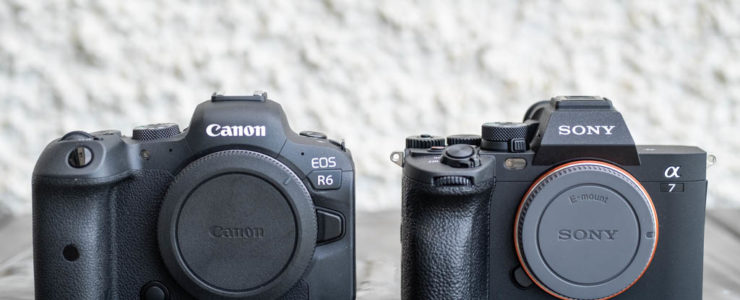
Here is a new Sony a7 IV vs Canon EOS R6 comparison review. Maybe the most exhaustive comparison review we ever featured.

Sony a7 IV at a glance:

  • 33MP Full-Frame Exmor R CMOS Sensor
  • Up to 10 fps Shooting, ISO 100-51200
  • 4K 60p Video in 10-Bit, S-Cinetone
  • 3.68m-Dot EVF with 120 fps Refresh Rate
  • 3″ 1.03m-Dot Vari-Angle Touchscreen LCD
  • 759-Pt. Fast Hybrid AF, Real-time Eye AF
  • Focus Breathing Compensation
  • 5-Axis SteadyShot Image Stabilization
  • Creative Looks and Soft Skin Effect
  • 4K 15p UVC/UAC Streaming via USB Type-C

Canon EOS R6 at a glance:

  • 20MP Full-Frame CMOS Sensor
  • DIGIC X Image Processor
  • 4K60p and FHD 120p 10-Bit Internal Video
  • Sensor-Shift 5-Axis Image Stabilization
  • 12 fps Mech. Shutter, 20 fps E. Shutter
  • Dual Pixel CMOS AF II with 1053 Points
  • 0.5″ 3.69m-Dot OLED EVF
  • 3″ 1.62m-Dot Vari-Angle Touchscreen LCD
  • Subject Tracking with Deep Learning
  • Dual SD UHS-II Memory Card Slots

Coming from our friend Mat at Mirrorless Comparison, the Sony a7 IV vs Canon EOS R6 review doesn’t let a question unanswered. Don’t look further if you want to learn about how these two cameras compare. From Mat’ conclusion:

In terms of autofocus, the two cameras are on the same level. You need specific situations to see a small advantage for one or the other, but overall they deliver an excellent level of speed and precision, and a similar keeper rate.

The R6 maintains an advantage with in-body image stabilisation (photos especially) and continuous shooting speed. I also prefer the Canon ergonomics, although the Sony is much better than before, and offers more customisation.

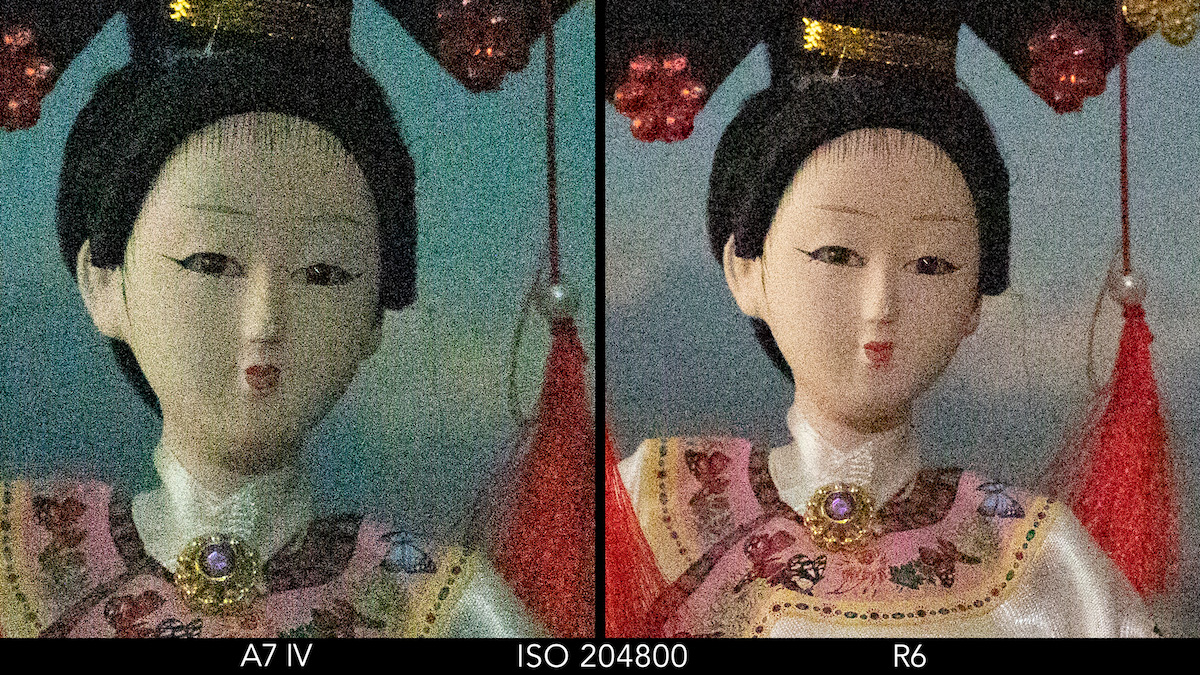
Concerning image quality, the main difference is the higher resolution of the A7 IV, which adds a bit more noise at high ISO, but has nothing to fear when it comes to dynamic range.

Then, there is video, where I think the A7 IV has the edge. Not only does it deliver more latitude with HDR and Log profiles, but it also has more codecs to offer, higher bitrates and can record for longer without overheating. The latter remains Canon’s weakest point.

The only real advantage for the R6 when it comes to movies is the possibility to record 4K 60p with a small sensor crop, whereas you need to accept a 1.5x crop on the A7 model.

Read the full review at Mirrorless Comparison.
Sony a7 iv vs canon eos r6
Insanely high ISO values (image © Mirrorless Comparison, used with permission)

You can dive into the Sony a7 IV vs Canon EOS R6 comparison also by watching the video-version of the review. The video review comes in two parts, the first comparing both cameras for photography, the second for video making. Enjoy.

More Sony a7 IV vs Canon EOS R6 comparisons are listed here.
The Good And The Bad Of Sony Cameras, According To DPReview TV

Sony a7 IV vs Canon EOS R6

DPReview TV posted a new video where they discuss the good and the bad of Sony cameras. Since here we all are big Sony fans I thought I might share it with you ;-)

Here is the table of contents for those in a hurry:

  • 0:00 – Intro
  • 0:37 – The good
  • 0:41 – Listening to feedback
  • 1:14 – Media management
  • 2:17 – Real Time Tracking
  • 3:14 – Third party lens support
  • 4:40 – The bad
  • 4:47 – Stylish designs
  • 6:09 – Professional video assist tools
  • 7:18 – The numbers game
  • 8:52 – Figure out APS-C lineup
  • 10:21 – Wishful thinking
  • 10:55 – The wrap

More Sony stuff covered here.

Is There A Difference Between a $500 And A $26000 Lens? And How Big Is It?

lens

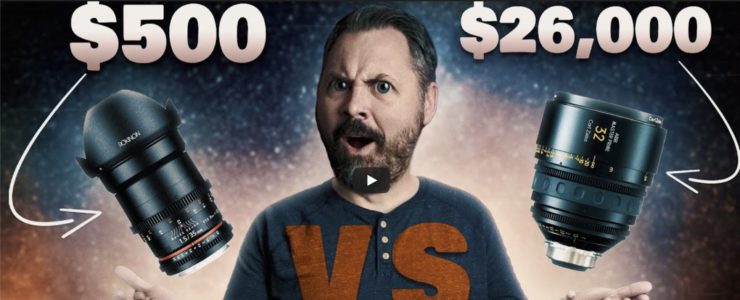
From the beloved series “unfair yet interesting comparisons”, here is a new episode. A lens selling for $500 compared with a lens that costs $26,000.

Film Riot compares the Rokinon 35mm T1.5 Cine DSX with the Arri 32mm Master Prime. A Blackmagic URSA Mini Pro was used for the comparison. You might be surprised to see that the inexpensive Rokinon performs well in many areas. Enjoy.

More comparison reviews are listed here.

[via PetaPixel]

Fujifilm GFX100S vs Canon R6: Medium Format Worth It? (not really)

fujifilm gfx100s

Here is an unfair comparison, the medium format Fujifilm GFX100S vs the full frame Canon EOS R6.

Fujifilm GFX100S at a glance:

  • 102MP Medium Format BSI CMOS Sensor
  • X-Processor 4 Image Processor
  • 4K30 Video; F-Log Gamma, 12-Bit Raw Out
  • 3.69m-Dot OLED EVF
  • 3.2″ 2.36m-Dot Tilting Touchscreen LCD
  • 5-Axis Sensor-Shift Image Stabilization
  • 425-Point Phase-Detection Autofocus
  • ISO 100-12800, up to 5 fps Shooting
  • 400MP Pixel Shift Multi-Shot
  • 19 Film Simulation Modes

Canon EOS R6 at a glance:

  • 20MP Full-Frame CMOS Sensor
  • DIGIC X Image Processor
  • 4K60p and FHD 120p 10-Bit Internal Video
  • Sensor-Shift 5-Axis Image Stabilization
  • 12 fps Mech. Shutter, 20 fps E. Shutter
  • Dual Pixel CMOS AF II with 1053 Points
  • 0.5″ 3.69m-Dot OLED EVF
  • 3″ 1.62m-Dot Vari-Angle Touchscreen LCD
  • Subject Tracking with Deep Learning
  • Dual SD UHS-II Memory Card Slots

Alex Barrera wonders if medium format is worth it, and compares the Fujifilm GFX100S with the Canon EOS R6. It’s a short video so I won’t spoil it, but the answer is “not really” :-)

Sony a7 IV vs Canon EOS R6 Review – Which One Better For Wedding And Portrait?

Sony a7 IV vs Canon EOS R6

Here is a Sony a7 IV vs Canon EOS R6 review with a focus on portrait and wedding photography. Both cameras are considered entry-level gear.

Sony a7 IV at a glance:

  • 33MP Full-Frame Exmor R CMOS Sensor
  • Up to 10 fps Shooting, ISO 100-51200
  • 4K 60p Video in 10-Bit, S-Cinetone
  • 3.68m-Dot EVF with 120 fps Refresh Rate
  • 3″ 1.03m-Dot Vari-Angle Touchscreen LCD
  • 759-Pt. Fast Hybrid AF, Real-time Eye AF
  • Focus Breathing Compensation
  • 5-Axis SteadyShot Image Stabilization
  • Creative Looks and Soft Skin Effect
  • 4K 15p UVC/UAC Streaming via USB Type-C

Canon EOS R6 at a glance:

  • 20MP Full-Frame CMOS Sensor
  • DIGIC X Image Processor
  • 4K60p and FHD 120p 10-Bit Internal Video
  • Sensor-Shift 5-Axis Image Stabilization
  • 12 fps Mech. Shutter, 20 fps E. Shutter
  • Dual Pixel CMOS AF II with 1053 Points
  • 0.5″ 3.69m-Dot OLED EVF
  • 3″ 1.62m-Dot Vari-Angle Touchscreen LCD
  • Subject Tracking with Deep Learning
  • Dual SD UHS-II Memory Card Slots

In his Sony a7 IV vs Canon EOS R6 review, Benj Haisch tests both cameras with an eye on wedding and portrait photography.

The Sony A7IV and the Canon R6 are most likely going to be the most popular cameras in that prosumer line, especially for wedding photographers like me. Today we compare resolution, high iso, and the overall feel and use of each camera.

More Sony vs Canon comparisons are listed here.

[via Fstopppers]

The Affordable Canon RF 16mm f/2.8 STM Gets Praise From DxOMark

rf 16mm f/2.8

The Canon RF 16mm f/2.8 STM for the EOS R system got DxOMarked and it didn’t score bad at all. This is not the first very positive review this lens gets.

Canon RF 16mm f/2.8 STM at a glance:

  • RF-Mount Lens/Full-Frame Format
  • Aperture Range: f/2.8 to f/22
  • One Aspherical Element
  • Super Spectra Coating
  • STM Stepping AF Motor
  • Customizable Control Ring
  • Rounded 7-Blade Diaphragm

DxOMark gives the Canon RF 16mm f/2.8 STM a score of 30. From their conclusion (emphasis mine):

With the introduction of the Canon RF 16mm F2.8 STM, Canon continues to explore new and innovative lenses for the RF mount. In an effort to reduce the optical complexity, thereby driving down the size, weight and cost, lens correction profiles make a lot of sense. Even without taking software correction into account, in our DXOMARK Lens test, the Canon RF 16mm F2.8 STM performs very well in certain key areas. It has, for example, similar sharpness and transmission to the larger and pricier Zeiss Distagon T* 15mm F2.8, while being much smaller and lighter. More importantly, especially for anyone on a tight budget, it’s around one-eighth of the price of the Zeiss and around the same price as the Samyang 14mm F2.8, making the Canon RF 16mm F2.8 STM a highly tempting option.

Head over to DxOMark for test charts and more

This is a little gem only Canon can make at this price. The Canon RF 16mm f/2.8 STM sells at $299: [shoplist 67369]

All Canon RF 16mm f/2.8 STM coverage is listed here.

Click here to open the rest of the article