Sigma 20mm f/1.4 DG HSM “Art” sample pictures
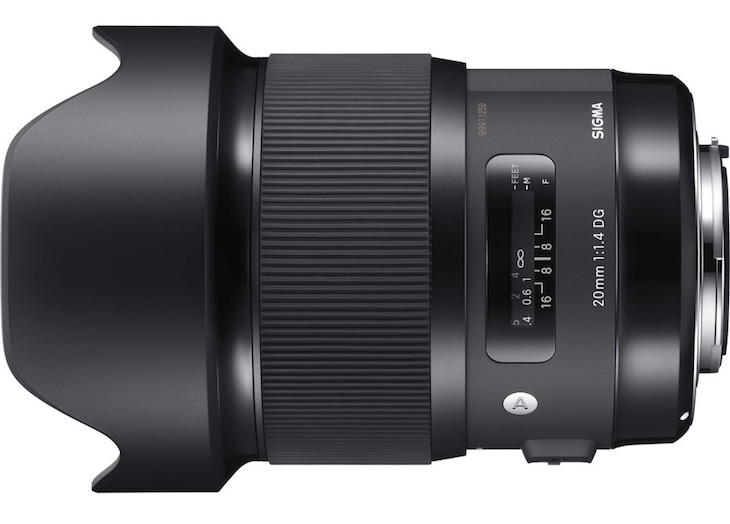
Sigma 20mm f/1.4

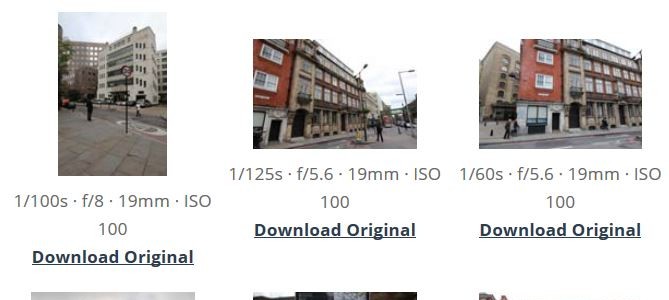
Photography Blog posted a set of 36 full-size sample pictures shot with the new Sigma 20mm F1.4 DG HSM “Art” lens (on a [shoplink 27766]EOS 5Ds R[/shoplink]). Full-size images available, can be downloaded.

Sigma 20mm f/1.4 DG HSM Art lens is on sale at $899: Amazon | Adorama | B&H Photo

Key features:

  • EF Mount Lens/Full-Frame Format
  • Aperture Range: f/1.4 to f/16
  • Two FLD Elements and Five SLD Elements
  • Two Aspherical Elements
  • Super Multi-Layer Coating
  • Hyper Sonic AF Motor, Manual Override
  • Rounded 9-Blade Diaphragm
  • TSC Material, Brass Bayonet Mount
  • Built-In Petal-Shaped Lens Hood
  • Compatible with Sigma USB Dock
Sigma 20mm f/1.4

Canon EF-M 11-22mm f/4-5.6 IS STM review (photozone)

EF-M 11-22mm f/4-5.6 IS STM

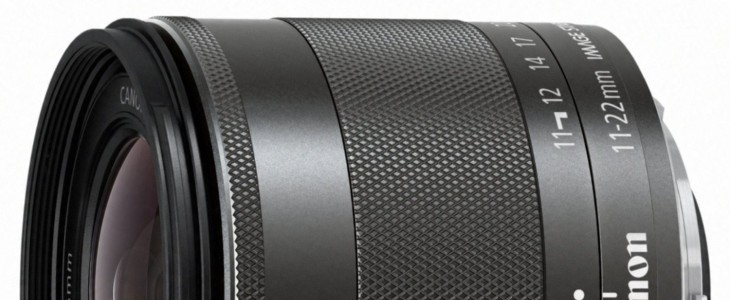
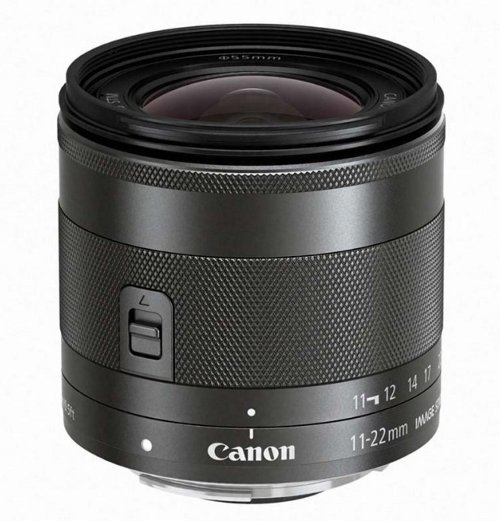
Photozone reviewed the Canon [shoplink 14076]EF-M 11-22mm f/4-5.6 IS STM[/shoplink], one of the five lenses for Canon’s EOS M system. From the conclusion:

Canon has a quite consistent record when it comes to lens quality and this is reconfirmed with the Canon EF-M 11-22mm f/4-5.6 STM IS once again. The resolution characteristic is generally very good except in the extreme corners at 11mm. Image distortions as well as lateral CAs are about average (in the true sense) for a lens in this class. If there’s one substantial weakness, it’s the amount of vignetting. We can’t really tell whether it’s just the lens or the combination with the sensor but the system performance is poor at fully open aperture. However, the transition of the vignetting is fairly smooth – thus less disturbing – and it’s much better at f/8. Read the review…

There is an interesting point discussed in Photozone’s review. The reviewer hypothises that the stron vignetting on the EF-M 11-22mm may be in part also due to the sensor. They suggest the [shoplink 29518]EOS M3[/shoplink] sensor is not optimised for lenses made for mirrorless systems. You can read about this issue here.

Canon EF-M 11-22mm f/4-5.6 IS STM: [shopcountry 14076]

EF-M 11-22mm f/4-5.6 IS STM

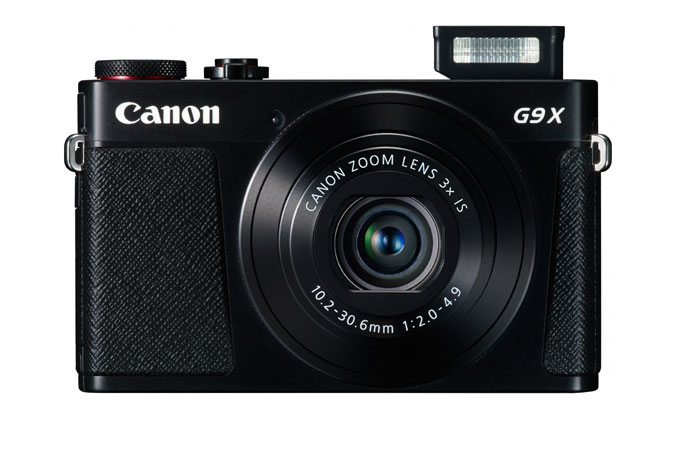
Canon Powershot G9 X review (Photography Blog)

Powershot G9 X

Canon Powershot G9 X key features

  • 20.2MP 1″ High-Sensitivity CMOS Sensor
  • DIGIC 6 Image Processor
  • 3x Optical Zoom f/2.0-4.9 Lens
  • 28-80mm (35mm Equivalent)
  • 3.0″ 1.04m-Dot Touchscreen LCD Monitor
  • Full HD 1080p Video Recording at 60 fps
  • Built-In Wi-Fi with NFC
  • ISO 12800 and 6 fps Continuous Shooting
  • Intelligent IS and Manual Control Ring
  • Dedicated Star Mode Shooting

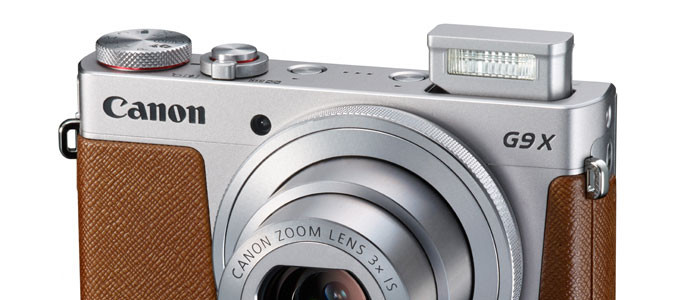
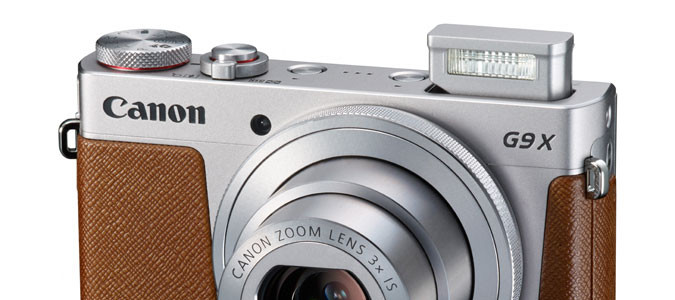
Photography Blog posted their review of the new Canon PowerShot G9 X, Canon’s latest super compact camera with an 1 inch sensor. The cute little PowerShot G9 X has the same well regarded 1 inch sensor as the [shoplink 22665]Powershot G7 X[/shoplink]. In the conclusion Photography Blog writes:

Once again Canon has produced a very appealing compact camera for those looking for something which is pocket friendly but retains many of the high quality features which something bigger and more advanced has.

The fact that the Canon PowerShot G9 X uses the same sensor as the highly praised G7 X is good news. A one-inch sensor in something so small and neat is not easily achieved however, and as such there is a compromise in the focal length of the lens. However, the 3x optical zoom gives you a little bit of flexibility, and is enough for landscapes, portraits and macro subjects. Read the review.

You can pre-order the Canon Powershot G9 X in two color options, black and silver: [shopcountry 35614]

Powershot G9 X

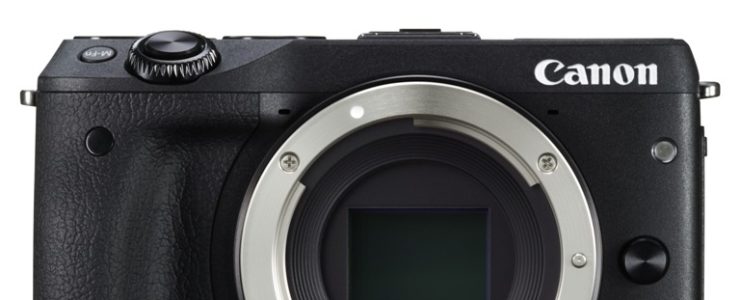
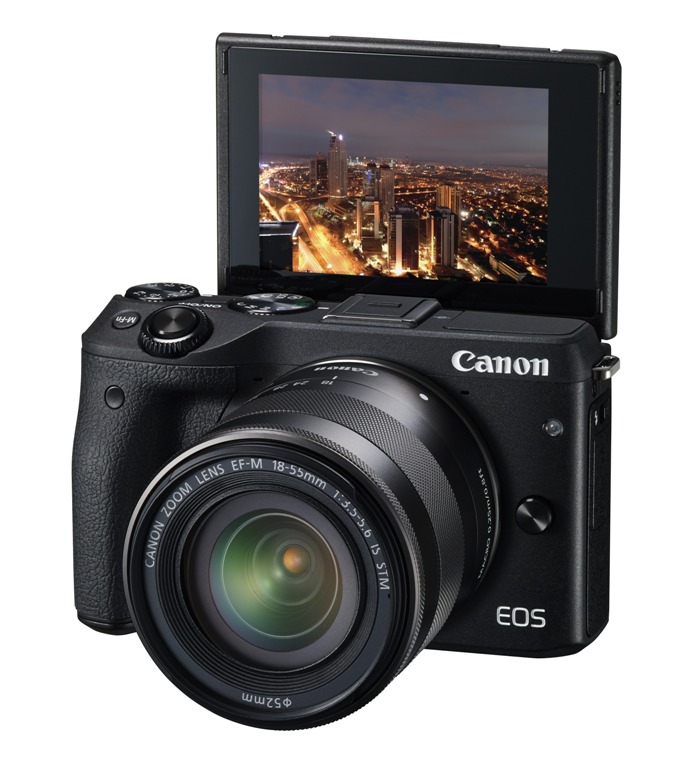
Canon EOS M3 review by K. Rockwell (best mirrorless picture quality)

eos m3

Ken Rockwell posted his thoughts and impression about the Canon EOS M3. You may agree or nor agree with Rockwell’s reviewing and writing style, but sentences like the one that follows have my full agreement:

The EOS M3 has the world’s best mirrorless picture quality because Canon has better color rendition than any other mirrorless brand. Canon’s real-world color rendition is far better to the critical artist than Fuji, Sony, or LEICA. Read the review.

There is nothing to say here: Canon is still the undisputed leader when it comes to color rendition. The [shoplink 29518]EOS M3[/shoplink] is a terrific mirrorless camera. I love mine and it is always in my bag now. It’s also my new travel kit with the [shoplink 14076]EF-M 11-22mm f/4-5.6 IS STM[/shoplink], [shoplink 6095]EF-M 18-55mm f/3.5-5.6 IS STM[/shoplink] and [shoplink 6093]EF-M 22mm f/2 STM[/shoplink] lenses. If there is one point in Rockwell’s review I agree totally, it’s the advantage to travel with such a lightweight kit while still getting stellar image quality. Rockwell also posted a review about the EF-M 11-22mm f/4-5.6 IS STM lens.

Canon EOS M3 key features:

  • 24.2MP APS-C CMOS Sensor
  • DIGIC 6 Image Processor
  • 3.0″ 1,040k-Dot Touchscreen Tilting LCD
  • Full HD 1080p Video at 24/25/30 fps
  • Built-In Wi-Fi Connectivity with NFC
  • Hybrid CMOS AF System with 49 AF Points
  • ISO 100-12800, Expandable to 25600
  • Hot Shoe and Built-In Flash
  • 3.5mm Stereo Mic Input
  • Full Manual Control

The Canon EOS M system: [shopcountry 6091]

eos m3

Canon Powershot G5 X and Powershot G9 X hands-on, and link to user manuals

Powershot g9 x

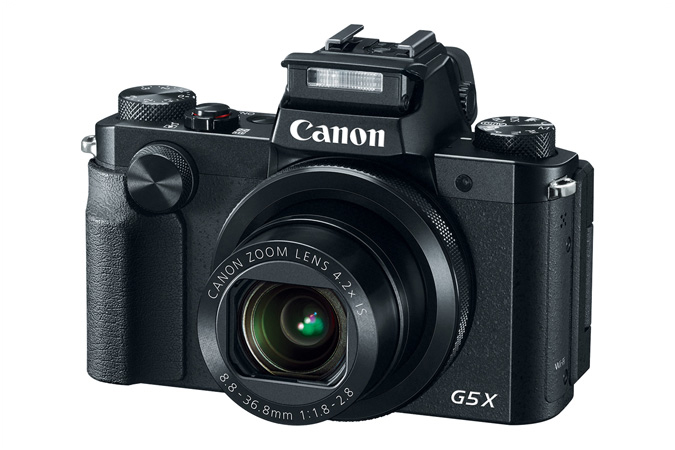
Canon Watch reader Al had the chance to quickly try out the new Canon Powershot G5 X and Powershot G9 X. He was also so kind to send me the download links for the user manuals.

Here are Al’s impression:

Canon Powershot G9 X (B&H Photo | Adorama | Amazon):

  • Can be almost considered as the S120‘s replacement, except for the touch-only rear control interface which is a BIG issue.  Without the usual RHS control set (cursor/four-way dial) the touch-only operation is really a real problem especially if one has large fingers.  And as usual, touch buttons can be mis-pressed very easily during operation.  Despite the shorter focal zoom length, could’ve otherwise been the perfect Powershot compact P+S had the full RHS control config been retained;
  • In case of touch panel failure, the G9X will be pretty much inoperable at system level.  In fact I’ve witnessed a demo G7X at the same showroom where the touch operation has completely failed (even with the function set to “on”), only to be operative as usual thanks to the RHS rear control set.  Showroom staff has been informed of the matter;
  • NO live histogram display during EV shift unless with specific camera operation.  The first of the high-end Powershot kind that exhibits such issue, which typically appears on other make/models like the Sony RX100/II/III/IV, and some low-end Olympus Stylus compacts.  Adjusting EV via touching the onscreen EV scale results in an EV sub-menu with an enlarged EV scale and +/- touch buttons but nothing else.  Live histo display during EV shift is only possible by adjusting via the frontal lens ring.  IMHO Canon could (and should) follow the steps of Nikon and Ricoh to include an enlarged (and compulsory) histo display during menu-based EV shift operation;

Canon Powershot G5 X (B&H Photo | Adorama | Amazon):

  • Nearest replacement to the outgoing G16 except for the shorter zoom focal length (the G16’s tele up to 140mm is much preferred).  Similar controls to previous models.  Smoother EV dial (much better than on the G7X for instance).  Also smooth frontal dial (above camera grip);
  • Relatively dimmer EVF than expected.  Even with brightness level set to 5 (max.) the EVF’s view still feels dim.  Rear touch panel’s brightness settings appear more normal;
  • Weak flash.  Didn’t get to tweak the flash settings, but overall feels a bit weaker than expected.  Apparently no zoom flash feature; (on both cameras as well as older GxX models)
  • Not sure why Canon would default the image aspect ratio to the typical 35mm’s 3:2.  Setting the ratio to the usual 4:3 (as in smaller image sensors up to m43) results in decreased pixel count to 18MP
Powershot g5 x
Powershot G5 X

A weird yet interesting comparison: Canon EOS D2000 (1998) vs EOS 5Ds R (2015)

EOS D2000

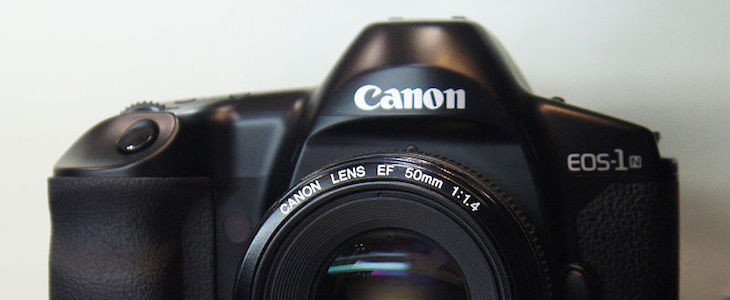
Let’s play History Channel. The video below, by All Things Photo on YouTube, is about a bizarre comparison, one that truly dives into history. The venerable Canon EOS D2000, ancestor of all Canon DSLRs, is compared to the latest tech from Canon, the [shoplink 27766]EOS 5Ds R[/shoplink]. That’s a 2MP sensor vs a 50MP sensor. To say it all, the D2000 is a branded Kodak DCS 520, but it’s also Canon’s first digital SLR. The D2000 was developed by Kodak on a Canon EOS-1N body.

Canon D2000 key features:

  • 2 megapixel
  • Crop factor of 1.6X
  • ISO 200-1600
  • File formats JPG or TIF
  • PCMCIA card slot
  • CCD sensor
Canon EOS 5Ds R key features:

  • 50 megapixel
  • Full frame sensor (no crop factor)
  • ISO 100-12800
  • File formats RAW, JPG, more
  • SD/CF card slot
  • CMOS sensor

You may be surprised to see that the menu interface after all didn’t change that much in 17 years. Do not miss mark 4:47 of the video and see how the D2000 performs in a low light setting. I bet some of the points in the video will surprise you quite a bit.

This is obviously a comparison that puts two extremes one against the other, shot by shot. It’s curious, and interesting to see how far we have gone in 17 years. Enjoy!

[via All Things Photo via DIY Photography]