Canon EOS R6 V Rumor Round-Up: Everything We Know So Far

eos r6 v

Or: Canon Builds a Cinema Camera, Then Removes the Cinema Price Tag

Canon is announcing the EOS R6 V on May 13, 2026. By now, if you have been paying attention to the rumors mill, you know roughly what you are getting. A full-frame hybrid camera. Cinema guts. No EVF. A fan built in. And apparently, IBIS after all.


What It Is

The R6 V sits in a strange corner of Canon’s lineup: above the R6 Mark III in video ambition, below the C50 in price and “pro” audio features. It shares the same 32.3MP full-frame CMOS sensor as the R6 Mark III and the Cinema EOS C50. But it is its own camera, not a rebadged C50.

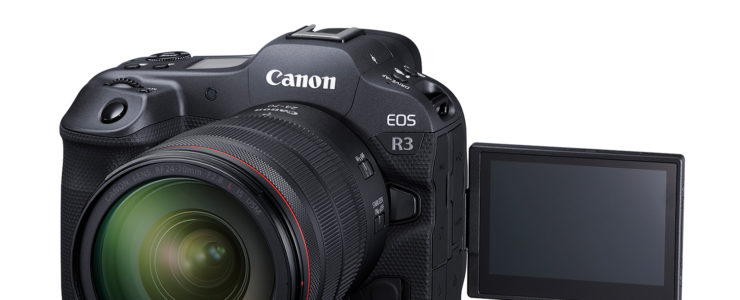
The official Canon USA teaser dropped on May 7, showing both the camera and the RF 20-50mm f/4L IS USM PZ lens. The cross-hatch grip pattern on the body mirrors the design language of the EOS R1. Whether that grip actually helps or just looks expensive is a debate for people who have held one.

Click to view on Instagram

The Specs, Such As They Are

The full spec sheet has not leaked yet. Canon tends to hold back official images and marketing material until very close to announcement day. But enough has surfaced that Craig Blair at Canon Rumors has been able to confirm quite a bit. Here is where things stand:

SpecRumor / Confirmed
Sensor32.3MP Full-Frame CMOS (same as R6 Mark III, C50)
Max Video7K 60fps RAW internal
Open Gate7K 30fps RAW
Max Output4:2:2 / ProRes RAW 10-bit up to 6.9K @ 23.98/24/25/29.97fps
GammaCanon Log 2, Canon Log 3
IBIS7.5 stops
Active CoolingYes – low / medium / high settings
ShutterElectronic rolling shutter only (no mechanical)
EVFNone
Screen3-inch, 1.62M dots, approx. 170-degree coverage
AF Points1053
ISO Range100-64,000 (boosted: 50-102,400)
BatteryLP-E6P
Weight598g with battery
Dimensions14.17 x 8.33 x 7.98 cm
Body PriceEUR 2,549 (rumored)

Active cooling was a late correction. Early reports said the R6 V had side vents but no fan. That changed. The camera does have active cooling with three speed settings, which separates it cleanly from the R6 Mark III and makes it viable for extended video shoots without thermal throttling becoming the defining feature of your recording session.

IBIS was a surprise. Earlier speculation suggested Canon would omit IBIS from a video-focused body, following the pattern of the C50. The rumored spec sheet lists 7.5 stops, which is a meaningful number and not nothing. Whether that number holds up when the camera is running warm remains to be seen.

The electronic rolling shutter is worth noting. No mechanical shutter. If you are shooting fast-moving subjects with the intent to freeze motion, the R6 V may exhibit rolling shutter artifacts. The R6 Mark III and C50 share this limitation.


The Kit Lens: RF 20-50mm f/4L IS USM PZ

Canon will bundle the R6 V with a new L-series power zoom lens. The RF 20-50mm f/4L IS USM PZ is a full-frame optic, not an RF-S crop lens. No specifications on size, weight, or zoom ring behavior have been confirmed yet. One open question is whether the zoom ring feels like a natural mechanical throw or like a motor trigger that activates servo zoom. The RF-S 14-30mm f/4-6.3 IS STM PZ uses the latter, and it is a point of ongoing frustration for users who prefer a more tactile experience.

Canon is reportedly also announcing 8-10 SKUs total on May 13, including creator bundles, accessory kits, new macro adapter rings, and a new wireless remote, the BR-E2. The macro ring pricing will likely be described as “overpriced” by the macro photography community, which is not a surprising characterization.


R6 V vs C50: Not the Same Camera

Canon Rumors has been fielding comments calling the R6 V a “C50 with IBIS.” That framing is understandable given the shared sensor, but it is not accurate.

  • The C50 has dual base ISO, the Cinema EOS OS, HDR, IP streaming, timecode, 16 stops of dynamic range claimed, simultaneous crop recording, and full button customization.
  • The C50 has an XLR handle option and “pro” audio inputs.
  • The C50 has shutter angle, a feature Canon appears to be using for product segmentation.
  • The C50 does not have IBIS.

The R6 V will likely miss shutter angle, which is a meaningful omission for video shooters who have been asking Canon to add it to the R6 Mark III and R5 Mark II. Whether it shows up via firmware after launch remains an open question.

The one thing that has been clarified from multiple sources: the R6 V has only one mounting point on the left side and the standard tripod mount on the bottom, similar to the R50 V. The C50 has top mounts for the XLR handle. The R6 V does not.


The 7K RAW Question

There were reports that the R6 V would shoot Open Gate 7K RAW at 60fps internally, a capability neither the R6 Mark III nor the C50 has. When Canon Rumors followed up with the original source, the response was not a hard no but an “I do not think so.” So consider that one: unconfirmed, with a leaning toward no.

The current consensus on specs points to 7K 60fps RAW as the max, but not in open gate mode. Open gate stays at 30fps. If Canon adds 7K/60 open gate to the C50 via firmware after the R6 V announcement, it would not be the first time they have refreshed an older camera’s capabilities post-launch.


The Nikon ZR Comparison

The Nikon ZR, which retails for around $2,196 USD, has been the obvious comparison point since the R6 V rumors started. The ZR is Nikon’s small full-frame video camera, and the reviews have been largely positive. It shoots ProRes RAW 12-bit up to 6K and uses dual base ISO (800 / 6400).

The R6 V at EUR 2,549 (rumored) would be in roughly the same ballpark in USD terms. If Canon hits that price point, it undercuts the R6 Mark III by $300-$400 and lands close to the ZR territory. Whether the feature set justifies one over the other will depend on what Canon ships and what Nikon updates next.

Canon rarely directly copies another company’s camera feature-for-feature. They do, however, compete in the same segments on price. The R6 V appears to be Canon’s answer to the question: what if you want cinema features without the cinema budget?


What We Do Not Know Yet

  • Full official spec sheet and feature list
  • US retail pricing (EUR 2,549 is European estimate only)
  • RF 20-50mm lens size, weight, and zoom ring behavior
  • Whether shutter angle arrives at launch or via future firmware
  • Card slot configuration (dual SD vs. CFexpress)
  • Whether open gate 7K/60fps is real or a wishful rumor

The official announcement happens at 9:00 AM EDT on May 13, 2026. Full specs will probably surface in the week before then. Check back, or do not, depending on how much uncertainty you can handle.

Sources: Canon Rumors (Craig Blair), Ordinary Filmmaker YouTube channel
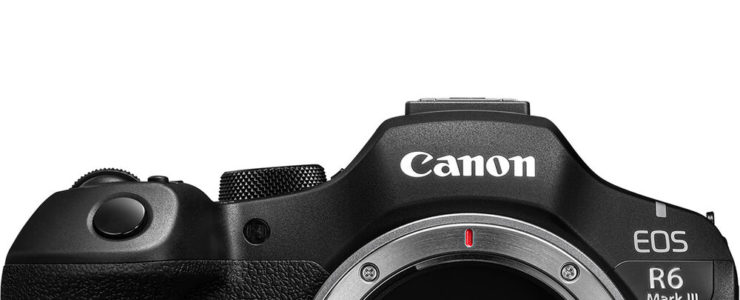
Canon EOS R6 Mark III Review (very impressive evolution, D. Abbott)

canon eos r6 mark iii

Canon EOS R6 Mark III at a glance:

  • 32.5MP Full-Frame CMOS Sensor
  • 7K 60p 12-Bit Internal RAW Light Video
  • Open Gate 7K 30p, High-Speed 4K 120p
  • Dual Pixel CMOS AF II & Movie Servo AF
  • Up to 40 fps & Pre-Continuous Shoot Mode
  • 8.5-Stop 5-Axis Image Stabilization
  • 3.69m-Dot OLED EVF with OVF View Assist
  • 3″ 1.62m-Dot Vari-Angle Touchscreen LCD
  • CFexpress & SD UHS-II Memory Card Slots
  • Multi-Function Shoe, Wi-Fi and Bluetooth

After some time I am happy to feature again a review by a reviewer I consider to be one of the most reliable out there. If you are on the fence for the Canon EOS R6 Mark III, this is the review to read.

Dustin Abbott posted a comprehensive review about the new Canon EOS R6 Mark III. The review discusses every aspect of the EOS R6 III, from sensor performance to dynamic range. Test pics, charts, ISO comparison, image quality analysis, it’s all there and there won’t be any question left after you read Mr. Abbott’s review on his webiste, so that you do not miss anything.

From Mr. Abbott’s conclusion:

[…] the Canon EOS R6 MKIII a very impressive evolution of the R6 line. Canon used to be notorious for “crippling” their lower tier cameras to protect the higher tier options, but the R6 MKIII feels like anything but that. It is enough cine camera for most people, and enough sports camera for others, while also managing to be a generally excellent jack-of-all-trades for those who need their camera to do everything. This is very competitive against equivalent options from Sony or Nikon, and definitely justifies its price tag of $2799 USD through its performance.

I remain frustrated by Canon’s prohibitive policies around third-party lenses, making it harder for me to recommend the system as a whole to people despite excellent cameras like this, but if you are someone who prefers to buy first party lenses anyway, that won’t be a restriction for you.

I wouldn’t be surprised to find the Canon EOS R6 Mark III become Canon’s best selling full frame camera over the next few years, as it now has enough resolution to feel acceptable, enough buffer depth and tracking capabilities to make people question the reason to spend more, and enough video performance to allow aspiring filmmakers to choose it over more expensive cine cameras. And, considering that Canon remains the top selling camera brand in the world, I suspect they will move just about as many R6 MKIII’s as they can make.

Seems to be a rather cool piece of gear, the EOS R6 Mark III. As usual with Mr. Abbott’s reviews, there is an exhaustive video version too.

More reviews by Dustin Abbott are listed here.

[via Dustin Abbott]

Canon Firmware Updates: EOS R3, EOS R5, EOS R6, EOS 1D X Mark III

canon eos r3 firmware sample picture user manual

Canon released a bunch of firmware updates today. See below.

Please note: I am linking Canon Japan through machine translation, because at time of writing the firmware updates are live on Canon Japan’s site.

EOS R3 Firmware Version 1.7.1

  1. When the power zoom adapter PZ-E2/PZ-E2B is attached to a compatible lens, servo zoom can now be performed remotely from EOS Utility and Camera Connect
  2. CF Express cards with a capacity greater than 2TB can now be used up to 2TB
  3. Fixed an issue where the camera would occasionally stop working while using the GPS function
  4. Corrected a phenomenon where error 70 may occur when taking flickerless shots with a shutter speed of 1 second or more
  5. Enhanced security during FTPS connection
  6. Fixed an issue where Mobile File Transfer could not be used when connected to an iPhone that supports USB 3.0 or higher
  7. Fixed a phenomenon that occurred only under certain conditions, where the image was not displayed properly on the viewfinder or monitor and the camera became inoperable (Error 70 may be displayed)
  8. Fixed minor bugs

EOS R5 Firmware Version 2.0.0

  1. When the power zoom adapter PZ-E2/PZ-E2B is attached to a compatible lens, servo zoom can now be performed remotely from EOS Utility and Camera Connect
  2. CF Express cards with a capacity greater than 2TB can now be used up to 2TB
  3. Corrected a rare phenomenon where the camera took a long time to start up, such as when returning from auto power off
  4. Fixed a phenomenon that occurred only under certain conditions, where the image was not displayed properly on the viewfinder or monitor and the camera became inoperable (Error 70 may be displayed)
  5. Fixed minor bugs

EOS R6 Firmware Version 1.8.4

  1. Corrected a rare phenomenon where the camera took a long time to start up, such as when returning from auto power off
  2. Fixed a phenomenon that occurred only under certain conditions, where the image was not displayed properly on the viewfinder or monitor and the camera became inoperable (Error 70 may be displayed)
  3. Fixed minor bugs

EOS-1D X Mark III Firmware Version 1.9.0

  1. CF Express cards with a capacity greater than 2TB can now be used up to 2TB
  2. Fixed an issue where the camera would occasionally stop working while using the GPS function
  3. Enhanced security during FTPS connection
  4. Fixed a phenomenon that occurred only under certain conditions, where the image was not displayed properly on the viewfinder or monitor and the camera became inoperable (Error 70 may be displayed)

Save Up To $700 On Select Canon Gear At B&H Photo (R5 C, R6, R7, RF 85mm f/1.2L)

canon

For limited time you can safe on Canon gear at B&H Photo.

  • Canon EOS R5 C Mirrorless Cinema Camera – $3,599 (save $700)
  • Canon EOS R6 Mirrorless Camera – $1,999 (save $300)
  • Canon EOS R7 Mirrorless Camera with 18-45mm Lens Content Creator Kit – $1,899 (save $200)
  • Canon RF 85mm f/1.2 L USM Lens – $2,599 (save $200)

You might want to have a look at the listings for refurbished lenses and DSLRs at Canon Store (best deals might be found here).

Canon Firmware Updates: EOS R3, EOS R6, EOS R7, EOS R8, EOS R10, EOS R50

canon eos r6 mark iii firmware updates viltrox eos r7 eos r10 reuters canon cameras europe canon eos r1 eos r rf 14-35mm Olympic Games ef-mount rudy winston

Today a bunch of Canon firmware updates was released for mirrorless cameras. Not much to write home about, besides the support for the RF-S 10-18mm F4.5-6.3 IS STM lens.

Canon EOS R50 firmware version 1.1.0 (download) incorporates the following fixes and enhancements:

  1. Adds support for RF-S 10-18mm F4.5-6.3 IS STM lens.
  2. Adds support for the Software Development Assistance Kit (EDSDK/CCAPI).
  3. Fixes minor issues.

Canon EOS R10 firmware version 1.4.0 (download) incorporates the following fixes and enhancements:

  1. Adds support for RF-S 10-18mm F4.5-6.3 IS STM lens.
  2. Fixes minor issues.

Canon EOS R6 firmware version 1.8.3 (download) incorporates the following fixes and enhancements:

  1. Fixes an issue, in which, after touchscreen operation, in rare circumstances, the camera operations cannot be performed, and even if the camera is operated, [BUSY] appears on the screen.
  2. Fixes minor issues.

Canon EOS R7 firmware version 1.4.0 (download) incorporates the following fixes and enhancements:

  1. Adds support for RF-S 10-18mm F4.5-6.3 IS STM lens.
  2. Fixes minor issues.

Canon EOS R8 firmware version 1.2.0 (download) incorporates the following fixes and enhancements:

  1. Adds support for RF-S 10-18mm F4.5-6.3 IS STM lens.
  2. Fixes minor issues.

Canon EOS R3 firmware version 1.5.1 (download) incorporates the following fixes and enhancements:

  1. Adds support for RF-S 10-18mm F4.5-6.3 IS STM lens.
  2. Fixes an issue that may cause the camera, in rare instances, to experience a delayed restart after the camera has gone into Auto Power Off.
  3. Fixes minor issues.

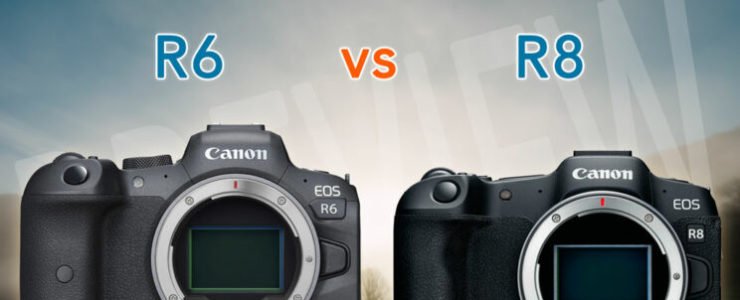
Canon EOS R6 vs EOS R8 Comparison Review, And 10 Differences

EOS R6 vs EOS R8

Here is a Canon EOS R6 vs EOS R8 comparison review, and a highlight of the 10 main differences.

Canon EOS R6 at a glance:

  • 20MP Full-Frame CMOS Sensor
  • DIGIC X Image Processor
  • 4K60p and FHD 120p 10-Bit Internal Video
  • Sensor-Shift 5-Axis Image Stabilization
  • 12 fps Mech. Shutter, 20 fps E. Shutter
  • Dual Pixel CMOS AF II with 1053 Points
  • 0.5″ 3.69m-Dot OLED EVF
  • 3″ 1.62m-Dot Vari-Angle Touchscreen LCD
  • Subject Tracking with Deep Learning
  • Dual SD UHS-II Memory Card Slots

Canon EOS R8 at a glance:

  • 24.2MP Full-Frame CMOS Sensor
  • 4K60p 10-Bit Internal Video, Canon Log 3
  • 2.36m-Dot OLED Electronic Viewfinder
  • 3.0″ 1.62m-Dot Vari-Angle Touchscreen
  • Dual Pixel CMOS AF II
  • 40 fps Electronic Shutter
  • Movie Digital IS
  • Vertical Movie Mode
  • Microphone Input, Headphone Output
  • Multi-Function Shoe, Wi-Fi & Bluetooth

Coming from our friends at Mirrorless Comparison, here is a neat Canon EOS R6 vs EOS R8 review. The 10 main differences are:

  1. Image Quality: The dynamic range and high ISO performance are very similar between the two cameras. The primary distinctions lie in the R8’s additional 4MP and its skin tone rendering with in-camera JPGs.
  2. Movie Capabilities: Both cameras offer the same 10-bit internal recording quality (dynamic range, ISO), but the R8 has fewer overheating issues and doesn’t crop the sensor in 4K. (Although the 1.07x crop on the R6 is hardly a significant concern.)
  3. Image Stabilisation: The R6 features 5-axis in-body stabilization, which extends the usability of slow shutter speeds for still photos and produces steadier footage while walking. That said, pair the R8 with a quality IS lens, and you’ll get more out of it than you would initially think.
  4. Autofocus: The R8 boasts more advanced subject detection software and performs better in low light. Both cameras excel in bird photography.
  5. Shutter and Continous Shooting: the R8 is faster with the electronic shutter (40fps vs 20fps) but doesn’t have a full mechanical shutter, only the EFCS (Electronic-First Curtain Shutter).
  6. Extra Features: The R8 includes Dual Pixel RAW, Focus Stacking, Breathing Compensation, and a USB plug-and-play webcam function.
  7. Design: The R8 is lighter and more compact, whereas the larger R6 offers several advantages such as a bigger battery, additional buttons, a larger grip, and an improved viewfinder.
  8. Viewfinder and LCD: The R6 boasts a larger viewfinder with greater resolution, particularly convenient for those wearing glasses. Both cameras share the same touch-sensitive, vari-angle rear LCD.
  9. Cards and Battery: The R6 is equipped with two card slots and a larger battery, providing extended longevity for both stills and video.
  10. Price: The R6 carries a higher price tag when purchased new, though the discrepancy isn’t substantial in some regions. Considering second-hand prices, the R6 often becomes the more favorable choice.

Read the full and exhaustive Canon EOS R6 vs EOS R8 review at Mirrorless Comparison, it comes with charts, ISO comparison and everything your pixel peeping heart might wish. Or you can watch the video below.