Interview With Canon Execs About Smartphones, EOS M2, 4K, Lenses, and more
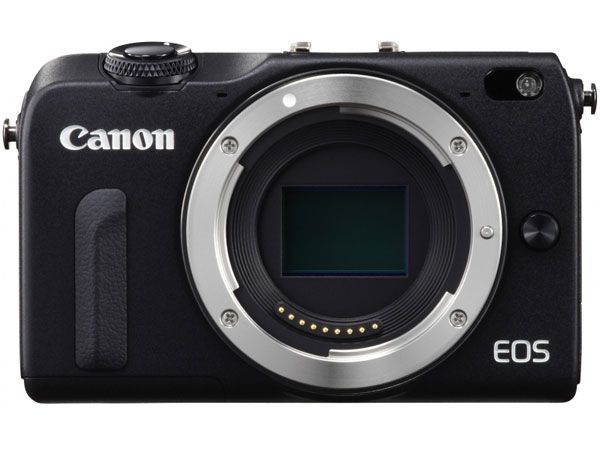
EOS M2
The Canon EOS M2

Dpreview conducted an interview with 5 Canon executives, most notably Mr. Masaya Maeda and Mr. Go Tokura. The interview was conducted via a translator and is the summary of three conversations. Below some excerpts from the interview.

When asked if smartphones are seen as a threat, Mr. Maeda said:

We don’t see the smartphone as an enemy. We like to see it as representing an infrastructure which we should be making use of. If we make sure that we continue to produce cameras that do things which smartphones can’t, and we also continue to provide links between our cameras and smartphones we’ll be able to create a system which is of benefit to our customers.

When asked if we will soon see a really affordable full-frame Canon DSLR, Mr. Ken-Ichi Shimbori said:

We can’t reveal plans for our future product development, but as you know we released the EOS 6D in 2012, which is designed for the mass market [and he added that Canon will look at user feedback for this]

About Canon’s often mentioned conservative approach to technology and innovation:

[…] we are incorporating technological innovation into our products. The EOS 70D’s Dual Pixel AF technology is a good example of innovation that is unique to Canon.

Dual Pixel CMOS AF was born out of the concept of allowing the user to freely choose which kind of finder they wanted to use. The optical finder, the camera’s LCD or the screen of a mobile device via our EOS Remote app.

Was the Canon EOS M [shoplink 6091](price & specs)[/shoplink] an experiment?

Well it was certainly an experiment! Japan and Asia as a whole accept mirrorless cameras more than any other markets. In the US, in terms of total number of cameras sold, mirrorless cameras account for less than 20%.

Will the [shoplink 19243 ebay]EOS M2[/shoplink] come to the US and EU market? Mr. Tokura says:

It’s a possibility but we haven’t made a final decision yet. We’re looking at the market [more about this issue here]

When asked if it is easier to make lenses for mirror less systems, Mr. Naoya Kaneda answers:

In designing lenses for mirrorless cameras we have a degree of freedom, in that they don’t need to have a long flange back distance. Especially when making high-quality wide zoom lenses, it’s easier to design them for a mirrorless platform. A good example of this is the 11-22mm zoom for the EOS M. Its optical performance is very high.

There is much more in the interview at DPreview, for instance Canon’s commitment to videography:

People are taking more movies with still cameras. We’ve confirmed this trend […]  For this reason video is an important feature even on entry-level cameras, and one that people are looking for.

Canon Ranked Among World’s Most Admired Companies 2014 (Fortune)

Canon

Fortune Magazine Ranks Canon as One of World’s Most Admired Companies for 2014

MELVILLE, N.Y., March 6, 2014 – Canon U.S.A., Inc., a leader in digital imaging solutions today announced that its parent company, Canon Inc., has ranked among the top global companies, placing sixth overall and third internationally in the computers category of this year’s Fortune World’s Most Admired Companies list. In the international computers category, Canon ranks as the top Japanese company and the sole representative of the imaging industry. Contributing to their rankings, Canon has received high accolades for innovation, quality of products/services and financial soundness.

Click here to open the rest of the article

How Bad Was 2013 For The Photography Industry?

Photography Industry
Click to see larger

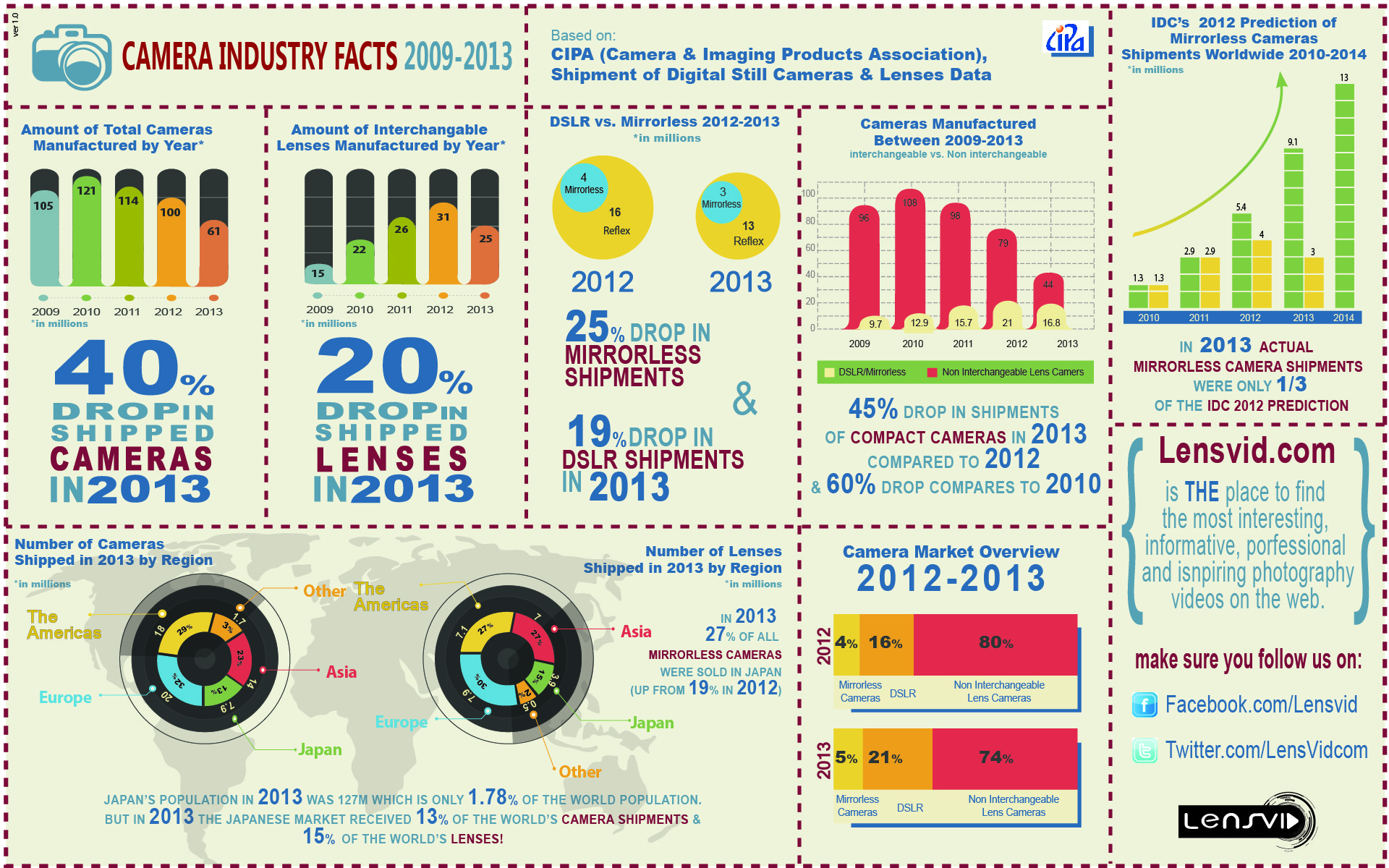
The folks at lensvid made an excellent infographic about how bad 2013 was for the photography industry. Very bad as you’ll see.

They took the figures published by CIPA (Camera & Imaging Products Association), and as you can see things are possibly worse than you have thought. Last years figures show a 45% drop in compact camera sales, a 20% drop for lenses, 25% for mirrorless system cameras, and a not less than 19% drop in DSLR sales figures. And it happened in just 12 months! While the reason for this probably needs further investigation, the people at lensvid outlines 3 main reasons (see also the video below):

  • The improvement of camera phones
  • The global economic crisis
  • Americans don’t like mirrorless cameras

It is certainly true that mirrorless system cameras are not doing well in the US, and to a lower degree in Europe. The incredible drop of 40% in compact camera sales can also plausibly be connected to always better performing smartphones (the iPhone 5 and the likes take great pics with a minimum of effort). Well, finally, the economic crisis is real, lot of us can feel it, and that could explain the drops in lens and DSLR sales.

Finally, amazing to see that Japan, which makes 1.78% of the world’s population, had shipped 13% of the world’s cameras and 15% of all shipped lenses (2013)!

What do you think, which scenario are you seeing in the future of the photo industry?

[via lensvid]

Tamron SP 150-600mm f/5-6.3 DI VC USD Sample Pics (Photography Blog)

Photography Blog published a set of 40 sample pictures shot with the new Tamron super-zoom, the Tamron SP 150-600mm f/5-6.3 DI VC USD (pre-order for $1069, Adorama | B&H Photo), and an EOS 5D Mark III [shoplink 2431](price & specs)[/shoplink].

The Tamron 150-600mm is getting good critics by early reviewers, so good that the lens was called a “game changer“.

Specs and product description after the break.

Click here to open the rest of the article

9 Canon Design Concepts Recognised With iF Design Award

Canon press release:

TOKYO, February 28, 2014—Canon Inc. announced today that nine Canon designs were recognized by iF International Forum Design GmbH with prestigious 2014 iF Design Awards in the product design and communication design categories.

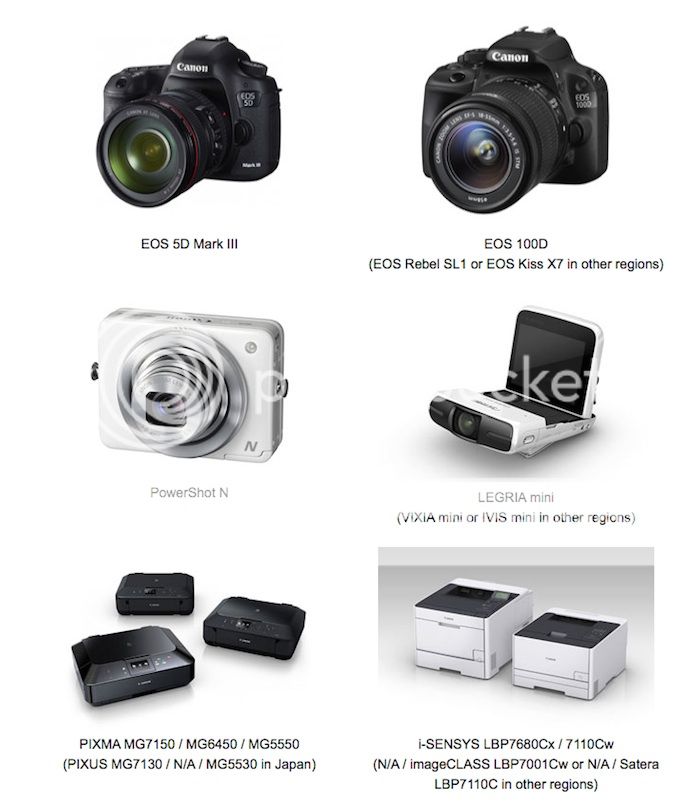
iF Product Design Awards went to the EOS 5D Mark III and EOS 100D (EOS Rebel SL1 or EOS Kiss X7 in other regions) digital SLR cameras, the PowerShot N compact digital camera, the LEGRIA mini (VIXIA mini or IVIS mini) camcorder, the PIXMA MG7150 / MG6450 / MG5550 (PIXUS MG7130 / N/A / MG5530 in Japan) inkjet printers, the i-SENSYS LBP7680Cx / 7110Cw (N/A / imageCLASS LBP7001Cw or N/A / Satera LBP7110C) color laser beam printers, the WUX450 multimedia projector, and the LE-5W LED projector. The iF Communication Design Award went to the user interface for the EOS M compact-system camera.

Click here to open the rest of the article

The Canon EOS M2 Will Come To The USA (and more from interview with Canon exec) – Update

[shoplink 19243 ebay]
EOS M2
Canon EOS M2
[/shoplink]

Update: After having published the interview, Imaging Resource was told by Canon USA that there are no plans to bring the EOS M2 to the US.

[Editor’s note: We received an update after we went to press that Canon USA does not have plans to sell the EOS M2 at this time. We’ll let you guys know if this changes!]

Imaging Resource’s Dave Etchells met Mr. Go Tokura, Group Executive, ICP Group 2, Image Communications Products Operations at Canon, and his colleague Mr Naoya Kaneda, Senior General Manager, ICP Development Center 1, Image Communications Products Operations at Canon. The interview was conducted with the help of a translator. Among other topics, in the interview they talked about Canon’s EOS mirrorless plans, the innovative and groundbreaking Dual Pixel CMOS AF technology, and the future of video shooting with mirrorless system cameras.

When asked about Canon’s mirrorless plans, more precisely about the EOS M2, Mr Tokura said that there “are plans for the M2 to arrive in the U.S.”, and then adds that this is a “decision that is led by the sales groups in each division, so they are the ones who are holding the decision-making responsibility on that.”. At least there are plans to bring the EOS M2 to the States (and hopefully also to Europe).

And the lens roadmap for the EOS M system? Mr Tokura says he “can assure [us] that [Canon] do have plans to roll out some lenses in the future” but he can’t say anything more precise about the roadmap (because of company policy).

When asked about the reason’s of the EOS M initial AF slowness, Mr. Tokura said that is was due to a very conservative approach to AF implementation, an approach that put more emphasis on precision than on speed.

There are more gems in the interview, as Dave Etchells’ investigation about the inner working of Dual Pixel CMOS Auto-Focus. Every pixel on the sensor “has two full readouts, so every pixel on the sensor can be read as two halves”.  Next question was “whether the signals from the two halves of each pixel are combined on the sensor chip for data image readout, or if they’re read out separately and then later combined in the processor?” – unfortunately Mr. Tokura couldn’t answer here since this information is kept under embargo by Canon. And what is the major drawback of the Dual Pixel AF technology? It is very expensive to manufacture because of the high precision required to tie the AF technology into the sensor.

There is more in the interview.