Canon Rebel SL2 (EOS 200D) shooting experience as seen by DPReview

Rebel SL2 SL3 minecraft server

Canon Rebel SL2: [shopcountry 46189]

Rebel SL2 at a glance:

  • 24.2MP APS-C CMOS Sensor
  • DIGIC 7 Image Processor
  • 3″ 1.04m-Dot Vari-Angle Touchscreen LCD
  • Full HD 1080p Video Recording at 60 fps
  • 9-Point AF System; Dual Pixel CMOS AF
  • Native ISO 25600, Extended to ISO 51200
  • Up to 5 fps Continuous Shooting
  • Feature Assistant; Microphone Input
  • Built-In Wi-Fi with NFC and Bluetooth

The new Canon Rebel SL2 aims at beginners and people new to photography and DSLRs, and it seems Canon hit the mark with their diminutive DSLR. The Rebel SL2 not only is easy to handle (especially with the “Feature Assistant”, see video below) but also delivers DSLR image quality.

DPReview posted a “shooting experience” article about the Canon Rebel SL2, and along with it also a gallery of sample shots. In the conclusion they write:

Overall, the SL2 suits the beginning or casual photographer quite well. It has a very simple interface if you want to use it, as well as the traditional Canon menus if you don’t. Its Auto and Scene modes always seemed to make appropriate choices, and the resulting photos were in-focus, well-exposed and with pleasant ‘Canon’ colors, though they are slightly noisy. And when it was time to share my photos, it couldn’t have been any easier. Based on my experiences thus far, I’d definitely recommend the SL2 to friends and family looking for an easy-to-use and portable camera.

Canon really tried to make things easy for beginners. The “Feature Assistant” featured on the Rebel SL2 serves this purpose. The video below gives a quick introduction.

Tips on how to photograph the Solar Eclipse by Canon Explorer of Light Ken Slutke

Canon Explorer of Light Ken Slutke about how to photograph the Solar Eclipse. Slutke was interviewed by Time.

He gives some recommendations:

Sklute recommends three Canon models at different price points and skill levels, as shown in the video above. The Powershot Sx60 is a beginner level point-and-shoot bundled with a solar filter that can be purchased for $499.99. For the next step up, Sklute suggests the Rebel T7i (camera body only) for $749.99. On the more professional side, you can buy the 5D Mark IV (camera body only) for $3,299.

Once you have your camera, the next step is choosing a lens. You’ll want at least a 300 mm focal length to get a good-sized image of the sun in the frame, Sklute says. Focal length refers to the distance between a camera’s sensor and its lens. The longer the lens’s focal length, the larger the sun will be in the final image. Those who are hesitant about investing in an expensive lens may want to rent one instead.

Read the article at Time

The total solar eclipse will be visible in the US on August 21, 2017. The Canon Digital Learning Center has a lot of resources to get you ready.

Sigma product advisory for Lens Aberration Correction bug on Canon EOS 6D Mark II, EOS 77D, Rebel T7i and Rebel SL2

sigma canon eos r

Sigma issued a warning for some of their lenses. These lenses (see list below) are not fully compatible with the new Canon EOS 6D Mark II, EOS 77D, Rebel T7i and Rebel SL2. An error occurs during LIve View shooting when the “lens aberration correction” feature is turned on.

Sigma advisory:

Dear Canon EOS 6D Mark II, EOS 77D, EOS Rebel T7i, EOS Rebel SL2 Users

Thank you for purchasing and using our products.

We have found that some SIGMA interchangeable lenses for CANON are not fully compatible with EOS 6D Mark II, EOS 77D, EOS Rebel T7i, EOS Rebel SL2.

When certain lenses are attached to these cameras and the “Lens aberration correction” function on these cameras is set to “Enable” for Live View shooting, an error would occur.

Please set the “Lens aberration correction” function of the cameras to “Disable” when using SIGMA’s interchangeable lenses for CANON.

In addition, please also refer to other notice below, related to the usage of EOS mount SIGMA lenses on Canon cameras.

[Phenomenon]

When the lenses listed below are used on EOS 6D Mark II, EOS 77D, EOS Rebel T7i, EOS Rebel SL2 and the “Lens aberration correction” function on the camera is set to “Enable” for Live View shooting, an error would occur.

[Products concerned]

  • SIGMA 30mm F1.4 DC HSM | Art
  • SIGMA 35mm F1.4 DG HSM | Art
  • SIGMA 30mm F1.4 EX DC HSM
  • SIGMA 50mm F1.4 EX DG HSM
  • SIGMA 85mm F1.4 EX DG HSM
[Usage Notice for customers who are using EOS mount SIGMA lenses on CANON cameras]

When using the SIGMA lenses for CANON, “Peripheral illumination correction”, “Chromatic aberration correction”, “Diffraction correction” as well as “Distortion correction” from the “Lens aberration correction” function of the camera are not supported. Therefore, we recommend you to set them to “Disable”.

If those functions are set to “Enable”, the performance of the lenses may not be accurate.

For further information, please contact your nearest authorized SIGMA subsidiary / distributor.
http://www.sigma-global.com/en/about/world-network/

We appreciate your continued support for our company and products.

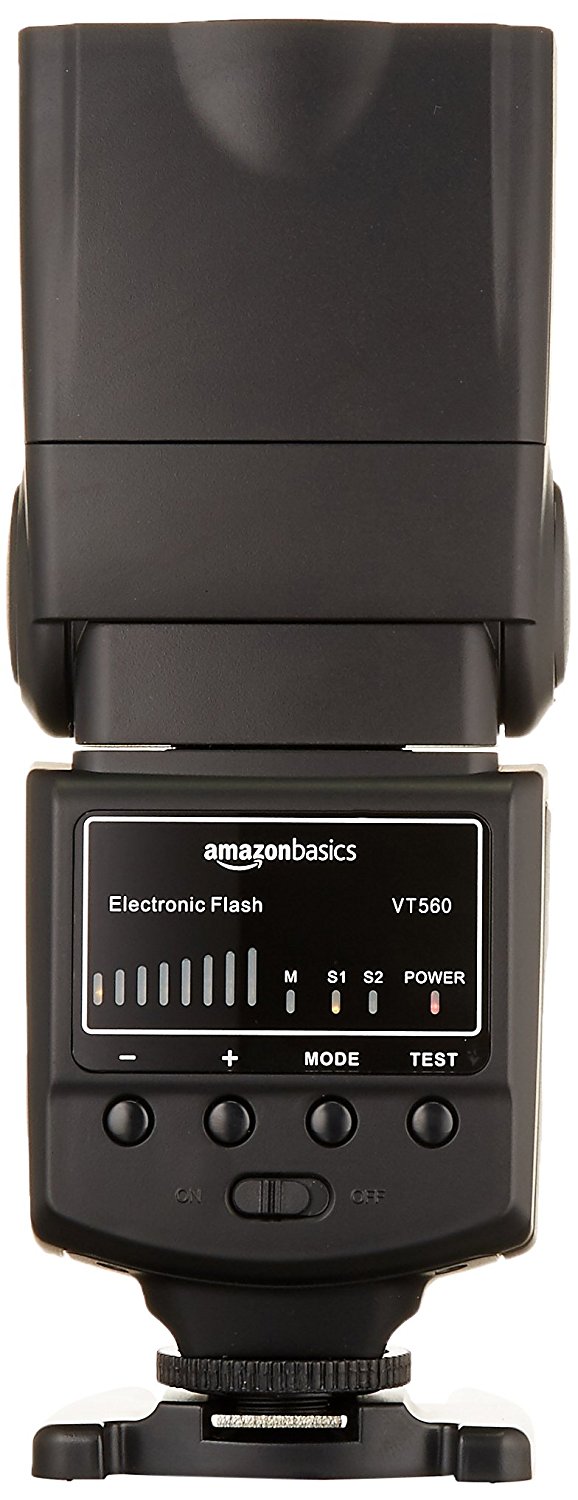
You can get an AmazonBasics Electronic Flash for Canon DSLRs for just $28

AmazonBasics Electronic Flash

AmazonBasics Electronic Flash at a glance:

  • External flash for taking professional-looking photos in low-light conditions; compatible with Canon and Nikon DSLR cameras
  • 3 flash modes for versatility: M, S1, S2 (Manual mode, Slave mode 1, and Slave mode 2)
  • Standard PC synchronous port (input) for off-camera connecting; wireless sensor for triggering flash from a distance
  • Tilts up to 90 degrees; rotates up to 270 degrees
  • 8 levels of flash-brightness control; automatic saving function retains current flash settings; hot shoe stand and carrying bag included

Well, this may appear to a lot of photographers on a budget. Amazon sells a very inexpensive flash for Canon and Nikon DSLRs under their AmazonBasics brand, the AmazonBasics Electronic Flash for DSLR Cameras, and it’s yours for just $27.99.

The AmazonBasics Electronic Flash has three modes, M, S1, and S2, respectively Manual, Slave mode 1, Slave mode 2. A standard PC synchronous port is also provided, so you can connect the flash off-camera using a cable.

Reviews are mostly positive with an average of 3.9/5. The AmazonBasics Electronic Flash for DSLR cameras appears to be a pretty good deal, as one reviewer puts it: “[…] no flash at this price point has those features. This is unbeatable for the money.

AmazonBasics Electronic Flash

[via PetaPixel]

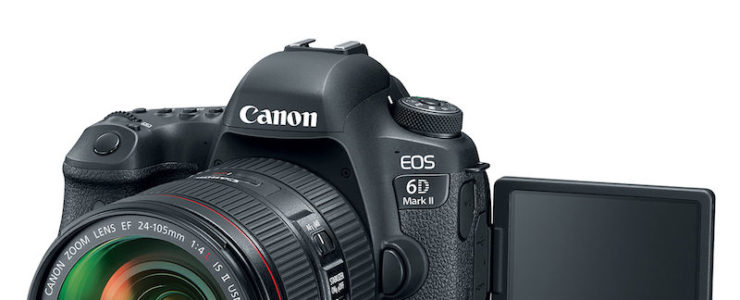
Canon EOS 6D Mark II review (DPReview)

Canon eos 6d mark ii deal

Canon EOS 6D Mark II is now available almost everywhere: [shopcountry 46185]

EOS 6D Mark II at a glance:

  • 26.2MP Full-Frame CMOS Sensor
  • DIGIC 7 Image Processor
  • 45-Point All-Cross Type AF System
  • Full HD Video at 60 fps; Electronic IS
  • 3.0″ Vari-Angle Touchscreen LCD
  • Dual Pixel CMOS AF and Movie Servo AF
  • Native ISO 40000, Expanded to ISO 102400
  • 6.5 fps Shooting; Time-Lapse & HDR Movie
  • Built-In GPS, Bluetooth, & Wi-Fi w/ NFC
  • Dust and Water Resistant; SD Card Slot

Photographic authority DPReview posted their Canon EOS 6D Mark II review.

Some excerpts from the conclusion:

[…] the EOS 6D Mark II is a classic Canon DSLR. Is it particularly exciting? No, but really, neither was the original 6D aside from its fairly accessible price point. What the 6D Mark II is, though, is a solid, well-built camera that is capable of producing great images while improving upon its predecessor in almost every measurable way.

[…] the 6D II excels at high ISO values. Once you get past ISO 1600, the 6D II handily pulls away from its crop-sensor cousins and is broadly competitive with market peers.

Comparison with other cameras:

For the same price, Nikon’s D750 offers nearly the same resolution, loads more dynamic range and a far more sophisticated autofocus system. Same goes for the Sony a7 II, though that camera is even cheaper. The Pentax K-1 is an incredible value and gives you even better build quality, unique and innovative features like Pixel Shift, and far more resolution. The only thing that makes the EOS 6D II stand out is Dual Pixel AF, which turns out is only of real value in this camera when shooting single shots of slow-moving subjects or HD video.

That’s why they didn’t give the EOS 6D Mark II the highest award but an 80% score. Sample pictures from the review are here. A closer look to the EOS 6D Mark II image quality is here.

Are you waiting for the Solar Eclipse? Canon Digital Learning Center has plenty of resources

The Canon Digital Learning Center silently provided a lot of resources for you, going from events and workshops to a rich set of articles (see the list below). Photojournalist Dave Henry and commercial/landscape photographer and Canon Explorer of Light Ken Sklute share articles and photos to help plan and photograph the eclipse event, which occurs on August 21, 2017.

It’s the first tome since almost 100 years that a total solar eclipse will traverse North America. Get ready for the big event by learning all there is to know. Click here to see what CDLC provided to get you ready for the solar eclipse.

  • Tracking the Eclipse
  • Planning Ahead for a Successful Solar Eclipse Shoot
  • Photographic Exposure of a Solar Eclipse
  • Spectacular Totality
  • Location Set-up
  • Choosing Lenses for Eclipse Photography
  • Choosing a Camera for Eclipse Photography
  • Multiple Camera Eclipse Coverage
  • Being Safe Using Solar Filters
  • Supporting Your Camera with a Tripod
  • Planning Multiple Exposure Sequences
  • Keeping It All In Focus

Then there is Google’s “Eclipse Megamovie” project (see here, and be sure to watch the 1min video on top).

Led by the University of California at Berkeley, scientists from multiple universities are turning to citizen scientists for help gathering images of the sun and its atmosphere, the corona. Volunteers armed with standard photography equipment—a camera, telephoto lens, and tripod—will capture photos of the eclipse as the moon’s shadow passes over their part of the country. Once this huge dataset is collected, it’s Google’s turn. We’ll use our technology to algorithmically align and process the images submitted by citizen scientists to create a continuous view of the eclipse: the Eclipse Megamovie.

In addition to the movie, the full dataset of images will be made available to the public and the scientific community. Time will only tell what insights and projects may come from this rich collection.

If you’ll be on the path of totality and plan on taking pictures, the project needs your help. Head to https://eclipsemega.movie/ to learn more about how to join and take the best eclipse photographs possible.