Canon Patent: 28-45mm f/1.2 and 35-70mm f/1.4 Zoom Lenses With Reflective-Transmissive Elements
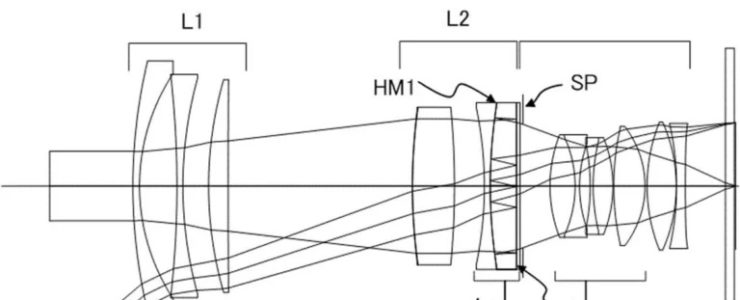
Canon just dropped a new patent, and it’s making us raise an eyebrow. Published February 27, 2026 (filed August 2024), the patent describes zoom lenses with apertures ranging from f/1.2 to f/1.4 — using reflective-transmissive (mirror) elements to keep things compact.

The Patent Details

The filing (P2026033938) covers several implementations:

  • Example 2: 28-45mm f/1.2 — backfocus 0.40mm
  • Example 3: 28.5-45mm f/1.4 — backfocus 0.40mm
  • Example 5: 35-70mm f/1.4 — backfocus 0.70mm

Example 2

  • Focal length: 28.00-45.00
  • F-number: 1.20
  • Half angle of view: 37.26-25.33
  • Image height: 21.30
  • Total length: 222.37-171.73
  • Back focus: 0.40

Example 3

  • Focal length: 28.50-45.00
  • F-number: 1.40
  • Half angle of view: 35.22-25.68
  • Image height: 20.12-21.64
  • Total length: 189.76-137.77
  • Back focus: 0.40

Example 4

  • Focal length: 15.40-36.01
  • F-number: 1.42
  • Half angle of view: 36.86-20.54
  • Image height: 11.54-13.49
  • Total length: 165.18
  • Back focus: 0.40

Example 5

  • Focal length: 35.70-68.00
  • F-number: 1.40
  • Half angle of view: 28.55-17.65
  • Image height: 19.42-21.64
  • Total length: 227.59
  • Back focus: 0.70

That’s… extremely short backfocus. Like, “we’re not talking about RF mount” short.

Wait, What?

For context, RF-mount lenses need a backfocus of around 20mm+ to clear the mirror. These numbers — 0.40mm and 0.70mm — are barely enough to clear a sensor. This suggests the optical design is intended for:

  • Compact cameras — where the lens sits directly on or very close to the sensor
  • Surveillance cameras — where catching every photon matters more than shallow DoF
  • Cinema sensors — some have extremely short flange distances

Not interchangeable lenses. Canon confirmed this in the filing notes: “backfocus is extremely short so this is not intended for interchangeable lens systems.”

But Here’s The Fun Part

Canon previously filed similar patents for prime lenses using the same reflective-transmissive technology — a 24mm f/0.7 and a 12mm f/1.0. Those were weird enough. Now they’re applying the same trick to zooms, going even wider and faster. A 28-45mm f/1.2 zoom would be absolutely enormous if built with conventional optics. The mirror elements fold the light path, dramatically shrinking total length.

Our Take

Is this coming to an RF-mount lens? Almost certainly not. The backfocus is physically incompatible.

Could this be a hint at future compact camera ambitions? Maybe. The G7 X line is due for a replacement, and a 28-45mm f/1.2 equivalent in a pocketable body would be something to see.

Or maybe Canon just likes filing patents for lenses they’ll never build. We’ve seen stranger things.

Source: Asobinet
How To Use A Canon EOS R As Webcam On A Mac Computer (and use it with Zoom)

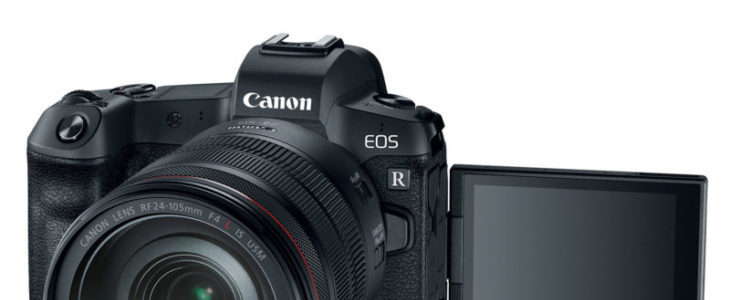
professional Canon EOS R mirrorless

Why use a Canon EOS R as a webcam? Canon recently released a pretty cool free software, Canon EOS Webcam Utility Beta. Unfortunately, for the time being it’s available only for Windows computer.

However, Marius Masalar published a short and easy to follow tutorial about how to use an EOS R as an external webcam on a Mac OS X system. Following Marius how-to you’ll be able to use your EOS R as a high-quality webcam, even in the latest versions of Zoom that has disabled virtual webcams.

You need only three things:

  1. A Canon EOS R, and an USB cable to connect it to your computer
  2. Camera Live: Download the latest version from GitHub
  3. CamTwist: Download it from their website

If you have these, then follow Marius Masalar’s easy instructions to set up your EOS R as a webcam on Mac OS X.

Thanks Marius!

Canon Patent Application for a 11-440mm f/2.1-4.1 Cinema Zoom lens

canon patent application

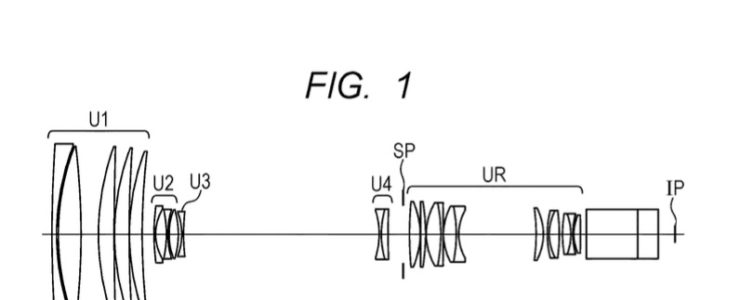
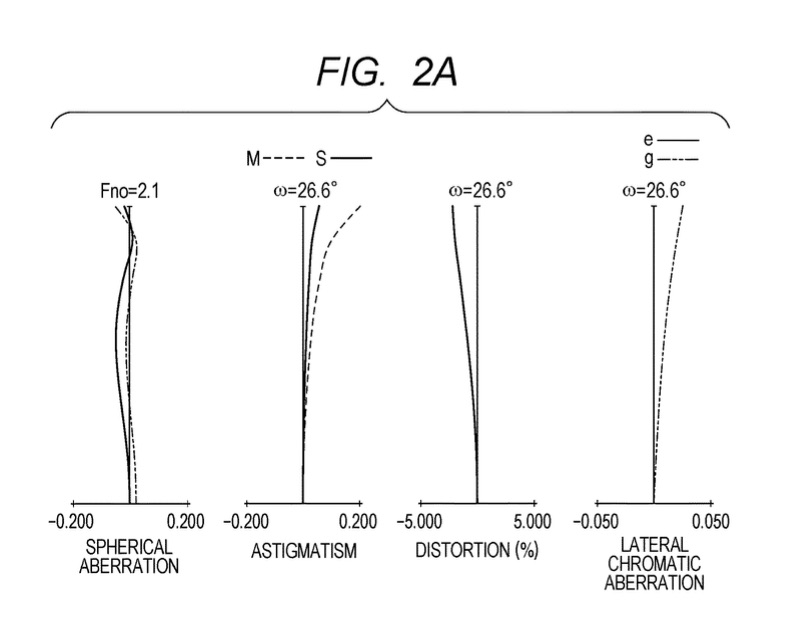
Canon patent application (US 20180143412) for what looks like a 11-440mm f/2.1-4.1 Cinema Zoom lens.

From the patent literature:

Conventionally, four-unit zoom lenses are often used as zoom lenses for television cameras because it is relatively easy to achieve a wide angle of view, a high zoom ratio, and size and weight reduction. Such a four-unit zoom lens includes, in order from the object side, a first lens unit having a positive refractive power that does not move for zooming, a second lens unit having a negative refractive power that moves during zooming, a third lens unit for correcting variation in the image plane caused by zooming, and a fourth lens unit having a positive refractive power for imaging.

In recent years, there have been proposed zoom lenses for television cameras including three, four, or more movable units as zooming units with functions as a variator and a compensator.

[…]

Thus, the present invention has an objective to provide a zoom lens including three or more movable units as its zooming units and simultaneously achieving a wide angle of view, a high zooming ratio, size and weight reduction, and particularly high performance in the focal length range from the wide-angle end to the zoom middle position. The present invention also aims to provide an image pickup apparatus having such a zoom lens.

To attain the above objective, a zoom lens according to the present invention includes, in order from an object side to an image side, a first lens unit having a positive refractive power that does not move for zooming, a second lens unit having a negative refractive power that moves during zooming, a third lens unit having a negative refractive power that moves during zooming, a fourth lens unit having a negative refractive power that moves during zooming, and a relay lens unit having a positive refractive power and being located closest to the image side that does not move for zooming. The second lens unit moves to the image side from a wide-angle end to a telephoto end. When a focal length fx determined based on a focal length fw of the zoom lens at the wide-angle end and a zoom ratio Z is fx=fw×Z0.38, the zoom lens satisfies 0.05<L2min/L2w<0.98, where L2min is a minimum distance between the second lens unit and the third lens unit in a zoom range from the wide-angle end to the focal length fx, and L2w is a distance between the second lens unit and the third lens unit at the wide-angle end.

Patent literature is a hard reading. If I got it wrong or if you have additional intel, please feel free to sound off in the comment section.

canon patent application