Here we have a classic example of rumor fabrication. A patent shows up, and they…
Canon Patent: Compact APS-C Wide Primes — 10mm, 12mm, 18mm & 28mm F2.8
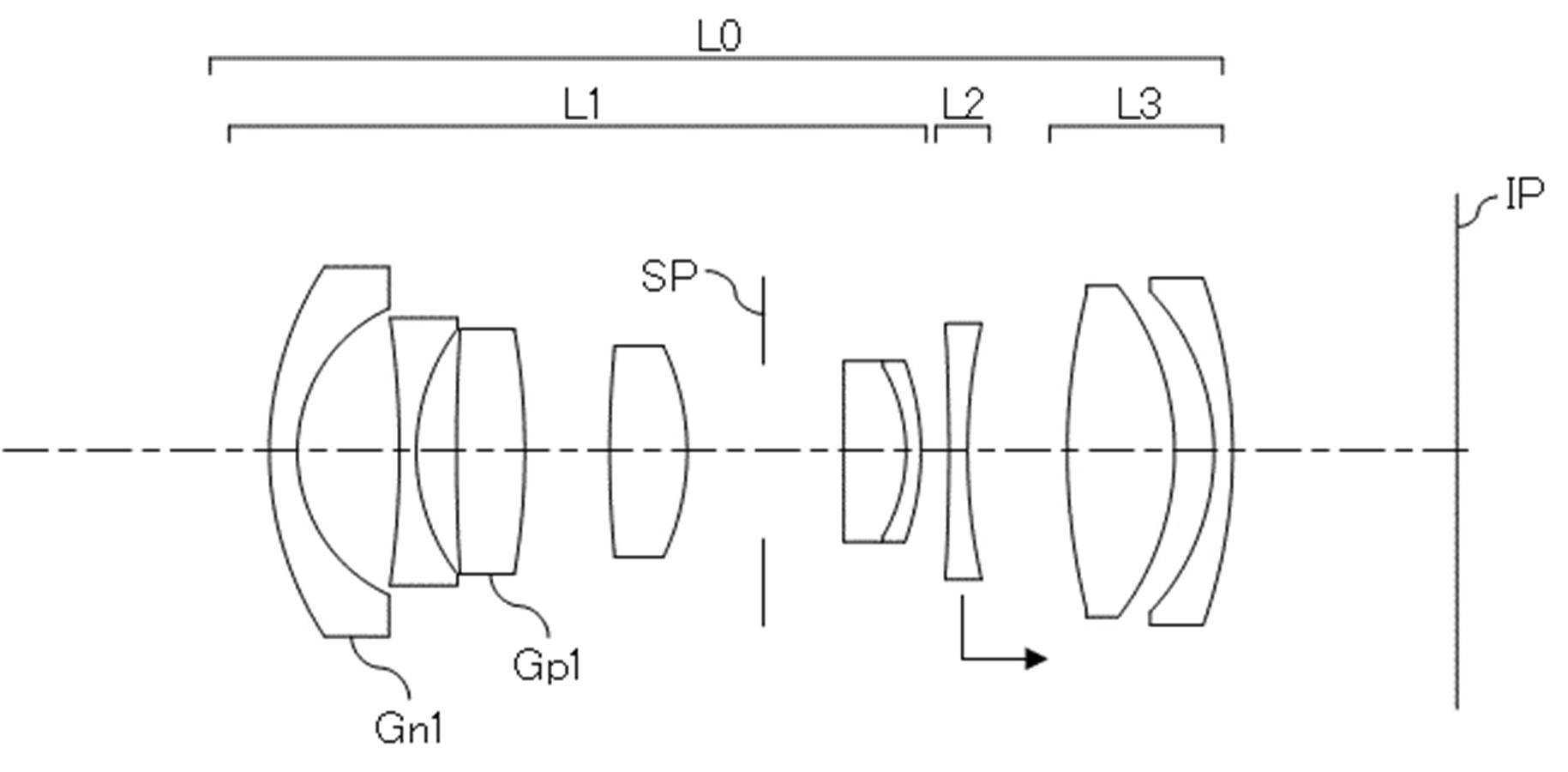
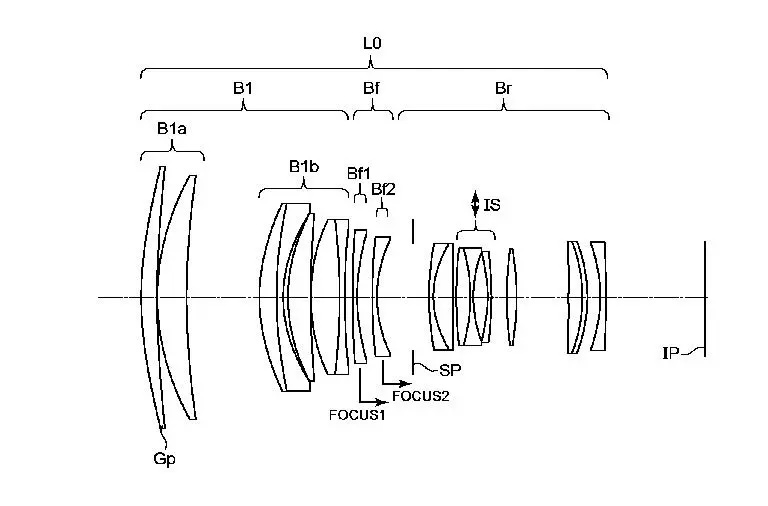
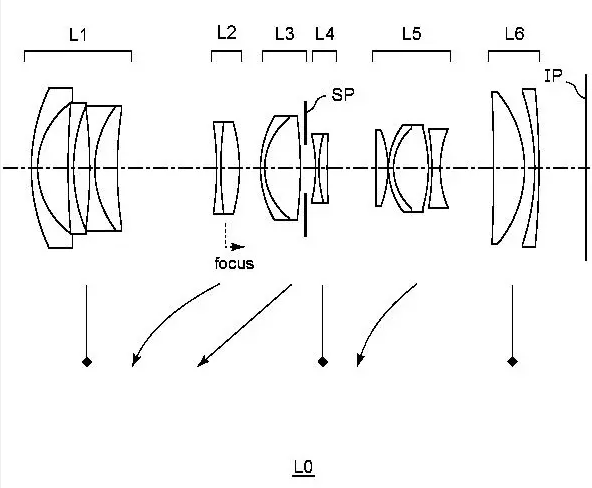
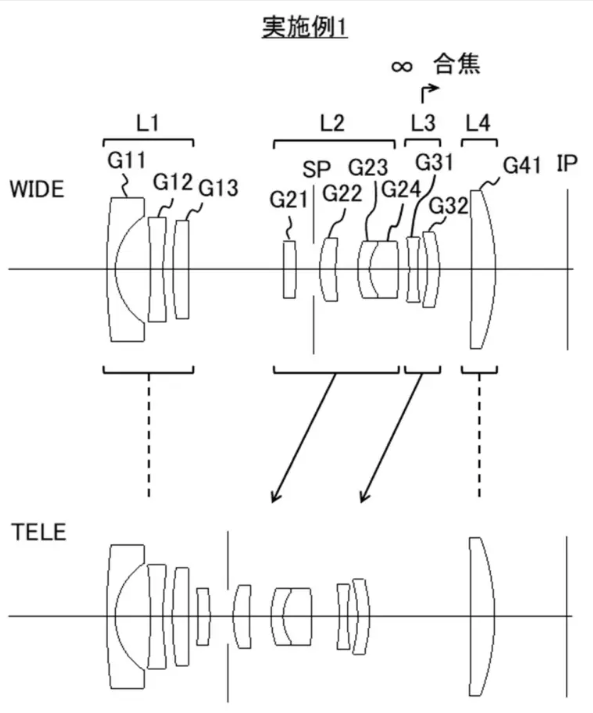
Canon has filed a patent application (publication number P2026052804, published March 25, 2026, filed September 12, 2024) covering optical systems that look suspiciously like a lineup of compact APS-C prime lenses. The patent — titled simply "Optical System and Imaging Device" — presents multiple embodiments clustered around an F/2.8 aperture class, covering focal lengths from 10mm to 28mm.
Here's what the optical data tells us:
Embodiment 1 — ~12mm F2.8
- Focal length: 12.38mm
- F-number: 2.83
- Half angle of view: 42.99°
- Image height: 11.54mm
- Total length: 63.50mm
- Back focus: 12.00mm
Embodiment 3 — ~28mm F2.8
- Focal length: 28.17mm
- F-number: 2.83
- Half angle of view: 24.14°
- Image height: 12.63mm
- Total length: 67.03mm
- Back focus: 15.32mm
Embodiment 4 — ~10mm F2.8
- Focal length: 10.02mm
- F-number: 2.83
- Half angle of view: 48.98°
- Image height: 11.52mm
- Total length: 65.00mm
- Back focus: 12.00mm
Embodiment 7 — ~14mm F2.8
- Focal length: 14.63mm
- F-number: 2.83
- Half angle of view: 39.45°
- Image height: 12.04mm
- Total length: 64.29mm
- Back focus: 16.54mm
Embodiment 8 — ~18mm F2.8
- Focal length: 18.13mm
- F-number: 2.83
- Half angle of view: 33.83°
- Image height: 12.15mm
- Total length: 70.71mm
- Back focus: 12.17mm
What's Canon Up To?
A few things stand out immediately. All embodiments share a tight F/2.83 aperture — clearly a unified F2.8 optical design philosophy across the series. The total lengths are remarkably compact: sub-70mm for everything from 10mm to 28mm is impressive. These aren't the kind of chunky pro primes Canon builds for RF full-frame.
The image heights are the interesting wrinkle. At 11–12mm image height, these designs fall short of what you'd normally expect for APS-C (which typically needs ~14mm image height). Asobinet's own analysis notes this discrepancy, suggesting Canon may be designing these with some built-in cropping in mind — trading a bit of the corner image circle to correct residual distortion in-camera. This isn't unusual; several existing Canon lenses do exactly this.
The back focus situation: With back focus values of 12–15mm across the lineup, these are clearly designed for a short flange-to-sensor distance mount. That points firmly at EF-M or RF-S / EOS R APS-C territory. Canon's EF-M system is effectively on life support at this point, so RF-S is the logical destination — meaning these could be affordable compact primes for the EOS R50 / R10 / R100 crowd.
Does This Mean Anything?
As always with Canon patents: file with healthy skepticism. Canon patents prolifically, and the vast majority never leave the lab. That said, this is a coherent, well-structured lineup — five focal lengths with unified aperture and compact dimensions — which suggests someone at Canon was seriously thinking about a kit of compact APS-C primes. Whether that becomes RF-S 10mm F2.8, 12mm F2.8, 18mm F2.8, and 28mm F2.8 lenses is another question entirely.
What Canon has shown with the RF-S line so far is a willingness to offer affordable, small lenses for their crop-sensor mirrorless bodies. A set of fast-ish primes in this style would fill a real gap in the RF-S lineup, which currently leans heavily on zooms. Fingers crossed this one actually makes it to production.
Source: Asobinet (Japanese) — Patent P2026052804
Related Posts