Canon patent application: wide-angle zoom lens for full-frame mirrorless camera

Canon patent

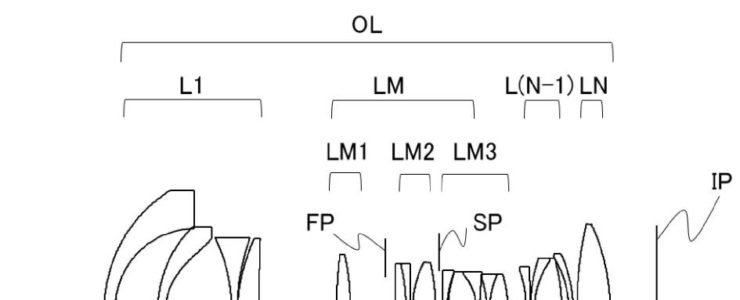
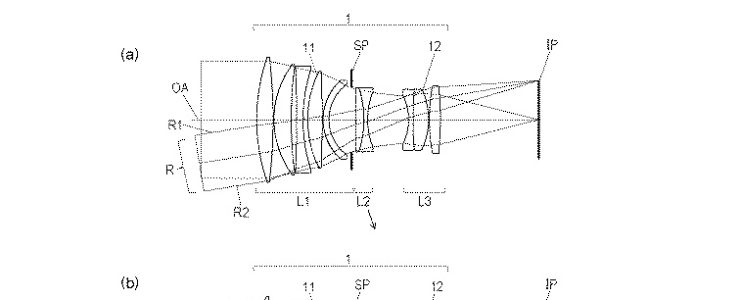
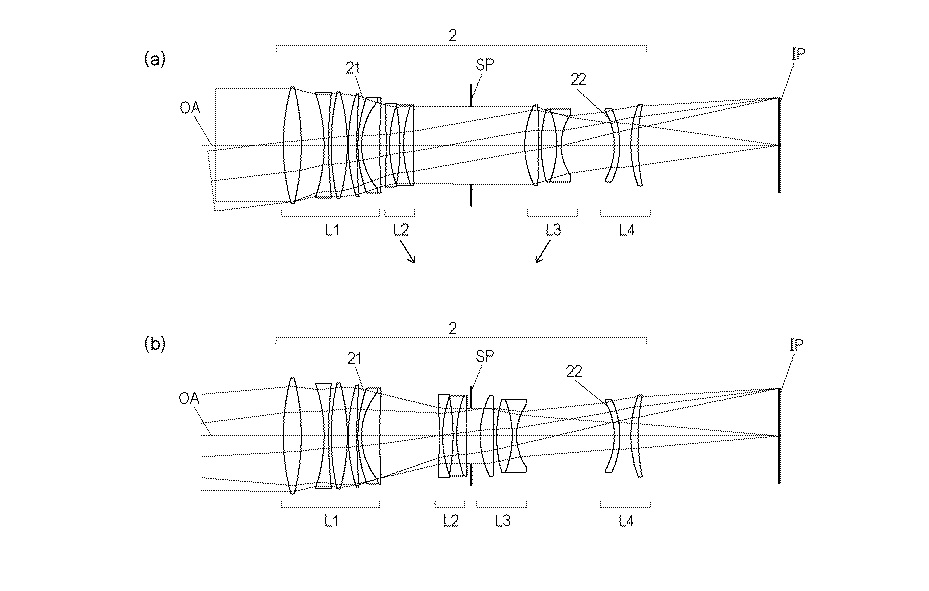
Canon patent application 2018-77320A describes a 16-28mm f/2.8, wide-angle zoon lens for a full frame mirrorless camera.

  • Zoom ratio: 1.67
  • Focal length: 16.48 – 27.44mm
  • F number: 2.88
  • Half angle: 52.70 – 38.25
  • Image height: 21.64mm
  • Back focus: 12.33 – 10.00mm

We expect Canon to announce their full frame mirrorless camera within the next 8 to 12 months. For the latest about it see here.

More Canon patent applications are listed here.

[via Hi Lows Note]

Future Canon Mirrorless Cameras may have a new kind of flip screen, patent application suggests

patent application

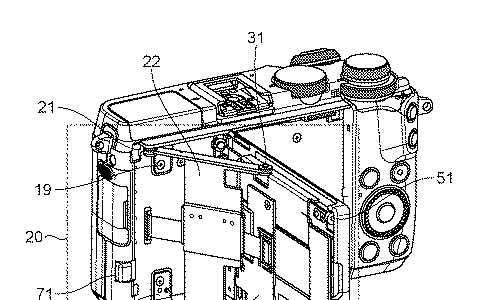
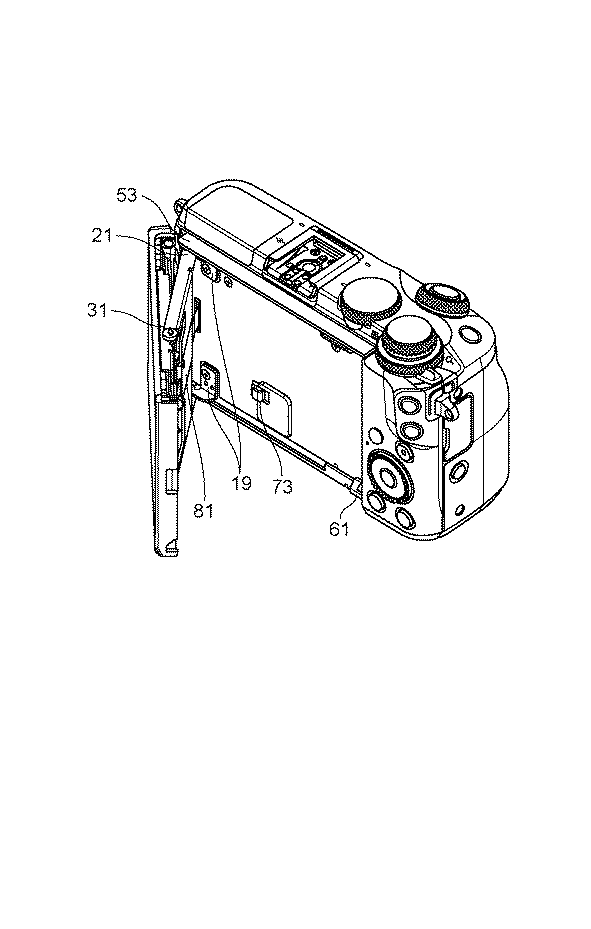
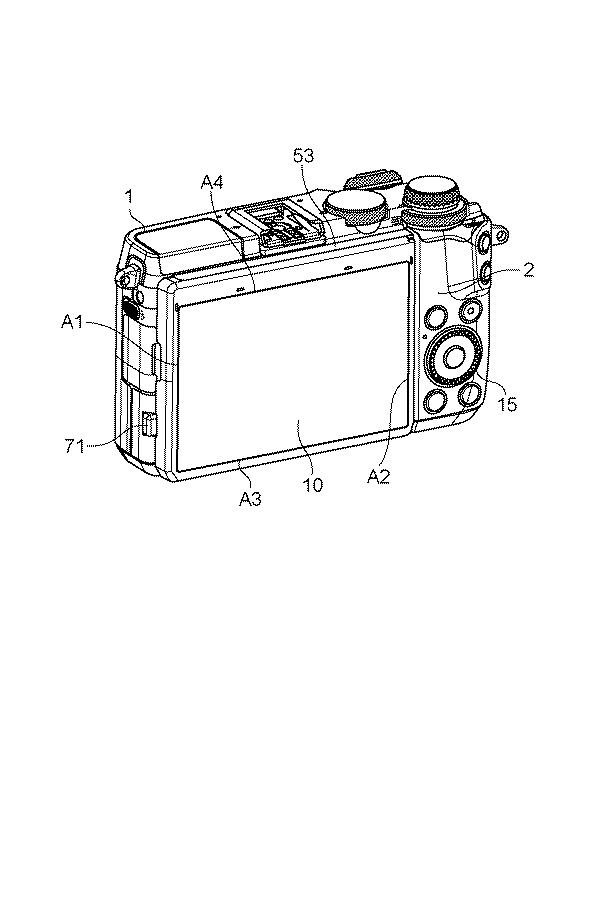
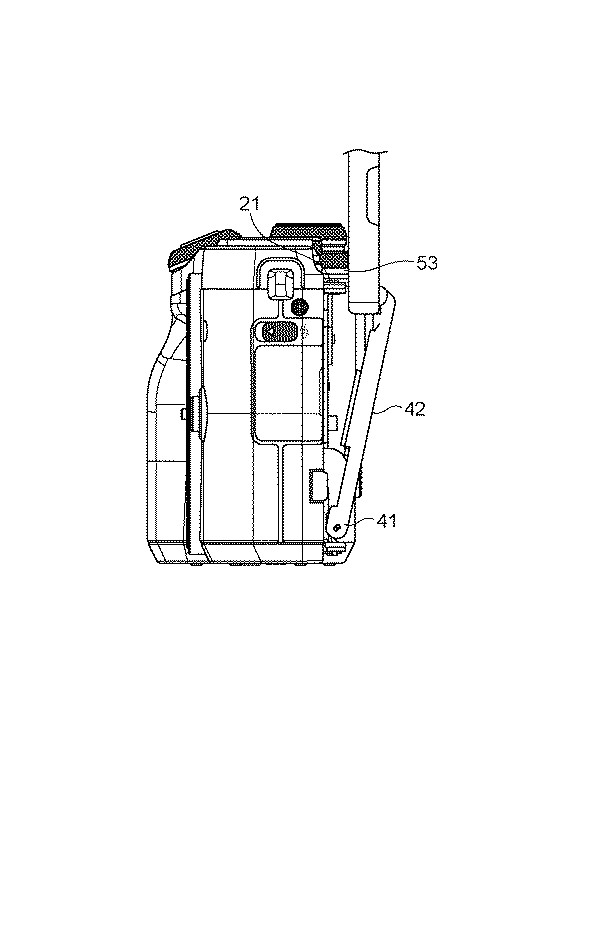
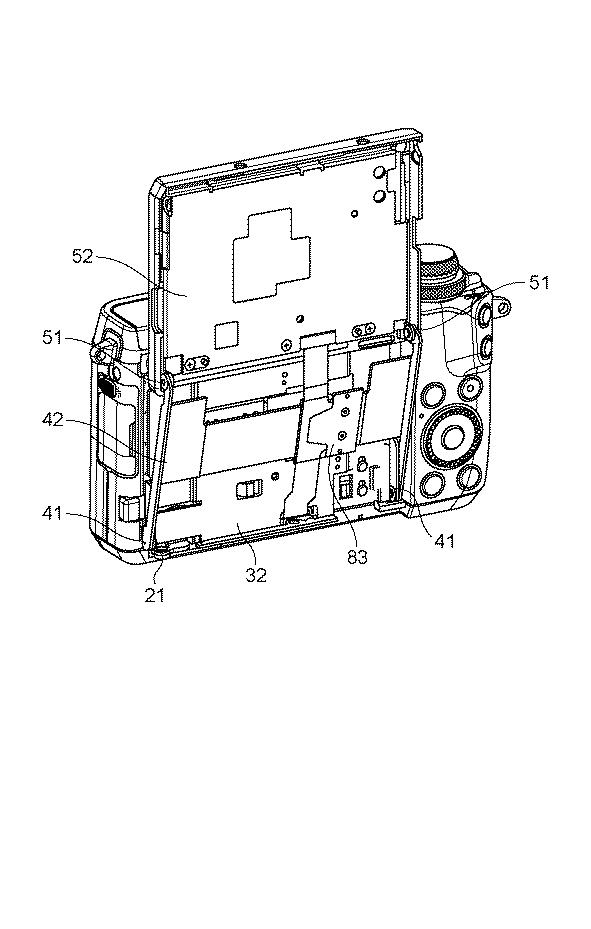
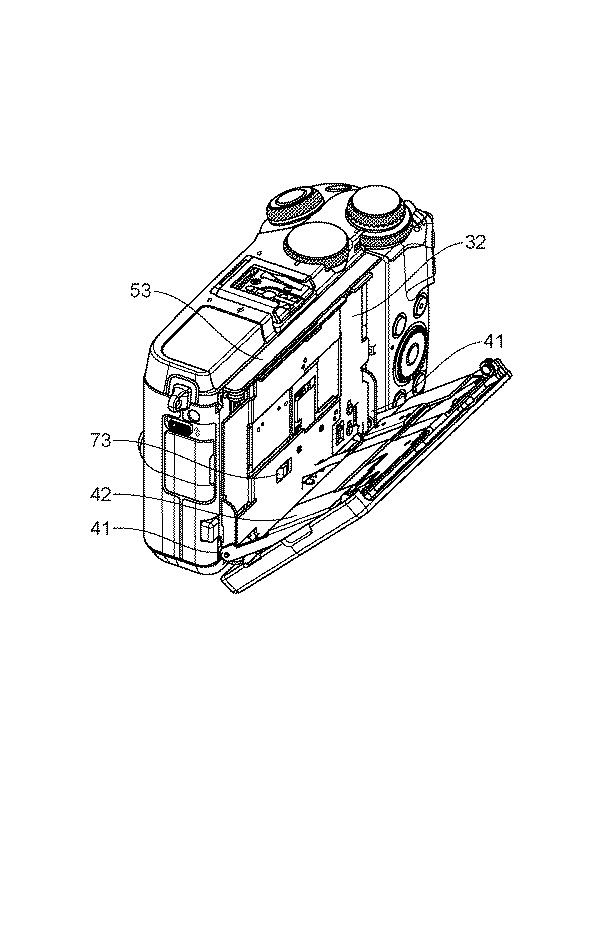
Japanese patent application 2018-54913 describes an articulating touchscreen that can rotate in various directions. Reducing the size of the mechanism seems to be one of the described claims.

Machine translated patent literature excerpt:

A display device having a display portion includes a first plate, a first shaft rotatably supporting the first plate, a second plate, a first plate provided on the first plate, A second shaft rotatably supporting the second plate rotatably in a direction substantially parallel to the first plate and the second plate, a third plate, a third plate provided on the second plate, and a third plate provided on the second plate and extending in a direction substantially perpendicular to the first axis and the second axis And a third shaft rotatably journalled, wherein the second shaft is provided at one end portion of the first plate and substantially at the center portion of the second plate, and the second plate is formed of a first And the second shaft is pivotally supported by the second shaft at a substantially central portion of the display portion in a direction substantially parallel to the third axis in a state where the plate, the second plate, and the third plate are overlapped with each other.

As you can already see from the images, the display can be articulated to the side (on a vertical axis) and from the bottom of the camera (horizontal axis).

Canon patent application for 18-185mm IS lens for APS-C PowerShot, 18-135mm IS for APS-C DSLR


Canon patent


Japanese site Hi Lows Note spotted two new Canon patent applications.

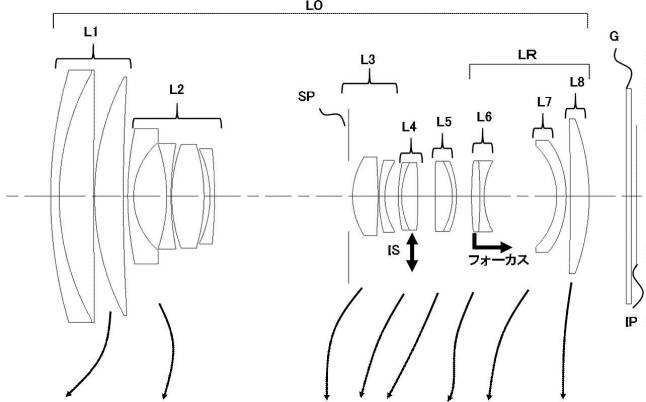
Patent application 2018-36364 describes a 18-185mm F/3.6-6.5 lens for compact cameras with an APS-C sensor, i.e. most likely a PowerShot compact camera (image on top). The lens appears to have image stabilisation.

  • Zoom ratio: 9.96
  • Focal length: 18.56 39.37 184.95
  • F no.: 3.61 5.11 6.49
  • Half image angle: 36.35 19.13 4.22
  • Image height: 13.66 13.66 13.66
  • Lens length: 110.65 121.29 164.53
  • Back focus: 8.65 10.60 12.43

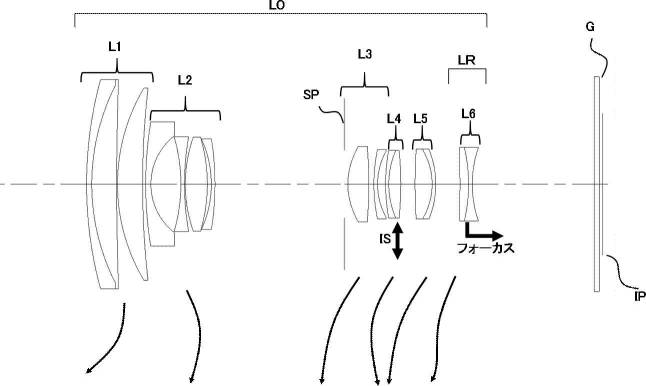
The same patent literature also describes a 18-135mm F/3.6-6.5 lens for APS-C DSLRs (image at bottom). This lens too appears to have image stabilisation.

  • Zoom ratio: 7.40
  • Focal length: 17.98 28.29 133.11
  • F no.: 3.60 4.15 6.49
  • Half image angle: 37.2 25.78 5.86
  • Image heigth: 13.66 13.66 13.66
  • Lens length: 99.01 100.39 147.68
  • Back focus: 24.78 28.43 62.75

canon patent

More Canon patent applications.

A patent application doesn’t mean the described technology will go into production soon. Some Canon patent applications which in our opinion might go into production:

Canon patent application for 15-105mm F/1.8-6.0 lens for APS-C cameras

canon patent

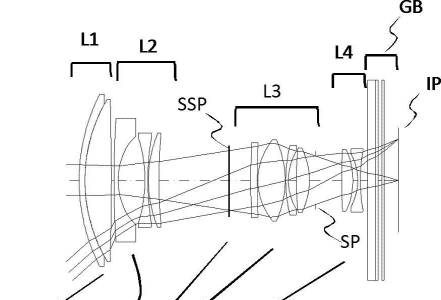
Canon patent application in Japan 2018-031935 describes a 15-105mm F/1.8-6.0 lens for APS-C cameras.

  • Zoom ratio: 6.75
  • Focal length: 15.21 52.83 102.65 mm
  • F no.: 1.85 4.20 6.00
  • Image angle: 36.19 14.50 7.58
  • Image height: 11.13 13.66 13.66 mm
  • Lens length: 83.84 101.55 121.52 mm
  • Back focus: 3.81 3.81 3.81 mm

May this patent refer to the EF-M mount? Can someone help understanding? All over the patent literature there are mentions about making this lens small, compact, “miniaturising a zoom lens” etc.

Excerpts from the patent literature:

In the present invention, it is related with a zoom lens in which small-diameter-izing of photographing length and a diameter of a body tube is possible.
Therefore, it is suitable to especially a digital camera.

[…] in order to realize a miniaturization, it is required to set up the refracting power of each lens group strongly.
While a zoom ratio exceeds 4x -, there are many zoom lenses of the positive lead type which a positive lens group precedes in a twice [ quantity ] as many zoom lens as this.

When such a zoom lens is miniaturized, each group refractive power arrangement needs to design, while the tendency which becomes strong is shown, refracting power is shared about the lens group composition and attention is further paid also for glass arrangement.

Well, a zoom lens going from 15-105mm, and with a starting f/1.8 sound cool. The f/6 at the telephoto end less. Lets hope this Canon patent will go to market for the EOS M.

[via Hi Lows Note]

Canon eventually working on In Body Image Stabilisation (IBIS), patent suggests

canon

Thanks Barry for the tip.

Is this Canon patent application describing a mirrorless system camera with an EVF and IBIS? We tend to believe it does.

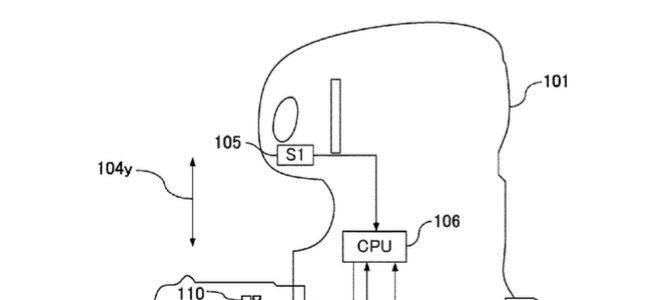
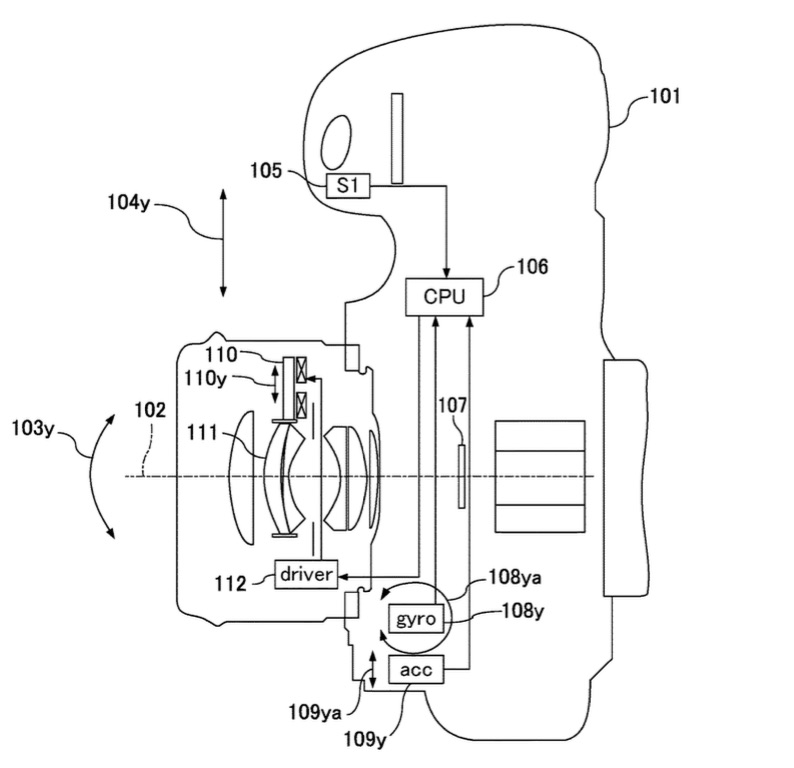
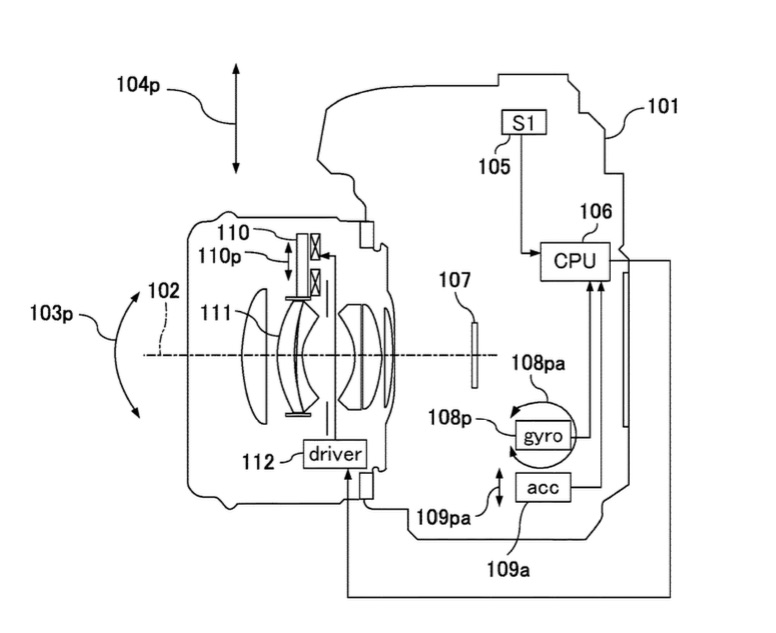
Canon patent application US20180041705 refers clearly to image stabilisation “in camera”. Moreover, as one reader noted, it looks like it will use a current Canon mount, since it doesn’t have the short flange a mirrorless must would have. Furthermore, there is no mirror in the images. It appears that an electronic viewfinder is placed where usually the pentaprism is located.

The patent application abstract says:

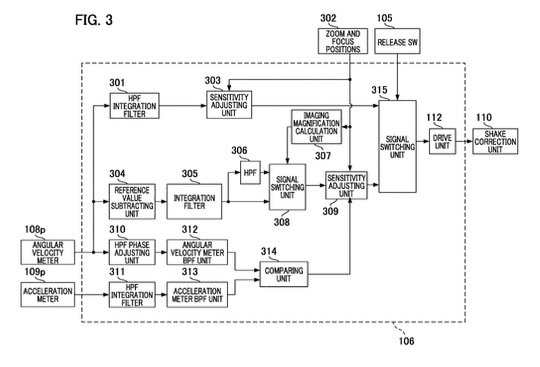
An image shake correcting apparatus in which a first calculating unit calculates a correction coefficient using information corresponding to an angular velocity from a first shake detecting unit and information corresponding to an acceleration output from a second shake detecting unit. A second calculating unit calculates a translational shake correction amount using the correction coefficient and the information corresponding to the angular velocity from the first shake detecting unit. A control unit controls (i) a shake correcting unit that corrects a translational shake according to a third calculating unit that calculates an imaging magnification of an imaging optical system, (ii) a filter selecting a frequency band in which the translational shake correction is performed, and (iii) the translational shake correction amount in the translational shake correction frequency range selected by the filter.

This part of the patent literature makes me think it’s In Body Image Stabilisation (IBIS) technology that’s described:

With respect to a camera incorporating an image shake correcting apparatus, in order to enable photography without image shake, angular shake of the camera due to hand movement, or the like, is detected, and an image shake correcting lens (hereafter “correcting lens”) is driven in accordance with detection values. In this process, it is necessary to accurately detect camera shake and to correct changes in the optical axis due to shaking. Image shake is suppressed by a vibration detecting unit (angular velocity meter, or the like) that obtains detection results, such as angular velocity, and a drive control unit that drives a correcting member (correcting lens, or the like) based on calculating processing results.

Incidentally, in the case of close range photography (an imaging condition of high imaging magnification), there is shake that cannot be detected by an angular velocity meter alone. This is so-called translational shake that is applied in a direction parallel to or vertical to the optical axis of the camera, and image degradation caused thereby cannot be ignored. For example, under conditions when imaging is performed by approaching to within 20 cm of the subject in macrophotography, or when the focal distance of the imaging optical system is extremely large (e.g., 400 mm) relative to a subject that is at a distance of 1 m from the camera, it is necessary to actively detect translational shake and to perform correction.

Any help with patents is always appreciated.