Canon working on weather sealed lens adapter, patent application suggests
canon patent

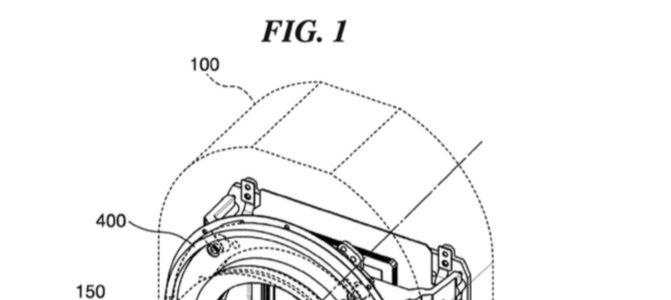
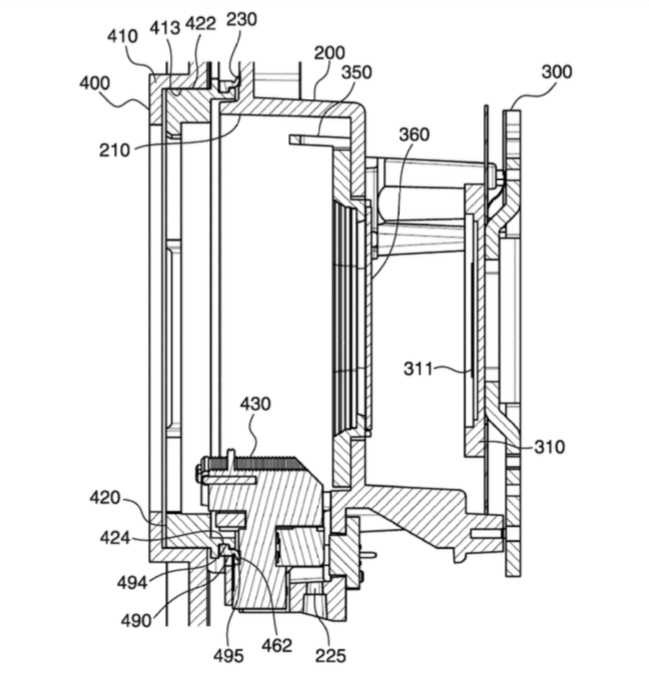
A few days ago we learned how well the EOS 5D Mark IV can cope with water. It’s just natural we found a Canon patent application for what appears to be a weather sealed lens adapter (EF/EF-S to EF-M, is my guess).

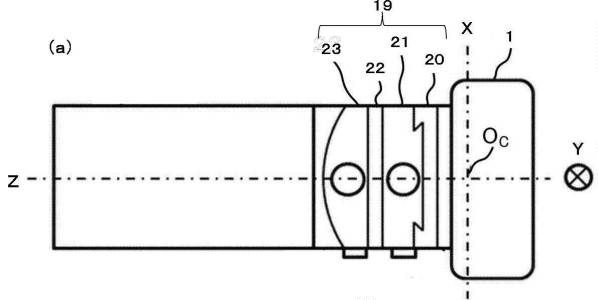
Canon patent application EP20170178735 describes a lens adapter which is protected against dust, water, whatever.

The present invention provides a technique that ensures reliability of an electric connection between a lens adapter and an apparatus body with a simple configuration even when a spacer is inserted between the lens adapter that has an electrical communication unit and the apparatus body of an image pickup apparatus. Moreover, the present invention provides a technique that ensures a dustproof performance between the lens adapter and the apparatus body of the mage pickup apparatus even when the lens adapter has the electrical communication unit.

According to the present invention, the reliability of the electric connection between the lens adapter and the apparatus body is ensured with the simple configuration even when the spacer is inserted between the lens adapter that has the electrical communication unit and the apparatus body of the image pickup apparatus. Moreover, according to the present invention, the dustproof performance between the lens adapter and the apparatus body of the mage pickup apparatus is ensured even when the lens adapter has the electrical communication unit.

I’d love to know what exactly this lens adapter is for. Is it the next iteration of the already existing EF/EF-S to EF-M adapter (), or has it something to do with Canon’s upcoming full frame mirrorless camera which is rumored since a while? Any help is welcome, patent literature is difficult to read.
canon patentPatent applications filed by a company do not necessarily mean the described technology will hit the market any time soon. Patents are a way companies have to protect their intellectual property and research. Some Canon patent applications that in our opinion might indeed go into production are these:

All Canon patent applications featured on Canon Watch.

Canon optical filters might get new and improved coating, patent application

optical filters

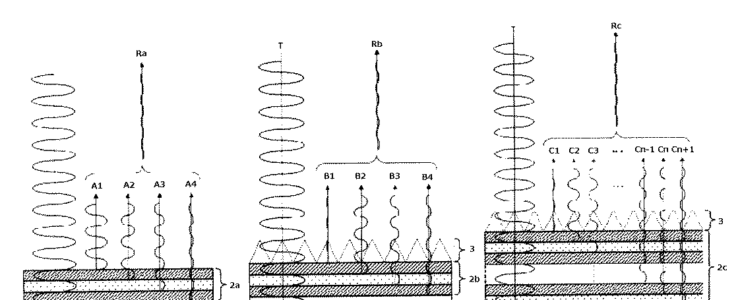
Canon patent application (in Japan) 2017-227774 describes methods and technology to reduce light reflection on optical filters.

Patent application abstract (machine translated):

To provide an optical filter, a light quantity adjusting device, and an optical device having an excellent light reflection preventing effect.
A fine structure provided on the multilayered film, wherein the microstructure is provided with a plurality of light emitting elements arranged in a matrix so that incident light from the outermost surface of the fine structure A microstructure surface having a fine uneven structure equal to or smaller than a wavelength of reflected light at an interface between the multilayer film and the microstructure, and a plurality of interfaces of the multilayer film and a plurality of interfaces of the multilayer film and the transparent substrate The relationship between the phase of the reflected light at one interface with respect to the incident light from the interface between the fine structure and the multilayer film and the phase of the reflected light at the other interface between the interface and the interface And a light reflection preventing structure having an anti-phase relationship in which they cancel each other out.

If I got it right, light reflection is reduced by applying a multilayered film with an extreme fine structure on the filter glass, a structure that’s “equal to or smaller than a wavelength of reflected light”.

Other interesting Canon patent applications that might go into production:

Japanese patent applications can not be linked. To learn more about this or other Japanese patent applications use this site and the number of the patent application (e.g. 2017-227774)

Future Canon tilt-shift lenses may have image stabilisation, patent application suggests

tilt-shift

Canon might experimenting with the idea to feature image-stabilisation on the company’s future tilt-shift lenses.

Canon patent application (in Japan) 2017-227697 describes the implementation of image-stabilisation technology in tilt-shift lenses.

A patent application filed by a company doesn’t necessarily mean the technology described in the patent application will hit the market any time soon. Patents are a way companies have to protect their intellectual property and research.

Some patent applications that in our opinion might indeed go into production are these:

Canon tilt-shift lenses on Amazon.

Canon patent for a new EF 24-105 f/4 lens

canon patent

Another Canon patent. An optical formula for a EF 24-105 f/4 lens has been filed by Canon.

The mere fact that Canon (or any other company) makes a patent application for an optical formula (aka lens) does not mean you will see this lens anytime soon. Patents are primarily a way for companies to secure their research. Very few of the many Canon patents you are seeing on the net will ever make it into production.

However, we spend a lot of time to search for patents that might go into production. I think the following patents have a fair chance to be implemented in upcoming Canon cameras:

The patent we are featuring today has a very little chance to go into production in my opinion. However, it’s Canon research so we will feature it. Also, note that there is no image stabilisation in this optical formula.

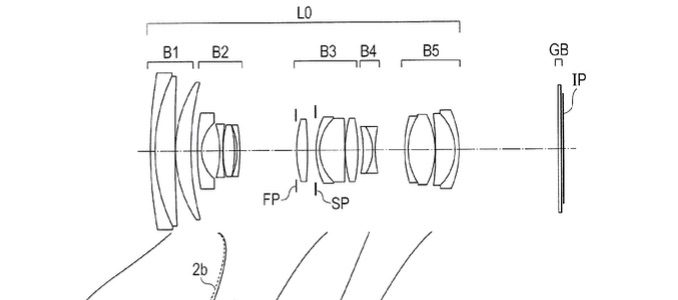
Canon patent US20170374291 describes the optical formula for an EF 24-105 f/4 lens, a classic and widespread focal range for full-frame cameras. Nothing really new. The patent may apply to a lens Canon already made.

The abstract:

Provided is a zoom lens, including, in order from an object side, a positive first lens unit, a negative second lens unit, a positive third lens unit, a negative fourth lens unit, and a positive fifth lens unit, in which an interval between each pair of adjacent lens units is changed during zooming, in which the second lens unit moves during focusing, and includes, in order from the object side to the image side, a negative lens, a negative lens, a positive lens, and a negative lens, and in which a focal length of the second lens unit, a thickness of the second lens unit on an optical axis, a refractive index of a material of the positive lens included in the second lens unit, and an average value of refractive indices of materials of the negative lenses included in the second lens unit are each appropriately set.

Again, a patent application does not mean that the described technology will go public soon. Patents are in first place a way for companies to secure their research. What they throw to the market is another story.

Canon patent to reduce moire artefacts in image data
canon patent

Here is another Canon patent application I think might go into production.

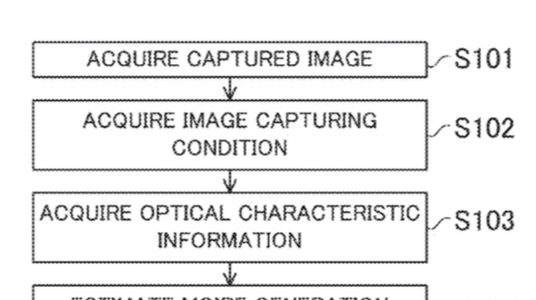
Canon patent application US20170358058 describes an algorithm to estimate and eventually correct moire artefacts in image data.

From the patent abstract:

An image processing apparatus includes an estimator which estimates a moire component included in an image based on optical characteristic information, a determiner which determines a correction amount based on the estimated moire component, and a corrector which corrects the image so as to reduce the moire component included in the image based on the correction amount.

Canon files a huge amounts of patent applications. That does not mean all the patents we spot will go into production. However, some patents actually have a chance to made it into production and I am trying to find them, like this patent to improve burst rate by compressing raw files, or this one describing an improved way to review photos from a sequential shot, or the patent that describes technology to improve wireless communication while reducing power consumption.

Canon patent to improve operability and reduce power consumption during wireless communication

canon patentSince a few weeks it seems anyone is flooding the web with patent applications filed by Canon, going from obscure to unintelligible (to me). Patents are a way companies have to put a protective seal on their research, independently from the fact if they plan or not to release their proprietary technology.
I’m trying to find patents that actually have a chance to made it into production, like this patent to improve burst rate by compressing raw files, or this one describing an improved way to review photos from a sequential shot.

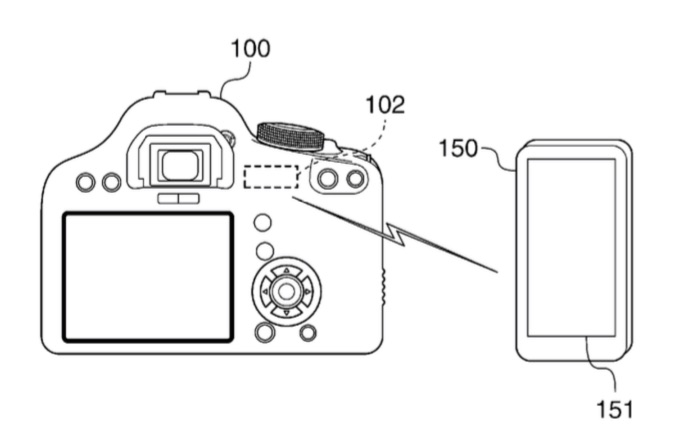
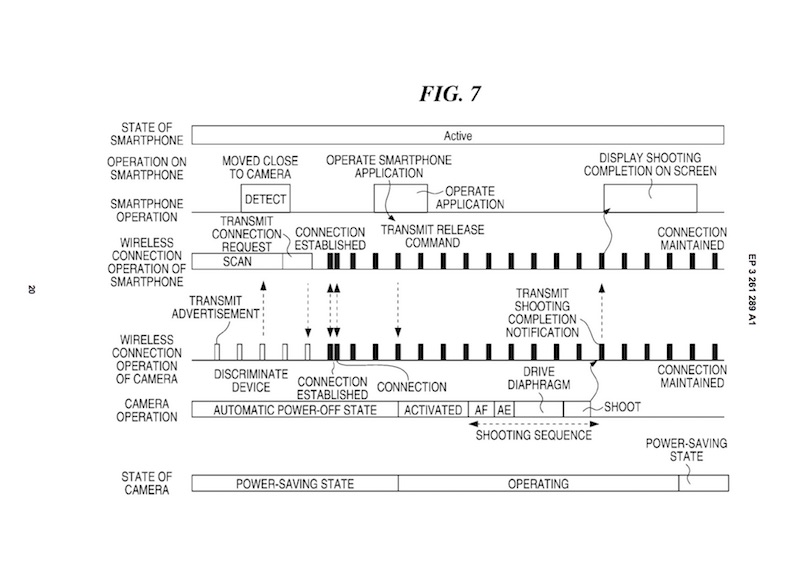
Similar immediate and real-world usefulness can be found also in Canon patent EP20170176556, which describes system and method to save power during a wireless communication, i.e. how to achieve both an improvement in operability and suppression of battery consumption. Something that surely matters to most photogs. It sure matters to me.

This is important, this is real world, and this may get soon on a camera (could be the EOS 7D Mark III).

The patent’s abstract:

A communication apparatus capable of achieving both of improvement in operability and suppression of battery consumption. A camera as the communication apparatus wirelessly communicates with one of a plurality of external devices including a remote controller and a smartphone. The state of the camera is switched between an operating state and a power-saving state in which power consumption is smaller than in the operating state. In the power-saving state, when a connection request is received from the remote controller as a device for non-continuous connection, a process for establishing a connection with the remote controller is started, and the camera is shifted to the operating state. In the power-saving state, when a connection request is received from the smartphone as a device for continuous connection, a process for establishing a connection with the smartphone is started, and the camera is not shifted to the operating state.

canon patent