Canon Participates in the University of Miami’s Coral Reef Restoration Project
Creation of the Canon Reef Reinforces Company’s Commitment to the Environment
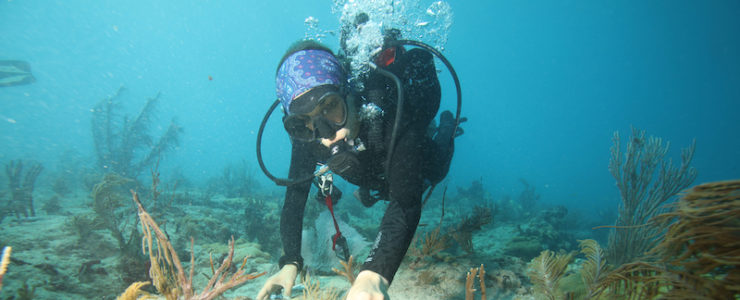
MELVILLE, NY, December 19, 2019 – Canon U.S.A., Inc., a leader in digital imaging solutions, and its wholly owned subsidiary, Canon Solutions America, Inc., announce Canon Solutions America’s participation in a Coral Reef Restoration Project, spearheaded by the University of Miami’s Rosenstiel School of Marine and Atmospheric Science. The environmental sustainability initiative launched on November 20 with university scientists, students, and Canon team members embarking on a collaborative expedition to plant the commemorative reef.
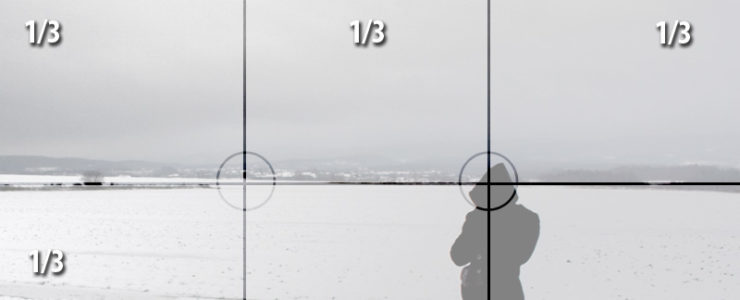
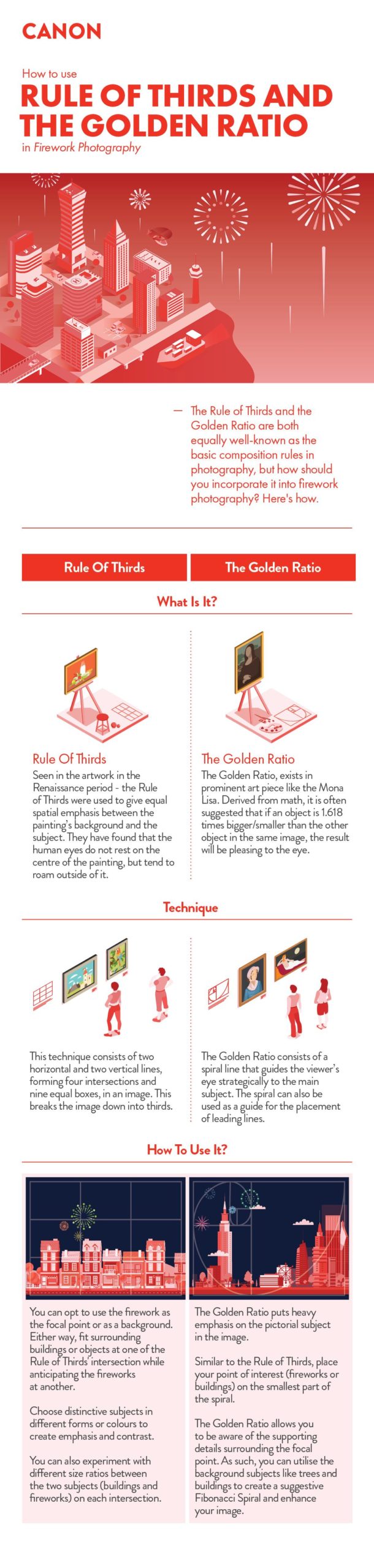
The rule of thirds is a “rule of thumb” or guideline which applies to the process of composing visual images such as designs, films, paintings, and photographs. The guideline proposes that an image should be imagined as divided into nine equal parts by two equally spaced horizontal lines and two equally spaced vertical lines, and that important compositional elements should be placed along these lines or their intersections. Proponents of the technique claim that aligning a subject with these points creates more tension, energy and interest in the composition than simply centering the subject.
Above: Instagram: Straight Talk for Photographers – by Sean Tucker
In this video I share some thoughts on how we can use Instagram as a tool to inspire us by curating our feeds, as well as thoughts on keeping our expectations for fame and fortune in check.
Below: The BEST way to IMPROVE YOUR PHOTOS by James Popsys
Improving your photography is hard, mainly because lots of other photographers give wildly varying advice, based only on their own preferences. I think by far the best way to take more photos YOU like, is to study others you’ve taken in the past that you’re proud of, and work out how to bring those learnings to your future images. That’s what I do with my photos in this video :)
Below: Improve your photography by UNDERSTANDING why a PHOTO is BAD (and GOOD) by Nigel Danson
It only really matters what you think of your photos. But do you know why a good photo is good and a bad photo is bad? Understanding this can massively help you improve your photography.
Canon doesn’t score very well in Chris and Jordan’s hit lists. They classify the Canon Rebel SL3 as “worst camera of 2019”. At least the EOS R ranks first in the category “most improved camera via firmware”.
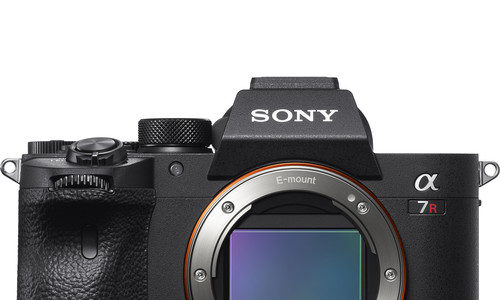
The Sony a7R IV is DPReview TV’s best camera of 2019, and the Panasonic S1H best hybrid camera of 2019. The Tamron 35mm f/1.4 is their best lens of 2019. And here is the video about best and worst gear of 2019:
Uh, does that mean something? According to data published by Map Camera there is no Canon camera among the top 10 cameras (new) sold in Japan in November 2019.
Map Camera posts sales figures for both new and used cameras.In the “new cameras” ranking the first Canon camera to rank, at position 12, is the EOS R. Other interesting fact: first and second ranked are both APS-C cameras.
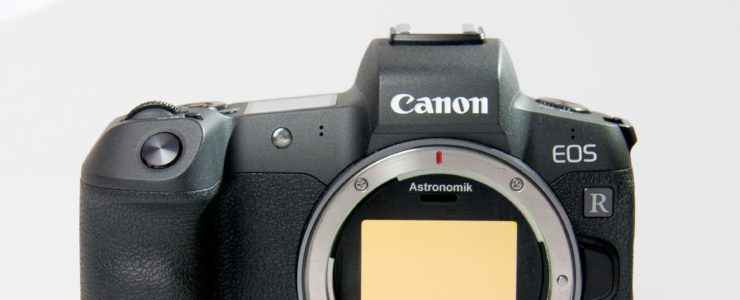
Astronomik (website) announced new clip filters for cameras in the EOS R lineup (EOS R, RP, and Ra).
Press release:
Astronomik presents Clip Filter for Canon EOS R, Ra and RP
We are proud to present our latest development to you today:
Astronomik Clip-Filter for the mirrorless full format cameras EOS R and RP
The new clip filters can be used with all lenses on the camera body without any modifications.The clip filters are optimized for use with normal camera lenses and telescopes.
All Astronomik filters are now also available as Clip filters EOS R!
The Astronomik CLS-CCD is our advice as an ideal “all-round filter”: The CLS-CCD largely suppresses artificial light pollution and enables deep, long-exposures even from locations with strong light pollution while giving your natural colors!
Beside the CLS-CCD the Astronomik emission line filters H-alpha, SII and OIII with 12nm and 6nm FWHM are available.The Astronomik ProPlanet 642 BP, 742 and 807 give the the infrared photographer a wide range of filters at his disposal. The UV+IR blockers L-1, L-2 and L-3 complete the family.
This website or its third-party tools use cookies, which are necessary to its functioning and required to achieve the purposes illustrated in the cookie policy. If you want to know more or withdraw your consent to all or some of the cookies, please refer to the cookie policy. By closing this banner you agree to the use of cookies.