Canon presents research paper for 4k2k Super 35mm Global Shutter CMOS Image Sensor
canoncmos

Canon presented a research paper at IEDM 2016 titled “A 1.8e- Temporal Noise Over 90dB Dynamic Range 4k2k Super 35mm Format Seamless Global Shutter CMOS Image Sensor with Multiple-Accumulation Shutter Technology” by K. Kawabata et al.

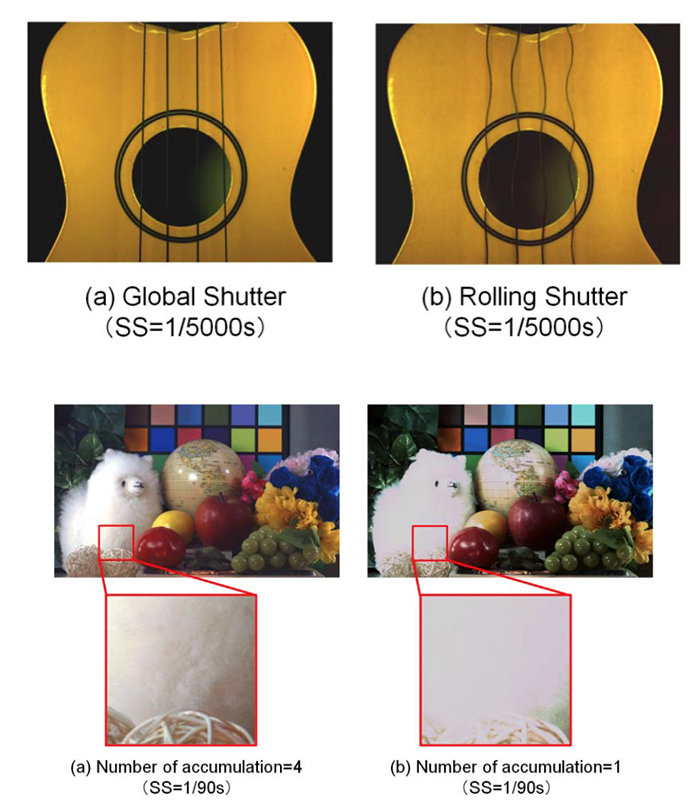
The image above shows a side by side comparison of Canon’s Super 35mm global shutter sensor a sensor with rolling shutter. Look at the Ukulele strings (more in the abstract below).

The IEDM press kit has a downloadable abstract.

Large-Format CMOS Imager with Global Shutter for High-Performance Cameras: Canon researchers will discuss high-resolution, large-format CMOS imaging technology for use in high-performance cameras large enough to take photographs and videos at ultra-high-definition resolution.

Most CMOS imagers use a rolling shutter, which captures an image at slightly different times at different areas of the imager. This can lead to image artifacts, especially for moving targets, because the image is taken while the subject is in different positions in the field. Imagers with global shutters capture light from each pixel in the imager at the same time, eliminating these artifacts. However, a global shutter usually leads to less dynamic range and higher noise and dark current, and thus to inferior photographs.

The Canon researchers developed a new architecture that enables the readouts of multiple pixels to be accumulated and stored in memory, and then processed all at once. This technique enabled the implementation of a global shutter while also delivering excellent noise and dark current performance and high dynamic range (92dB at a standard 30fps frame rate).

The images of a vibrating ukulele were taken at the same shutter speed (1/5000 sec.). In the global shutter mode (a) distortion is successfully suppressed, while (b) shows distortion from a rolling shutter. The bottom images show the difference between (a) quadruple charge accumulation with the global shutter and (b) single charge accumulation, both at a 1/90 sec. shutter speed.

(Paper #8.6, “A 1.8e- Temporal Noise Over 90dB Dynamic Range 4k2k Super 35mm Format Seamless Global Shutter CMOS Image Sensor with Multiple-Accumulation Shutter Technology,” K. Kawabata et al, Canon, Inc.)

At the end of August Canon made an announcement for a global shutter enabled sensor. Not sure if this research paper has to do with the global shutter sensor announced previously. My guess is, the paper refers to a new development, i.e. to another sensor that will have global shutter. Being a Super 35mm sensor, Canon EOS Cinema line-up is the most likely candidate for such a sensor. The EOS C700, announced back in September, comes in three variations, one having a global shutter Super 35mm sensor.

[via Image Sensors World]

 

Zombies are the reason Sigma continues to make cameras, CEO Kazuto Yamaki says

sigmaIn an interview at Photokina 2016 by the folks of Lensvid, Sigma CEO Kazuto Yamaki gave a weird reason about why the company is still making cameras.
Mr. Kazuto Yamaki lists three reasons Sigma continues to manufacture cameras, and that’s where the zombies come in:

  1. It’s important for a company specialized in lenses to produce also cameras. The know-how coming from camera production helps to design and build better lenses
  2. Designing cameras is a true passion of Sigma’s engineers
  3. Michihiro Yamaki, Kazuto’s father and the founder of Sigma, always dreamed about making cameras. If Sigma would stop doing it, Michihiro Yamaki might come back as zombie and try to kill his son.

The interview in the video below lasts 15 minutes and is definitely worth your time.

[via heise.de]

Tamron SP 150-600mm F5-6.3 G2 sample image gallery

Tamron SP 150-600mm

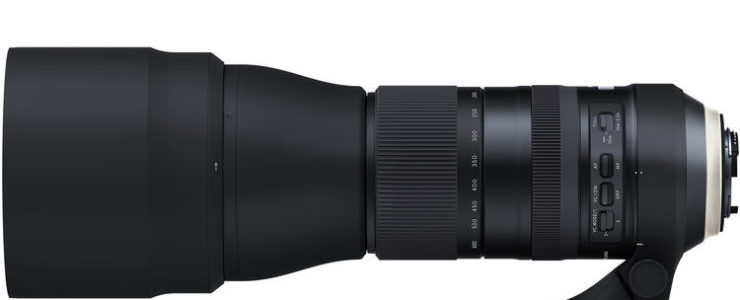
DPReview posted a set of real world sample photos shot with the new Tamron SP 150-600mm F5-6.3 G2 lens. Click here to see the pictures.

Sigma product advisory for lenses used on Canon EOS 5D Mark IV

sigma

Sigma released a product advisory concerning Sigma lenses for EOS system when used on the new Canon [shoplink 40051]EOS 5D Mark IV[/shoplink].

Sigma advisory:

ADVISORY 2016.09.23

Dear Canon EOS 5D Mark Ⅳ Users

Thank you for purchasing and using our products.

Please find the following notes on the usage of SIGMA interchangeable lenses for EOS, when attached to Canon EOS 5D Mark IV that is released on September 8th.

  • MO (Manual Override) function is unavailable with this camera (Full-time Manual function can be offered).
  • When using a SIGMA interchangeable lens for EOS, setting the corrections to [Disable] is recommended, as “Lens Correction” functions of the camera, such as Peripheral illumination correction, Chromatic aberration correction, Diffraction correction and Distortion correction are not supported.** If those functions are activated, the performance of lenses may not be accurate.
    * This is not only for EOS 5D Mark IV, but also for other camera bodies with the same function.

We appreciate your continued support for our company and products

Canon makes non-profit CDP’s ‘Climate A-List’ for first time

canon rumors

Canon press release:

TOKYO, October 25, 2016—Canon’s initiatives to tackle climate change have been recognized by the international non-profit organization CDP,1 based in the United Kingdom, earning the Company its first inclusion on the Climate A List.

Since 2003, the CDP has evaluated major companies worldwide on their efforts to tackle climate change. The evaluations are based on information disclosed in response to questions sent to the companies2 regarding business risks and opportunities associated with greenhouse gas emissions and climate change. In 2016, approximately 6,000 businesses were assessed, of which 500 were Japanese. The evaluation ranks companies on a scale from A to F, with A being the highest, and Canon was declared one of the 193 companies in the world to make the A List.

Click here to open the rest of the article