New Canon Firmware For EOS R6, EOS R7, EOS R10 And EOS-1D X III
canon eos r7 review canon firmware updates

New Canon firmware for four cameras has been released. I found it on Canon Japan’s site and hence I am linking it because it’s not available yet on the Canon USA or EU sites (will be later on).

Download EOS-1D X Mark III Firmware Version 1.7.0 from Canon Japan:

  • [Save/load communication settings to card] has been added to the menu. Network settings can now be inherited between cameras of the same model.
  • You can now trim and resize images while transferring them to the FTP server.
  • Fixed minor bugs.

Download EOS R6 Firmware Version 1.8.0 from Canon Japan:

  • You can now trim and resize images while transferring them to the FTP server.
  • Fixed minor bugs.

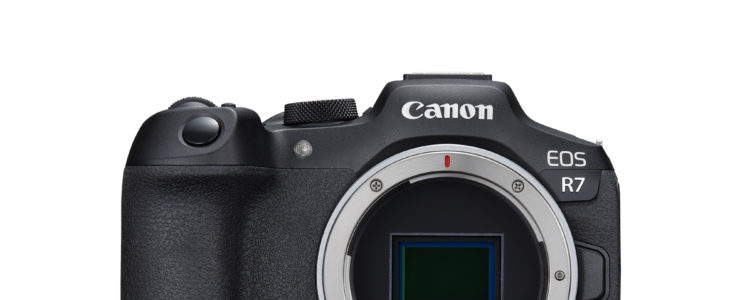
Download EOS R7 Firmware Version 1.3.0 from Canon Japan:

  • Compatible with Speedlite EL-5. *Not compatible with the auto-dimming function of the AF auxiliary light.
  • Supports RF-S55-210mm F5-7.1 IS STM.
  • Fixed minor bugs.

Download EOS R10 Firmware Version 1.3.0 form Canon Japan:

  • Compatible with Speedlite EL-5. *Not compatible with the auto-dimming function of the AF auxiliary light.
  • Supports RF-S55-210mm F5-7.1 IS STM.
  • Fixed minor bugs.

Canon Presents Its Own AI-based Image Processing Technology

canon

I guess it was just matter of time before Canon would also release or at least announce some photo editing tool based on artificial intelligence.

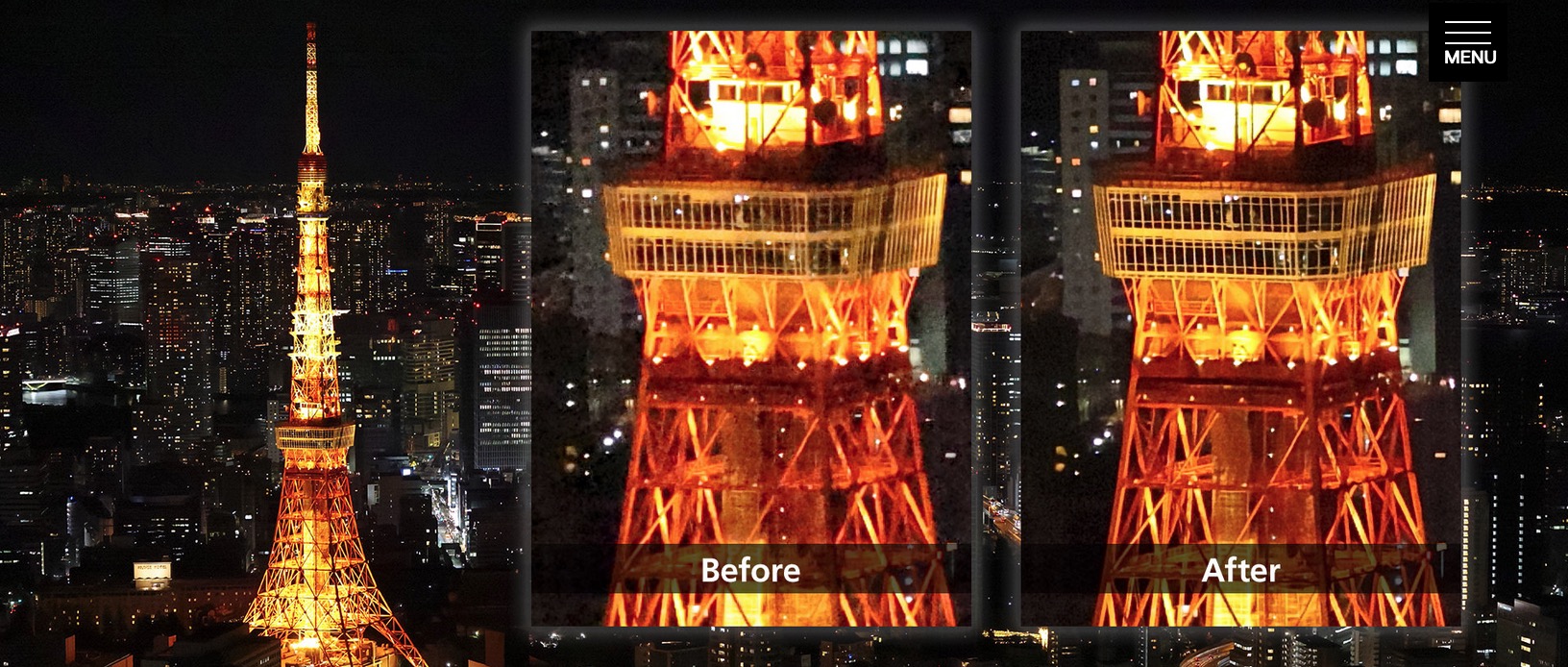
Canon presents a deep-learning neural network for image processing. Canon’s motivation (machine translated):

[there might be] unavoidable problems with the image quality of the photos. For example, noise that makes a photo look grainy, moiré that makes a moire pattern that should not exist, and blurring of an image caused by the principle of a lens. There were times when information was reflected. When a wide-angle lens is used, the image quality in the peripheral areas off the center of the lens tends to be blurred due to the deterioration of the optical performance of the lens.

As AI technology advances and deep learning technology is being applied in a variety of ways, Canon, as a leading company with extensive knowledge of cameras and lenses, is committed to the inevitability of the principle of photography. In order to solve this problem, he directly tackled the development of deep learning image processing technology himself.

So, how does Canon’s AI technology work?

Canon’s deep-learning image processing technology, aimed at achieving true-to-life photography, covers three areas: noise reduction, color interpolation, and aberration diffraction correction (lens blur correction). Both areas have so far been regarded as problems in principle.

In the first place, the key to achieving high accuracy in the results of deep learning image processing technology is how many pairs of “teacher images” and “student images” (=learning data) can be prepared. Canon has a huge image database that has been accumulated through the development of cameras and lenses so far, covering all imaginable subjects, and storing RAW data with more detailed information such as JPEG. increase. In addition, we were able to collect a large amount of ideal training data using the camera manufacturer’s unique know-how, which is well-versed in how camera settings affect image quality.

Curious? Then have a look here (it’s machine translated but well understandable).

Cosina Will Soon Announce A Nokton 50mm f/1 For The RF Mount

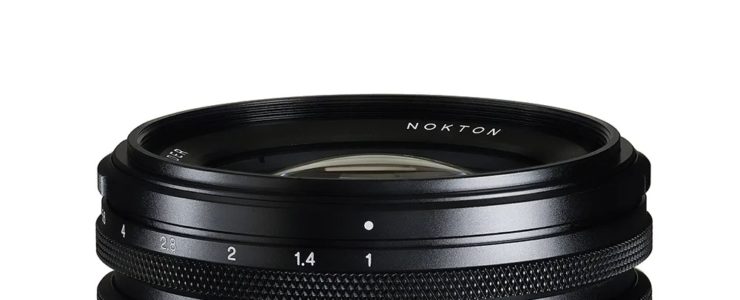
NOKTON 50mm f/1

Good news for those looking to an ultra-fast prime lens for the EOS R camera system. A NOKTON 50mm f/1 aspherical lens is coming.

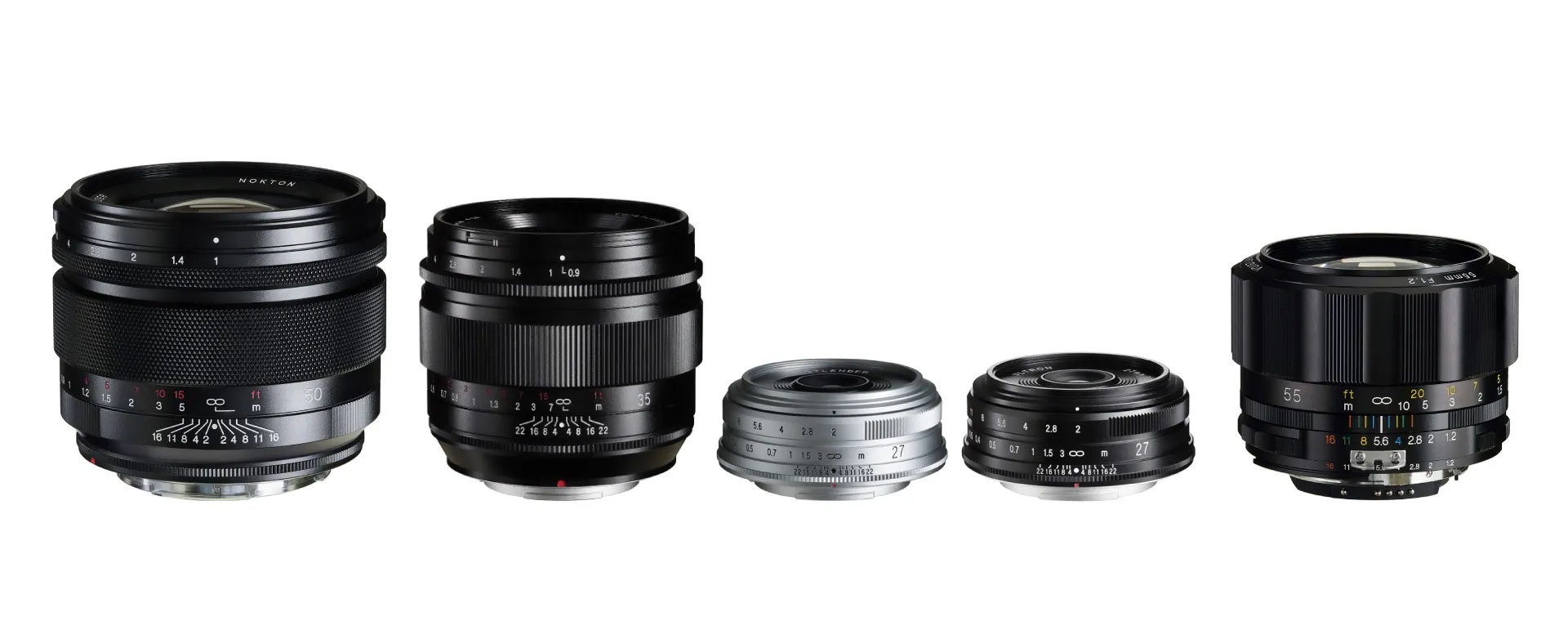
Cosina will soon release a NOKTON RF 50mm f/1 aspherical lens, along with other new prime lenses. Indeed, we expect 5 new lenses, these:

  • NOKTON 50mm F1 Aspherical RF-mount
  • NOKTON 35mm F0.9 Aspherical X-mount
  • NOKTON 55mm F1.2 SLIIs
  • ULTRON 27mm F2 X-mount Black
  • ULTRON 27mm F2 X-mount Silver

Here are the specifications for the NOKTON 50mm f/1 (thanks Mistral75):

Focal length50mm
Maximum aperture1:1
Minimum apertureF16
Lens configuration7 groups 9 elements
Angle of view48.0°
Number of diaphragm blades12
Shortest shooting distance0.45m
Maximum shooting magnification1:6.9
Maximum diameter x total lengthΦ79.3×64.0mm
Filter sizeΦ67mm
Weight650g
Lens hoodDedicated screw-in hood included
Aperture ringEquipped (manual aperture)
Electronic contactsAvailable
Exif informationCorrespondence
OtherSelective Aperture Control System

No specifications so far. All we know for the time being is that the new Cosina lenses will have electrical contacts to communicate with the camera. Moreover, a mechanical system is used for aperture interlocking, and an aperture switching mechanism for moving images is also present.

All upcoming Cosina lenses pictured below, click to enlarge.

[via Digicame-Info]

This Camera Has Been Reduced To The Size Of A Salt Grain

camera

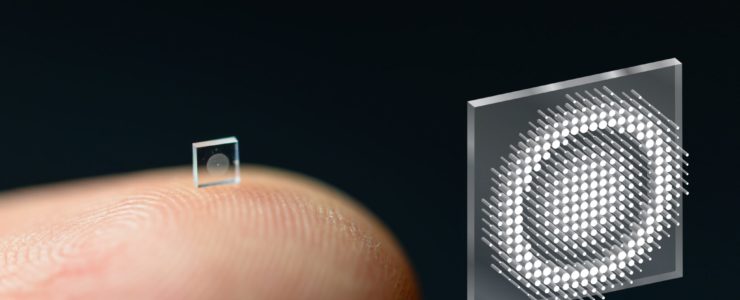
Researchers at Princeton University and the University of Washington have presented a camera with the size of a salt grain.

The researchers…

[…] have overcome these obstacles with an ultracompact camera the size of a coarse grain of salt. The new system can produce crisp, full-color images on par with a conventional compound camera lens 500,000 times larger in volume, the researchers reported in a paper published Nov. 29 in Nature Communications.

Enabled by a joint design of the camera’s hardware and computational processing, the system could enable minimally invasive endoscopy with medical robots to diagnose and treat diseases, and improve imaging for other robots with size and weight constraints. Arrays of thousands of such cameras could be used for full-scene sensing, turning surfaces into cameras.

A key innovation in the camera’s creation was the integrated design of the optical surface and the signal processing algorithms that produce the image. This boosted the camera’s performance in natural light conditions, in contrast to previous metasurface cameras that required the pure laser light of a laboratory or other ideal conditions to produce high-quality images, said Felix Heide, the study’s senior author and an assistant professor of computer science at Princeton.

Read more about the camera reduced to the size of a salt grain here.

Canon Already Notifies About Supply Shortage For EOS R8 (and more stuff)

canon eos r8 review

In what seems to be a regular appointment after every recent gear announcement, Canon let’s know that there are supply shortages for the Canon EOS R8. Check all Canon EOS R8 coverage here.

From Canon Japan:

Apology and information regarding product supply status

Updated: February 10, 2023

Thank you for your continued patronage of Canon products.

Currently, we have received more orders than expected for the following products, and due to the global supply of parts, delivery delays are occurring. We apologize for the inconvenience caused to our customers and business partners.
We apologize again for making our customers wait so long. We will continue to take measures for stable product supply so that we can deliver products as soon as possible. Thank you kindly look forward for your understanding.

Record

product nameAbout supply
EOS R6 Mark II
Canon EOS R7
Canon EOS R8
RF135mm F1.8L IS USM
RF400mm F2.8L IS USM
RF800mm F5.6L IS USM
Speedlite EL-5
We are planning to ship in order, but it may take longer than usual to deliver.

All new Canon gear is already available for preorder at B&H Photo and Adorama.

Canon EOS R8 world-wide preorder: [shoplist 70746]

Canon Ends “Kiss” Camera Lineup In Japan (and “Rebel” lineup too?)

canon

After almost 30 years, Canon is killing the popular “Kiss” camera lineup in Japan (and Asia).

The news comes from ITMedia News, and is nicely summed up by Digicame-Info:

  • On February 8, Canon announced the APS-C mirrorless “EOS R50” that inherited the concept of the company’s entry-level single-lens camera “EOS Kiss” series.
  • The R50 is a model that aims to improve image quality with the EOS R system while inheriting the concept of the company’s “EOS Kiss” series, “simple, clean, compact”. However, it does not bear the name of Kiss, and is not a direct successor to the current model “EOS Kiss M2” of the same brand. Nonetheless, while covering the entry level targeted by Kiss, it will be developed as a model that conveys the appeal of mirrorless cameras more widely.
  • The Kiss series is celebrating its 30th anniversary this year, but as mentioned above, the R50 is an entry model but not the “Kiss” series. According to Canon Marketing Japan, camera needs have diversified with the changing times, and in order to convey the appeal of mirrorless interchangeable-lens cameras to a wider range of people than Kiss users so far, it has been integrated into a model name that is used globally instead of the Kiss brand. It is said that
  • Kiss is a brand name that was originally used in Japan, for example, the overseas name of the EOS Kiss M2 was “EOS M50 Mark II”. However, in addition to the EOS Kiss M2, the EOS Kiss series including single-lens reflex cameras such as the “EOS Kiss X10/X10i” are still on sale, so the Kiss brand will not disappear soon.

This makes me wonder if Canon will kill the Rebel camera lineup too. I guess they will. The new Canon EOS R50 seems to introduce a new entry-level camera lineup that might well replace the Kiss and Rebel lineups.

Any idea?