Samsung Galaxy S7 and S7 Edge use Dual Pixel Auto-Focus technology (is this Canon’s tech?)

Samsung Galaxy S7

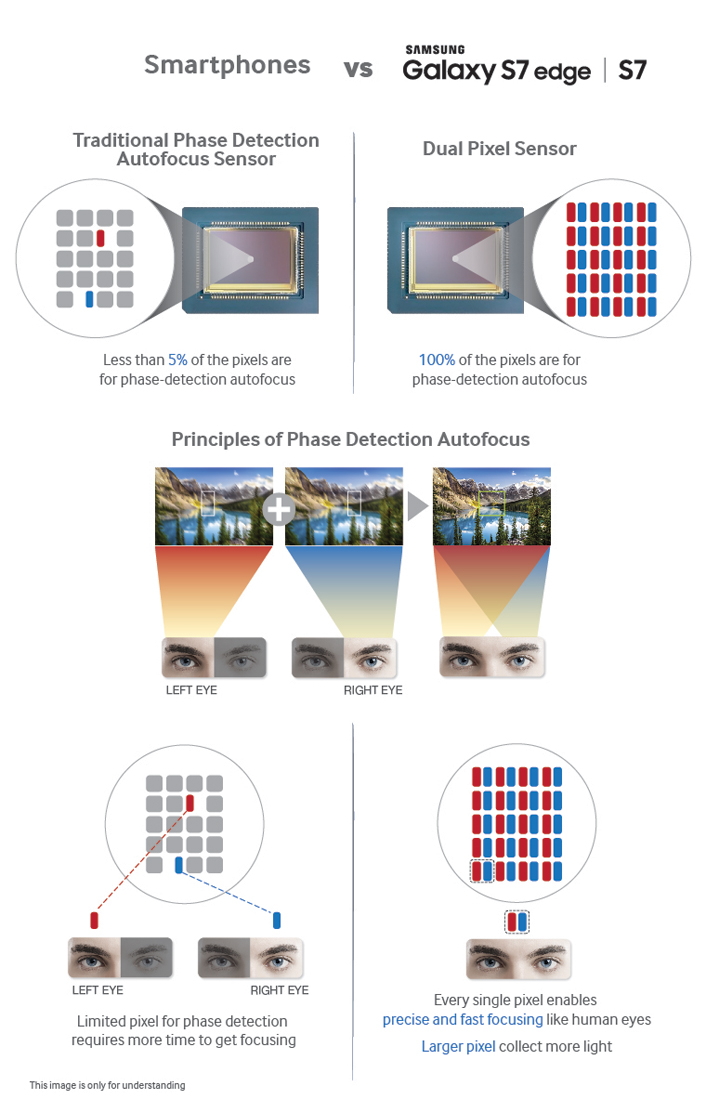
Samsung announced their new Samsung Galaxy S7 and S7 Edge. The interesting point: Samsung touts both smartphones to have DUal Pixel Auto-Focus (DPAF) on board. DPAF is a technology developed by Canon and introduced first on the [shoplink 14246]Canon EOS 70D[/shoplink] in 2013.

Now, while Samsung doesn’t mention Canon anywhere, there are some statements that indirectly point to Canon. Like the following sentence taken from Samsung’s Galaxy S7 product page (emphasis mine):

Dual Pixel technology, which is utilized in selective, high-end DSLR camera models, as well as those of the Galaxy S7, sends light from the lens to two image sensors separately to adjust the focus, much in the same way that the human eye does.

Did Canon license their DPAF technology to Samsung? Or did Canon build the imaging sensor found in the Galaxy S7? I couldn’t find any pertinent information on the web. However, I guess it is an almost safe bet to say that Canon is in some way involved in the imaging sensor of the Galaxy S7.

Look how Samsung presents Dual Pixel AF:
Samsung Galaxy S7

That’s pretty similar to how Canon presents DPAF.

Below are Samsung’s Galaxy S7 introduction video as well as a video about Samsung’s implementation of DPAF.
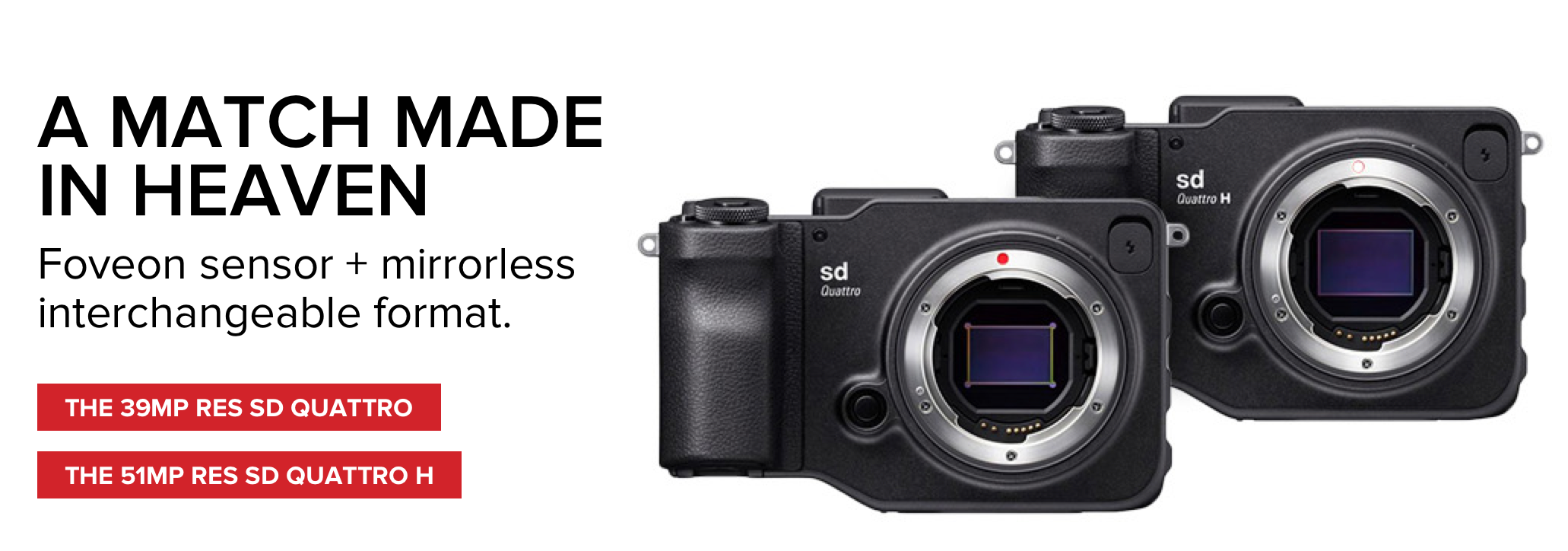
Off brand: Sigma announce mirrorless cameras with 39MP and 51MP sensors

Bildschirmfoto 2016-02-23 um 08.14.23

Sigma announced the SD Quattro mirrorless system cameras with Foveon sensor and SA mount. Both cams are resolution champions: the Sigma Quattro SD has a 39MP sensor, the Sigma SD Quattro H a 51MP sensor. No info about price and shipping so far.

The Sigma Quattro SD:

  • Two mode Autofocus system
  • Mirrorless system, Dust & Splash magnesium alloy body
  • Resolution equal to 39MP Bayer sensor on resolution testing
  • Compact design similar to dp Quattro cameras
  • SA mount

The Sigma SD Quattro H:

  • Larger APS-H sensor
  • Resolution equal to 51MP Bayer sensor on resolution testing
  • Designed to take advantage of SGV lenses with great IQ
  • SA mount

Press text and images after the break (via Mirrorless Rumors).

Click here to open the rest of the article

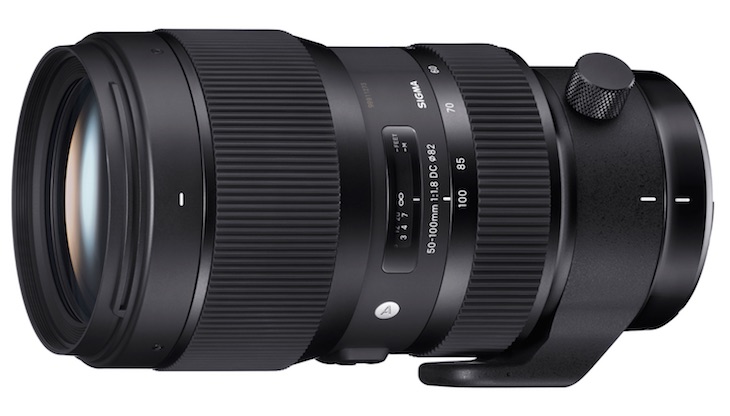
Sigma 50-100mm f/1.8 DC HSM Art lens officially announced

50-100mm is first constant aperture f/1.8 telephoto zoom; 30mm represents first affordable F1.4 high-performance lens for mirrorless cameras

KANAGAWA, JAPAN — February 23, 2016 – Sigma Corporation of America, a leading DSLR lens, camera, flash and accessories manufacturer, today announced the addition of two high-performance APS-C format lenses to the Sigma Global Vision product line: Sigma 50-100mm f/1.8 DC HSM Art Lens and the Sigma 30mm F1.4 DC DN Contemporary Lens.

“Sigma’s aim is to provide high-performance lens options that lead with innovation and break new boundaries for every photographic scenario our customers can dream up,” states Mark Amir-Hamzeh, president of Sigma Corporation of America. “These new lenses build on Global Vision’s great IQ technology and reflect this goal, delivering immense value, quality and performance that the Sigma brand is known for.”

Sigma 50-100mm f/1.8 DC HSM Art
Building on the groundbreaking Sigma Global Vision 18-35mm f/1.8 DC HSM Art Lens, the new Sigma 50-100 f/1.8 (75-150mm on 35mm format) mid-range zoom lens embodies the same engineering prowess to deliver outstanding prime lens-like results. Factoring in the APS-C image circle of 1.5x, the 50-100mm F1.8 covers three popular short tele prime focal lengths: 85mm, 105mm and 135mm. Like the 18-35mm f/1.8, the new 50-100mm f/1.8 maintains a constant f/1.8 aperture yielding exceptional brightness and resolution throughout the zoom, while simultaneously maintaining focus as the lens is zoomed, a feature videographers will greatly appreciate.

Sigma Art Line Image Technology Innovation

  • Features three FLD (F Low Dispersion) glass elements, one SLD (Special Low Dispersion) glass element, and one high-refractive index, high-dispersion glass element to minimize aberrations.
  • Redesigned and enhanced, the new Hyper Sonic Motor is 30% slimmer and provides fast and accurate AF.
  • Highly durable polycarbonate diaphragm made with fluorine; blades feature carbon feather film offering exceptionally smooth operation even during continuous shooting.

Outstanding Zoom Lens Maneuverability

  • Inner focusing and zoom design offer versatile shooting options
  • Tripod socket for stable, comfortable operation
  • Features 21 elements / 15 groups, Minimum Aperture: F16, 82mm filter thread, Minimum Focus Distance: 37.4in, Dimensions: 3.7×6.7, Weight: 52.6oz

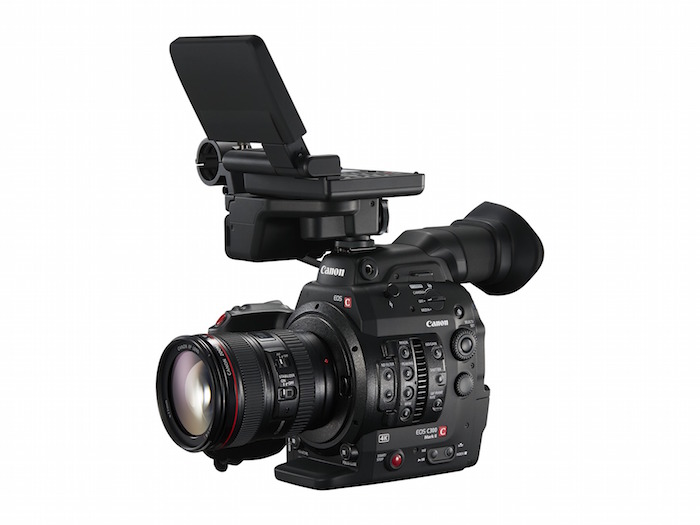
Canon EOS C300 Mark II meets EBU HD and UHD classification

EOS C300 Mark II
EOS C300 Mark II

Canon press release:

Canon EOS C300 Mark II meets EBU HD and UHD classification

United Kingdom, Republic of Ireland, 18th February 2016 – Canon today announces that the EOS C300 Mark II digital cinema camera has been independently tested in accordance with European Broadcast Union (EBU) recommendations for both HD and UHD content acquisition¹. The report recognises image capture of up to 15 stops of dynamic range using Canon Log2 and qualifies the EOS C300 Mark II for R.118 Tier 1 in HD and Tier 2 in UHD².

The new gamma Canon Log2 has been designed specifically for the C300 MKII’s new 8.85MP Super 35mm CMOS sensor. Having access to this high dynamic range gives users the creative freedom to produce more compelling visuals. Combined with the EOS C300 Mark II’s built-in noise reduction functionality, filmmakers have the ability to shoot almost anywhere, capturing low-noise footage in many challenging shooting scenarios.

The EBU exists to serve 73 broadcasters across 56 countries in understanding which technology is best suited to certain tasks. The UK’s Digital Production Partnership (DPP) broadcasters use these recommendations to ensure their content meets a minimum threshold. This is especially important when a compressed image needs to survive editing, grading, encoding and transmission before it reaches audiences in its final pictures.

Click here to open the rest of the article

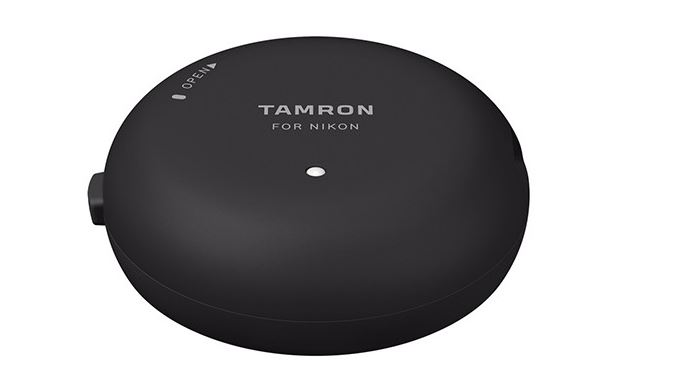
Tamron announces DIY firmware updates through TAP-in Console

TAP-in Console

After the Tamron SP 90mm F/2.8 Di VC USD 1:1 MACRO and SP 85mm f/1.8 Di VC USD lenses, Tamron also announced the TAP-in Console for firmware updates. Tamron press release:

TAMRON ANNOUNCES THE LAUNCH OF ACCESSORY THAT ENABLES FIRMWARE UPDATES AND CUSTOMIZED SETUPS FOR SELECTED LENSES

Tamron TAP-in Console™TM (Model TAP-01)

February 22, 2016, Commack, New York – announces the launch of the Tamron TAP-in Console™ (Model TAP-01), a new lens accessory that enables firmware updating and customized setups for selected Tamron lenses. The TAP-in Console™ is expected to be available in March. The price will be announced shortly.

PRODUCT HIGHLIGHTS

For the first time, customers can update firmware in selected Tamron lenses and customize various lens functions to meet their needs simply by attaching a Tamron TAP-in Console™ and running the Tamron TAP-in Utility software on their PC or Mac. Previously, firmware updates could be performed only at a Tamron Customer Service Center. Using the new accessory and an internet connection, customers can access a dedicated website and update firmware themselves anytime, anywhere. In addition, selected lenses can be customized by changing various settings (described below) to match the customer’s preferences based on how they like to use the lens, making it even more versatile and user-friendly.

1. Custom Options

With a Tamron TAP-in Console™, customers can do the following things.

  • Update firmware
  • Update the firmware of compatible lenses
  • Update the firmware of the TAP-in Console™ itself
  • Customize functions of selected lenses
  • Focus adjustment
  • Focus distance limiter customization (only for lenses that have the Focus Limiter feature)
  • Full-time Manual Focus override customization (only for lenses that have the Full-time Manual Focus feature)
  • VC adjustment (only for any lenses with VC)
  • Save customized data files
Click here to open the rest of the article

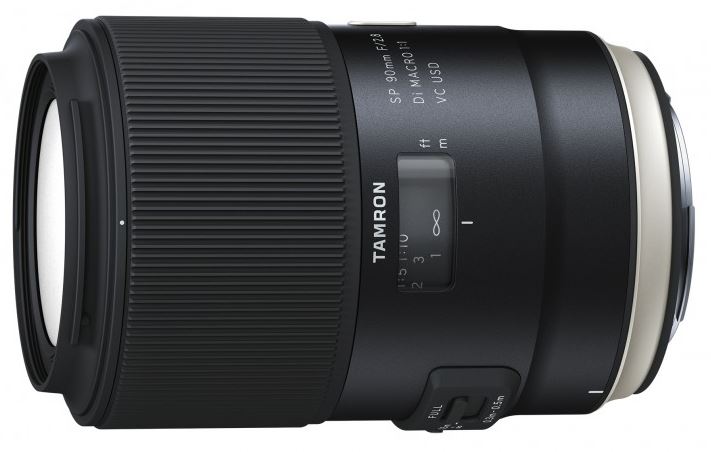
Tamron SP 90mm F/2.8 Di VC USD 1:1 MACRO officially announced

Tamron SP 90mm F/2.8 Di VC USD 1:1 MACRO

The other lens Tamron announced today is the Tamron SP 90mm F/2.8 Di VC USD 1:1 MACRO.

Tamron press release:

TAMRON 90MM MACRO LENS: REBIRTH OF A CLASSIC WITH A LEGACY OF SUPERIOR OPTICAL PERFORMANCE

Enhanced VC functionality and advanced features

February 22, 2016, Commack, New York – Tamron, a leading manufacturer of optics for diverse applications, announces the launch of the SP 90mm F/2.8 Di VC USD 1:1 MACRO (Model F017). The new 90mm macro has been enhanced with advanced features and builds upon a legacy of superior optical performance. XY-Shift compensation has been newly added to reinforce VC functionality, further improving image stabilization from infinity to macro. Advancements in USD control software have also increased AF focusing speed, and optimally fine-tuned for various framing conditions. In addition, a high standard of Moisture-Proof and Dust-Resistant Construction has been added to prevent intrusion of dust or moisture, and a highly durable Fluorine Coating has been applied to the top element surface to prevent condensation and repel smudge-causing substances.  The lens will be on sale in the U.S. starting in March 2016 in Canon and Nikon mounts (the Sony mount to be launched at a later date). The on-sale date in the USA is February 25, 2016 at an approximate price of $649.

PRODUCT HIGHLIGHTS

1.  Built upon the outstanding optical performance of the legendary Tamron 90mm Macro

Inheriting the optical design of the previous 90mm Macro lens (Model F004), the new Model F017 delivers the same excellent resolving power and remarkably soft background blur effects (bokeh). The advanced construction includes one LD (Low Dispersion) specialized glass element that maximally limits the dispersion properties of light and two XLD (eXtra Low Dispersion) glass elements that correct dispersion properties to an even greater extent. The special elements optimally compensate for on-axis and lateral chromatic aberrations from macro shooting range to infinity. Furthermore, the design ensures the best imaging performance at any range by adopting the Floating System that shifts the location of a group of elements to the best possible position as the focusing group travels relative to shooting distances. From 1:1, life-size close-ups to the most distant horizon, this new 90mm Macro lens achieves outstanding image quality.

Click here to open the rest of the article