Canon’s Future 8K Video Camera Concept Explained
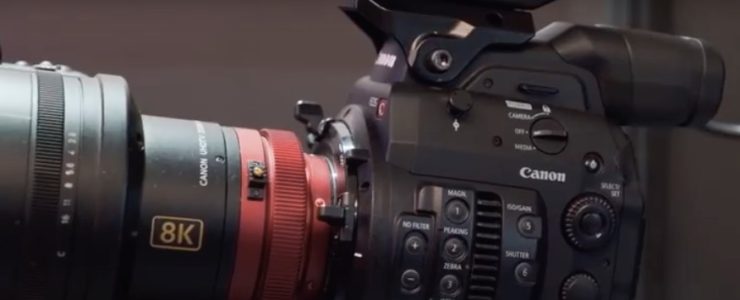
8k video

The folks at Cinema5D made a neat video where they explain what Canon’s 8K video technology is about.

At Inter Bee 2018 Cinema5D met with Canon’s Toshiyuki Akimoto who is responsible for the development of 8K monitors and cameras. He was kind enough to explain Canon’s take on 8K acquisition.

The Canon 8K camera concept presented at Inter BEE 2018 has quite a compact body very similar to the Canon C300 Mark II. It will have a super 35mm sensor and an 8K processing unit inside and mind you that recording will not be done internally. You will have to find and attach an external 8K recording solution. According to Canon, the purpose of this demonstration is to research the market and to gather the customer’s opinion regarding future 8K demand.

Since this 8K camera is still only a prototype and future technology demonstration, there is no detailed explanation of its functions or ergonomics yet. The presented camera, however, looks to being very close to the production stage.

Canon has in fact already demonstrated the same system at the “Canon Expo” in 2015. It seems that Canon has had 8K technology for quite a while already. We can only guess the reason for not releasing a Canon 8K capable camera til now was because the 8K market has not grown enough yet. 8K is being promoted mainly in Japan – there were very few 8K demonstrations at international trade shows like NAB or IBC.

And here is the video.
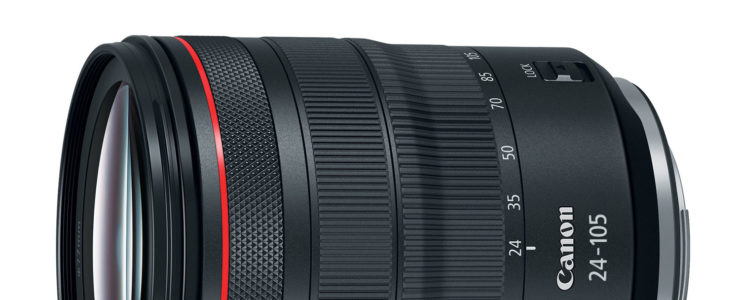
Canon RF 24-105mm f/4L vs EF 24-105mm f/4L II Lenses Comparison Review

Canon RF 24-105mm f/4L IS Review Canon EOS R

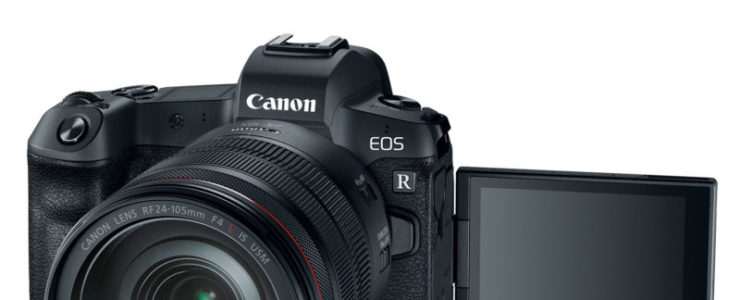
Rather interesting comparison. Canon made quite an impression with the RF 28-70 mm F/2L and especially the RF 50mm F/1.2L lenses for their new EOS R system. The RF 24-105mm f/4 on the other hand is the EOS R kit lens, and it’s likely the lens most users will start with.

The folks at Mirrorless Comparison compare the new world to the old. Jokes aside, the Canon RF 24-105mm f/4L (for EOS R systems) compared to the EF 24-105mm f/4L II (for “classic” Canon DSLRs).

From the conclusion:

The RF 24-105mm, the first of two zooms designed for the new Canon mirrorless mount, seems to have an advantage over the EF version: not only is it slightly sharper at most focal lengths and apertures (centre and corners) but it also has a more pleasant bokeh, a quieter AF motor and less focus breathing. The differences aren’t as significant as we had anticipated however, and let’s not forget that many other aspects are almost identical, such as the stabilisation and autofocus performance and perhaps most importantly, the price.

For these reasons, we feel that if, as a former or current Canon user, you already own the EF version of the 24-105mm, it makes sense to purchase the EF-EOS R adapter (which costs around $99 at the time of writing) and continue using it on the EOS R, especially if you plan to keep your Canon DSLR. Read the review…

Canon RF 24-105mm f/4: [shoplist 53593]

Canon EOS R: [shoplist 52287]

Canon RF 35mm f/1.8 IS Macro STM Review (Photograpy Blog)

Canon RF 35mm f1.8 IS STM

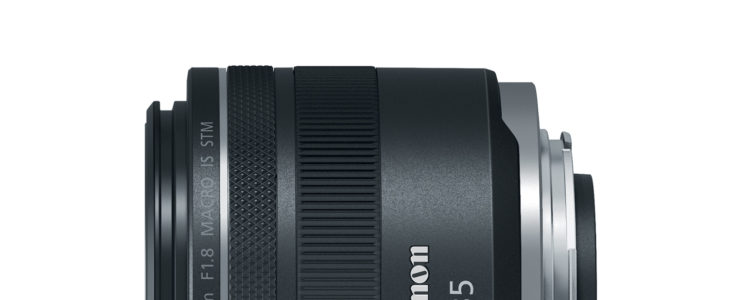
Photography Blog completed their full review of the Canon RF 35mm f/1.8 IS Macro STM lens for the EOS R system. This is the less expensive RF mount lens so far available ([shoplink 53576]£519/€519/$499)[/shoplink].

From the conclusion:

There’s lots to like in terms of image quality, and little to complain about. This lens is sharp almost from the get-go, excellent in the centre and at the edges when shooting wide open at f/1.8 and outstanding between f/2.8 and f/11. It’s capable of producing some nice bokeh effects for an f/1.8 lens, helped by the ability to focus as close as 17cms away from your subject. There is some mild barrel distortion and vignetting at f/1.8, but both of these can be corrected in post-processing. Chromatic aberrations are very well controlled and it even produces some nice sun-star effects at f/16-f/22.

The build quality is very good, certainly on a par with the RF 24-105mm kit zoom, with the built-in weather-proofing offering peace of mind in more inclement conditions. Canon also provide a good lens hood and padded case in the box. Read the review…

Canon RF 35mm f/1.8 IS Macro STM:

[shoplist 53576]

Entry-Level Full Frame Camera Comparison: Nikon Z6 vs Sony a7 III vs Canon EOS R

canon eos r

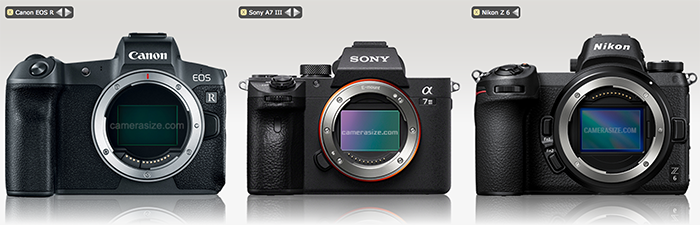
Chris and Jordan compare the current generation entry-level full frame mirrorless models from each company: the Nikon Z6, Sony a7 III, and Canon EOS R. Watch their analysis to find out where they think each model excels or has room to grow.

Canon EOS R: [shopcountry 52287]

Nikon Z6: [shopcountry 53554]

Sony a7 III: [shopcountry 53556]

Tamron 17-35mm F2.8-4 OSD (A037) Review (D. Abbott)

Tamron 17-35mm

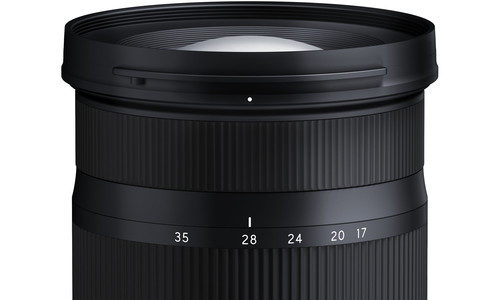
Tamron 17-35mm F2.8-4 OSD at a glance:

  • EF-Mount Lens/Full-Frame Format
  • Aperture Range: f/2.8 to 22
  • Fluorine and BBAR Coatings
  • Optimized Silent Drive AF Motor
  • TAP-in Console Compatible
  • Leak-Proof Lens Seals
  • Rounded 7-Blade Diaphragm

Dustin Abbott posted an exhaustive review of the Tamron 17-35mm F2.8-4 OSD lens. A lens with a pretty interesting price tag ($599).

What he likes and what not:

Pros:

  • Very strong sharpness across focal range and image frame
  • Very low levels of coma
  • Larger maximum aperture at most focal lengths than competing zooms
  • Chromatic aberrations well controlled
  • Good color rendition and contrast
  • Nice consumer grade build with thorough weather sealing
  • Lighter weight and more compact than competing lenses
  • Excellent price

Cons:

  • Heavy vignette
  • Some strong barrel distortion at 17mm
  • No full time manual override and lifeless manual focus
  • No VC

Dustin Abbott’s review comes with a large set of sample pictures taken with the Tamron 17-35mm on a Canon EOS R and Sony a7, and delivers all the insights you might want to get. If you prefer to watch the review, we have you covered. Just start the videos below.

Tamron 17-35mm F2.8-4 OSD

[shoplist 52463]

Canon EOS R Review by DPReview

canon eos r firmware update

DPReview posted their exhaustive review of the Canon EOS R, and it is not an entirely positive review.

DPReview found a series of things they didn’t like, starting from ergonomics:

Surprisingly for a Canon camera, we’re unimpressed by the EOS R’s ergonomics. The M.Fn Bar is, in its current state, superfluous. The rear dial is too recessed, the buttons are mushy, don’t offer good feedback, and are questionably arranged on the body of the camera. Available customization options are puzzling, with great freedom in some areas and frustrating limitations in others.

From the conclusion:

In the end, it’s perhaps best to look at the EOS R as a case study for the future benefits of the RF system; all native lenses released so far are of very high quality, plus Canon offers a total of three EF lens adapters depending on your needs. But unfortunately, we find it difficult to recommend the EOS R to the broader public besides perhaps existing Canon users looking for a second, lightweight full-frame body. Because ultimately, while the EOS R is unequivocally capable of taking beautiful photos, it too often distracted us and pulled us out of the picture-taking process instead of becoming an invisible part of the process itself, as the best cameras do.

Read the review at DPReview.


The Canon EOS R and RF lenses are in stock and ready to ship

Please use the links below to put your order (international shipping available).

Order the Canon EOS R in the USA: B&H Photo | Adorama | Canon USA | Amazon

Order the Canon RF mount lenses in the USA: B&H Photo | Adorama | Canon USA | Amazon

Availability should be given also at major retailers in Europe and around the world (you have to check for your country). Please use the links below.

Canon EOS R world-wide order links:

[shoplist 52287]

Canon RF mount lenses world-wide order links:

[shoplist 52325]