Canon EOS R6 V Officially Announced: 7K RAW, Active Cooling, No EVF – And It’s 300 Cheaper Than the R6 III
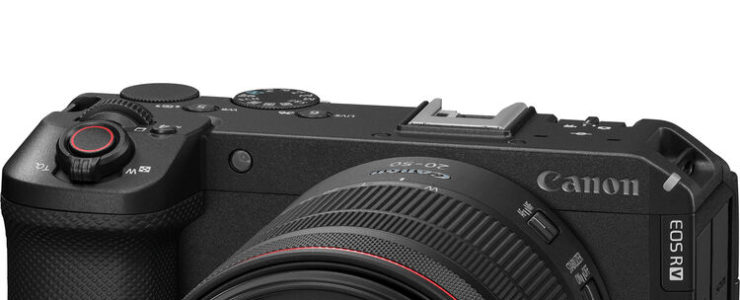
eos r6 v

Pre-orders are available at B&H Photo:

It’s official. Canon has announced the EOS R6 V, a video-first full-frame mirrorless camera that borrows the R6 Mark III’s sensor, throws in 7K RAW recording, adds a cooling fan, and removes the viewfinder. The result is something that doesn’t quite fit into any existing category – which appears to be exactly the point.

What It Is

The R6 V is the newest member of Canon’s “V-series” lineup (following the EOS R50 V and PowerShot V1), designed specifically for video creators. It uses the same 32.5MP full-frame CMOS sensor as the EOS R6 Mark III and Cinema EOS C50, paired with a DIGIC X processor. But that’s where the similarities end.

Canon stripped out the EVF and mechanical shutter entirely, added a built-in cooling fan, and built the body around video workflow: flat top plate for gimbal mounting, front-facing record button, a zoom lever around the shutter button, and dual tripod mounts (one on the bottom, one on the side grip for vertical shooting). It even has a tally lamp.

The Video Headlines

  • 7K RAW internal recording at up to 30p (Canon Cinema Raw Lite), or 7K Light RAW at up to 60p
  • Open Gate recording (3:2, 6960×4840) at up to 30p in RAW
  • Oversampled 4K from 7K at up to 60p, subsampled 4K at up to 120p
  • Full HD at up to 180p for slow motion
  • Canon Log 2 and Log 3, plus newly added HLG and PQ HDR
  • 7K ProRes RAW via HDMI to compatible Atomos recorders

Codec support includes XF-HEVC S and XF-AVC S, with 10-bit 4:2:2 options. Canon says you can record continuously for over 2 hours in demanding modes (like 4K/60 oversampled or 7K Open Gate) thanks to the active cooling fan – a significant improvement over the R6 Mark III, which would overheat after 20-30 minutes in the same modes.

The Stills Situation

Yes, it shoots stills. 32.3MP at up to 40fps with electronic shutter, with pre-continuous shooting that buffers about 20 frames before you fully press the shutter. RAW, C-RAW, JPEG, and HEIF are all supported.

The catch? There’s no mechanical shutter – just an electronic rolling shutter with a ~13.5ms readout. That means rolling shutter artifacts on fast-moving subjects, and no flash support at launch (Canon says a firmware update is coming). Also: sRGB only for stills. No Adobe RGB. Make of that what you will.

IBIS: The Surprise Inclusion

Here’s what nobody expected: the R6 V has in-body image stabilization rated at 7.5 stops (CIPA standard). That’s noteworthy because the more expensive Cinema EOS C50 – which shares the same sensor – does not have IBIS. For handheld video work, this is a big deal.

RF 20-50mm f/4L IS USM PZ: The Kit Lens

Announced alongside the R6 V is the RF 20-50mm f/4L IS USM PZ, Canon’s first L-series lens with a built-in power zoom. The 20-50mm range covers ultra-wide to standard, and the internal optical zoom design keeps the center of gravity balanced for gimbal use. You can switch between manual and power zoom from a single ring, and control zoom remotely via the Canon Camera Connect app or Bluetooth remote.

Pricing and Availability

Yes, you read that right: $2,499, which is $300 less than the EOS R6 Mark III. Canon is pricing this aggressively for the creator market. Everything ships late June 2026.

What’s Missing

No EVF. No mechanical shutter. No flash support (for now). No Adobe RGB. No shutter angle (you’d need to step up to the C50 for the Cinema EOS menu system). No bulb mode. No dual base ISO. This is not a camera for everyone, and Canon seems perfectly fine with that.

The Competition

The most direct competitor is the Nikon ZR, which also takes a full-frame sensor from an enthusiast hybrid and wraps it in a video-centric body with RAW recording. The R6 V wins on Open Gate recording, full-size HDMI, and full-size SD card slots. The ZR fights back with internal 32-bit float audio and a larger 4″ display. Sony’s ZV-E1 and FX2/FX3 are also in the conversation, though the R6 V’s 7K RAW and built-in cooling give it a clear thermal and resolution edge.


Sources: Canon USA press release

Canon EOS R6 V Rumor Round-Up: Everything We Know So Far

eos r6 v

Or: Canon Builds a Cinema Camera, Then Removes the Cinema Price Tag

Canon is announcing the EOS R6 V on May 13, 2026. By now, if you have been paying attention to the rumors mill, you know roughly what you are getting. A full-frame hybrid camera. Cinema guts. No EVF. A fan built in. And apparently, IBIS after all.


What It Is

The R6 V sits in a strange corner of Canon’s lineup: above the R6 Mark III in video ambition, below the C50 in price and “pro” audio features. It shares the same 32.3MP full-frame CMOS sensor as the R6 Mark III and the Cinema EOS C50. But it is its own camera, not a rebadged C50.

The official Canon USA teaser dropped on May 7, showing both the camera and the RF 20-50mm f/4L IS USM PZ lens. The cross-hatch grip pattern on the body mirrors the design language of the EOS R1. Whether that grip actually helps or just looks expensive is a debate for people who have held one.

Click to view on Instagram

The Specs, Such As They Are

The full spec sheet has not leaked yet. Canon tends to hold back official images and marketing material until very close to announcement day. But enough has surfaced that Craig Blair at Canon Rumors has been able to confirm quite a bit. Here is where things stand:

SpecRumor / Confirmed
Sensor32.3MP Full-Frame CMOS (same as R6 Mark III, C50)
Max Video7K 60fps RAW internal
Open Gate7K 30fps RAW
Max Output4:2:2 / ProRes RAW 10-bit up to 6.9K @ 23.98/24/25/29.97fps
GammaCanon Log 2, Canon Log 3
IBIS7.5 stops
Active CoolingYes – low / medium / high settings
ShutterElectronic rolling shutter only (no mechanical)
EVFNone
Screen3-inch, 1.62M dots, approx. 170-degree coverage
AF Points1053
ISO Range100-64,000 (boosted: 50-102,400)
BatteryLP-E6P
Weight598g with battery
Dimensions14.17 x 8.33 x 7.98 cm
Body PriceEUR 2,549 (rumored)

Active cooling was a late correction. Early reports said the R6 V had side vents but no fan. That changed. The camera does have active cooling with three speed settings, which separates it cleanly from the R6 Mark III and makes it viable for extended video shoots without thermal throttling becoming the defining feature of your recording session.

IBIS was a surprise. Earlier speculation suggested Canon would omit IBIS from a video-focused body, following the pattern of the C50. The rumored spec sheet lists 7.5 stops, which is a meaningful number and not nothing. Whether that number holds up when the camera is running warm remains to be seen.

The electronic rolling shutter is worth noting. No mechanical shutter. If you are shooting fast-moving subjects with the intent to freeze motion, the R6 V may exhibit rolling shutter artifacts. The R6 Mark III and C50 share this limitation.


The Kit Lens: RF 20-50mm f/4L IS USM PZ

Canon will bundle the R6 V with a new L-series power zoom lens. The RF 20-50mm f/4L IS USM PZ is a full-frame optic, not an RF-S crop lens. No specifications on size, weight, or zoom ring behavior have been confirmed yet. One open question is whether the zoom ring feels like a natural mechanical throw or like a motor trigger that activates servo zoom. The RF-S 14-30mm f/4-6.3 IS STM PZ uses the latter, and it is a point of ongoing frustration for users who prefer a more tactile experience.

Canon is reportedly also announcing 8-10 SKUs total on May 13, including creator bundles, accessory kits, new macro adapter rings, and a new wireless remote, the BR-E2. The macro ring pricing will likely be described as “overpriced” by the macro photography community, which is not a surprising characterization.


R6 V vs C50: Not the Same Camera

Canon Rumors has been fielding comments calling the R6 V a “C50 with IBIS.” That framing is understandable given the shared sensor, but it is not accurate.

  • The C50 has dual base ISO, the Cinema EOS OS, HDR, IP streaming, timecode, 16 stops of dynamic range claimed, simultaneous crop recording, and full button customization.
  • The C50 has an XLR handle option and “pro” audio inputs.
  • The C50 has shutter angle, a feature Canon appears to be using for product segmentation.
  • The C50 does not have IBIS.

The R6 V will likely miss shutter angle, which is a meaningful omission for video shooters who have been asking Canon to add it to the R6 Mark III and R5 Mark II. Whether it shows up via firmware after launch remains an open question.

The one thing that has been clarified from multiple sources: the R6 V has only one mounting point on the left side and the standard tripod mount on the bottom, similar to the R50 V. The C50 has top mounts for the XLR handle. The R6 V does not.


The 7K RAW Question

There were reports that the R6 V would shoot Open Gate 7K RAW at 60fps internally, a capability neither the R6 Mark III nor the C50 has. When Canon Rumors followed up with the original source, the response was not a hard no but an “I do not think so.” So consider that one: unconfirmed, with a leaning toward no.

The current consensus on specs points to 7K 60fps RAW as the max, but not in open gate mode. Open gate stays at 30fps. If Canon adds 7K/60 open gate to the C50 via firmware after the R6 V announcement, it would not be the first time they have refreshed an older camera’s capabilities post-launch.


The Nikon ZR Comparison

The Nikon ZR, which retails for around $2,196 USD, has been the obvious comparison point since the R6 V rumors started. The ZR is Nikon’s small full-frame video camera, and the reviews have been largely positive. It shoots ProRes RAW 12-bit up to 6K and uses dual base ISO (800 / 6400).

The R6 V at EUR 2,549 (rumored) would be in roughly the same ballpark in USD terms. If Canon hits that price point, it undercuts the R6 Mark III by $300-$400 and lands close to the ZR territory. Whether the feature set justifies one over the other will depend on what Canon ships and what Nikon updates next.

Canon rarely directly copies another company’s camera feature-for-feature. They do, however, compete in the same segments on price. The R6 V appears to be Canon’s answer to the question: what if you want cinema features without the cinema budget?


What We Do Not Know Yet

  • Full official spec sheet and feature list
  • US retail pricing (EUR 2,549 is European estimate only)
  • RF 20-50mm lens size, weight, and zoom ring behavior
  • Whether shutter angle arrives at launch or via future firmware
  • Card slot configuration (dual SD vs. CFexpress)
  • Whether open gate 7K/60fps is real or a wishful rumor

The official announcement happens at 9:00 AM EDT on May 13, 2026. Full specs will probably surface in the week before then. Check back, or do not, depending on how much uncertainty you can handle.

Sources: Canon Rumors (Craig Blair), Ordinary Filmmaker YouTube channel

Canon’s Next PowerShot Is Getting an “All-New” Sensor (Whatever That Means)

canon eos r7 mark ii canon rumors EOS R6 Mark III

Canon is coming back to compact cameras with not just new bodies, but an “all-new” sensor. Because apparently reusing perfectly good silicon would be too easy.

According to the source of the rumor, the next “flagship” PowerShot will feature a brand-new image sensor, one that Canon won’t be recycling from the PowerShot V1. The source describes the new sensor as “more advanced” than the current 1.4″ unit. What does “more advanced” mean exactly? Nobody knows. But it sounds great, so let’s run with it.

What We Actually Know

The PowerShot V1, released in early 2025, uses a 1.4″ sensor, the largest in the current PowerShot lineup. Before that, the PowerShot G7 X Mark III (2019, seven years old, still somehow selling for over $1,000 used) used a 1″ sensor. So the current range spans from “not bad” to “getting there.”

The new sensor will reportedly be smaller than 1.4″, but “more advanced.” The source of the rumor speculates it’ll be a 1″ BSI stacked sensor, Canon’s own design, built with current technology rather than 2019 technology. That would be a meaningful upgrade regardless of the size step-down, since BSI stacked sensors deliver faster readout speeds, better low-light performance, and improved dynamic range.

There have been whispers that the V1’s 1.4″ sensor is a cropped version of the APS-C sensor found in the EOS R7. Canon has never confirmed this, and Canon Rumors isn’t claiming it either. It’s the kind of rumor that sounds plausible and is very difficult to disprove, which is the sweet spot for camera internet speculation.

The Sensor Size Debate That Was Never Really a Debate

Canon briefly went full APS-C in a compact with the G1 X Mark III. It was an interesting camera. It was also large, expensive, and sold to exactly the kind of person who then bought a mirrorless camera instead. Canon hasn’t repeated the experiment.

A bigger sensor in the next PowerShot? Canon Rumors doesn’t think so, at least not at launch. The logic is sound: Canon isn’t coming back to compacts to win over EOS R5 shooters. They’re coming back to offer something between a smartphone and an interchangeable lens camera, at a price closer to $800–$1,000. An APS-C sensor in that package would push the price into mirrorless territory, which rather defeats the point.

What Models to Expect

The rumor points to a G7 X-style camera and a superzoom variant, both using the same new sensor. We covered the broader 2026 PowerShot lineup back in March when a retail source leaked that Canon had up to three new models in development. The “all-new sensor” detail adds a layer of substance to what had previously been a fairly vague product roadmap.

Announcements? Don’t hold your breath before late August, Canon is reportedly targeting Q4 for the release. There are other cameras coming first, specifically an EOS R7 Mark II that Canon Rumors has been tracking separately.

Should You Believe This?

The sensor claim is rated “likely true”. Given that Canon’s Executive VP publicly confirmed new compact cameras are coming at CP+ 2026, and we already know multiple models are in development, a new sensor being designed for them is the least surprising thing about this rumor.

The only genuinely vague part, and it’s quite vague, is “more advanced.” Canon knows they’re re-entering a market that will compare their new sensor directly against Sony’s 1″ stacked sensor in the RX100 VII, which is itself from 2019 and still outperforms most of the competition. If Canon’s “all-new” sensor doesn’t clearly beat the RX100 VII on measurable specs, the internet will have opinions about it. Strong ones.

New sensor, smaller than 1.4″, more advanced than current options, possibly 1″ BSI stacked. That’s the rumor. That’s all the rumor.

Source: Canon Rumors

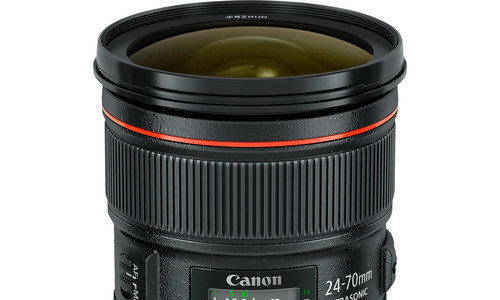
Canon’s Legendary 24-70mm f/2.8L Might Be Getting a Wider Successor — And Yes, It Would Have VCM

Canon EF 24-70mm f/2.8L II USM

Canon’s Legendary EF 24-70mm f/2.8L Might Be Getting a Wider Successor — And Yes, It Would Have VCM

If you’ve been using the RF 24-70mm f/2.8L IS USM and thinking “this is great, but what if it started at 20mm instead?”— first of all, congratulations on your very specific taste. Second: Canon may be thinking the same thing.

According to rumor source, the next iteration of Canon’s flagship workhorse zoom is reportedly in the works, with sources suggesting it could arrive sometime in 2026. The headline detail: the follow-up lens could be wider than 24mm — with the working hypothesis being an RF 20-70mm f/2.8L IS VCM. The source reportedly didn’t know exactly how much wider, which is either honest uncertainty or a carefully maintained air of mystery. We’ll give them the benefit of the doubt.

VCM: The Acronym of the Moment

Here’s the part that’s actually news: this lens would reportedly be Canon’s first VCM (Voice Coil Motor) zoom lens — a significant step, given that VCM autofocus is widely considered the future of high-performance lens AF. Canon already dropped the RF 14mm f/1.4L VCM ($2,599) in February 2026 — alongside the RF 7-14mm f/2.8-3.5L Fisheye STM ($1,899), which uses a leadscrew-type STM motor — so VCM technology is clearly in production and working in the RF lineup. A VCM zoom would be a new frontier.

Nikon and Sony have already been heading in the VCM direction, and Canon has made no secret of wanting to evolve its RF lineup beyond the traditional USM motor. So a VCM-powered 24-70 successor isn’t just a nice rumor — it fits the roadmap.

The 20mm Difference

For anyone who’s shot wide, the jump from 24mm to 20mm is not trivial. It’s the difference between “that almost fits in frame” and “yes, that absolutely fits in frame.” The RF 20mm f/1.4L VCM prime is already in Canon’s lineup, and those who’ve used it know the focal length has real character. A zoom that starts there — at f/2.8 — would be genuinely exciting for event, wedding, and documentary photographers who live on that lens.

It would not, however, be cheap. Plan accordingly.

Don’t Expect It Tomorrow

The CanonRumors source is confident enough that this lens is coming “at some point this year,” but also notes that no new lens announcements are expected in the next couple of weeks. Attention will likely shift to the EOS R7 Mark II first, expected in the coming months. After that, the L glass pipeline should open up again — and we may start hearing more concrete details about the zoom.

NAB in April is traditionally a Cinema EOS moment, so don’t hold your breath for a 24-70 successor there either. But summer? Fall? A man can dream.

Bottom Line

Confirmed: Canon is moving toward VCM zoom lenses. The RF 7-14mm and RF 14mm f/1.4L VCM are real, shipping, and in the wild.

Rumored (with moderate confidence): A follow-up to the RF 24-70mm f/2.8L IS USM is in the works, likely wider than 24mm, possibly an RF 20-70mm f/2.8L IS VCM.

Speculation: It will cost more than you want to spend, arrive later than you’d like, and you’ll buy it anyway.

Source: CanonRumors

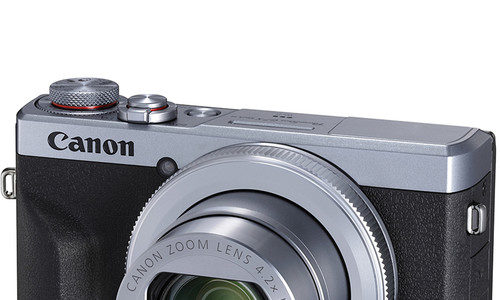
Canon Is (Maybe, Possibly, Allegedly) Working on Three New PowerShot Cameras in 2026

Canon Powershot G7 X mark iii

Because one vague promise wasn’t enough.

Let’s review the facts, such as they are: a retail source, in a country that must not be named, like some kind of camera Voldemort, sat in on a “future products” meeting with Canon sales reps and came away with this bombshell intelligence: Canon might have up to three new PowerShot cameras coming in 2026.

Up to three. That’s technically anywhere from zero to three, which is essentially the range of outcomes for any Canon compact camera rumor at any point in the last eight years. But hey, it’s on the record now.

Canon’s Executive Vice President Has Spoken (Vaguely)

At CP+ 2026 in Yokohama, Canon’s Executive Vice President and Head of Imaging, Go Tokura, told DPReview that the next compact camera needs to “offer new technologies or a new use case.” That’s a sentence that means everything and nothing simultaneously. A true masterpiece of corporate communication.

What kind of new technology? Unknown. What use case? Unclear. When? ¯\_(ツ)_/¯

But crucially: Canon said it. Out loud. In public. That alone puts us ahead of schedule compared to the previous eight years of absolute compact camera silence.

So What Are These Three Cameras?

Here’s what the rumor mill is grinding out:

Camera #1: The Super Zoom PowerShot

Think Nikon P1000 energy, but Canon. The source specifically mentions “pre-capture” functionality, a feature that records frames before you press the shutter button, so you can finally photograph that bird that flew away 0.3 seconds before you were ready. Canon will reportedly not replicate Nikon’s bonkers 24-3000mm equivalent zoom range (good, that camera is basically a telescope with a shutter button), but something with serious telephoto reach is on the table.

Fact check: The Nikon P-series (P950, P1000) is a real product line that genuinely exists and genuinely costs around $600-$800 USD. Bird photographers actually love it. Canon abandoned the SX super zoom line in 2018. The demand is real. ✅

Camera #2: The G7 X Series Successor

The PowerShot G7 X Mark III, which currently sells for over $1,300 new and over $1,000 used because Canon hasn’t made a better one, is getting a new sibling. Canon reps apparently confirmed a G7 X series camera is coming, with a “fast constant aperture lens.” It won’t be called the Mark IV because Canon apparently wants to keep us guessing about naming conventions too.

Fact check: The G7 X Mark III was released in 2019 and runs on Canon’s DIGIC 8 processor, which launched in 2018. DIGIC 8 is now seven years old. For reference, in smartphone years, that’s roughly the Jurassic period. The resale prices are genuinely absurd for a 2019 camera. ✅

Camera #3: The Mystery Box

Nobody knows. The source says it’ll be something “affordable” for the mass market. The source of the rumor floats the idea of a modern PowerShot ELPH 360 HS (a slim little pocket camera) as the mass-market option. It would complete a lineup of: enthusiast zoom, vlogger/creator, and “I just want a camera that fits in my pocket and isn’t my phone.”

Fact check: Canon did re-release the PowerShot ELPH 360 HS A in 2025 as a sort of nostalgic stopgap. The original ELPH 360 HS launched in 2016. Yes, they re-released a 2016 camera in 2025. Canon is just built different. ✅

The Elephant in the Room

Canon already released the PowerShot V1 in 2025, a video-first compact. So the video lane is covered. What’s been missing is a photography compact that uses Canon’s current sensor and processor technology. The current flagship compact uses DIGIC 8. Canon’s current mirrorless cameras use DIGIC X and DIGIC Accelerator. That’s not a gap, that’s a canyon.

To Canon’s credit, Go Tokura’s CP+ statement was surprisingly direct: new compact cameras are coming, and they’ll have new technology. No hedging, no “we’re always looking at market opportunities.” Just: yeah, we’re doing it.

Should You Believe This?

The “up to three cameras” claim comes from a single unnamed retail source, in an unnamed country, who attended an unverified sales meeting. That’s about four layers of telephone game. However, it aligns with what Canon executives said publicly at CP+ 2026, and with the broader industry chatter about a compact camera revival.

There’s clearly something happening. Whether it’s three cameras, two cameras, or one camera arriving at some point before 2030 remains to be seen.

But at least Canon’s executives are using the word “coming” now. That’s progress. We’ll take it.


Source: Canon Rumors | Canon executives quoted by DPReview at CP+ 2026

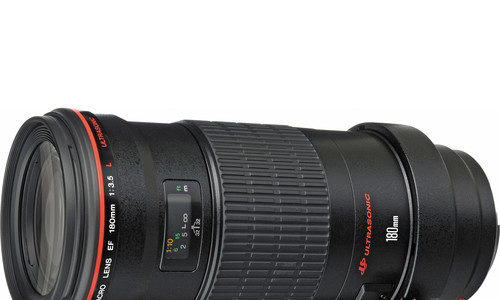
A New Canon Macro Longer Than 100mm With Variable Magnification? Yes Please.

Canon EF 180mm f/3.5L Macro USM Lens

An anonymous source claims that Canon is planning a new macro lens, longer than 100mm, and with variable magnification ratios. No focal length. No aperture. No timeline. Just a dangling carrot for the macro crowd, and honestly? That’s enough to get people excited.

Canon’s Macro Legacy (The Good Old Days)

Let’s take a quick trip down memory lane, because Canon has made some genuinely wild macro lenses in the past.

The EF 180mm f/3.5L USM Macro, a telephoto macro that gave you true 1:1 reproduction and a generous working distance, meaning you didn’t have to shove the lens two inches from a bug’s face to get a sharp shot. Beloved by macro shooters. Discontinued. No RF replacement has appeared. Macro fans are still waiting.

The MP-E 65mm f/2.8 1-5x Macro, now this was something special. A manual-focus-only lens capable of magnification from 1:1 all the way up to 5:1. Five times life size. At 5x you’re essentially photographing the cellular structure of a gnat’s wing. A deeply weird lens that attracted a deeply passionate following. Also discontinued. Also without an RF successor.

Both lenses are gone from Canon’s active lineup, but you can still find them new-in-box if you look hard enough.

The New Rumor: Combining the Best of Both

Here’s where it gets interesting. The source suggests a lens that would combine:

  • Focal length longer than 100mm (the 180mm territory)
  • Variable magnification ratios (the MP-E 65mm territory)
  • Potentially with autofocus — which the MP-E 65mm notably lacked

The rumor source floats the idea of something like an RF 200mm f/4L with variable magnification as one possibility. That’s entirely speculative, no specs were provided, but it’s a plausible direction given Canon’s recent RF lens design philosophy.

What About the RF 100mm f/2.8L?

Canon does have a current macro for the RF mount: the RF 100mm f/2.8L IS USM, which features 1.4x maximum magnification (slightly beyond 1:1) and excellent hybrid IS. It’s a good lens. But some shooters have noted a focus shift issue when stopping down, and it doesn’t scratch the itch of the longer working distance crowd or extreme magnification enthusiasts.

A 100mm macro is great. A 180mm+ variable-magnification macro with autofocus would be on a different level entirely.

Fact Check

ClaimStatus
Canon EF 180mm f/3.5L USM existed✅ Confirmed — real lens, now discontinued
Canon MP-E 65mm f/2.8 1-5x existed✅ Confirmed — real lens, MF only, now discontinued
Canon RF 100mm f/2.8L IS USM exists✅ Confirmed — current RF macro, 1.4x magnification
RF 100mm focus shift issue✅ Reported by multiple shooters
New macro longer than 100mm planned❓ Single anonymous source, unverified
Variable magnification on new lens❓ Same anonymous source, unverified
RF 200mm f/4L specifically❓ Canon Rumors speculation, not from source
Timeline❌ None given

The Verdict

Low confidence on specifics, but Canon absolutely should make this lens. The EF 180mm and MP-E 65mm communities were passionate and underserved. A modern RF macro that merges long working distance with variable magnification, and adds autofocus, would be a statement lens.

Whether it actually happens is another question. As Canon Rumors admits, the source is anonymous and confidence is low. But hey, a macro shooter can dream.


Source: Canon Rumors