
From Retro Rebels to 600mm Reach: Every Canon Camera and Lens Rumor Worth Believing Right Now
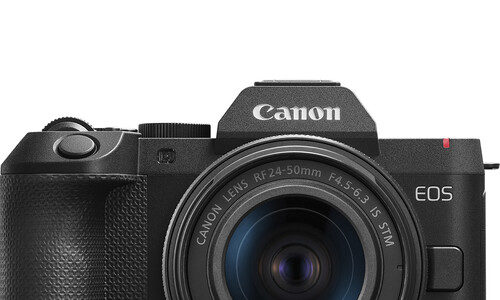
The EOS R8 Mark II is real, a 300-600mm may be weeks away, and the rumor mill says Canon isn’t done with 2026 yet.
Canon doesn’t do quiet autumns. Fresh off unveiling the retro-leaning, IBIS-equipped EOS R8 Mark II on September 15, the rumor mill is already buzzing about one more announcement day before the year closes; this time, it’s supposed to be all about lenses. Honestly, the leaks coming out of Canon right now read like a photographer’s wishlist: a long-rumored RF 300-600mm f/5.6L that has dealers buzzing, a compact 90mm macro outed by patent filings, Sigma glass quietly landing on the RF mount, and a 40MP-class EOS R7 Mark II that’s been delayed so many times it’s practically folklore. There are even whispers of an R5 Mark III in 2027.
Some of that is solid reporting; some of it is patent tea-leaf reading. And knowing the difference is the difference between buying smart and waiting forever. So let’s sort the near-certainties from the educated guesses: what just launched, what’s almost certainly coming, and what Canon’s rumored pipeline reveals about an RF mount finally entering its maturity phase.
1. The EOS R8 Mark II — Canon Goes Retro (Sort Of)
Let’s start with what’s no longer a rumor. On September 15, Canon pulled the cover off the EOS R8 Mark II, and the headline story is the redesign: a flatter-top, angular body that’s clearly courting the retro wave Fujifilm has been riding for a decade. Under the skin, it’s a familiar-but-smarter package. The same 24.2MP full-frame sensor carries over, but in-body image stabilization arrives for the first time at this tier, making this the lightest IBIS-equipped EOS body to date. Canon lists it at roughly 546g with battery and card. Drive speed is genuinely serious for the money: a blistering 40fps electronic shutter with pre-continuous shooting that buffers frames before you fully press the shutter. Price is $1,899 body only and $2,099 in a kit with the RF 24-50mm f/4.5-6.3 IS STM. It ships late October alongside the Speedlite EL-5 Ver.2 ($379) and the optional EG-E2 Extension grip ($99,99). And yes, it keeps a single SD card slot; expect the internet to fight about that for a month.
The rumor-scorecard angle is what makes this launch worth studying. Reportedly, early leaks pointed to a 32.5MP sensor and dedicated manual dials; both were walked back in the final weeks before launch, and neither materialized. That’s a textbook case of how rumors calcify into “fact” and then quietly dissolve. Keep that lesson in mind for everything else in this post.
Why does this camera matter beyond its spec sheet? Two reasons. First, it’s Canon’s clearest admission yet that the Fujifilm aesthetic sells; dials, flat tops, and nostalgia have proven their market. Second, and more importantly, IBIS trickling down to the entry full-frame tier signals the end of stabilization as a segmentation tool. Canon used to treat IBIS as a reason to upsell you to an R6; that era is ending.
One honest caveat: plenty of early readers argue the R8 II reads “modern angular” more than genuine AE-1 homage. If you were hoping for a Nikon Zf-style time machine, temper those expectations.
2. The Super-Telephoto Pipeline — Canon’s Answer to Nikon
If the R8 Mark II was the appetizer, this is where the rumor mill says the year-end announcement will deliver the main course. And it’s aimed squarely at Nikon.
The star is the RF 300-600mm f/5.6L IS VCM, the long-rumored wildlife and sports zoom that follows the playbook of Canon’s beloved (but $9,000-plus) RF 100-300mm f/2.8L: take a professional supertele range and make it a zoom. Rumor mills have been tracking this lens for years and describes its confidence as higher than ever; retail chatter is heating up too, though nobody has official pricing yet. Also on deck: replacements for the RF 400mm f/2.8L and RF 600mm f/4L primes, the workhorses of the sidelines and safari circuit. Multiple sources say those two get announced in late 2026, ship in early 2027, and add a built-in 1.4x teleconverter; that would turn the 400mm into a 560mm f/4 and the 600mm into an 840mm f/5.6 with no accessory needed.
The genuinely intriguing wildcard is a patent: an internal-zoom RF 180-600mm f/6.3L IS design, which was recently spotted alongside 70-135mm f/2L and 200-400mm f/4L concepts in the same filing. Nikon has been quietly owning the affordable supertele space with its lightweight telephotos, the 400mm f/4.5, 600mm f/6.3, and 800mm f/6.3, while Canon’s budget options stop at the 100-400mm zoom and the slow-but-cheap f/11 primes. If this patent becomes a product, Canon’s answer to Nikon wouldn’t be copying their primes. It would be one L-grade internal-zoom lens that replaces all three. Internal zooming also means the lens doesn’t extend while you’re tracking a bird in flight; that’s a genuinely meaningful upgrade over every consumer telephoto in this range.
For wildlife, bird, and budget-sports shooters, the takeaway is simple: the RF mount’s biggest weakness, the lack of credible mid-priced long glass, may finally be closing.
3. Compact Glass and the Third-Party Wave
From the biggest glass on the roadmap to the smallest: the freshest rumor in the pipeline also happens to be the most believable, an RF 90mm f/2.8 IS STM Macro. It’s a non-L lens by design, since the RF 100mm f/2.8L Macro already exists at the top of the range, and the whole point is compact: roughly 100mm long versus 148mm for the 100L. Expected to land under $1000, it is positioned as travel and hiking lens imo.
What makes this rumor unusually solid is the paper trail. It surfaced first it in late September, and the patent evidence has since grown from one design to two, and now to a third design (patent JP-2026-155997). Three independent optical layouts for the same focal length and aperture is about as close to a confirmation as patents ever get. The same reporting suggests a late October or early November announcement, right on schedule for the rumored year-end lens day. Bonus tea leaves: a separate Canon patent also shows 135mm f/2.8 and 180mm f/3.5 macro designs, so this 90mm may just be the first of a small macro family.
Meanwhile, the third-party wave keeps building. Sigma is rumored to be prepping an RF 50-120mm f/2.8 DC OS for APS-C in October; that’s an 80-200mm f/2.8 equivalent, giving the EOS R7 and EOS R10 the classic fast-telephoto zoom they’ve never had. Sigma already sells a licensed lineup of ten-plus RF-mount lenses, so this would be a natural next step rather than a leap. Between Sigma’s expanding RF lineup and Canon’s own push toward smaller, lighter “hybrid” lenses with VCM motors, the RF mount’s early reputation as a walled garden is fading fast.
4. The Long Game — Flagships and the “Unicorn” APS-C Body
Zoom out from this year’s roadmap and the rumors get fuzzier. But arguably more interesting.
The EOS R7 Mark II is, by wide consensus, the most-delayed camera in Canon rumor history. It’s been penciled in for 2025, then 2026, and now points to a Q1 2027 launch around CP+; one Reddit thread counts seven different release-date claims that came and went. When it arrives, the whispers say it gets a roughly 39-40MP APS-C stacked sensor, which would finally match Fujifilm’s high-resolution bodies, plus fast electronic burst shooting with pre-capture. For APS-C shooters who’ve watched the original R7’s 32.5MP sensor age gracefully since 2022, that’s the body worth waiting for. Or waiting again for, as it were.
Beyond that: R5 Mark III whispers point to a 2027 window (late 2026 at the earliest) with a 60MP-plus next-generation sensor and AI-assisted autofocus. The R1 Mark II and R6 Mark IV exist mostly as names and informed shrugs; the most concrete R6 IV chatter says 2027-2028. And the compact front is livelier than it looks: a PowerShot G7 X Mark III successor is reportedly coming before the R7 Mark II, possibly as one of three new Canon compacts, though Digital Camera World’s retailer source claims it may not carry the “Mark IV” name at all. With the current G7 X III still selling faster than Canon can make it, that successor is quietly one of the most consequential items on this whole roadmap.
5. How to Read Canon Rumors Like a Pro
So how do you sort all of this yourself? A quick toolkit, before you repost the next “leak.”
First: take it always with a grain of salt. Second: patents are not products. Canon has placed among the world’s top 10 U.S. patent holders for 41 consecutive years, and first among Japanese companies for 20 years running; it files thousands of designs annually, and the overwhelming majority never become lenses. A patent tells you what Canon is exploring, not what’s shipping.
You can also lean on Canon’s remarkably predictable calendar: big bodies around CP+ in late February, flagship and enthusiast announcements in late August/September, and a lens-focused announcement day in October or November. If a rumor claims a major camera is dropping in July, be skeptical.
And the practical takeaway: if you need a camera today, buy today. With the R8 Mark II shipping in late October at $1,899, the original EOS R8 and the EOS R6 Mark II are already sliding into bargain territory. Waiting for the 300-600mm or the R7 Mark II means budgeting realistically; the lens could be weeks away, but the R7 II means holding out until CP+ 2027.
One last thing, because it always needs saying: everything above except the R8 Mark II is unconfirmed. Rumors are for planning, not for guarantees.
The Bottom Line: What’s Real, What’s Next, and What It All Means
So let’s tally the scorecard. Confirmed and real: the retro-adjacent, IBIS-equipped EOS R8 Mark II, down to its $1,899 price and 40fps burst. Near-locks: the RF 300-600mm f/5.6L, which has dealers buzzing, and the compact 90mm macro, whose three patent designs are the closest thing to a paper trail rumors ever get. Informed speculation: everything stamped 2027, from the 39-40MP EOS R7 Mark II to the R5 Mark III and the big-prime refreshes with their built-in teleconverters.
Thread them together and a single strategy emerges: Canon isn’t chasing headlines anymore. It’s methodically sealing every gap in the RF mount; retro bodies for the heart, compact glass for the bag, and long lenses for the budgets that were always priced out of reach.
Which leaves a question worth sitting with: when a mount has everything, what are you still waiting for? The rumors we choose to believe tend to reveal more about us than about Canon.
So here’s your homework: bookmark this piece and come back after Canon’s year-end announcement; we’ll grade the rumor mill together, leak by leak. Which ones landed, which fizzled, and which we should have seen coming. And drop your Canon wishlist in the comments while you wait; I’ll revisit the best guesses when the next announcement drops. In the meantime, if you’re shopping, remember the one rule that never leaks: a camera that exists today beats a camera that might exist in February.