Canon Files Another Patent For Phase Detection Auto-Focus

Canon Files Another Patent For Phase Detection Auto-Focus
I reported about two similar patents filed by Canon in the past (here and here). Now Canon files another patent for phase detection Auto-Focus, explicitly referring to phase-detection AF for a camera with “removable lenses”.

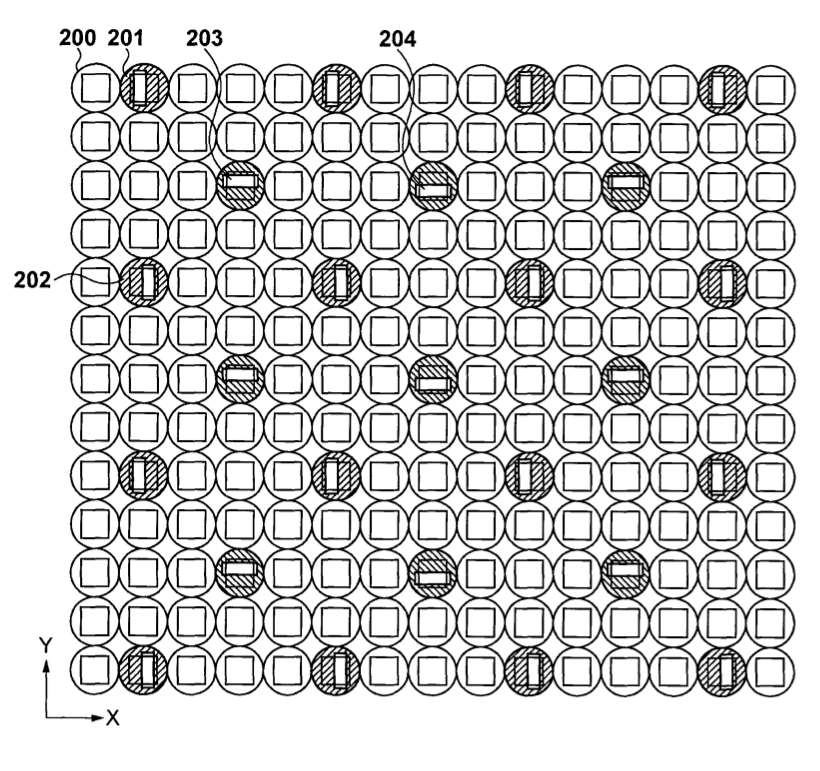
The present invention has been made in view of the above-described problems, and provides an image- pickup apparatus in which a focus detecting pixel is arranged in a part of an image sensor to perform focus detection based on the phase difference detection method. With this arrangement, it is possible to reduce the frequency of lens driving upon focusing while preventing a hunting phenomenon upon focusing.

The image-pickup apparatus according to a first aspect of the present invention capable of mounting a removable lens unit with an image-pickup optical system including a focus lens thereon,

comprises: an image sensor in which an image-pickup pixel to receive a light beam passed through an exit pupil of the image-pickup optical system and a focus detecting pixel to receive a light beam passed through the exit pupil, partially shielded, of the image-pickup optical system are arrayed; focus detection means for detecting a shift amount of the focus lens from a focus position based on a phase difference in an output signal from the focus detecting pixel; and acquisition means for acquiring ray vignetting information of the image-pickup optical system, wherein, when a position detection resolution of the focus lens is lower than a drive resolution of the focus lens, the focus detection means detects the shift amount of the focus lens from the focus position using the ray vignetting information in a predetermined position of the focus lens specified based on information from the lens unit.

Could this be the patent for a new method to get phase-detection AF? Maybe it is for Canon’s next, pro-oriented mirrorless camera.
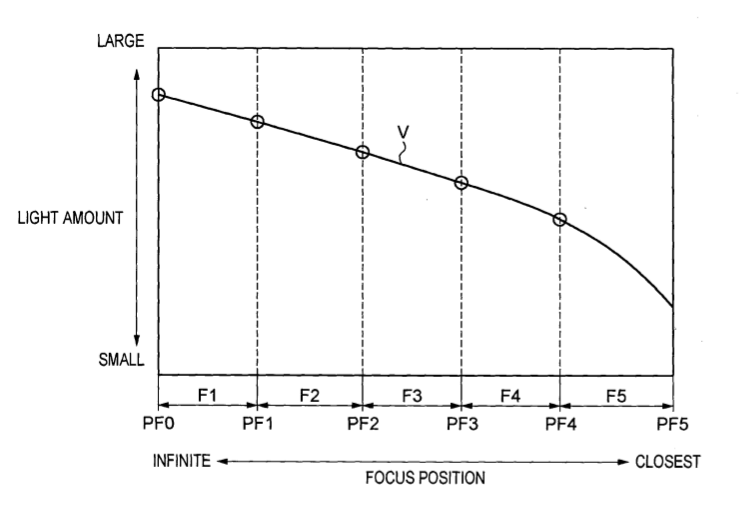
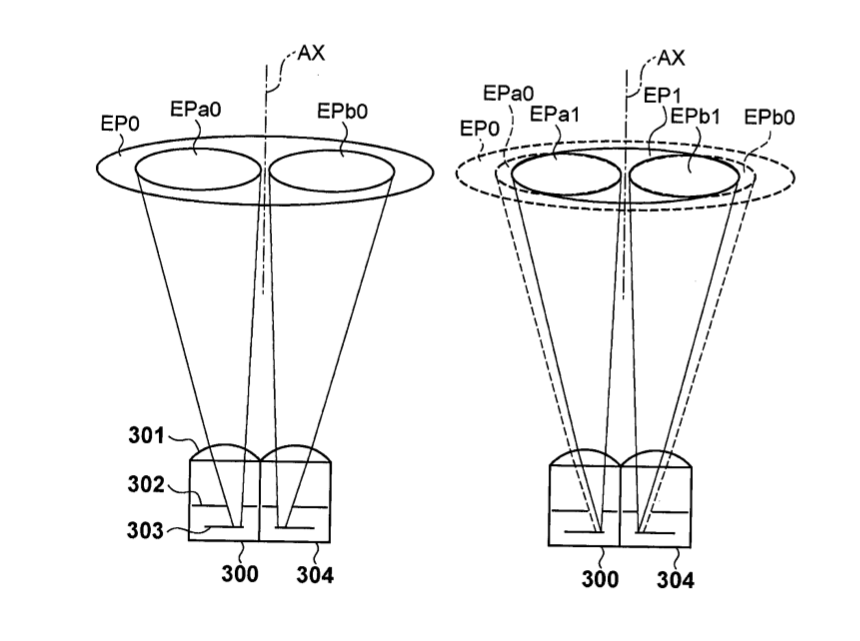
[via freepatentsonline]
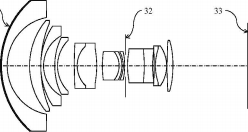
[Patent] Canon Files Patent For 14mm f/2.8 Lens (better coating, low refractive index)

14mm f/2.8

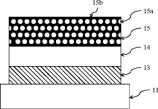
Egami (translated) spotted another patent filed by Canon. This time it is for a 14mm f/2.8 lens with improved coating (tubular coating):

It seems it is possible to realize a low-refractive-index low reflectivity by the structure below the diffraction limit, even without the uneven surface of the coating. 14mm F2.8 is what I want you to adopt all means patent coating of the lens as the front lens is large, yet is protruding.

Cross-sectional view
  • Patent Publication No. 2012-159723
    • 2012.8.23 Release Date
    • 2011.2.1 filing date
  • Example 1
    • F = 14.3mm focal length
    • Fno. = 2.89
    • Half angle ω = 56.6 °
    • 14 images in 10 groups lens configuration
  • Existing coating roughness
    • In daily use, dirt or dust may adhere, could not wipe, sex or bad Mentenasu productivity and manufacturing process
  • Canon patent
    • (Coating applied to one surface of a lens) thin film layer
    • Having a plurality of tubular spaces are arranged parallel to the tube
    • Maximum opening diameter of the tubular space below 400nm
    • The inorganic oxide materials (silica, titania)
[via Egami]

[Patent] Canon Files Patent For A New 35mm f/1.4 Prime Lens

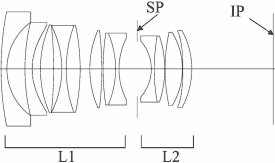
Egami (machine translated) spotted a new Canon patent. This time it is for a 35mm f/1.4 prime lens. The existing EF 35mm was released in 1998, so it makes sense for Canon to work on a new release of this lens. According to Egami, it looks as if Canon has been working since four years on this lens.

Details (machine translated):

  • Patent Publication No. 2012-123155
    • 2012.6.28 Release Date
    • 2010.12.8 filing date
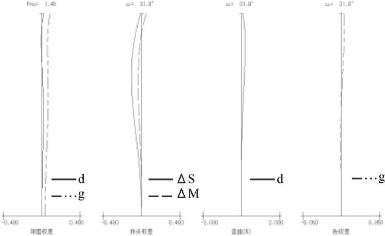
  • Example 1
    • Focal length f = 34.73mm
    • Fno. 1.45
    • Half angle of 31.92 deg.
    • Image height 21.64mm
    • Length 128.11mm lens
    • 38.48mm back focus
    • An effective diameter of 52.03mm lens
    • Effective diameter aperture 25.52mm
    • Lens Construction 12 elements in 9 groups sheet
    • 2 2 aspherical surface
  • Retrofocus
    • And retro focus lens optical system focal length is shorter than the length of the optical system
    • Increasingly asymmetric refractive power arrangement must be strengthened a negative refractive power of the front group in particular
      • Coma aberration, astigmatism, spherical aberration occurs
    • Order to secure a back focus must be to increase the ratio retro
      • Pettsuvu~aru sum is reduced and off-axis aberration (field curvature, distortion) is worse