Here is a neat video. Host Rudy Winston, Canon technical advisor of renowned fame, explains how Auto Focus woorks on Canon cameras.
Join Rudy Winston, a Technical Advisor in the Product Planning Dept. for Canon USA, and me as we take a deep dive into the amazing auto-focus systems available in the current line of Canon cameras, on this Behind the Shot.
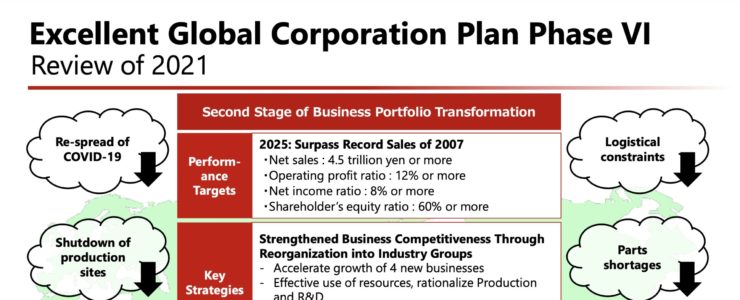
Canon released their annual financial results, and reveals strategies and hopes for the future.
Canon aims to become the number 1 in the mirrorless market.
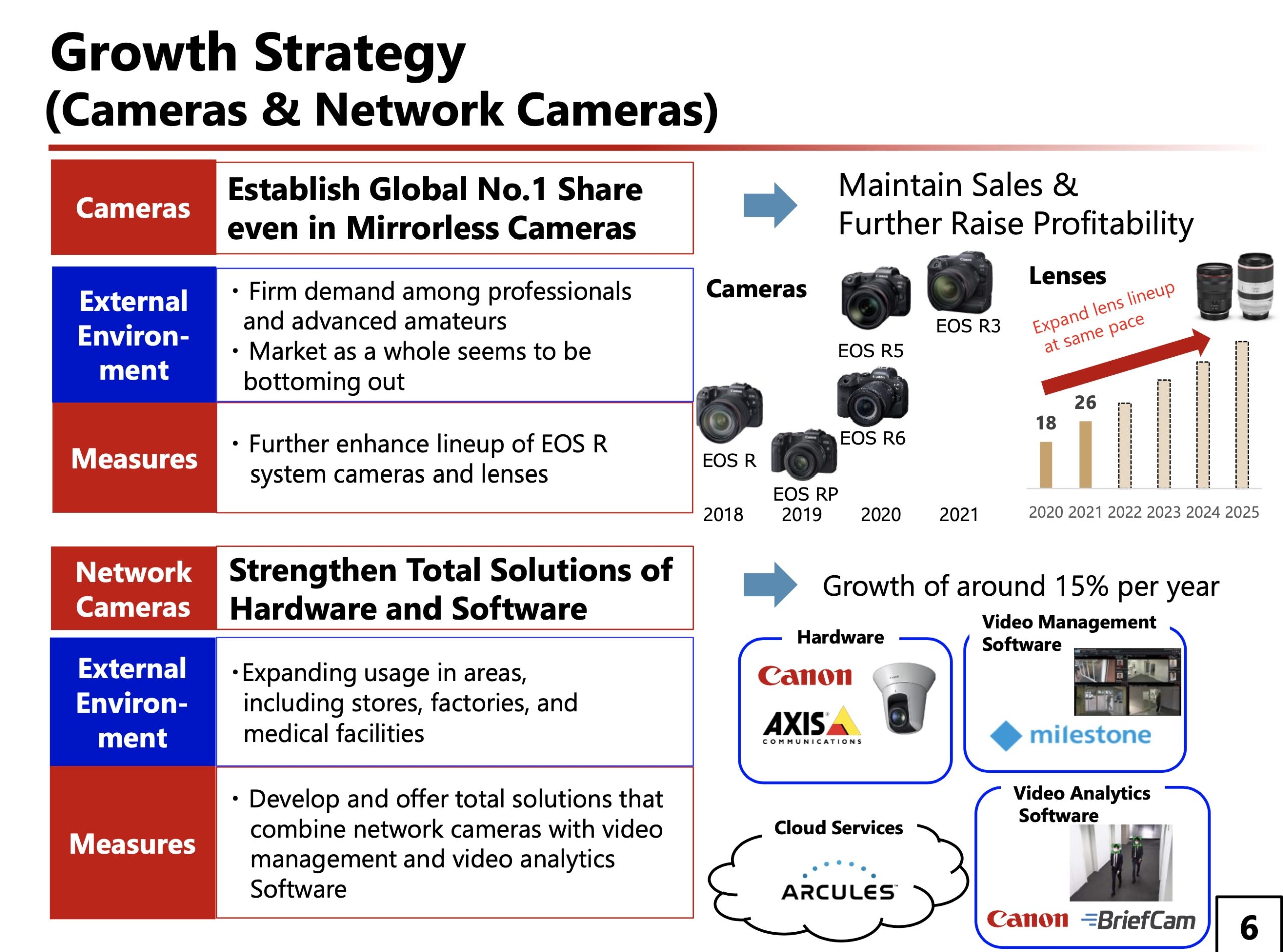
As for cameras, although the overall market continues to shrink, this mainly reflects lower sales of entry-class models. In contrast, demand among professionals and advanced amateurs seeking high-quality image expression remains strong. Overall, the market seems to be bottoming out. Over the past several years, we have worked to raise the appeal of the EOS R system by enhancing our lineup with highly competitive full- frame mirrorless cameras and RF lenses. As a result, we have established a solid position in mirrorless cameras, and are now in a situation where we can target the top market share position. Leveraging this, we will not only increase our market share, but also strive to improve our product mix, and combined with the effects of structural reforms we have been implementing, we feel we have created a system that can generate stable, high profits. Going forward, we will continue to expand our lineup in response to user feedback, secure the global No. 1 market share position in mirrorless cameras, maintain the level of sales, and further increase profitability by expanding automation and improving development efficiency.
[…]
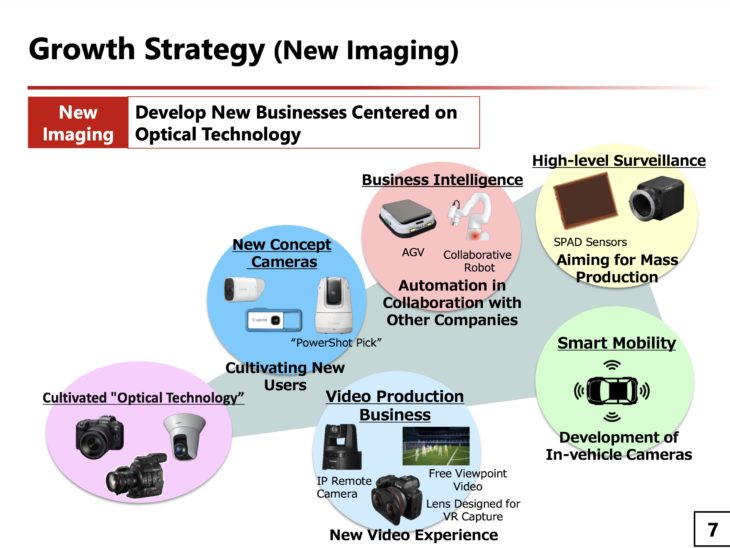
As for the new imaging business that centers on optical technology, for consumers, last year we launched the PowerShot Pick, the third of our new concept cameras, which can automatically recognize people and capture natural and rich facial expressions of your family’s daily life etc. without being aware of the camera. Additionally, for the video production business, our free-viewpoint video system is increasingly being used in corporate commercials, TV programs, and recently in broadcasting professional sports. In addition, we have successfully launched exciting businesses such as the IP remote camera system, which contributes to more efficient and labor-saving video production, and the EOS VR system, which enables easy shooting of VR video that is being utilized in a wide range of industries such as entertainment, tourism, and education.
Furthermore, as for future product development, we expect to mass-produce SPAD sensors by the end of this year, which can take color images with excellent color reproducibility even in the dark, and are expected to be used for various applications, including advanced monitoring. Additionally, in the smart mobility field, where significant growth is expected, we will continue to develop in-vehicle cameras and expand the scale of our new imaging business.
Canon also plans to release many RF lenses per year through 2025. In the presentation material they say at the “same pace” as in the last years. So this could mean up to eight new RF lenses per year.
Once every few months a new camera or lens shows up on the Russian regulatory site that deals with electronics radio emissions licensing. It has long been the source of occasional product detail leaks that Canon filings reveal prior to actual announcements. Except, in Russia, this department also happens to be one of the primary bureaucracies censoring the internet. Yesterday and today, the site has been down – due, apparently, to a distributed denial of service attack.
Russian regulations over recording technology and radio technology have been some of the strictest in the world. During the Cold War, tourists were sometimes arrested for taking pictures of subway station entrances, and film was often confiscated or exposed in customs. Private transmission equipment wasn’t allowed in without special licenses. After the cold war, the regulation got a little more rational, but never lost the slightly paranoid, national security orientation.
Let’s hope this conflict is over soon and doesn’t escalate.
Apology and guidance regarding product supply status
Updated: February 28, 2022
Thank you for your continued patronage of Canon products.
Currently, we have received orders for each of the following products in excess of expectations, and due to the influence of global parts supply, delivery delays are occurring. We apologize for the inconvenience caused to our customers and business partners. The products are scheduled to be shipped one by one, but it is expected that it will take a lot of time for the new camera body EOS R3 and RF lens RF14-35mm F4 L IS USM. We sincerely apologize for the long wait for our long-awaited customers. We will continue to take measures to ensure a stable supply of products so that we can deliver our products as soon as possible. Thank you kindly look forward for your understanding.
Product name
About supply
EOS R3 RF14-35mm F4 L IS USM
It will be shipped in sequence, but it may take more than half a year to deliver when you place a new order.
RF16mm F2.8 STM RF400mm F2.8 L IS USM RF800mm F5.6 L IS USM RF1200mm F8 L IS USM Eye cup ER-hE Lens hood EW-65C
We plan to ship the products one by one, but it may take longer than usual to deliver.
All in all, chip shortages will ease slightly in 2022 with more production in Asia, but a massive wave of new supply will be on stream in 2023. Given that the bulk of that production will only be for mature node semiconductors, only higher-end chips will face shortages.
Of course, another potential bottleneck for the entire industry is the supply of vital rare earths and other raw materials needed to manufacture the semiconductors themselves, which could be in jeopardy as a result of rising geopolitical tensions.
Other uncertainties include climate change and the need to meet various emissions targets, which are bound to affect the production of semiconductors as well, and any resulting upward pressure on energy prices.
Still, the massive investment in mature node semiconductors does point to a potential bifurcation in the supply of semiconductors, with the least advanced ones experiencing huge supply increases, if geopolitics and rare earths are permitting, while the most advanced chips, which are key for new technologies, will remain scarce.
This website or its third-party tools use cookies, which are necessary to its functioning and required to achieve the purposes illustrated in the cookie policy. If you want to know more or withdraw your consent to all or some of the cookies, please refer to the cookie policy. By closing this banner you agree to the use of cookies.