Canon Announces RF 5.2mm f/2.8L Dual Fisheye Lens For VR
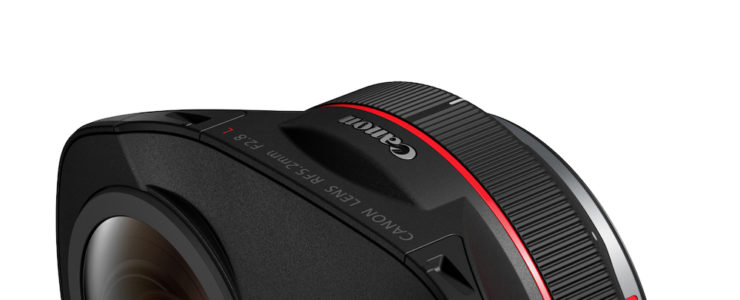
RF 5.2mm f/2.8L

The lens no rumor mill saw coming is here: the RF 5.2mm f/2.8L Dual Fisheye lens for virtual reality applications. The Canon RF 5.2mm f/2.8 L Dual Fisheye lens is scheduled to be available in late December 2021 for an estimated retail price of $1,999.

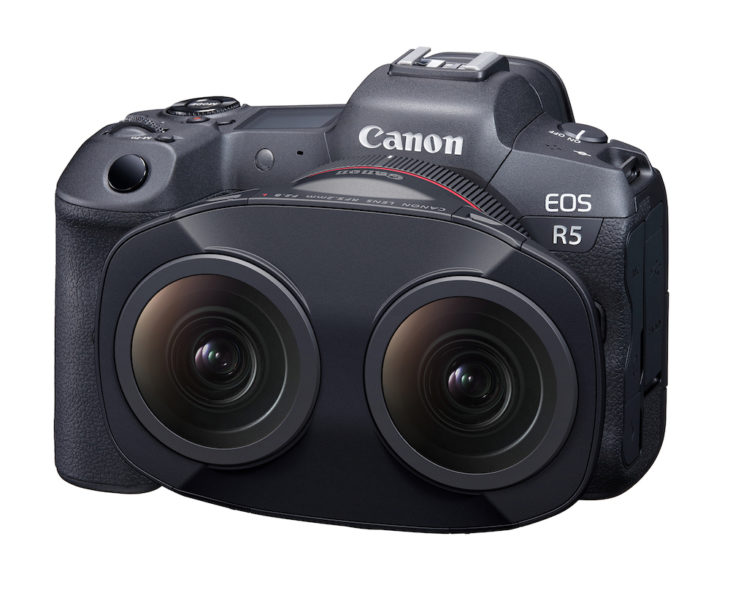
The RF 5.2mm f/2.8L Dual Fisheye lens will be part of the EOS VR system and capture stereoscopic 3D 180-degree images. A firmware update to support the lens on the EOS R5 will follow and a software to edit the images and convert and process them for viewing on VR devices will also be released.
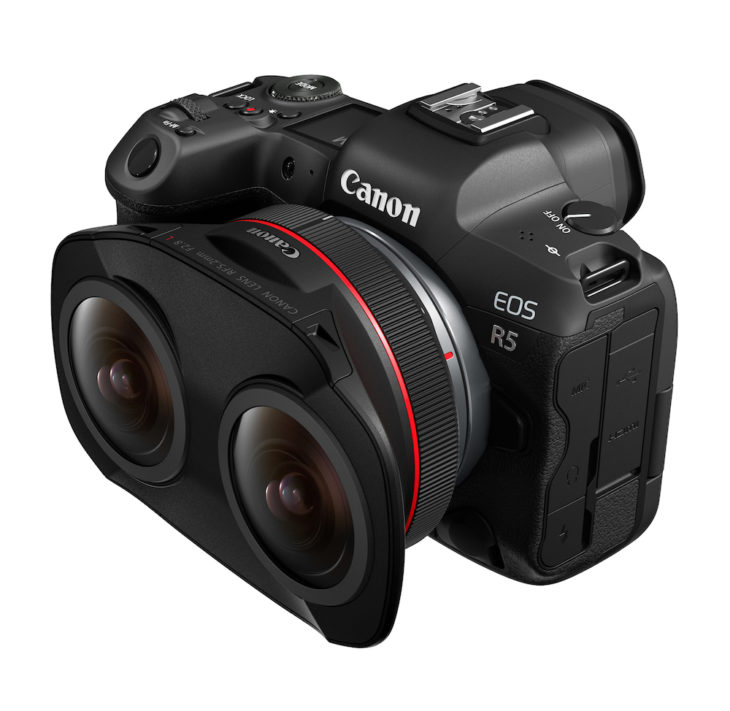
Canon press release:

Virtual Reality Through a New Lens: Canon Introduces Their First Dual Fisheye Lens for Stereoscopic 3D 180° VR Capture in 8K

MELVILLE, NY, October 6, 2021 – Canon U.S.A., Inc., a leader in digital imaging solutions, has introduced its first product designed to empower the next generation of immersive storytellers. The new RF5.2mm F2.8 L Dual Fisheye lens brings stereoscopic 3D virtual reality (VR) capture* to the EOS R5 camera as part of the EOS VR System, which also includes a future firmware update for the EOS R5 camera to support use of this lens with new VR shooting specific functions, as well as new upcoming Canon EOS VR software solutions for conversion and processing. As the world’s first digital interchangeable dual fisheye lens capable of shooting stereoscopic 3D 180° VR imagery to a single image sensor** the complexities of virtual reality production and the ability to view the content in full capacity, are greatly streamlined for seasoned professionals and newcomers to the craft. In order to truly experience the captured content by this system in its truest form, a compatible VR headset is recommended for use such as the Oculus Quest 2, allowing the viewer to immerse themselves in the content — by simply moving their head to provide a vivid, incredibly wide view.

“At Canon, we innovate so creators can push artistic boundaries, and this commitment to innovation is what led us to introduce the new RF5.2mm F2.8 L Dual Fisheye lens. As Canon’s first entry into the world of virtual reality image capture, the EOS VR System represents an important milestone in our company’s rich history as a lens manufacturer and welcomes a bright future for VR content creation,” said Tatsuro “Tony” Kano, executive vice president and general manager of Canon U.S.A.’s Imaging Technologies & Communications Group. “This new RF lens produces a stunning 8K virtual reality image and sets itself apart through its simplified workflow. Our goal is to make immersive storytelling more accessible for all.”

The RF5.2mm F2.8 L Dual Fisheye features high-quality L-series optics engineered with an interpupillary distance of 60mm for delivery of 3D imagery in VR with natural parallax closely resembling human vision when viewed through a compatible headset. With a 190 degree field of view captured from two separate optical systems they deliver outstanding results for 180° VR viewing platforms. With subwavelength coating technology offering impressive flare control in backlit conditions, VR creators can have freedom to shoot regardless the time of day, or position of the sun. The dual fisheye design provides versatile exposure control with a maximum aperture of a bright f/2.8 to a deep depth of field of f/16 with electronically controlled apertures allowing the dual fisheye lens to operate just like other RF mount lenses. Between the dust and water-resistant sealing and fluorine coating of the lens and the robust build of the EOS R5 camera, this System delivers peace of mind even in challenging weather conditions. Canon’s free Camera Connect app and Canon’s EOS Utility program both will be updated in the future to offer remote-control live view functionality for monitoring purposes while on-the-go.

The EOS VR System’s convenient workflow is a standout feature. Accomplished by recording left and right fisheye images to a single full-frame image sensor, this design helps to solve common VR challenges of stitching and synching, by outputting one single image file. Canon is currently developing two paid subscription-based software solutions as available options for completing the post-production process. Canon’s EOS VR Utility will offer the ability to convert clips from dual fisheye image to equirectangular and make quick edits, as well as select the resolution and file format before export. With the EOS VR Plug-In for Adobe® Premiere® Pro, creators will be able to automatically convert footage to equirectangular, and cut, color, and add new dimension to stories with Adobe Creative Cloud® apps, including Premiere Pro.

Compact, lightweight, and portable, the RF5.2mm F2.8 L Dual Fisheye is easily packed in a camera bag to help the creator tell unlimited virtual reality stories.

Additional features of Canon’s first interchangeable, stereoscopic 3D 180° VR 180 lens include:

  • Close-focusing distance of 7.87-inches/0.2m is possible – max magnification is 0.03x.
  • Aperture range of f/2.8 to f/16 with a 7-blade aperture and simultaneous electro-magnetic diaphragm for both left and right lenses.
  • Built-in Gelatin Filter Holder – allows ND gel filters to be used in bright environments if a bright aperture is desired.
  • Fluorine Coating on the front lens elements, with a dust and water resistant design.
  • Extremely compact size – allowing it to be used in different types of productions.

Pricing and Availability

The Canon RF 5.2mm F2.8 L Dual Fisheye lens is scheduled to be available in late December 2021 for an estimated retail price of $1,999.00***. In addition to the lens, both of Canon’s EOS VR Software solutions (EOS VR Utility and the EOS VR Plug-in for Adobe Premiere Pro) are currently scheduled to be available in late December 2021. Both software solutions will be available as a paid subscription based model, but will offer free trial periods (details to be disclosed at a later date) as well as the ability to process still images and certain clip lengths for free. For additional information, please visit usa.canon.com.
Canon PowerShot G7 X Mark III Firmware Update Released (ver. 1.3.0)

canon powershot g7 x mark iii review

Canon has released a firmware update for the popular PowerShot G7 X Mark III.

At a glance:

  • 20.2MP 1″ Stacked CMOS Sensor
  • DIGIC 8 Image Processor
  • 4.2x Optical Zoom f/1.8-2.8 Lens
  • 24-100mm (35mm Equivalent)
  • 3.0″ 1.04m-Dot Tilting Touchscreen LCD
  • UHD 4K30p and Full HD 120p Video
  • 20-fps Shooting, 30-fps Raw Burst Mode
  • Built-In Bluetooth and Wi-Fi
  • Live Streaming & Vertical Video Support

Canon PowerShot G7 X Mark III firmware 1.3.0 incorporates the following enhancements:

1. Adds support for [Video Blog Recording Mode] setting to the [Movie Mode] function.
2. Adds support for [Zebra Settings] to the [Movie Mode] function.
3. Adds support for [Aspect marker] to the [Shooting information display setting] in [Movie Mode].
4. Adds support for [Recording emphasis] to the [Shooting information display setting].
5. Adds supports level display when AF mode is set to [Face + Tracking priority AF].

Firmware Version 1.3.0 is for cameras with firmware up to Version 1.2.0. If the camera's firmware is already Version 1.3.0, it is not necessary to update the firmware.

Download Canon PowerShot G7 X Mark III firmware 1.3.0.

PowerShot G7 X Mark III coverage is listed here.

Astrophotography: MILCs On The Raise But Canon EOS 6D Still Most Used

eos 6d

Here are some interesting statistics about cameras used for astronomy photography. Canon cameras rule here too.

In the last three years Skies & Scopes has analyzed approximately 400 images listed for the Astronomy Photographer of the Year competition. The results are not what I would have expected.

  • The Canon EOS 6D is the most successfully used astrophotography camera overall, with Canon the best performing brand.
  • The Canon EOS 5D Mark IV is the third most used camera for astrophotography
  • The number of shortlisted images using mirrorless cameras has increased each year and Sony models dominate this section of the market.

The venerable Canon EOS 6D is the most used camera by astro-photographers. More statistics (emphasis mine):

From the three years of shortlisted astrophotography images, there is a split of 55% using DSLR or mirrorless cameras (205 images), and 45% using dedicated astronomy cameras (CCD/CMOS) (169 images)

Moreover, not only is the Canon EOS 6D the most used camera but Canon is also the most used brand (23%), followed by Nikon (22%), ZWO (22%) and Sony (11%).

The six most used cameras are:

  • Canon EOS 6D (10%)
  • ZWO ASI174mm (6%)
  • Canon EOS 5D Mark IV (4%)
  • ZWO ASI160mm (4%)
  • Nikon D750 (4%)
  • Nikon D850 (4%)

Head over to Skies & Scopes to see all statistics.

Canon EOS R3 Not Flagship Camera, Canon Rep Confirms

canon eos r3 firmware sample picture user manual

It was already clear to most in the industry, never the less here is a confirmation: the Canon EOS R3 is not the flagship camera in the EOS R lineup.

Although the EOS R3 is price-wise very close to the Canon EOS-1D X Mark III, the R3 is not playing in the same league . Mainly because the EOS-1D X Mark III features an even better weather sealing and can thus operate in very harsh environments. This was confirmed by a Canon representative at the Photography Show in Birmingham. The video below by Sonder Creative is a recording of the short interview.

When will the flagship EOS R model, likely to be named EOS R1, get announced? We are sorting out rumors we got and will try to update you asap.

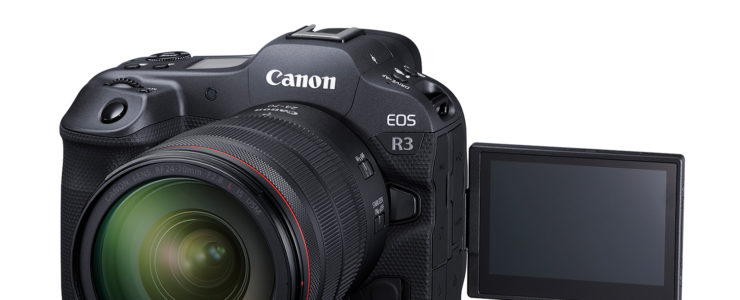
A few days ago a technical brochure about the EOS R3 showed up. You can watch the Canon EOS R3 live-stream again here. All EOS R3 coverage is listed here. We put together some interesting videos about the Canon EOS R3, listed here. Be sure to check Gordon Laing’s in-depth review of the Canon EOS R3, part 1 and part 2. Oh, and don’t forget to listen how the R3’s 30fps sound. Canon EOS R3 product description after the break.

Preorder in the USA ($5,999):
B&H Photo | Adorama

All Canon EOS R3 world-wide preorder links: [shoplist 67350]

Click here to open the rest of the article

Canon EOS R3 Information Brochure Released

canon eos r3

While we wait for the Canon EOS R3 user manual, we can have a look at a detailed information brochure published by Canon Asia.

The brochure reveals some more details about the Canon EOS R3. The brochure is available here. It’s the one MILC born to rule and its reign continues ¯\_(ツ)_/¯

You can watch the Canon EOS R3 live-stream again here. All EOS R3 coverage is listed here. We put together some interesting videos about the Canon EOS R3, isted here. Be sure to check Gordon Laing’s in-depth review of the Canon EOS R3, part 1 and part 2. Oh, and don’t forget to listen how the R3’s 30fps sound. Canon EOS R3 product description after the break.

Preorder in the USA ($5,999): B&H Photo | Adorama

All Canon EOS R3 world-wide preorder links: [shoplist 67350]

Click here to open the rest of the article

The Benefits Of Using The Canon EOS R3 Told By A Pro Photographer

canon eos r3 firmware sample picture user manual

Before the Canon EOS R3 was officially announced, some photos takes at the Tokyo Olympics made their rounds. Now the photographer who used the EOS R3 at the Olympics talks about how good the R3 is.

EOS R3 a glance:

  • 24MP Full-Frame Stacked BSI CMOS Sensor
  • Dual Pixel CMOS AF II, Eye Control AF
  • 6K60 Raw and 4K120 10-Bit Internal Video
  • 30 fps E. Shutter, 12 fps Mech. Shutter
  • 5.76m-Dot EVF with 120 fps Refresh Rate
  • 3.2″ 4.2m-Dot Vari-Angle Touchscreen LCD
  • Sensor-Shift 5-Axis Image Stabilization
  • Multi-Function Shoe, Built-In Vert. Grip
  • CFexpress & SD UHS-II Memory Card Slots
  • Wired LAN and 5 GHz Wi-Fi Support

Jeff Cable gave an interview to Digital Photo Pro about the Canon EOS R3. Here are some excerpts.

Q: What do you think about it having 24MP of resolution?

Jeff Cable: I think 24MP is fine for shooting sports. I’d maybe preferred a bit more resolution – I see 30MP as a sweet spot – but as a sports photographer, I don’t really need 50 or 60 or 70MP. For example, the USA Water Polo team has a large billboard in Southern California using one of my images from the Tokyo Olympics and it was taken with the R3 at 24MP. Plus, the more megapixels you pile on, the more noise you’re introducing into the image.

[…]

Q: Was the full 30 frames per second speed something you used a lot at the Olympics?

Jeff Cable: For stuff I was contractually obligated to shoot, I was mostly using the R3 at max speed, and it really did make a difference. The job of a sports photographer is to capture the peak of action and the R3’s 30fps helped me do that.

[…]

Q: How was editing all those images you shot at 30fps?

Jeff Cable: It was brutal. At a typical water polo match in the past, I’d shoot around 1200 images with the Canon 1D X. Now, with the R3, I’d come back with 2500 or 2600 shots. And I’m like, holy crap, my deadlines didn’t change, so now I have to haul ass in the editing room.

[…]

Q: How was the Eye Control Autofocus (AF) feature on the R3?

Jeff Cable: […] During some sports though, the Eye Control AF wasn’t locking in fast enough for what I wanted, so I turned it off and went to back-button focus. Mostly though, I didn’t have time the learn it well enough to use it during the Olympics. I’d like to spend more time experimenting with it. It’s something I’m dying to use for my event photography.

Read the interview at Digital Photo Pro…

You can watch the Canon EOS R3 live-stream again here. All EOS R3 coverage is listed here. We put together some interesting videos about the Canon EOS R3, isted here. Be sure to check Gordon Laing’s in-depth review of the Canon EOS R3, part 1 and part 2. Oh, and don’t forget to listen how the R3’s 30fps sound. Canon EOS R3 product description after the break.

Preorder in the USA ($5,999): B&H Photo | Adorama

All Canon EOS R3 world-wide preorder links: [shoplist 67350]

Click here to open the rest of the article