Together with friends he made a prototype 4.9mm f/3.5 “hyperfisheye” lens.
[the] prototype C-4 Optics 4.9mm f/3.5 circular fisheye [is] a massive lens giving a 270-degree field of view, meant for immersive video and specialty shots. To give you an idea of what 270 degrees means, the lens sees behind itself. An ultra-wide 15mm fisheye lens gives a 180-degree field of view while an 11mm rectilinear lens is less than 120 degrees.
The picture below exemplifies what is said above.
Head over to Lens Rentals to see all steps of the assembly, along with a large set of images. Or just watch the video below.
We anticipated it a few days ago, now Tamron made it official.
Press release:
Tamron announces the development of three lenses – two for full-frame DSLRs and one for full-frame mirrorless cameras
February 20, 2019, Saitama, Japan – Tamron Co., Ltd. (President & CEO: Shiro Ajisaka), a leading manufacturer of optics for diverse applications, announces the development of two new lenses for full-frame DSLR cameras
the 35-150mm F/2.8-4 Di VC OSD (Model A043) zoom lens and the SP 35mm F/1.4 Di USD (Model F045) fixed focal lens; and a new high-speed ultra wide-angle zoom lens for Sony E-mount full-frame mirrorless cameraa
the 17-28mm F/2.8 Di III RXD (Model A046).
Tamron will display these new lenses at CP+ 2019, the World Premiere show for camera and photo imaging, beginning February 28 through March 3, 2019 at Pacifico Yokohama.
Irix 150mm f/2.8 macro has received a world-renowned design prize
Baar, Switzerland, February 15, 2019
Although it’s only three years since Irix arrived on the world market, our team of international photographers – a team who established the Irix brand – are pleased to be the winners of one of this year’s iF PRODUCT DESIGN AWARDS, a world-renowned prize for design!
Therefore we are probably one of the youngest photographic companies that have received such an award and recognition from the world’s oldest independent design organization, the Hannover-based iF International Forum Design GmbH, a group which organizes the iF PRODUCT DESIGN AWARD.
Photographer Tyson Robichaud switched to the Canon EOS R after years using Sony cameras (and other brands too). In a recent post he reviews the Canon EOS R, compares the EOS R to the Sony a7R II, and explains why he switched to Canon.
Tyson’s review is a real world review, with many sample photos, ISO test charts and more useful insights. As you can see below, Canon’s sensor is still behind Sony’s when it comes to high ISO performance.
The EOS R has a lot going for it, and a few bizarre omissions/inclusions in my personal opinion. How those sit with any given shooter will certainly come down to personal needs and expectations for the cost.
Short and sweet, the image quality is still behind the better performing, comparably priced full frame cameras right now. That, in and of itself may be enough for many to steer clear and go elsewhere with their hard earned money. The tradeoff for that IQ, in my experience, has been a much better and more solidly operating tool in most every regard. Less the omission of in body stabilization, and some of the odd and arguably excusable/ignorable design choices, I find the EOS R to be provide a better shooting experience for me, compared to my Sony cameras. Canon, for their faults, have always been great at building a camera that integrates well with the shooter, and photographic task at hand.
If you want to learn about the Canon EOS R we highly recommend Tyson’s review. It’s the kind of camera review I read before deciding which camera to buy.
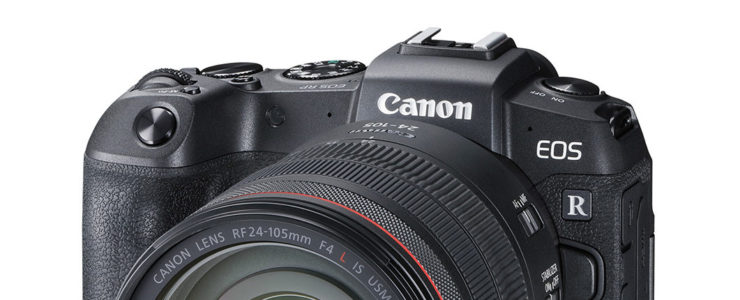
Yesterday Canon announced their second full frame mirrorless camera, the Canon EOS RP.
This website or its third-party tools use cookies, which are necessary to its functioning and required to achieve the purposes illustrated in the cookie policy. If you want to know more or withdraw your consent to all or some of the cookies, please refer to the cookie policy. By closing this banner you agree to the use of cookies.