Canon EOS 6D Mark II Has Been Discontinued

canon EOS 6d Mark ii

Please note: the original post mentioned the EOS R6 Mark II, that was obviously nonsense and a mistake.

It appears the Canon EOS 6D Mark II has reached end of life, at least what concerns the production.

Canon EOS 6D Mark II at a glance:

  • 26.2MP Full-Frame CMOS Sensor
  • DIGIC 7 Image Processor
  • 45-Point All-Cross Type AF System
  • Full HD Video at 60 fps; Digital IS
  • 3″ 1.04m-Dot Vari-Angle Touchscreen LCD
  • Dual Pixel CMOS AF and Movie Servo AF
  • Native ISO 40000, Expanded to ISO 102400
  • 6.5 fps Shooting; Time-Lapse & HDR Movie
  • Built-In GPS, Bluetooth & Wi-Fi with NFC
  • Dust and Water-Resistant; SD Card Slot

Sources from Japan suggest that the EOS 6D Mark II is no longer produced. The EOS 6D Mark II is still available at major resellers, though.

Our Canon EOS 6D Mark II coverage is listed here.

[via asobinet]

Canon Claims To Be #1 Mirrorless Camera Brand In The US

Canon

Canon press release:

The Mirrorless Data is Clear: Canon is #1

MELVILLE, NY, February 8, 2024  –Canon U.S.A., Inc., a leader in digital imaging solutions is proud to announce they have solidified the #1 mirrorless camera brand position for a third year in a row in 20231 and was the #1 mirrorless camera brand in the U.S. in 20232.

Since the introduction of the EOS R system, Canon has continued its innovative product developments with cameras such as the EOS R6 Mark II, EOS R5 C, EOS R5 and EOS R8. The robust rolodex of cameras has options for the professional photographer on the sidelines of world-class sporting events, to portrait or wedding photographers looking to capture a moment of a lifetime and the family photographer who is documenting the hustle and bustle of everyday life. Canon mirrorless cameras have a place in the gear bags of any visual storyteller looking for high-quality images and video.

“The needs of our customers have always been at the forefront of our business at Canon and it’s why we have worked so hard to maintain a number one position within the industry,” said Brian Mahar, senior vice president and general manager, Imaging Technologies & Communications Group. “I am proud of our team for not only achieving this great success, but for also empowering our visual storytellers.”

“Canon mirrorless cameras have impacted my business’s bottom line as well as my client experience. With the advancement of technology, I’m able to concentrate more on client interaction and higher quality production. I’ve seen an enhancement in my photography, my profit and client satisfaction.” Vanessa Joy, Canon Explorer of Light and award-winning wedding and brand photographer

To learn more about Canon’s EOS R system including RF lenses visit: https://www.usa.canon.com/cameras/eos-r-system

# # #

† Based on weekly patent counts issued by United States Patent and Trademark Office.

1 Source: Circana, Retail Tracking Service, U.S. unit sales, 12 months ending December 2021, 2022, and 2023

2 Source: Circana, Retail Tracking Service, U.S. unit sales, 12 months ending December 2023

Are These The Nikon Z 6 Mark III Specifications?

nikon z 6 mark iii full frame mirrorless camera nikon rumors

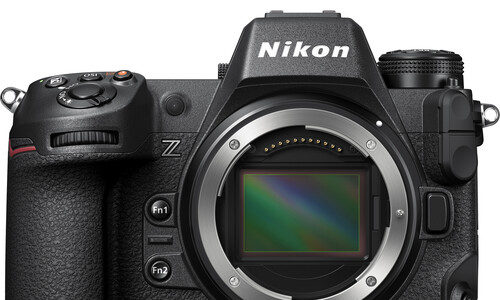
The same user that posted a much reposted set of alleged Canon EOS R1 specifications, posted a set of alleged Nikon Z 6 Mark III specifications.

Coming from Weibo, here are the suggested Nikon Z 6 Mark III specifications. They are machine translated and partly manually corrected. The [?] means I have no idea what it means. Suggestions welcome.

  • Accelerated FX picture 24.5 Megapixels BSI CMOS Sensor
  • EXPEED 7 processor
  • Same form factor as the Z 8
  • Easy-to-use multi-angle LCD screen, bright EVF
  • Optimized ergonomics
  • 7 stops IBIS, better than Z f optimised video stabilisation
  • Pixel displacement high resolution photography [?]
  • Double data flow AF system, updated focus algorithms and methods, better AF than Z f and Z 8
  • FX picture with the highest 40fps electronic shutter consecutive shot with 120fps DX picture electronic shutter
  • 6K/60p & 4K/120p 12Bit N-RAW recording
  • 4K H.265 10Bit MOV video, which can be a FX picture of 6K after sampling 4K, or a DX picture with a maximum of 120p.
  • 4K ProRes 422 HQ 10 MOV video, up to 4K/60p
  • Fine quick door corner options, project frame rate and shooting frame rate split [?]
  • Two card slots supporting CFexpress B, SD UHS-II
  • Support WiFi 2.4/5 GHz, Bluetooth LE connection

Canon Displays A Concept VR/3D Lens For APS-C At CES 2024

ces 2024

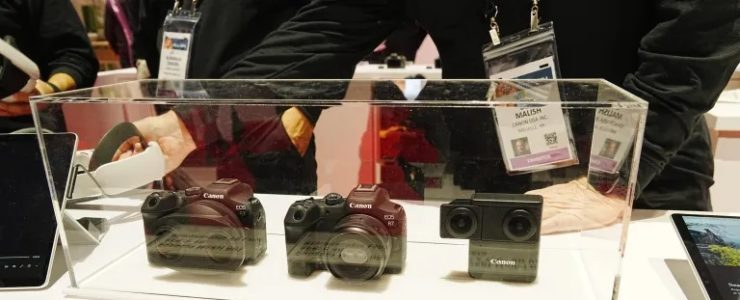
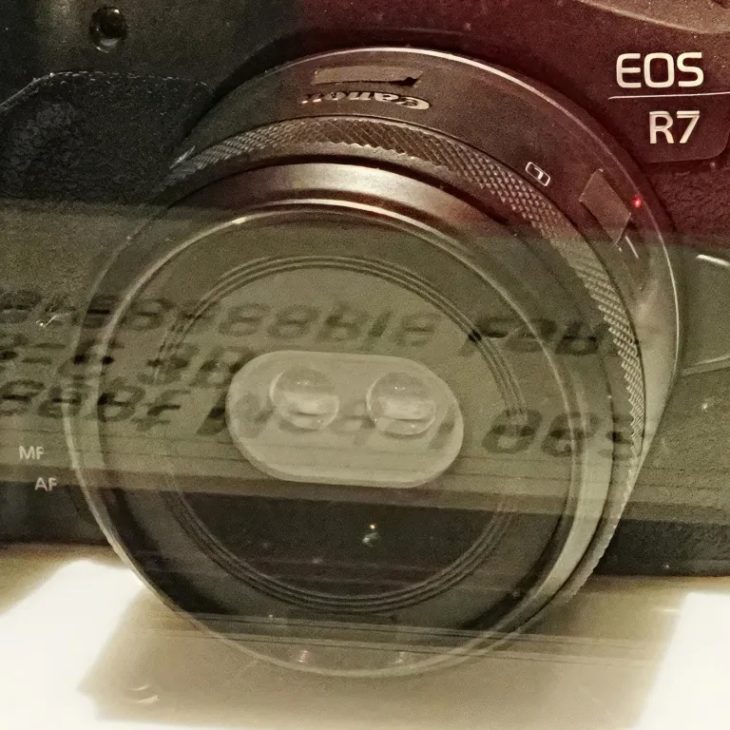
Canon put a concept lens on display at CES 2024. The lens appears to be for virtual reality (VR) and/or 3D applications.

Along with the lenses, Canon also displayed a PowerShot V-series camera for VR. Here the gear that has been put on display:

  • APS-C 3D VR lens
  • APS-C 3D stereoscopic lens
  • 360°/180° 3D VR camera

Canon already offers the RF 5.2mm F2.8L Dual Lens Fisheye lens for this kind of applications. It appears Canon is even more committed to VR. The images on top and below come from Weibo.

[via asobinet]

Save Up To $75 On Topaz Labs AI Software (Photo AI & Video AI)

topaz labs

There are a few days left for this sale by Topaz Labs. The sale ends December 31, 2023.

You get $50 off Photo AI and $75 off Video AI. Trail version available, click here to learn more.

More selected deals:

Nikon Made A Special Firmware For NASA, To Avoid Cosmic Rays In Photos

nikon z 9

Well, if this is not a nice technological thing by Nikon. Making a special firmware to block cosmic rays in photos.

In an interview with PetaPixel, astronaut Don Pettit talks about the changes that Nikon made to firmware.

Excerpt from the interview:

“Our cameras in space get sensor damage from galactic cosmic rays and after about six months we replace all the cameras but you still have cameras with significant cosmic ray damage,” explains Pettit.

“It shows up at fast shutter speeds, not just the slow ones. So we got Nikon to change the algorithm so that it can do in-camera noise reduction at shutter speeds of up to 500th of a second.”

Pettit says Nikon’s in-camera noise reduction “does wonders” for getting rid of the cosmic ray damage and that “trying to get rid of it after the fact is really difficult.”

NASA used to use Hasselblad cameras, but then started using Nikon cameras. Apparently , there are between 12 and 15 Nikon D5 cameras on the ISS (International Space Station). According to Don Pettit, they are “in the process of switching over to the Z9 and [they are] going to slowly replace the lenses with the Z lenses, initially replacing the lenses that require the mechanical autofocus.“