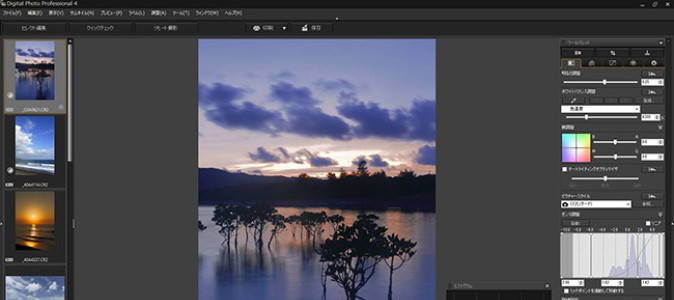
Updates for Canon Digital Photo Professional, EOS Utility, Picture Style Editor are available for download at Canon USA. Support for the latest Canon cameras has been added.
Changes for Digital Photo Professional 4.6.10:
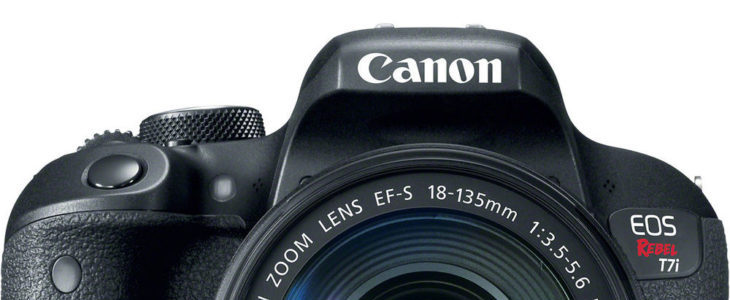
Supports EOS Kiss X9i/REBEL T7i/EOS 800D, EOS 9000D/EOS 77D, EOS M6
Supports EF-S18-55mm f/4-5.6 IS STM
Stability of the connectivity has been improved
Click here to download the updates for Canon Digital Photo Professional and the other software tools.
Canon Digital Photo Professional is a powerful RAW processing and photo editing software that comes for free with all Canon DSLRs (and MILCs and RAW capable Powershots). As powerful as it is, it might be intimidating at first. If you want to jumpstart into Canon Digital Photo Professional have a look at this series of Canon produced tutorials.
The new cameras are expected to start shipping by the end of the March/beginning of April (depending by your geographical area. To pre-order follow the links below:
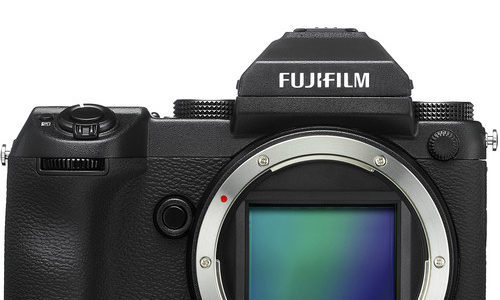
This will come as shock for the many Fuji fans. The latest Fuji product, the medium format, mirrorless Fujifilm GFX 50s, is not worth the extra money you have to pay over a full-frame DSLR. That’s what photographic authority DPReview says.
Low Light noise performance: Current Full Frame systems offer faster lenses than the GFX, so you’ll get less low light noise with FF. Moreover the FF sensor technology like Sony’s back-illumited sensor allows to catch up with MF since “sensor is better able to use the light projected onto it“
Base ISO Dynamic Range: The Nikon has the ISO 64 mode. “Each pixel can hold more total charge before clipping, relative to equally-sized pixels on any other sensor in a consumer camera. That means it can tolerate a longer exposure at ISO 64, longer enough (at least 2/3 EV, or 60% more light) to capture as much total light as the 68% larger sensor in the GFX 50S exposed at its base ISO (100). […] noise performance at ISO 64 rivals many current medium format cameras their base ISOs“
Shallow Depth-of-Field: The GFX lenses are not as fast as the fastest FF lenses, so they have less shallow DOF
Resolution: Resolution-wise, they simply can’t imagine anything better than the Canon 5DS R paired with truly stellar lenses. However, they also add that “larger sensors will always tend to out-resolve smaller sensors with equivalent glass. And so this is the area where we most expect to see an advantage to the Fujifilm system, especially over time as we approach 100MP, and beyond. It’s probably easier for a F1.8 prime paired with the GFX 50S to out-resolve a F1.4 prime on a 5DS R when both systems are shot wide open, but whether that will be the case (or if Fujifilm will even make a F1.8 or brighter prime for the system) remains to be seen. I certainly don’t think it would be a cheap combination.”
As you can see, the available ecosystem (i.e. lenses!) plays an important role for DPreview’s reviewer. I guess that must hurt for some people. Being a medium format camera, the Fujifilm GFX 50s comes with a corresponding price tag, $6,499. The price of the full-frame [shoplink 27765]Canon EOS 5Ds is below $3000[/shoplink], and you can use some of the world’s best lenses, so it isn’t difficult to understand why DPReview gave such a statement.
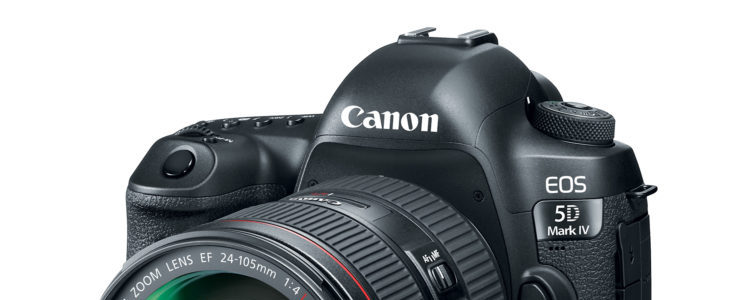
If true this is great news for all videographers. Canon may soon add C-Log to the Canon EOS 5D Mark IV’s feature set, that’s what rumors suggest. It fits with a previous rumor stating new features will be added to the EOS 5D Mark IV via firmware.
The new firmware, and hence C-Log on the EOS 5D Mark IV could be announced immediately before NAB 2017 in Las Vegas, USA, happening in April 2017.
While it’s still a rumor, it will likely cause some excitement among videographers. I just wonder why Canon isn’t delivering certain features from the beginning instead of adding them later via firmware.
Both DPReview and Imaging Resource had the rare opportunity to visit Canon’s primary lens factory. The Utsunomiya lens factory – about 80 miles north of Tokyo – is where Canon assembles all its “L” lenses. Both articles offer a pretty interesting journey into the Utsunomiya lens factory, accompanied by plenty of pictures and insights. Definitely worth to have a look.
DPReview also posted an interview with Canon execs taken at the Utsunomiya lens factory. Some excerpts from the interview:
What percentage of L lenses are manufactured in the Utsunomiya lens plant?
Because this is the ‘mother’ factory, 100% of L lenses are made here.
How many different lenses can be manufactured simultaneously in this plant?
Basically, we create all lenses every day [including L-series EF, Cinema EOS and broadcast]. The only exception is some of the broadcast lenses.
Which lenses in particular are the most difficult to manufacture and why?
Any large super telephoto lenses because of the size of the glass elements. In terms of skill required for lens assembly: the TV broadcast lenses are most difficult.
How many lenses are produced at this lens plant every year, both in terms of types of lenses and total units?
We do not disclose total production for this plant. That said, Canon has produced a total of 120 million lenses over the years. Of course, many of those are kit lenses, which are not produced here, but in our facility in Taiwan.
Google developed Guetzli, a new JPEG encoding algorithm. What’s special with it? The algorithm, which btw is open source, is able to compress a JPG file without loss of image quality and to cut its size by 35% (again: it’s lossless).
Guetzli is a JPEG encoder that aims for excellent compression density at high visual quality. Guetzli-generated images are typically 20-30% smaller than images of equivalent quality generated by libjpeg. Guetzli generates only sequential (nonprogressive) JPEGs due to faster decompression speeds they offer.
From the Google Research Blog:
Guetzli [guɛtsli] — cookie in Swiss German — is a JPEG encoder for digital images and web graphics that can enable faster online experiences by producing smaller JPEG files while still maintaining compatibility with existing browsers, image processing applications and the JPEG standard. From the practical viewpoint this is very similar to our Zopfli algorithm, which produces smaller PNG and gzip files without needing to introduce a new format, and different than the techniques used in RNN-based image compression, RAISR, and WebP, which all need client changes for compression gains at internet scale.
The visual quality of JPEG images is directly correlated to its multi-stage compression process: color space transform, discrete cosine transform, and quantization. Guetzli specifically targets the quantization stage in which the more visual quality loss is introduced, the smaller the resulting file. Guetzli strikes a balance between minimal loss and file size by employing a search algorithm that tries to overcome the difference between the psychovisual modeling of JPEG’s format, and Guetzli’s psychovisual model, which approximates color perception and visual masking in a more thorough and detailed way than what is achievable by simpler color transforms and the discrete cosine transform. However, while Guetzli creates smaller image file sizes, the tradeoff is that these search algorithms take significantly longer to create compressed images than currently available methods.
It’s easy to figure out how big of an impact this will make for the Internet. The algorithm may literally reduce the size of the Internet, and that’s no joke.
You may try out Guetzli on your own, it’s free and available on GitHub. It’s compatible with all browsers and image processing applications, and obviously it’s compatible with the JPEG standard.
What about the name? You’ve seen above that it is Swiss German for cookie. The project was born out of Google Research’s Zurich office.
This website or its third-party tools use cookies, which are necessary to its functioning and required to achieve the purposes illustrated in the cookie policy. If you want to know more or withdraw your consent to all or some of the cookies, please refer to the cookie policy. By closing this banner you agree to the use of cookies.