Sigma 35mm f/1.4 Review (The Digital Picture)
[shoplink 8892][/shoplink]

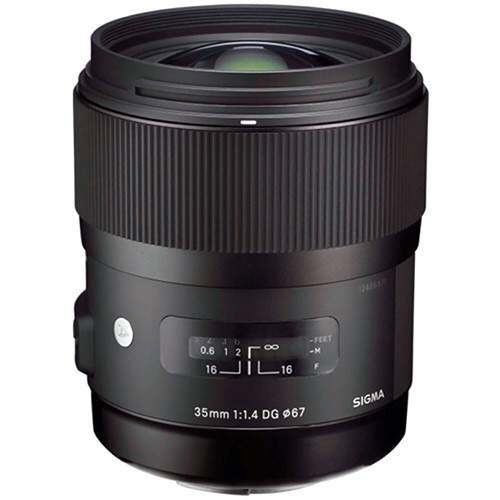
The Digital Picture reviewed the [shoplink 8892]Sigma 35mm f/1.4 (price & specs)[/shoplink], a lens highly appreciated also by other reviews. About Sharpness:

The Sigma 35mm f/1.4 EX DG HSM Lens is an impressively sharp lens – with very sharp center and mid image circle results even at a wide open f/1.4 aperture. Full frame f/1.4 peripheral image circle results are still quite good, but softer than the center results. Results are slightly sharper at f/2, but the clearing vignetting is the biggest difference noticed by stopping down. Don’t expect center-of-the-frame image quality to noticeably improve by stopping down beyond f/2. Corners slowly improve until becoming very impressively sharp at f/5.6.

About image quality:

The impressiveness of the Sigma 35mm f/1.4 EX DG HSM Lens’ image quality becomes most apparent when comparing the results to the other great 35mm lenses. I have not used a lens of any focal length (Canon, Nikon, Zeiss, …) that delivered better/sharper image quality at f/1.4. This comparison of course includes the also-impressive Zeiss 35mm f/1.4 Distagon T* ZE Lens and the Canon EF 35mm f/1.4 L USM Lens.

About auto-focus:

While it is not perfect, I’m finding the Sigma 35 to perform close to the Canon 35 L in AF accuracy. A somewhat consistent and quite noticeable front focus problem on both of my 5D Mark III bodies required AFMA to correct. You may want to capture multiple images in situations with especially shallow DOF – which will be closer to MFD (Minimum Focus Distance). Note that the focus-and-recompose technique can begin to fail as shallower DOF is achieved.

And finally:

I think that the Sigma 35mm f/1.4 EX DG HSM Lens is my new favorite Sigma lens. Perhaps the “A” plate on the barrel represents this lens’ report card grade average, showing that it has brains to go along with the great looks.

There is much more in The Digital Picture‘s review, lot’s of details, so be sure not to miss it.

Sigma 35mm f/1.4 price check: [shopcountry 8892]
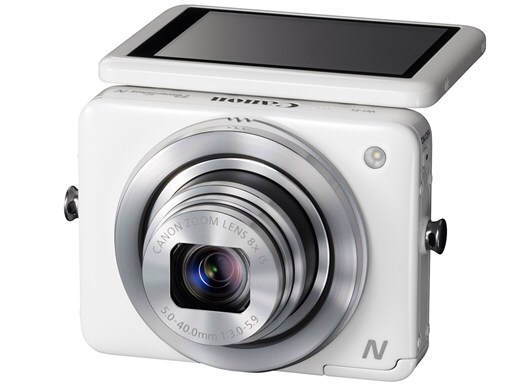
More Canon PowerShot N Tidbits

Above: Engadget’s first impressions. Canon USA PowerShot N page.

Digitalcamerainfo’s first impressions: The PowerShot N is Canon’s boldest move toward a future that just won’t come to pass: a future where compact cameras can go toe-to-toe with mobile devices in terms of wireless connectivity. In the (harsh) conclusion they write:

At its core, the N is just a capital-letters Cheap Point-and-Shoot with a wacky design. There is simply no good reason for a camera like this to have wireless connectivity if it can’t handle sharing as seamlessly as a smartphone.

PetaPixel’s first impressions:

The uber-compact body looks and feels nice in the hand, and can easily be carried around in your pocket without causing too much of a bulge. It’s light, and won’t weigh you or your bag down if you carry it around everywhere you go. It’s a camera that’s just as compact as a smartphone, but offers nice advantages: a longer-reaching optical lens and a larger sensor are two of the main ones.

Slashgear’s first impressions:

That’s a healthy amount of features for this little 12-megapixel shooter, but this still has plenty of the features you’d expect. These include low-light performance, ISO up to 6400, and the ability to capture video in 1080p. Canon says the PowerShot N will begin shipping in April 2013 and will come with a price tag of $300, which doesn’t seem too bad.

The PowerShot N, which will cost $299 and be available soon, can be pre-ordered at the following links (along with all the other Canon gear that was announced at CES 2013, click on shopname): B&H | Adorama.

Canon’s promo video for the PowerShot N

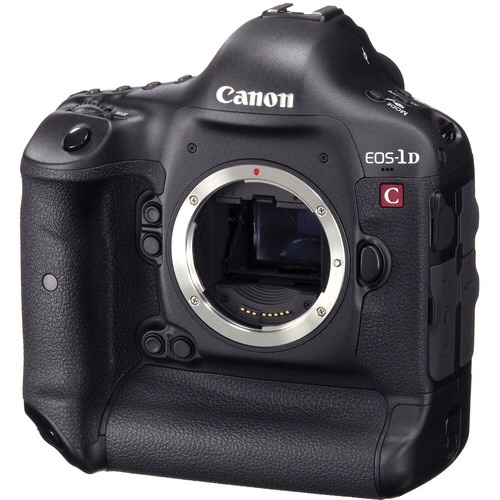
The Inner Life Of A Canon EOS-1D C

Canon Rumors had a chance to have a look inside an EOS-1D C, but no pictures were allowed to be taken.

They write that the differences (internally) are minimal, mainly visible by the heat sink that is used to dissipate the heat produced by the camera because of the 4k circuitry.

The real interesting thing is that the EOS-1D X has tokens of the EOS-1D C firmware and that features are locked by software switches. But hackers be warned: Canon will throw tons of lawyers to anyone who dares to manipulate an EOS-1 body at the software level (read: modify, extend, hack the firmware). Will this stop all the skilled hackers out there? Maybe it does.

Finally, the astronomic price of the EOS-1D C ($11.999). The answer is: limited production. By no way comparable to the [shoplink 2431]Canon EOS 5D Mark III (price & specs)[/shoplink], the [shoplink 337]EOS 7D (price & specs)[/shoplink] or the [shoplink 5623]Rebel T4i/650D (price & specs)[/shoplink]. Moreover, the software that’s featured in the cam had its share of costs.

The Canon EOS-1D C is in stock at B&H (click here). Canon EOS-1D C price check: [shopcountry 4119] [via CR]


Canon PowerShot N First Impressions Round-Up

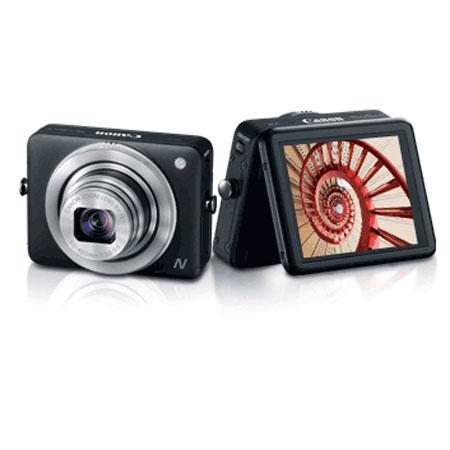
12MP, tilting touchscreen, built-in Wi-Fi capabilities, an 8X-optical-zoom lens, 3.09 x 2.37 x 1.15 inches… Canon’s latest fun toy wasn’t expected. Let’s see some of the first hands-ons that showed up on the net. The PowerShot N, which will cost $299 and be available soon, can be pre-ordered at the following links (along with all the other Canon gear that was announced at CES 2013, click on shopname): B&H | Adorama.

Canon PowerShot N availability check for your country: [shopcountry 9369] (you probably have to wait some time)

Techradar: They found good: Easy to use, One-touch Wi-Fi, Small size, Good sensor, Responsive touch-control. Not so good: Slightly awkward to hold, Little manual control, Restricted LCD movement. More:

The PowerShot N is all about creating images quickly and easily, so naturally all the exposure modes are automatic. Program mode provided the most control, with aspects such as exposure compensation and white balance being adjustable. Alternatively, there are some creative shooting options with filter effect such as Fish-eye Effect, Miniature Effect, Soft Focus, Toy Camera Effect and Monochrome.

PCWorld:

This little box of a 12-megapixel camera also doesn’t have a traditional shutter button or zoom control. Instead, you trigger the shutter by pressing a ring around the lens, and you operate the zoom lens by rocking a second lens-ring control back and forth with your finger. You can also focus and take a photo by tapping the camera’s 2.8-inch capacitive touchscreen, which is definitely responsive

t3.com:

It’s an interesting idea, and perhaps something that will genuinely appeal to the left-handers out there, but we found the camera to be quite uncomfortable to use, and we didn’t really warm to the strange design even after a lengthy play.

Canon USA PowerShot N page

Finally, a video by Whatdigitalcamera:

icanb


Canon 24-70mm f/2.8L Mark II Review (SLR Lounge)

SLR Lounge reviewed the [shoplink 2160]Canon 24-70mm f/2.8L Mark II (price & specs)[/shoplink]. Not everything gets a positive opinion, but the auto focus:

The Mark II is now boasts a faster and more importantly, more accurate autofocus compared to the Mark I. The AF snaps almost instantaneously and there were no back-focus issues that I felt plagued my Mark I. Photojournalists, wedding photographers, and event photographers, will benefit tremendously from the near-instant and accurate AF speed.

Quoting from the conclusion:

The new 24-70mm Mark II is such big improvement over the Mark I that I now shoot over 25% of my portrait and engagement session images with this lens. I have come to prefer it to the Canon 16-35mm f/2.8L whenever I do not need the extra wide angle. There are even times, and it is crazy that I am saying this, I preferred it to the Canon 50mm f/1.2L because the bokeh was good enough and gave me the extra flexibility in zoom.

The Canon 24-70mm f/2.8L Mark II gets a rating of 5 out of 5.

Canon 24-70mm f/2.8L Mark II price check: [shopcountry 2160] [via SLR Lounge]

Dissecting The Canon EF 24-70 f/4L IS

Dissecting The Canon EF 24-70 f/4L IS
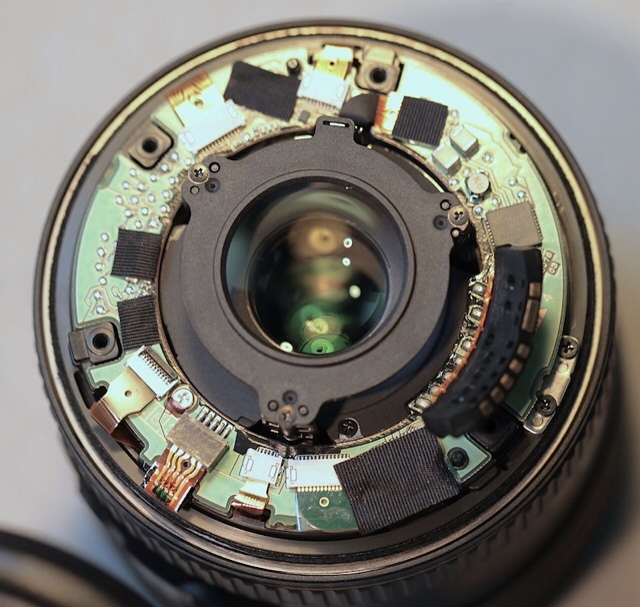
Dissected EF 24-70mm f/4L – image credit: lensrentals.com

After having measured the resolution of the [shoplink 8251]Canon EF 24-70 f/4L IS (price & specs)[/shoplink], R. Cicala and the lensrentals team decided to open and dissect the EF 24-70. And since they are really ironic guys, they started the post with an Albert Einstein quote: If we knew what we were doing it wouldn’t be called research, would it? :-)

The lens is dissembled and every step is shown with pics and explained in text. This is for sure nothing you should do as a DYI weekend project. In the conclusion they write:

[…] the Canon 24-70 f/4 IS is a truly interesting design, with some things that we’ve never seen before.

Some worry me a tiny bit. I’m certain the zoom-lock/macro switch is going to break some, although it doesn’t appear that will have any major effect.

The large number of adjustable elements is a bit concerning, too. In theory, at least, that’s more adjustments that could contribute to sample variation. On the other hand, Canon’s been a long time developing this lens and they engineer lenses more logically than anyone else. I suspect there’s a nice thick document I’ll never see that tells techs exactly which of those adjustments controls which aspects of the lens’ optics.

In some other lenses, where one element is used to adjust several variables the adjustments can be ridiculously finicky to make. It might well be that having more adjustable spots will make the adjustments more straightforward and logical, reducing sample variation. Only time will tell on that one.

A limited stock of the 24-70mm is available at Adorama for $1499

Canon EF 24-70mmf/4L IS price check: [shopcountry 8251]

[via lensrentals]