Canon RF 24-70mm f/2.8L IS Review (Canon got it right, D. Abbott)
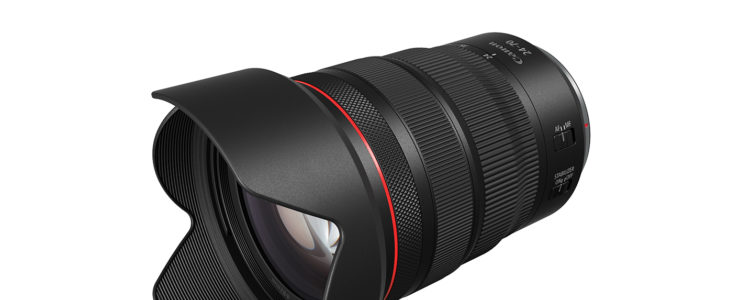
Canon RF 24-70mm f/2.8L IS review

Here is a Canon RF 24-70mm f/2.8L IS review from our favorite gear reviewer.

Dustin Abbott posted his exhaustive Canon RF 24-70mm f/2.8L IS review. As usual with his reviews, it comes with a huge set of sample pictures, test charts, comparisons, and answers basically every question you might have about the RF 24-70mm f/2.8L IS. From his conclusion:

It isn’t a perfect lens.  It is expensive ($2299 USD), which will be the chief obstacle to many potentially interested customers.  It’s also a bit heavy and is on the larger side, though the size isn’t unusual for this class of lens.  There’s some barrel distortion at 24mm that is a bit complex, and the vignette is very heavy there as well.  Fortunately both of these can be corrected for, but what the RF 24-70L has that some competitors do not is fantastic image sharpness across the frame even at F2.8.  Add to this excellent autofocus, great stabilization, and fantastic handling, and you’ve got a pro-grade lens worth owning and using for many years.  The Canon RF 24-70mm F2.8L IS USM was an important lens for Canon to get right, and I think that’s exactly what they’ve done.

Read Dustin Abbott’s review…

If you prefer to watch your reviews, have a look at the videos below. First one is a shorter version, second video the full review.

More Canon RF 24-70mm f/2.8L IS review stuff is listed here.

Canon RF 24-70mm f/2.8L IS: [shoplist 58389]

Canon RF 24-70mm f/2.8L IS at a glance:

  • Standard wide-angle to telephoto zoom lens is designed for use with full-frame Canon RF-mount mirrorless cameras
  • Bright f/2.8 constant maximum aperture maintains consistent illumination throughout the zoom range and suits working in low-light conditions as well as affords increased control over depth of field for working with selective focus techniques.
  • Three UD (Ultra-Low Dispersion) elements help to minimize chromatic aberrations and color fringing in order to provide greater clarity and color accuracy.
  • Three aspherical elements are used to correct spherical aberrations and distortion for improved sharpness and accurate rendering.
  • An Air Sphere Coating (ASC) has been applied to lens elements to reduce backlit flaring and ghosting for maintained light transmission and high contrast in strong lighting conditions.
  • An Optical Image Stabilizer helps to minimize the appearance of camera shake by five stops to better enable working in low-light conditions and with slower shutter speeds.
  • Nano USM system utilizes both a ring type USM and an STM mechanism to realize quick and accurate focusing that is also smooth and nearly silent to suit both photography and video applications. This focusing system also affords full-time manual focus control when working in the one-shot AF mode.
  • Configurable Control Ring can be used to adjust a variety of exposure settings, including aperture, ISO, and exposure compensation.
  • Protective fluorine coating has been applied to the front and rear element to resist fingerprints and smudges and to make cleaning these elements significantly easier.
  • As a member of the esteemed L-series, this lens has a weather-resistant design that protects against dust and moisture to enable its use in inclement conditions.
  • Rounded nine-blade diaphragm contributes to a pleasing bokeh quality.
Click here to open the rest of the article

Canon RF 600mm f/11 Review With Sample Photos

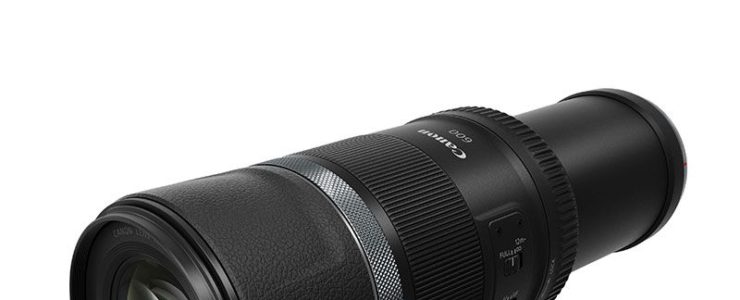
canon rf 600mm f/11 review

Here is another good Canon RF 600mm f/11 review. The RF 600mm f/11 and RF 800mm f/11 made quite a splash when they were announced. Initially seen with skepticism, they are now getting a lot of positive feedback.

After having reviewed the RF 800mm f/11 lens, Christopher Frost dedicated his attention to the RF 600mm f/11.

If you are interested there is an interview with the engineers who developed these lens. Also, Canon already said there will be more such lenses. For more Canon RF 800mm f/11 and RF 600mm f/11 review stuff have a look here.

Canon RF 600mm f/11 [shoplist 62748]

Canon RF 800mm f/11 [shoplist 62749]

Click here to open the rest of the article

Canon EOS R5 DxOmarked, Scores 95 (one of the most well-rounded performers)

eos r5 8k video

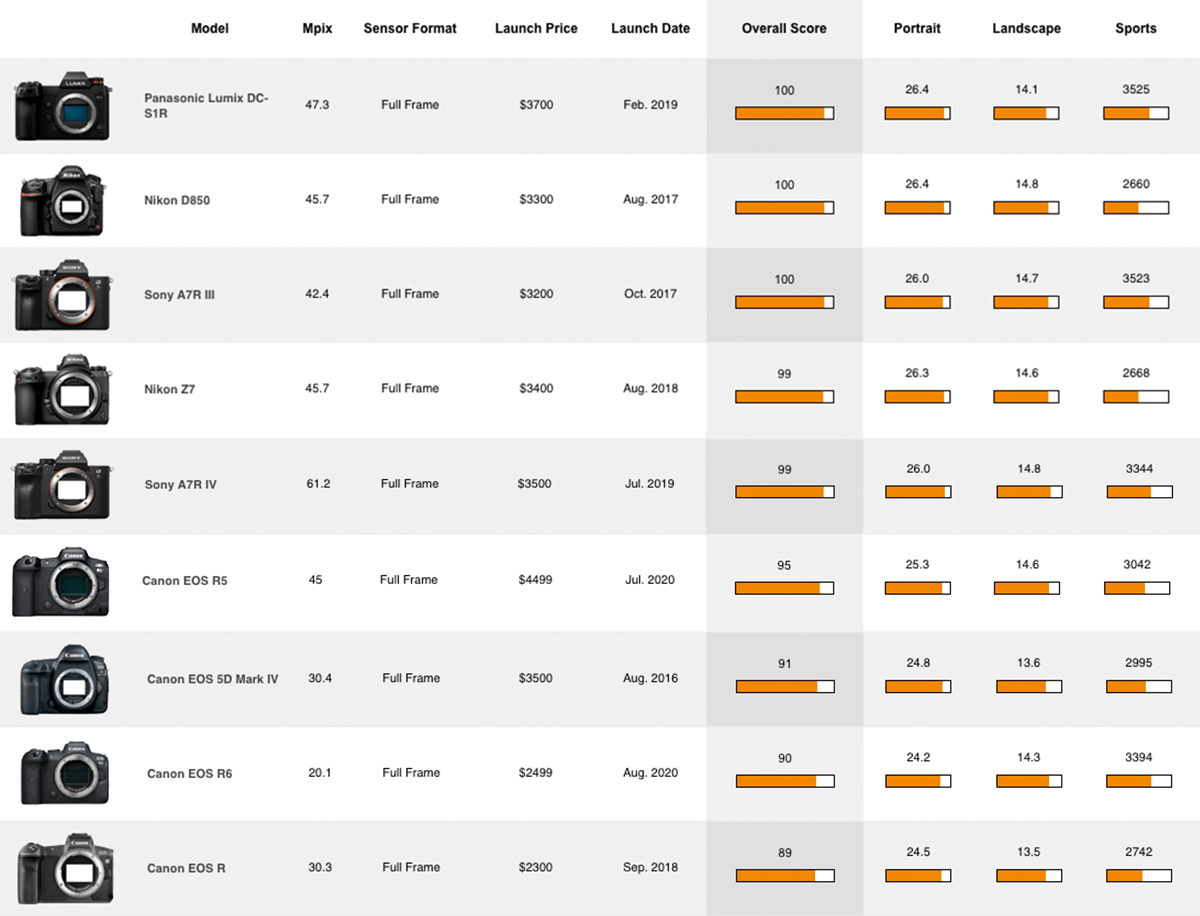
The Canon EOS R5 went through DxOMark’s sensor tests and got a score of 95. More than other Canon’s and less than the usual Sony crowd (including brands that feature Sony sensors).

From DxOMark‘s conclusion (emphasis mine):

[…] the technical specifications – a high-resolution stabilized body, super-fast burst rates, highly capable dual-pixel AF II, and some incredible video capabilities – exceeded all expectations. But it wasn’t without some downsides. Extended 8K DCI and oversampled 4K video capture may have been a bit of stretch in such a highly compact body, but there’s no denying Canon really did push the boundaries of what’s possible.

As for sensor performance, the EOS R5 sensor represents a high water mark for Canon. Maximum dynamic range is competitive with the best in class, and the R5 sensor offers a useful advantage at some crucial ISO settings over its rivals. It also has excellent color and low noise at high ISOs, which all go toward making the Canon EOS R5 one of the most well-rounded performers in this important category. It may have taken a while to get here, but the Canon EOS R5 looks set to be the one to beat.

Some strong statements about the EOS R5 performance in the conclusion. But it’s true: Canon did push the boundaries of what is possible, and this might well be the reason they got such a massive s**tstorm after the launch of the EOS R5.

See below how the Canon EOS R5 scores compared to its peers.

Click to enlarge (image © dxomark.com)

More Canon EOS R5 reviews are listed here, for EOS R6 reviews see here. The EOS R5 is highly regarded as a stills camera. In particular, the EOS R5 autofocus system seems to be huge leap forwards. User manual are available for download for the EOS R5 and the EOS R6.

Canon EOS R5: [shoplist 62744]

Click here to open the rest of the article

Canon RF 50mm f/1.8 Review And Comparison With EF 50mm f/1.8

canon rf 50mm f/1.8 STM review

Just recently Canon released the Nifty-Fifty for the RF mount. Here is a Canon RF 50mm f/1.8 review and a comparison with the older EF version of this hugely popular lens.

I am very interested to know how this little lens performs but serious reviews are scarce so far. Coming from Christopher Frost the two excellent videos reviews below look at the RF 50mm f/1.8 STM and how it compares to the older and less expensive EF 50mm f/1.8 STM lens.

More Canon RF 50mm f/1.8 review stuff are listed here. This lens is a no brainer for every EOS R owner.

At a glance:

  • RF-Mount Lens/Full-Frame Format
  • Aperture Range: f/1.8 to f/22
  • One Aspherical Element
  • Super Spectra Coating
  • STM Stepping AF Motor
  • Customizable Control Ring
  • Rounded 7-Blade Diaphragm

Canon RF 50mm f/1.8 STM: [shoplist 64339]

Click here to open the rest of the article

Canon RF 24-240mm f/4-6.3 IS Lens Explained In Less Than 2 Minutes

Canon RF 24-240mm f/4-6.3 IS review

The Canon RF 24-240mm f/4-6.3 IS lens is one of the less expensive RF mount lenses for the Canon EOS R full frame mirrorless system.

The video below shows the convenience of the Canon RF 24-240mm f/4-6.3 IS for travels and other settings where you don’t want to carry around a lot of lenses or too much weight.

Some Canon RF 24-240mm f/4-6.3 IS reviews are listed here.

At a glance:

  • RF-Mount Lens/Full-Frame Format
  • Nano USM AF System
  • Optical Image Stabilizer and Dynamic IS
  • Customizable Control Ring

Canon RF 24-240mm f/4-6.3 IS: [shoplist 57127]

Click here to open the rest of the article

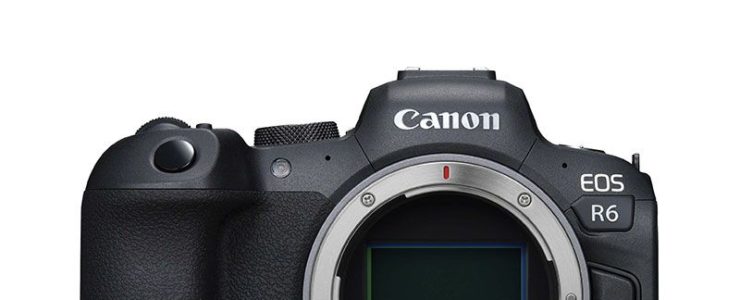
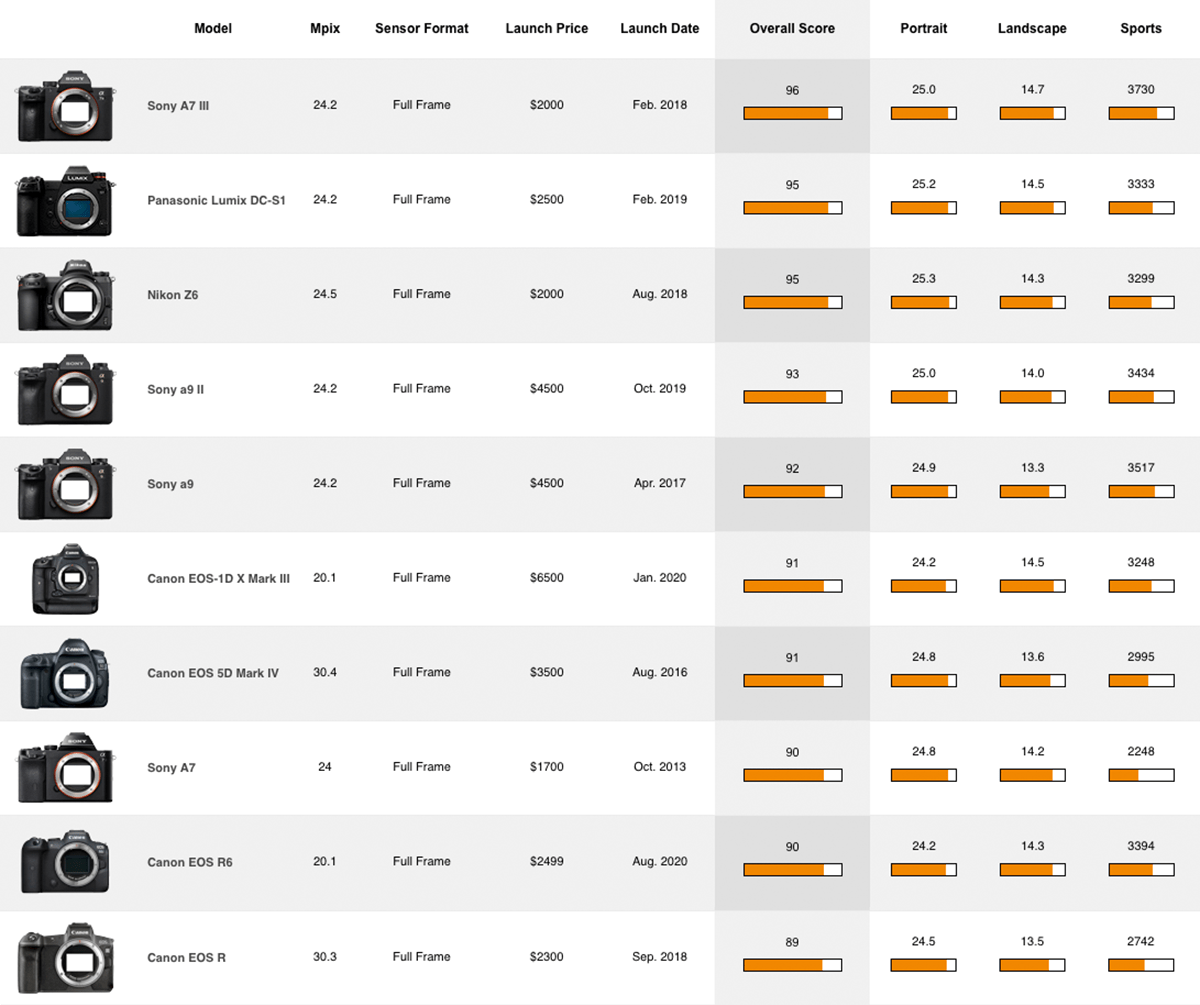
Canon EOS R6 DxOMarked, Scores One Point Less Than EOS 5D IV and EOS-1D X III

canon eos r6 manual

The Canon EOS R6 underwent DxOMark’s sensor benchmarks, and gets a score like the EOS-1D X Mark III and EOS 5D Mark IV (both 91).

The Canon EOS R6 scored 90 at DxOMark’s test. The Canon EOS R6 sensor is based on the imaging sensor featured in the EOS-1D X Mark III, and it shows its heritage. The sensor is also behind Sony’s.

From DxOMark’s conclusion:

Canon’s decision to launch the EOS R6 alongside the more intriguing EOS R5 may have kept the former out of the limelight somewhat, but it’s a highly capable camera with competitive specifications. Its body stabilization, super-fast burst rates, solid video specs, and useful dual-pixel AF II all add up to a very well-rounded offering.

While the 20 MP sensor may seem an odd choice, this is a variant of the one found in the flagship EOS-1D X Mark III, and the results are practically identical. It performs well across the board with excellent dynamic range at all ISOs. Add to that the sensor’s good color and low noise, and the Canon EOS R6 looks set to be a firm favorite among a wide range of photographers who work across many different genres.

Click to enlarge (image © dxomark.com)

EOS R6 at a glance:

  • 20mp Full-frame CMOS sensor
  • Sensor-based image stabilisation (IBIS) – works with any lens
  • 3.69m dot electronic viewfinder (EVF), 0.76x magnification
  • 3.0inch vari-angle touch-screen, 1.62m dots
  • 12 / 20fps continuous shooting (mechanical / electronic)
  • ISO100 to ISO102400, Low ISO50, High ISO204800
  • 6072 autofocus points/positions
  • Dual Pixel CMOS AF
  • Face and Eye-AF tracking
  • Built-in Wi-Fi and Bluetooth
  • Dual SD card slots
  • 4K UHD 60/30/25/24fps
  • FullHD High-speed 120/100fps
  • HDR FullHD Video

For more Canon EOS R6 reviews see here. User manual are available for download for the EOS R5 and the EOS R6.

Canon EOS R6: [shoplist 62745]

Click here to open the rest of the article