Lomography Brings Back the 19th Century Petzval Lens

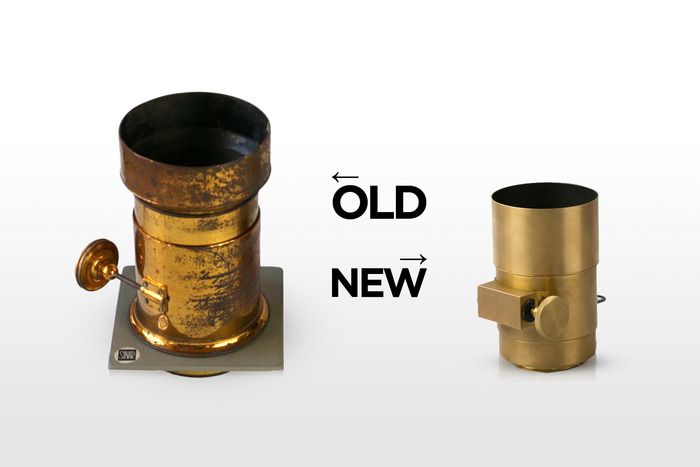
Lomography is crowdsourcing the funding for this lens project. The lens will be available for Canon and Nikon DSLRs. The Phoblographer has a good article to learn more about the Petzval lens. For sample pics check the Kickstarter page.

Quoting the project:

In the 19th Century, the vast majority of photos were shot with the extremely popular Petzval lens. The lens was invented by Joseph Petzval in Vienna in 1840 and had a huge impact on the development of photography. Photos shot with a Petzval lens are immediately recognizable for their sharpness and crispness, strong color saturation, wonderful swirly bokeh effect, artful vignettes and narrow depth of field. The totally distinctive look of Petzval photos is all about the fantastic lens design that gives you the satisfaction of the instant optic experience that goes far beyond using photo editing software and filters.

For this Kickstarter project, we are reinventing the Petzval Lens for 21st century photographers and videographers. It doesn’t matter whether you shoot analog or digital; the brand new Lomography Petzval Portrait Lens is designed to work withCanon EF and Nikon F mount cameras. So, for the first time, you can easily get the fantastic Petzval photographic look with 35mm analog cameras and DSLR cameras too. This will bring with it a whole new world of possibilities; from shooting Petzval photos with your 35mm SLR or DSLR, to creating amazing DSLR movies with the lens!

The specs:

  • Focal Length: 85mm
  • Maximum Aperture: f/2.2
  • Apertures: Waterhouse aperture set, up to f/16
  • Image Circle: 44mm
  • Field of View: 30 degrees
  • Lens Mounting Profile: Canon EF and Nikon F
  • Electronic contacts: No
  • Closest Focusing Distance: 1m
  • Focusing Mechanism: Gear Rack Focusing
  • Lens Construction: 4 Elements in 3 Groups
  • Filter Thread: 67mm
  • Max. Diameter x Length, Weight: 120mm x 85mm x 80mm (Please note: This is an estimate based on the first working sample)
  • Weight: 500g (Please note: This is an estimate based on the first working sample)

Petzval Lens

How To Make an Easy and Simple Timelapse Controller for Canon DSLRs using Arduino

Arduino

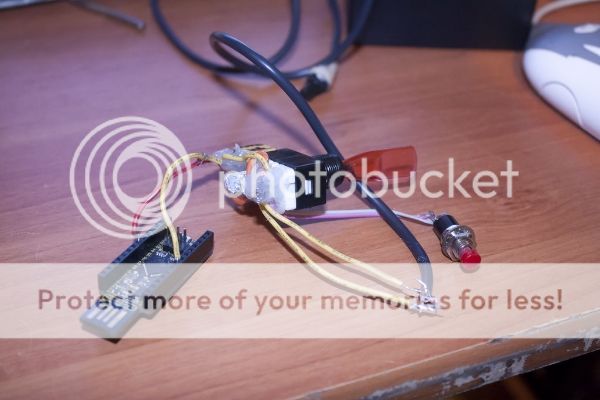
Arduino is an open-source electronics prototyping platform, a single-board microcontroller you can use for small projects, like this one. Instructables user  aidanjarosgrilli posted the instruction for a simple and easy timelapse controller for your Canon DSLR, the how to is here. You need:

  • Arduino
  • 3v relay
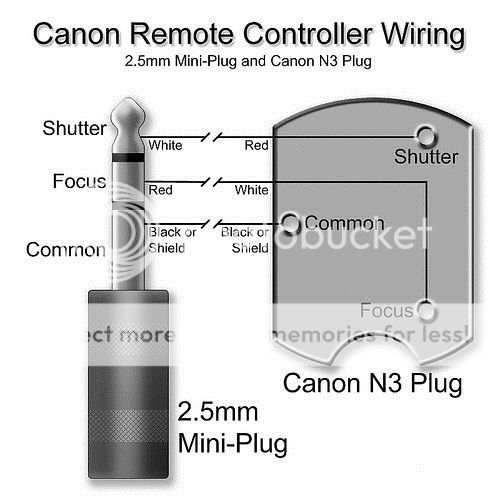
  • a remote plug for your camera
  • a 4x AA battery pack
  • switches/buttons (optional)

Nice week-end project. :)

Arduino

Canon Rumor: More On Canon 75MP High Res DSLR (dual pixel tech, 36-38MP, 4K)

Canon RumorCanon Rumor

I got word from a source that Canon is actively testing more than one prototype with a sensor over 75MP. It appears as if +75MP are the total count of photodiodes on the sensor, not the effective pixel count. The tested sensors employ the technology Canon introduced with the [shoplink 14246]Canon EOS 70D[/shoplink], i.e. dual photodiodes for each pixel. The effective image resolution of the sensor should thus be around 36-38MP. The source also said that while Canon is researching high resolution sensors they put priority on image quality and to further improve high ISO/low light performance. There is no pressure to win the high resolution race. The source said that “this is not part of Canon’s philosophy” That is to say that Canon will embrace a lower resolution sensor if image quality does not correspond to expected figures. The high DSLR should be announced sometime before summer 2014. The source clearly stated that these prototypes have nothing to do with the successor of the [shoplink 2431]Canon EOS 5D Mark III[/shoplink]. No indication about the name. Finally, the camera will do 4K video.

Previous features like high frame rate and EOS-1 shaped body have also been confirmed by the same source. Hard to say what we can expect. With the EOS 70D, Canon showed us that they still are on the edge when it comes to sensor technology (and research), and it is plausible they will employ the same tech also on full-frame sensors, pushing full-frame video performance event further. One thing is sure: with all this Canon high resolution DSLR rumours surfacing in the last weeks we can safely assume that there is something in work.

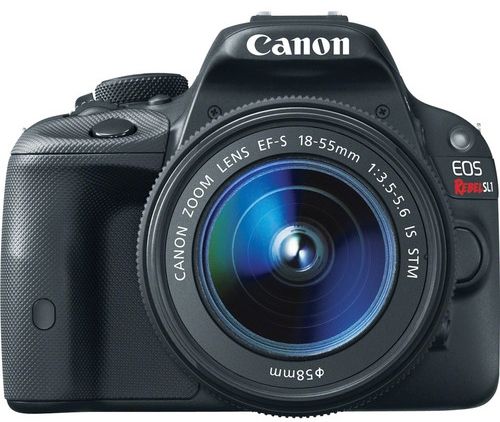
Canon Rebel SL1 (EOS 100D) Review (dpreview)

[shoplink 11240]Rebel SL1[/shoplink]

Canon Rebel SL1 (EOS 100D)
[shopcountry 11240]

Dpreview published their review of Canon super tiny DSLR, the [shoplink 11240]Rebel SL1 (EOS 100D)[/shoplink]. The SL1 got a pretty good review, among the best features are excellent overall image quality, good high ISO image quality (even over 6400), the usability of the touchscreen, improved live view with STM lenses, and more. In the conclusion they write:

Canon took the standard Rebel and whittled it into a smaller body, removing only a few features, while adding one very important one: improved live view autofocus. The result is a mature camera for the family photographer that’s not a burden to bring along, but which can also serve as a reliable, lightweight backup for a more knowledgeable photographer. Those familiar with Canon SLRs will feel right at home, but those with smaller hands won’t feel left out or intimidated. For amateurs, Canon still includes full auto modes as well as Creative Auto mode for simple, jargon-less access to changes like color mode and background blur. Experienced photographers will be able to pick up the Canon SL1 and still feel at home, with a full set of manual and semi-auto modes.

This is the review to read if you want to learn about the Rebel SL1/EOS 100D. Sample pics are here (scroll down to the bottom).

Canon Interviews Engineers on Dual Pixel CMOS AF Technology (EOS 70D)

EOS 70D

The Canon Digital Learning Center published an 8 pages interview with the engineers that are behind the Canon EOS 70’s new and groundbreaking Dual Pixel CMOS Auto-Focus system. The PDF file can be downloaded here (scroll down the page, the link to the PDF is at the bottom).

The text starts citing three widespread assumptions:

The correct way to take photos is by looking through an optical viewfinder and shooting

Live View is a subsidiary function, inferior to the optical viewfinder

The DSLR’s movie mode is so difficult, as to be usable only by a professional

And then goes on:

Dual Pixel CMOS AF is a new technology that will cast aside these assumptions. The entire surface of the sensor is lined with pixels composed of two photodiodes each, and the image plane phase-difference detection AF focuses using the phase-difference of the two parallax images.

Even when shooting with Live View, because it is phase-difference detection the AF is fast. Rather than pixels dedicated to AF, the pixels have both AF and imaging functions, all effective pixels can also be used for imaging. Now Live View Shooting will be a shooting method choice that is equal to optical viewfinder shooting.

Definitely worth a read!

[via NC]

Canon EOS 70D
[shopcountry 14246] [shoplink 14246]EOS 70D[/shoplink]