If you happen to be in London during the upcoming London Fashion Week (from February, 15th, at Somerset House in London) you have the chance to win an [shoplink 6091]Canon EOS M (price & specs)[/shoplink] mirrorless camera with an [shoplink 6095]EF-M 18-55mm f/3.5-5.6 IS STM[/shoplink] lens and a [shoplink 10328]Canon SpeedLite 90EX[/shoplink] flash. Canon is also giving away 25 pairs of tickets for the Fashion Week.
So, what do you have to do? Shot yourself in your favorite street style and email the picture to [email protected].
The makers of stylescrapbook.com will select the winners. These are the conditions:
The competition is only open for people present in London during Fashion Week as Canon are not covering any transport costs.
Please click HERE for the Terms and Conditions + more details about the competition.
The winners will be announced on The Canon UK Facebook page on Tuesday 12th of February and the competition closes on Friday 8th of February.
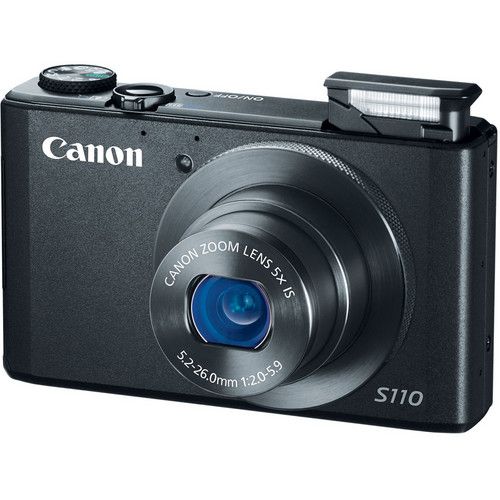
Cameralab’s review of the [shoplink 8374]PowerShot S110 (price & specs)[/shoplink], successor of the highly popular [shoplink 10301]PowerShot S100 (price & specs)[/shoplink]. Foremost: while the S100 had built-in GPS, the S110 comes with built-in WiFi connectivity, and no more GPS. I can’t say if Canon did this for commercial reasons or because of engineering issues. It is not a big issue since you can always geo-tag your pics by connecting to your smart-phone. The other big difference to its successor is the introduction of a touch-screen 3″ display, a welcome addition for all those who are used to smart-phones and similar devices. If the touch interface is as smart and well workingas on the [shoplink 6091]Canon EOS M (price & specs)[/shoplink] then Canon did it right. In the same way as on the EOS M, the touch-screen can be used for focusing and subsequent shutter release.
In the conclusion they write:
[…] the PowerShot S110 remains the smallest camera with advanced features like a bright lens, RAW files and manual controls, and the only one with a built-in motorised lens cap. The competition from Panasonic and Olympus meanwhile continues to travel in a different direction, offering brighter lenses, hotshoes and accessory ports, but in a less compact form factor with lens caps. Sony’s RX100 comes closest physically and packs in a bigger sensor too, but again lacks the motorised lens cover and some of the S110’s other features. While you may think having a manual lens cap isn’t a big deal, it does make a camera larger and delays the time to first shot; certanly when shooting with the S110 alongside any of the aforementioned rivals, it’s been noticeably quicker to action and that can mean the difference between capturing or missing a brief opportunity, and that’s worth taking into consideration.
[…] the PowerShot S110 remains the best bet for enthusiast photographers seeking the rare combination of advanced control in a truly compact connected camera. Had Canon made a better job of the connectivity features it would have been Highly Recommended, as it is the PowerShot S110 comes Recommended; if you value genuine take-anywhere portability over the bright lens, hot shoe and accessory optons of larger models it’s hard to beat.
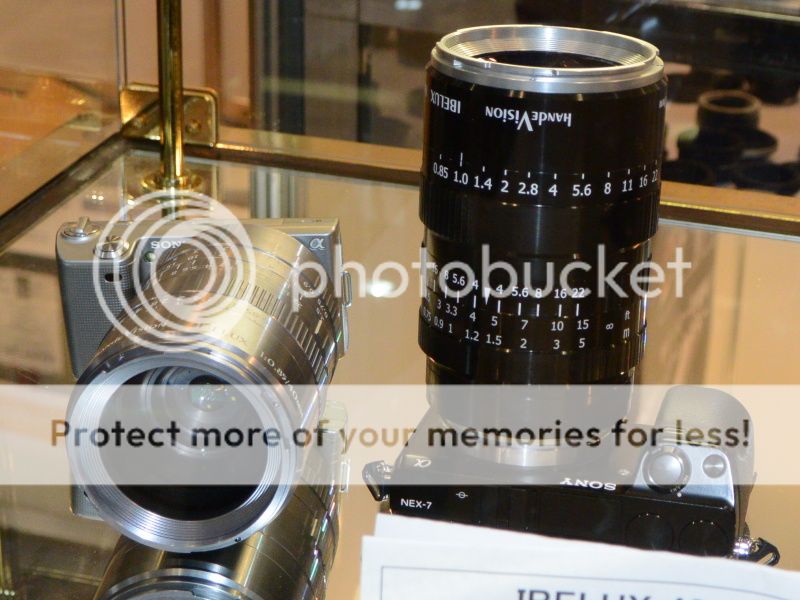
This new and fast Ibelux 40mm f/0.85 lens was displayed at the CP+ exhibition in Japan. It's made by Kipon and the German company IBE. Among other mount types it will be released for the [shoplink 6091]Canon EOS M (price & specs)[/shoplink] around July 2013 (other mounts: E, MFT, M, and X). Price hasn't been announced yet but it is expected to be between 950 and 1200 Euro. For the time being this is the fastest lens ever released for a modern digital mirrorless system. German company IBE (click here) has a long history of high quality video lenses, so there shouldn't be surprises with the optical quality of this lens.
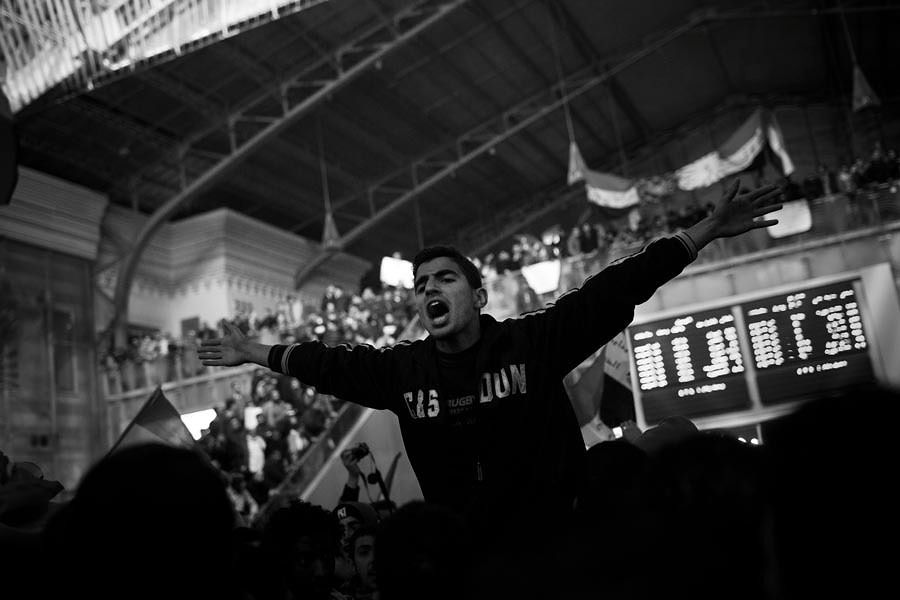
Rob Stothard, 27 years young and from Leeds, has been named the tenth Times/Canon Young Photographer of the Year. He got a six-month contract with The Times, and will be trained and learn about photojournalism. And he will receive all the state-of-the-art Canon gear he needs along with a year’s membership to the British Press Photographer’s Association. As reported on the London College of Communication’s blog:
Rob studied mathematics at the University of Leeds and had been working in the city when he turned his attention to photography, applying for LCC’s MA Photojournalism and Documentary Photographycourse. Then in a desire to better his photography skills he threw himself head-first into a big international story by making the brave decision of going to Egypt to cover last year’s elections.
Rob explains “I had been interested in and travelled in the Middle East for some time and felt going to Egypt and setting myself up to cover the elections would be perfect. So I changed to the online mode of the course hoping it would give me the structure and mentorship I feel is difficult to gain as a freelancer fresh into the industry.”
“Aside from the help from course director Paul Lowe, the other staff and my fellow students, being part of a society of journalists based in Cairo has been an invaluable experience. Whilst my technical skills as a photographer have improved I feel the most valuable part of my time in Cairo has been learning from more experienced journalists how to accurately and honestly depict a complex political scene.”
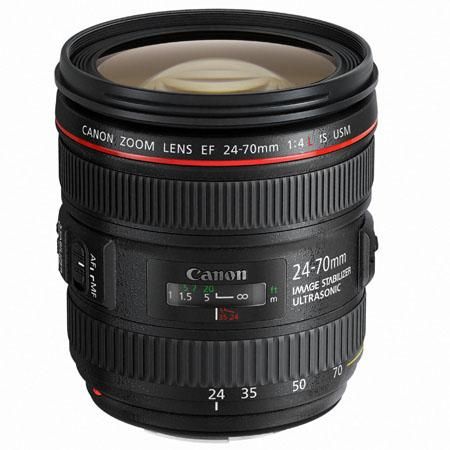
The [shoplink 8251]Canon EF 24-70mm f/4L IS USM (price & specs)[/shoplink] is about to become a highly popular lens, at least this is the impression if you look at the many EF 24-70mm f/4L IS USM reviews that are published. The latest comes from slrgear. Some excerpts from their review:
The 24-70mm […] offers sharp results, but is also the subject of some controversy for its performance at 50mm. We tested three copies of this lens; the first and second had poor performance at the 50mm setting.
Stopping down the lens does improve its sharpness: corner softness is never completely removed to provide tack-sharp results from corner to corner on full-frame, but it is dramatically reduced. Peak performance is shown at ƒ/8 across all focal lengths
Results for chromatic aberration with the 24-70mm ƒ/4L were good: overall, CA is kept under control through the majority of the frame
On APS-C sensors corner shading is not an issue, but on full-frame: the lens creates images with corners that are significantly darker than the center. In the worst case, 24mm at ƒ/4, the extreme corners are a full stop darker than the center
[…] testing for distortion shows a complicated pattern with a point of near-zero distortion.
Going from infinity to close-focus takes well less than one second, and point-to-point focusing is lightning quick
the lens offers an impressive 0.7x magnification [for macro]. There is also some slight fine-tuning adjustment available for zoom and focus in the macro setting
As you have seen, they are nor very satisfied with the performance at 50mm (sharpness-wise). Moreover, they found inconsistencies among copies of the lens (not good Canon!). It is hence wise to test the lens at 50mm before buying it. The issues at 50mm reflect also in the conclusion:
Canon made a smart decision to offer a lower-priced alternative to its 24-70mm ƒ/2.8, in order to give Canon shooters of the more casual or economical nature a way to stay true to the brand name. Unfortunately the lens’ performance at 50mm stands out as unacceptable, especially when you consider [it] still costs $1,500. […] So what is a Canon shooter to do? If you’re happy with the performance you see from our sample pictures, and you need or want the image stabilization and macro capabilities of the 24-70mm ƒ/4, then you should be happy with your purchase – assuming you get as good a copy as we did […]
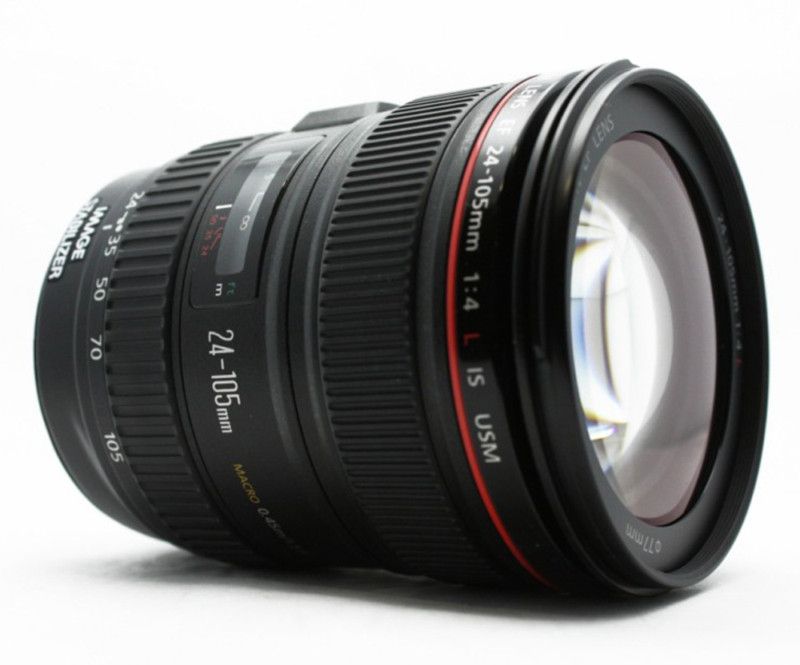
There is always the alternative to go for the good old [shoplink 230]Canon EF 24-105mm f/4L IS USM (price & specs)[/shoplink], which offers a wider range and the same specs as the 24-70mm. And the 24-105mm is known not only to be a lens of proven quality, but also to have consistent optical performance.
Canon EF 24-70mm f/4L IS USM price check: [shopcountry 8251]
Canon EF 24-105mm f/4L IS USM price check: [shopcountry 230]
Mr. Ritsuo Mashiko – Image courtesy: Exposure Magazine
That’s the same factory where the Canon EOS 6D is made, the factory is located in Oita Prefecture, Kyushu, Japan. Exposure Magazine was invited to visit the factory. They were welcome by Mr. Ritsuo Mashiko, head of the Canon factory in Oita. All started in 1982, with a first factory built in in Aki, near the Oita airport. In 2005 the new factory began to work.
This is the factory where the [shoplink 7139]Canon EOS 6D (price & specs)[/shoplink], [shoplink 2431]Canon EOS 5D Mark III (price & specs)[/shoplink], [shoplink 337]EOS 7D (price & specs)[/shoplink], [shoplink 6091]Canon EOS M (price & specs)[/shoplink], and all the other digital EOS DSLRs are manufactured, where the Cinema EOS camera line-up is produced, all Legria and XF series camcorders are made, and all EF lenses too. But there is more: The Oita factory is also the place where Canon builds and tries out prototypes and deploys technological pilot projects. Moreover, advanced automation techniques are applied in the production chain. The know-how developed in automation goes so far that visitors are not allowed to take pictures:
“All automation came from ourselves and we did it ourselves,” said Mashiko. It is acceptable that to keep the secrecy, visitors are not allowed to take pictures in the factory, except in the area of guest reception and cafeteria.
The design of the automation process is based on a cell based production (i.e. the assembly stages are grouped together according to the similarity of parts of the parts that get assembled, or the tasks that are performed; each cell is an autonomous steps that lead to the finished product) and involves men and machines. Unmanned vehicles go from one assembling area to the next. Clearly, being this a factory where highly sensitive opto-electronic equipment is manufactured, everything has to be clean and dust free.
One interesting thing in Canon Oita factory is that it is clean, no dust at all. It could be cleaner than hospital. Workers wear special white shoes in the factory, and visitors are asked to wrap their shoes with plastics provided by the factory.
This website or its third-party tools use cookies, which are necessary to its functioning and required to achieve the purposes illustrated in the cookie policy. If you want to know more or withdraw your consent to all or some of the cookies, please refer to the cookie policy. By closing this banner you agree to the use of cookies.


 [/shoplink]
[shoplink 8374]
[/shoplink]
[shoplink 8374]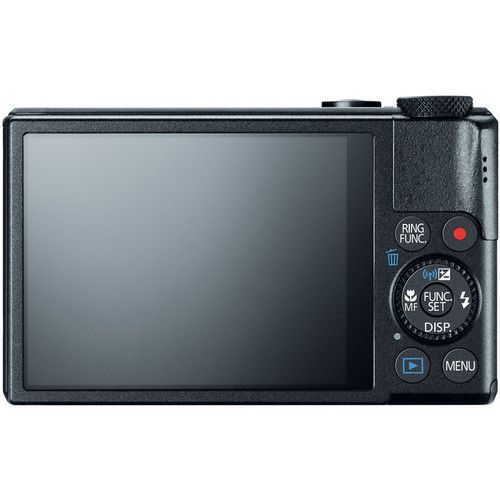 [/shoplink]
 [/shoplink]
 [/shoplink]