Deal: Canon EOS 5Ds at $1656, EOS 5Ds R at $1865 (import models)

Canon eos 5ds

Top Rated seller 6ave (99.7% positive ratings) has two good deals on Canon’s high resolution full frame DSLRs.

Please note: this is an import model, 1 year US seller warranty applies. Import models are legally imported from another country through channels other than the maker’s official distribution system.

More selected and exclusive deals:

More hand-picked deals are listed here.

Authorised Canon retailer B&H Photo has discounted EOS 5D Mark IV and EOS 6D Mark II bundles on offer for the holidays.

We offer 10% discount to subscriptions to Pixpa all-in-one platform for photographers.

Today’s Gold Box and one day only deals at Amazon US, Amazon DE, Amazon UK, B&H Photo, eBay, Adorama.

Canon Europe stores have a cash back promotions going on:

Refurbished lenses and DSLRs at Canon Store (best deals to be found here)

Save $10 on Luminar 4 and/or Aurora HDR 2019 using our code “WATCH” at checkout.

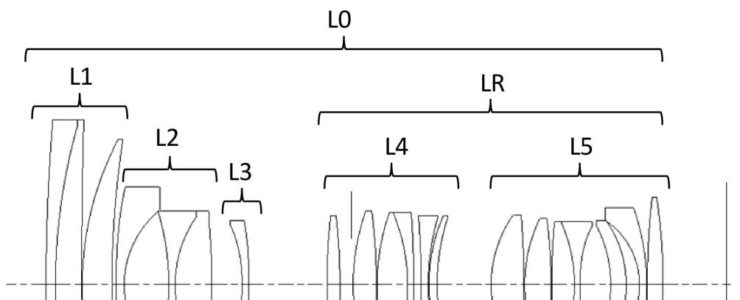
Canon Patent For 85mm f/1.2, 100mm f/1.4, 24-70mm f/2.8, and 28-85mm f/2-2.8 Lenses for Mirrorless

Canon Patent

Another Canon patent application spotted by Hi Lows Note.

Patent application 2019-49646A and 2019-49645A describes optical formulas for 85mm f/1.2, 100mm f/1.4, 24-70mm f/2.8, and 28-85mm f/2-2.8 lenses for mirrorless cameras.

Focal length: 86.5 mm
F number: 1.24
Image height: 21.64 mm
Lens length: 135.0 mm
Back focus: 13.5 mm

Focal length: 100.0 mm
F number: 1.46
Image height: 21.64 mm
Lens length: 142.0 mm
Back focus: 14.1 mm

Zoom ratio: 2.75
Focal length: 24.71 – 45.00 – 67.90 mm
F number: 2.88
Half angle of view: 41.21- 25.68 – 17.67
Image height: 21.64 mm
Lens length: 143.89 – 161.78 – 179.68 mm
Back focus: 13.42 – 27.34 – 38.58 mm

Zoom ratio: 3.04
Focal length: 28.00 – 53.77 – 85.00 mm
F number: 2.00 – 2.60 – 2.88
Half angle of view: 37.69 – 21.92 – 14.28
Image height: 21.64 mm
Lens length: 158.50 – 176.83 – 195.16 mm
Back focus: 16.00 – 28.52 – 41.05 mm

Canon celebrates 25th straight year of TIPA Awards

TIPA Awards

Press release:

Canon celebrates 25th straight year of Technical Image Press Association awards

TOKYO, April 2, 2019—One Canon camera and three Canon lenses have been recognized with “Best Photo and Imaging Product” awards by the Technical Image Press Association (TIPA), representing 30 photo and imaging magazines from 14 countries and regions. Encouraged by these awards, Canon will continue to create products that meet the needs of a wide range of users, from entry-level to professional photographers.

CategoryProduct
Best Full Frame Camera AdvancedEOS RP
Best Mirrorless Prime Standard LensRF50mm F1.2 L USM
Best APS-C Mirrorless Prime LensEF-M32mm f/1.4 STM
Best DSLR Professional Prime LensEF400mm f/2.8L IS III USM

About the TIPA Awards

Held every year since 1991, the TIPA Awards recognize the best photo and imaging products announced during the previous 12 months based on such criteria as innovativeness, use of leading-edge technologies, design and ease-of-use. In 1992, Canon took home its first TIPA accolade for the EOS 100 SLR camera and, over 27 separate occasions since then, has been honored with TIPA awards for a total of 91 products and technologies*.

Canon EOS RP Review (gets a lot right, DPReview)

canon eos rp best mirrorless

DPReview completed their full Canon EOS RP review. They gave the Canon EOS RP an 83% score and a silver award.

Funny fact: DPReview learned they had “to create a new scoring category [since] this is the first camera to really fall into the ‘Entry-level Full Frame Camera’ space”. Well, a “kudos Canon” wouldn’t have been displaced.

From their conclusion:

The biggest trade-off comes from the 26.2MP full-frame sensor. Sure, with the right lenses, that large sensor gets you access to shallower depth-of-field (blurrier backgrounds) than cameras with smaller sensors. But when shooting in Raw, the RP’s images are also noisier than most current full-frame cameras, and similarly noisy to some APS-C cameras. The video features and quality will also disappoint power users, and the battery life is perhaps best described as ‘tolerable.’ It’ll get you through a day of heavy shooting, provided you turn the camera off between shots.

On the other hand, there’s a lot that the EOS RP gets right. The combination of pleasing JPEGs, an excellent grip, light weight, good controls, strong connectivity options and compact size is just a recipe for fun. The autofocus system is reliable, and Pupil Detection makes it easier to get perfectly focused portraits – though some competitors’ eye-focusing systems are more effective.

Read the review…

DPReview had an interview with Canon’s lens designers about the RF mount lenses.

Canon EOS RP: [shoplist 54789]

Canon Lens Designers Talk About Latest RF Mount Lenses in Interview

Canon RF 85mm

DPReview sat down with Canon lens designers (Manabu Kato – Head of EF + RF mount R&D, Yoichi Sato – EOS camera electronics R&D, Shogo Yamaguchi – Optical planning specialist).

The interview was about the new Canon EOS RP, the six RF lenses Canon is set to announce soon, and in general what’s going to happen with the EOS R system.

Excerpts from the interview:

How do you prioritize which [RF mount] lenses to develop?

So the idea for the initial four lenses was we wanted to deliver the surprise factor, so we decided to deliver the 28-70mm, as well as the 50mm F1.2, with stunning resolution. That was the concept behind these two lenses.

With 24-105mm we thought it would be the best match as a standard zoom lens to the EOS R camera, and the 35mm F1.8 was supposed to be an affordable and compact travel companion. Those were the concepts behind the four initial lenses.

With the six additional lenses that we introduced as development announcements this time, we believe we will be able to deliver more surprise factors, for some models compactness. These two concepts with the addition of these models.

About the Defocus Smoothing technology.

Can you give any insight into the DS technology?

With lens such as the 85mm F1.2 bokeh is a really important factor, because it’s a portrait lens. We really wanted to deliver something that was not possible with the conventional lenses, so we decided to develop this technology of defocus smoothing.

The fact with our DS technology is that it’s a coating technology, so it’s relatively easy to apply this technology to a range of different lenses. This is all we can say at this moment.

Read the interview at DPReview.