Canon Has Five New Super Specialised Image Sensors On Offer

Image Sensors

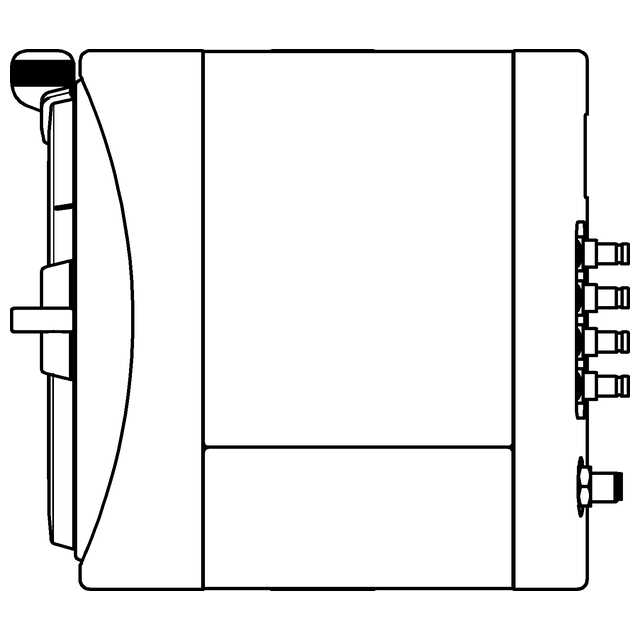
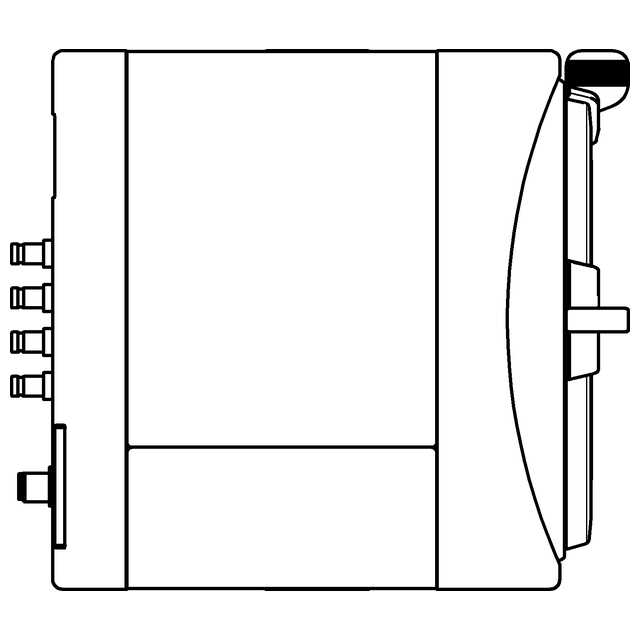
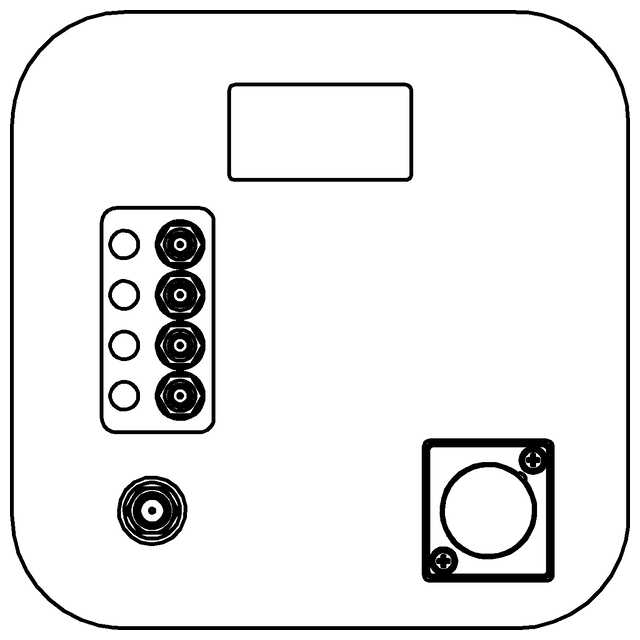
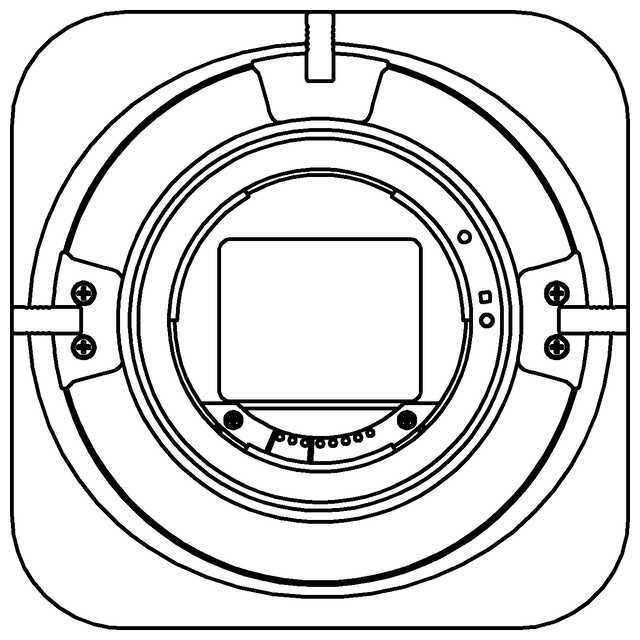
Canon added five new specialised image sensors to their lineup.

Canon’s superspecialised image sensors are used in industry applications, science, space imagery, and surveillance. To see our coverage of Canon specialised image sensors click here.

Canon 1 Inch 12MP CMOS 4K Sensor

Color CMOS solid-state image sensor, 12 million effective pixels in a square pixel array. Supports read speeds of 24 fps when reading all pixels.

  • Filter Type – RGB
  • Sensitivity – 22,000 e/lx/sec @Analog gain x1 (TBD)
  • Sensor Size – 1 inch
  • Number of Effective Pixels – 4000x 3000 (Horizontal x Vertical)
  • Pixel Size – 3.2 um x 3.2 um
  • Shutter – Rolling shutter 12 bit, 24 fps (All Pixels)
  • Maximum Frame Rate – 10 bit, 60 fps (4K2K)
  • Saturation 22,000 e (TBD) @ Analog gain x 1
  • Dark Random Noise – 2.8 e rms @Analog gain x16 (TBD)
  • Dark Current – 17 e/sec (TBD) @package reverse side 60℃
  • Drive Frequency – 27 MHz (recommended)
  • Output Channels – Data: 12 lanes, Clock: 2 lanes
  • Output Format – LVDS output maximum 648 Mbps @12 bit
  • Power Consumption – 540 mW(Typ.) @All pixels readout 24fps (12bit)
  • Power Supply Voltages 3.3V, 1.8 V
  • Package Type – 150 pin ceramic LGA
  • Package Size – 25.10 mm x 22.20 mm x 2.99 mm

Canon 1/1.7 Inch 12MP CMOS Sensor

Color CMOS solid-state image sensor, 9.3mm measured diagonally, 12 million effective pixels in a square pixel array. Supports 4K/2K video at 30 fps and 12MP still images.

  • Filter Type – RGB
  • Sensitivity – 8,900 e/lx/sec @Analog gain x1 (TBD)
  • Sensor Size – 1 / 1.7 inch
  • Number of Effective Pixels 4000x 3000 (Horizontal x Vertical)
  • Pixel Size – 1.86 um x 1.86 um
  • Shutter – Rolling shutter 12 bit, 15 fps (All Pixels)
  • Maximum Frame Rate – 11 bit, 30 fps (4K2K)
  • Saturation – 12,000 e (TBD) @Analog gain x1
  • Dark Random Noise – 1.3 e rms @Analog gain x16 (TBD)
  • Dark Current – 7 e/sec (TBD) @package reverse side 60℃
  • Drive Frequency – 27 MHz (recommended)
  • Output Channels – Data: 12 lanes, Clock: 4 lanes
  • Output Format – LVDS output maximum 648 Mbps @12bit
  • Power Consumption – 0.52 W (Typ.) @All pixels readout 15 fps (12bit)
  • Power Supply Voltages 3.5V, 3.4V, 3.3 V, 1.8 V
  • Package Type – 129 pin ceramic LGA
  • Package Size – 15.80 mm x 14.90 mm x 2.10 mm

Canon 1/2.32 Inch 2.8MP High Dynamic Range CMOS Sensor

CMOS type of solid-state image sensor (3U3MRXSAA), 1/2.32″ pixel array of 2.81M. Rolling electronic shutter for video to control the charge storage period. Can output effective 1936 x 1456 pixels video at 60 fps and 12bit via 4 channels of digital signal output. Includes HDR ( High Dynamic Range)  drive features. 3U3MRXSAAC has an RGB on-chip color filter.

  • Filter Type – RGB
  • Sensitivity (e/lx/sec) 25,000 (Green) @Analog  gain x1 (TBD)
  • Sensor Size – 1 / 2.32 inch equivalent
  • Number of Effective Pixels 1936 x 1456 (Horizontal x Vertical)
  • Pixel Size – 3.2 um x 3.2 um
  • Scan Type – Progressive scan
  • Shutter – Rolling shutter 120 dB, HDR
  • Dynamic Range – 75dB, Normal
  • Maximum Frame Rate (All Pixels) – 60 fps, Normal, 30 fps, HDR
  • Operating Temperature – -40℃ ~ 105℃(-40°F ~ 221°F)
  • Saturation – 23,000 e @Analog gain x1 (TBD)
  • Dark Random Noise – 2.7 e rms @Analog gain x4 (TBD)
  • Dark Current – 13 e/sec @Analog gain x 1, 60℃ (TBD), TBD @room temperature
  • Drive Frequency – 24MHz (recommended)
  • Output Channels – Data: 4 lanes, Clock: 1 lane MIPI-CSI2 output maximum 576 Mbps
  • Output Format – @in all-pixel operating mode 12bit, 60fps
  • Power Consumption – 300mW (Typ.) @using all pixels 60 fps (TBD)
  • Power Supply Voltages 3.3 V, 1.8 V, 1.2V
  • Package Type – 94 pin ceramic LGA
  • Package Size – 15.07 mm x 13.37 mm x 2.74 mm 

Canon Super 35mm 9.34MP 4K CMOS Sensor

Color CMOS solid-state image sensor, Super 35mm (30mm diagonally), 9.24 million effective pixels in a square pixel array. Supports speeds of 60 fps when reading all pixels, high-sensitivity 4K.

  • Filter Type – RGB
  • Sensitivity – 72,000 e/lx/sec @Analog gain x1 (TBD)
  • Sensor Size – super 35mm (Diagonal30 mm)
  • Number of Effective Pixels 4112x 2248 (Horizontal x Vertical)
  • Pixel Size – 6.4 um x 6.4 um
  • Shutter – Rolling shutter
  • Maximum Frame Rate 12bit, 60 fps (All Pixels)
  • Saturation – 39,000 e(TBD) @Analog gain x1
  • Dark Random Noise –  2.7 e rms @Analog gain x 8 (TBD)
  • Dark Current – 54 e/sec(TBD) @package reverse side 60℃
  • Drive Frequency – 72 MHz (recommended)
  • Output Channels – Data: 24 lanes, Clock: 2 lanes
  • Output Format – LVDS output maximum 576 Mbps @12 bit
  • Power Consumption – 2 W (Typ.) @All pixels readout 60 fps
  • Power Supply Voltages 3.3V, 2.1 V, 1.8 V, 1.0V, 0.85V, -1.2V
  • Package Type – 154 pin ceramic LCC
  • Package Size – 46.00 mm x 38.00 mm x 3.59 mm

Canon Full Frame 50MP CMOS Sensor

Full frame CMOS solid-state color image sensor (43.2mm diagonally), 50.6 million effective pixels in asquare pixel array. High definition, low noise, and reduced dark current.

  • Filter Type – RGB
  • Sensitivity – 32,000 e/lx/sec @Analog gain x16 (TBD)
  • Sensor Size – 35mm Full size (36 mm x 24 mm)
  • Number of Effective Pixels 8688x 5792 (Horizontal x Vertical)
  • Pixel Size – 4.14 um x 4.14 um
  • Shutter – Rolling shutter
  • Maximum Frame Rate – 6.8 fps (All Pixels)
  • Saturation – 38,000 e (TBD)
  • Dark Random Noise – 2.5 e rms @Analog gain x16 (TBD)
  • Dark Current – 9.6 e/sec (TBD) @package reverse side 60℃
  • Drive Frequency – 24 MHz (recommended)
  • Output Channels – Data: 16 ch
  • Output Format – 16 ch analog outputs
  • Power Consumption – 1.5 W (Typ.) @All pixels readout 6.8 fps
  • Power Supply Voltages 5.5V, 4.8V, 3.3V, 2.0V, 1.8 V, 1.5 V, 1.3V, 1.2V, -1.4V
  • Package Type – 104 pin ceramic QFP
  • Package Size – 55.2 mm x 44.35 mm x 2.74 mm

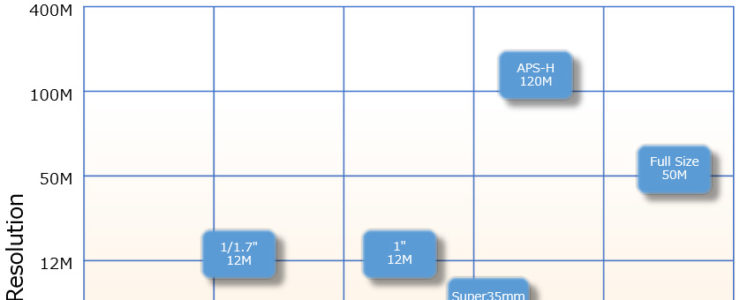
Below you see the full list of Canon’s specialised image sensors, and their area of application. The first five image sensors in the list are the new ones (in bold)

ProductPixel
type
Image
Size
ResPixel
Size
(μm)
ChromaIFMax Frame Rate
(fps)
Application
2.8M HDR colorRolling-shutter1 / 2.32 “2.8M3.2RGBMIPI CSI260Surveillance
Full size 50M
color
Rolling-shutter35mm Full Size50M4.14RGBAnalog
(serial)
6.8Industly
/ Surveillance
1 / 1.7 inch
12M color
Rolling-shutter1 / 1.7 “12M1.86RGBLVDS30
(4K2K)
Surveillance
1 inch 12M
color
Rolling-shutter1 “12M3.2RGBLVDS60
(4K2K)
Surveillance
Super35mm
4K color
Rolling-shutterSuper
35mm
10M6.4RGBLVDS60Surveillance
5MGS monochromeGlobal-shutter2/3 “5M3.4B / WLVDS120Industly
5MGS colorGlobal-shutter2/3 “5M3.4RGBLVDS120Industly
/ Surveillance
5MGS RGBIRGlobal-shutter2/3 “5M3.4RGB / IRLVDS120Industly
/ Life science
120M monochromeRolling-shutterAPS-H120M2.2B / WLVDS9.4Industly
120M RGBRolling-shutterAPS-H120M2.2RGBLVDS9.4Surveillance
/ Industly
120M RGBIRRolling-shutterAPS-H120M2.2RGB / IRLVDS9.4Life science
/ Surveillance
35mm FHD
monochrome
Rolling-shutter35mm Full Size2M19B / WAnalog
(serial)
115
(FullHD)
Space science
/ Surveillance
35mmFHD
RGB
Rolling-shutter35mm Full Size2M19RGBAnalog
(serial)
115
(FullHD)
Space science
/ Surveillance

How To Do A Livestream With The Canon PowerShot G7 X Mark III – A Step-By-Step Tutorial

powershot g7 x

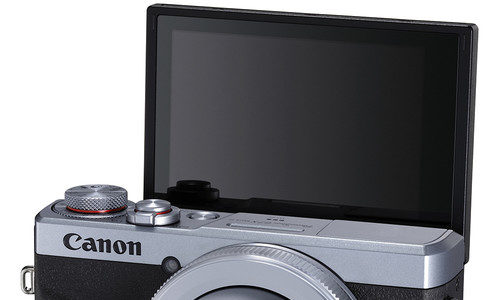
Canon Powershot G7 X Mark III at a glance:

  • 20.2MP 1″ Stacked CMOS Sensor
  • DIGIC 8 Image Processor
  • 4.2x Optical Zoom f/1.8-2.8 Lens
  • 24-100mm (35mm Equivalent)

The Canon PowerShot G7 X Mark III has some appealing features for the videographer and Youtuber crowd.

Sporting advanced video features, the PowerShot G7 X Mark III has been called a “blogger’s dream“. A neat little compact camera with powerful features for still photography and videography.

For all those just starting into the world of video blogging, Canon has provided a short but exhaustive step-by-step tutorial. Join Canon Trainer Jon Lorentz in the 9 minutes video below as he takes you through the setup process for livestreaming on the PowerShot G7 X Mark III. Lorentz will guide you through different scenarios: setting up livestreaming for the first time, livestreaming while you are at home, livestreaming on the road.

Table of contents for the video above:

  • 00:41 Checklist
  • 02:00 Canon Image Gateway Setup
  • 02:50 Livestream Setup
  • 05:20 Livestreaming for the First Time
  • 06:30 Livestreaming From Home
  • 07:25 Setup on the Road

The PowerShot G7 X Mark III livestreaming tutorial is available also in written form with screenshots guiding you through the process, to download click here.

Buy the PowerShot G7 X Mark III at $749: [shoplist 57126]

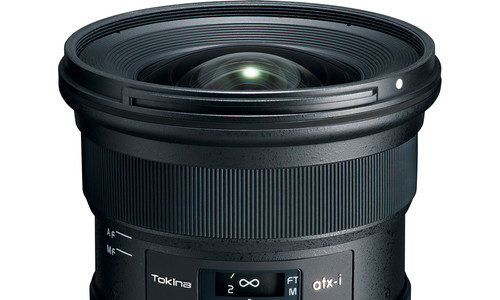
Tokina atx-i 11-16mm f/2.8 CF Lens Announced, Preorder at $449

Tokina atx-i 11-16mm

At a glance:

  • EF-Mount Lens/APS-C Format
  • 17.6-25.6mm (35mm Equivalent)
  • Aperture Range: f/2.8 to f/22
  • Two Aspherical Elements
  • Two SD Low Dispersion Elements
  • Multi-Coated Elements
  • One-Touch Focus Clutch Mechanism
  • Internal Focusing Design
  • 9-Blade Diaphragm

Tokina announced the Tokina atx-i 11-16mm f/2.8 CF lens for APS-C cameras. You can already preorder the Tokina atx-i 11-16mm f/2.8 CF for $449 at B&H Photo and Adorama.

Press release:

Kenko Tokina Co., Ltd. is pleased to announce the sales release of Tokina atx-i 11-16mm F2.8 CF. The Tokina atx-i 11-16mm F2.8 CF is the first renewed long seller AT-X 116 PRO DX II model to fit contemporary DSLR cameras in newly launched atx-i series.

Sales will commence on November 8, 2019.

Based on widely popular AT-X 116 PRO DX II model atx-i 11-16mm F2.8 CF is designed and optimized for contemporary APS-C sensor DSLR cameras in terms of improved specifications and renovated design with still photographers and video content creators’ demands in mind.

The Tokina atx-i 11-16mm F2.8 CF features two models to fit Nikon F and Canon EF mounts.

Highlighted Features

  • Ultra-wide 11-16mm focal length
  • Constant maximum aperture of f/2.8
  • Excellent optical performance
  • Internal Focus
  • Water-repellent coating
  • One-touch Focus Clutch mechanism

Skylum Luminar 4 Will Be Released November 18, 2019

skylum luminar 4

Skylum announced the release date of Luminar 4.

Skylum Luminar 4 will be available to the masses on November 18, 2019. If you preorder now at $79 you get bonus one-year plan to SmugMug (worth US$180). Upgrading is $69. When released on November 18, the price will jump to US$89 new and US$79 for an upgrade.

Some of the AI powered features of Luminar 4 have been already been disclosed.

Skylum press release:

Image editing made extraordinarily fast through AI advancements in Luminar

Flagship software to bring innovative machine-learning tools and workflow to photographers as both a standalone application and plugin.

BELLEVUE, WA -October 15, 2019—Skylum is pleased to announce additional enhancements coming to Luminar 4 to be shipped on November 18, 2019. The release intends to change the way photographers approach photo editing, offering several tools informed by extensive machine-learning and a new streamlined interface to make photo editing more accessible than ever before.

Luminar 4 isn’t just another photo editor —it brings time-saving, creative photo processing to everyone in an easy-to-use approach. Skylum wants people to enjoy not only the taking of photos, but also the processing images which is typically where many photographers have the most frustration.

With Luminar 4, anyone can create a masterpiece.With a refreshed interface and workflow, Luminar 4 shifts from being a tool-based approach to one that is purpose-based. It shortens the learning process, helping any photographer experiment creatively and expand their vision. While the software incorporates complex tools, they’re completely customizable and easy to use, whether you’re a beginner or seasoned professional.

For example, in Luminar 4, photographers will experience the power of AI Sky Replacement —the first automated sky replacement tool in the market. AI Structure provides photographers with a tool to adjust fine details in their photographs, without destroying relevant subjects. Finally, tools like AI Skin Enhancer and Portrait Enhancer will take an everyday portrait and turn it into a masterpiece!

Click here to open the rest of the article

This Image Sensor Makes It Virtually Impossible To Blow Highlights

Image Sensor

Researchers at the German Institut für Mikroelektronik Stuttgart have developed an image sensor that makes it almost impossible to blow highlights with.

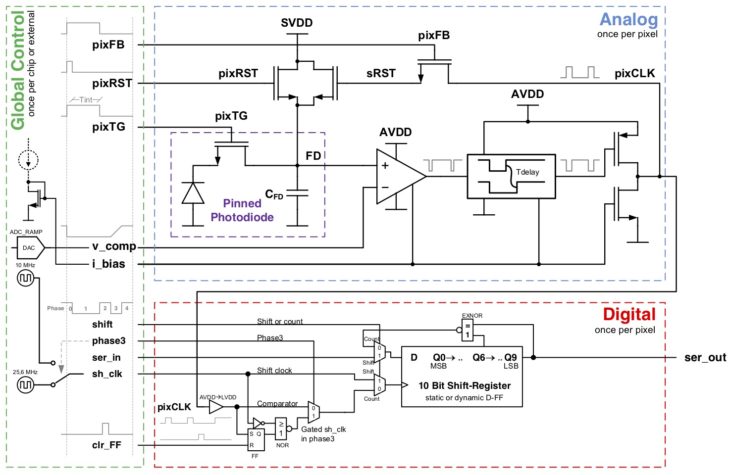
What this image sensor does, is using “self resetting pixels“, i.e. pixels that don’t clip when they get saturated but instead starts over and counts the times it has started over. From the research paper’s abstract:

Conventional CMOS image sensors with a linear transfer characteristic only have a limited dynamic range (DR) of about 60–70 dB. To extend the dynamic range considerably, the already successfully demonstrated concept of a linear self-reset pixel was employed in this work. With the self-reset concept the limit of the maximum analyzable photo generated charge (Qmax) during the exposure time is extended to a multiple of the saturation charge of the photo diode (Qsat) by asynchronous self-resets of the photo diode. Additionally, the remaining charge at the end of the exposure time is evaluated to increase the resolution of the opto-electronic conversion. Thus we achieved pixels with a DR of more than 120 dB combined with an improved low light sensitivity using a pinned photodiode.

In other words: you don’t have to worry about your exposure in order to save highlights in your image. Instead, you can set the best exposure for your subject and safely snap knowing that no highlights will be blown out.

This image sensor is a prototype and likely far from going into production. Never the less, it’s a technological innovation that sooner or later will be featured on image sensors.

The full paper “Realization and opto-electronic Characterization of linear Self-Reset Pixel Cells for a high dynamic CMOS Image Sensor” by Stefan Hirsch, Markus Strobel, Wolfram Klingler, Jan Dirk Schulze Spüntrup, Zili Yu, and Joachim N. Burghartz, is available here.

Let’s hope it’s something Canon will research too.

[via Image Sensors World]