Canon EOS M DxOMark Scores Published (better than T4i/650D)

[shoplink 6091]Canon EOS M DxOMark Scores Published [/shoplink]

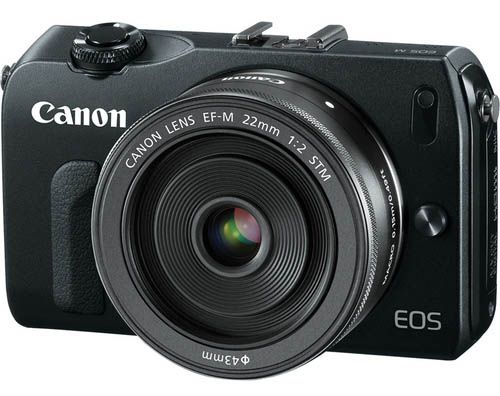
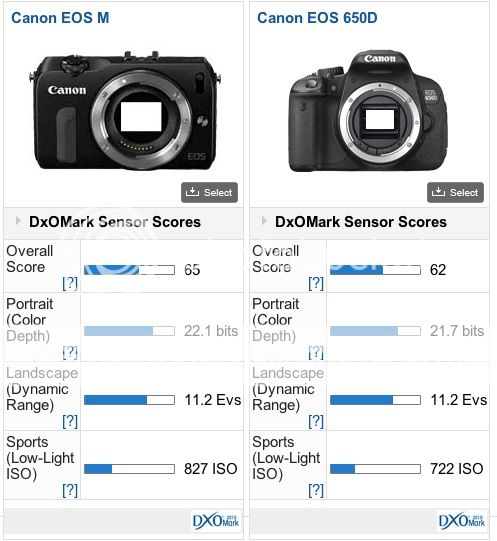
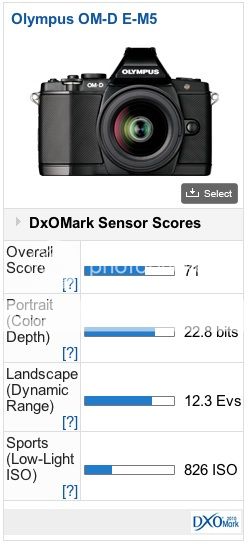
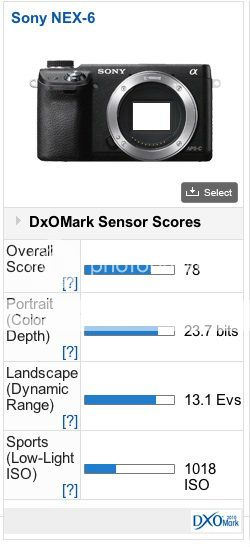
Canon EOS M DxOMark scores published. Not surprising: the [shoplink 6091]Canon EOS M (prce & specs)[/shoplink] scores lower than the [shoplink 9328]Sony NEX 6 (price & specs)[/shoplink] and the [shoplink 5711]Olympus OM-D (price & specs)[/shoplink]. Surprising: the EOS M scores higher (slightly) than the [shoplink 5623]Rebel T4i/EOS 650D (price & specs)[shoplink], both for color depth and low light ISO.

Canon EOS M DxOMark Scores Published Canon EOS M DxOMark Scores Published Canon EOS M DxOMark Scores Published

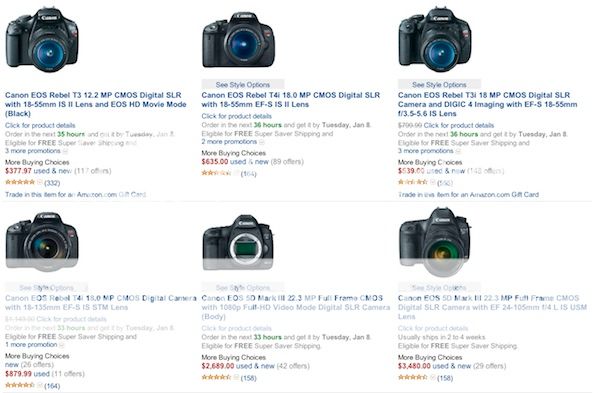
Canon EOS M price check: [shopcountry 6091] Rebel T4i/EOS 650D price check: [shopcountry 5623]

Canon EF 24-70 f/4L IS Resolution Test (R. Cicala)

ca24704u_1

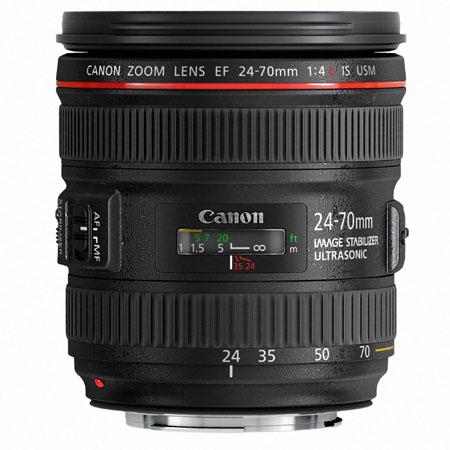
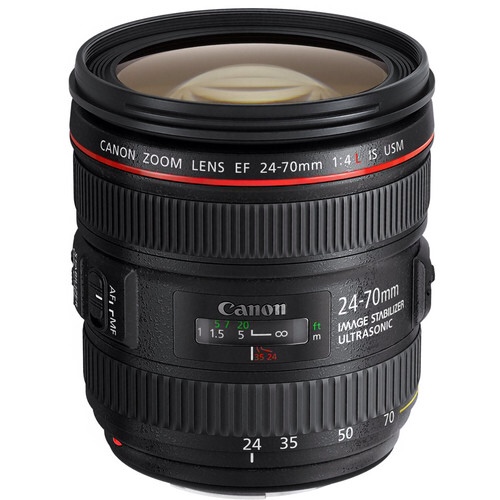
There is one thing I really like in Roger Cicala’s reviews (beside the quality of the content): they are concise and won’t make you waste time until you get the information you are looking for. Cicala did the usual resolution test on the Canon EF 24-70mmf/4L IS (available here in limited stock for $1499).

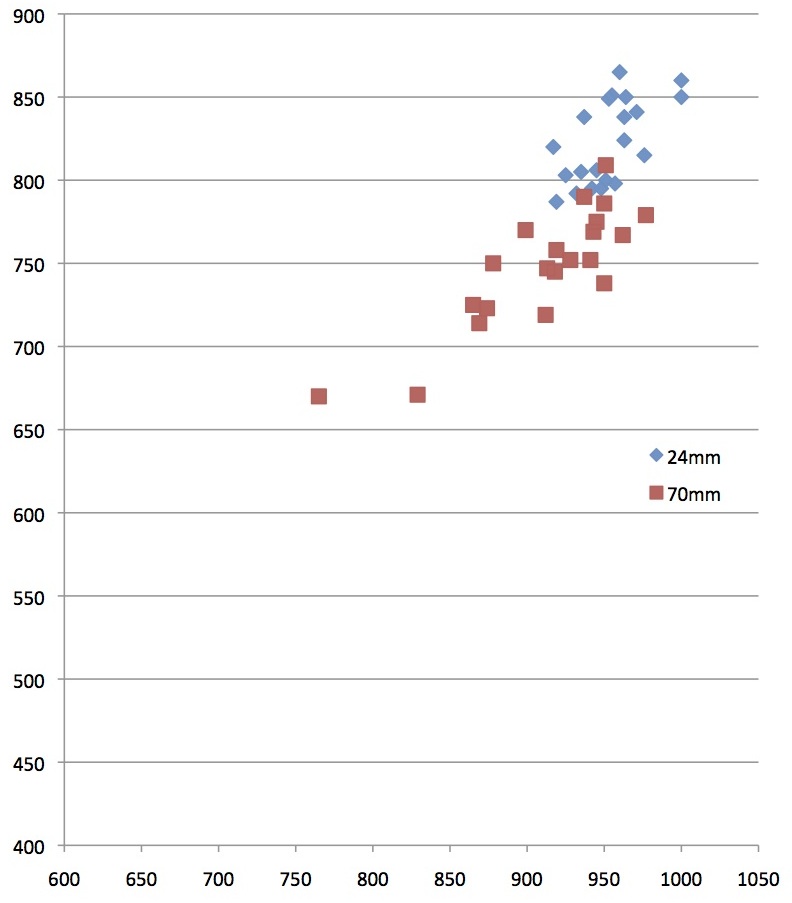
The lens doesn’t come out of the test with much glory, unfortunately.In the conclusion Cicala writes:

On the basis of this information [the resolution test data], though, I’m . . .  well, I don’t know what I am. This is a good lens, but I at the price point I’d probably prefer the f/2.8 of the Tamron VC to the new Canon’s f/4. The macro feature is nice and will certainly pull some people towards the Canon.

This is only a sample of 22 copies, but the sample variation at 70mm is a bit bothersome. I don’t feel comfortable making any statements about it, though, until we’ve seen another 40 or 50 copies. This might just be a couple of bad lenses in a small sample.

My bottom line is I sit here thinking the prices need to settle down a bit. If I was considering upgrading to one of these lenses I’d probably hold off a few months and see how the prices change.

Canon EF 24-70 f/4L IS Resolution Test
Credit: lensrentals.com

The lens was compared to the [shoplink 5013]Tamron 24-70mm f/2.8 VC (price & specs)[/shoplink] and the [shoplink 2160]Canon 24-70mm f/2.8 Mark II (price & specs)[/shoplink] since they all share the same focal range, and to the [shoplink 230]Canon 24-105mm f/4 IS (price & specs)[/shoplink]. Cicala writes:

  • If you want the best 24-70 f/2.8 zoom at any price, the Canon 24-70mm f/2.8 Mk II outresolves anything else, period.

  • If you want image stabilization with your 24-70 zoom, the Tamron is really very good, and while it doesn’t quite resolve up to Mk II standards, it does outresolve the Mk I version (which is itself a pretty good lens, at least when you get a good copy).

  • The Canon 24-105 f/4 IS gives good quality and greater range at a lower price.

[via lensrentals]

Canon EF 24-70mmf/4L IS price check: [shopcountry 8251] Tamron 24-70mm f/2.8 VC price check: [shopcountry 5013] Canon 24-70mm f/2.8 Mark II pice check: [shopcountry 2160] Canon 24-105mm f/4 IS price check: [shopcountry 230]


Canon EOS 6D Reviews Round-Up (Moire Issue Confirmed)

More [shoplink 7139]Canon EOS 6D (price & specs)[/shoplink] reviews for you. We reported about the strong moire artifacts noticed by Gizmodo's reviewers in their short review. Unfortunately the problem gets confirmed also by photo-oriented sites, like learningcameras. They tested the EOS 6D in an comprehensive review (see also the video above), and about the moire issue they write:

[…] there was a great increase in the amount of moire on the 6D vs other cameras like the 5D mark III. It is almost as if Canon had a filter on the 5D and removed it for the 6D resulting in greater sharpness but also in moire. In my video tests, it was not visable in most shots but certain scenes bring it out more clearly. It also really does not seem like Canon designed this camera to be a great video DSLR.

It is not as harsh as in Gizmodo's review, but the issue is real. On the other hand, the EOS 6D stands out for the sharpness of the video footage, and for the high image quality, which slightly outperforms even the [shoplink 2431]Canon EOS 5D Mark III (price & specs)[/shoplink]:

Quality was similar or better than the excellent 5D mark iii in virtually every test, not enough to be significant, but enough to be noticeable at 100% viewing. During the low light tests, results were similar to the 5D mark III up to ISO 3200 and were very usable. At 6400 ISO, the results began to get a slight bit better than the 5D mark III and produced results about ⅓ of a stop better. This lead continued up to the max ISO however results after 12,800 ISO are probably going to be unusable. This is also significantly better than the Nikon D600 which began to fall apart in my use at anything above 6,400 ISO.

Next, a real world test of the EOS 6D (and short comparison to the EOS 5D Mark III and Fuji XE-1) by photographer Michael Stringer. He was positively impressed by the AF of the 6D, which is by far less sophisticated than the AF of the 5D Mark III:

Much has been said about the 6D’s focus deficiencies in comparison with the 5D III. Of course 61 vs 11 AF points is a substantial difference – as is the fact that the 6D only has 1 cross sensor in the centre while the 5D III has 41 of them. Before using the 6D at a recent wedding I read that the 6D’s centre AF point was particularly sensitive and I can confirm that it definitely is. Whether it is better than the 5D III is debatable but I can say that I had little problem achieving focus in near darkness (12800 iso) with my Canon EF 85mm f/1.2L lens.

About the sensor noise, he confirms what we already reported:

I would say that the I’m very comfortable with 6D images at 12800 iso and 5D III images at 6400-10000 iso. Of course metering must be pretty accurate for well controlled noise at these iso settings.

The review comes with images (wedding shots) so be sure to check it out.

Another EOS 6D review comes from Ron Martinsen. He writes:I’ll admit it, until I tested the new Canon 6D, the Nikon D600 was my camera of the year for 2012. About the image quality: This camera creates some delicious images that seem to even out perform the 5D Mark III at the highest ISO’s. You can check out Ron's images shot with an EOS 6D clicking here.

Finally, though the video dates back to November 2012, watch Canon's Chuck Westfall showing how you can remotely control the EOS 6D via a WiFi connected smartphone.

Canon EOS 6D price check: [shopcountry 7139]

Canon EOS 5D Mark III price check: [shopcountry 2431]

 

Update – Why You Should Better Not Use An SD Card With The EOS 5D Mark III

[shoplink 2431]Better Not Use An SD Card With The EOS 5D Mark III[/shoplink]

Update: Reader AI pointed out that the post was incomplete. Thanks AI. You can read it in the comment section. I post his comment here:

Jeff Cable said…
As many of you have pointed out, the degradation in speed will occur when you are attempting to use both the CF and the SD to write files. If you have an SD card in the camera and are not writing to it, you will be fine. I am not sure why you would want that (except for overflow), but this is the case.

Someone also brought up the speed difference in writing RAW+JPEG vs RAW+RAW. This is also true on the 1Dx. I believe that this is due to the fact that the camera has to process the file twice (once for RAW and once for JPEG) which takes longer than clearing two RAW files from the buffer. I was hoping to shoot RAW+JPEG at the Olympics with the 1Dx but will now shoot RAW+RAW only.
June 25, 2012 6:12 PM

So, the slow down issue only affects someone if your writing images to both cards, at the same time. You will get normal, native speeds on either card if your only writing to one or the other….

While having both a CF and an SD card slot is certainly a good feature, unfortunately it appears that there is an issue with the [shoplink 2431]Canon EOS 5D Mark III (price & specs)[/shoplink].

Photographer Jeff Cable found out that using an SD card slows down buffer and write speed of the EOS 5D Mark III. While the 5D Mark III supports the UDMA7 CompactFlash protocol (speed up to 90MB/sec) it seems it does not support the UHS-1 (ultra high speed) standard for SD cards. What does that mean? It means that whatever SD card you will use, the 5D Mark III will always write 20MB/sec instead of 45MB/sec (which conforms to the UHS-1 specs). And that’s not all of the bad news: if you pull both a CF and an SD card in your 5D Mark III, the cam will switch to the slowest speed for both cards. In other words: your pricey UDMA7 CF card will perform at lame 20MB/sec.

The solution: use only the CF card. The solution #2: Canon please fix this with a firmware update!

[BorrowLenses.com via slrlounge]