Canon Announces the Company’s First Set of RF-Mount Cinema Prime Lenses

RF-Mount Cinema

Canon press release:

MELVILLE, N.Y., September 12, 2023 – Canon U.S.A., Inc., a leader in digital imaging solutions, announced today the introduction of the company’s first RF-Mount Cinema Prime Lenses for the Cinema EOS System. The new lenses combine high optical performance for 4K and 8K shooting, cinema-style operability, and RF mount communications. The first set of seven RF-Mount Cinema Prime Lenses is only the beginning. Canon plans to swiftly expand the lineup of RF-mount-compatible video production equipment to meet the needs of professional video production of such content as movies, TV, and commercials.

The seven Canon CN-R lenses, with focal lengths and T stops of 14mm T3.1, 20mm T1.5, 24mm T1.5, 35mm T1.5, 50mm T1.3, 85mm T1.3, and 135mm T2.2, are compatible with the two existing RF-Mount Canon Cinema Cameras, the EOS C70 and EOS R5 C. These lenses will allow for RF mount protocol transmission, and just like the EF-Mount Cinema Prime Lenses, operators can control magnification, chromatic aberration correction, peripheral light correction, and a dual-pixel focus guide via camera body operations. In addition, the new lenses also feature lens distortion correction. These features support efficient video production during on-location recording and post-production workflow.

The new lenses are able to achieve high optical performance suitable for use with 4K and 8K cameras by optimally positioning large-diameter aspherical lens elements and lens elements with anomalous dispersion glass. Their compatibility with the full-frame large-format sensor, bright T stop values1, and 11-blade iris helps produce a shallow depth of field for subjects, natural round blurring, and soft image expressions. In addition, unified Cinema EOS color balance throughout the series helps provide consistent color, even when changing lenses.

Designed with an ideal level of ring torque, the new lenses allow for the precise and smooth adjustments often needed during cinema productions. Thanks to a unified design across the series, including the gear position of the operation ring, the diameter of the lens, and the rotation angle (operation angle), lenses can be effortlessly swapped in and out without the need to adjust matte boxes or external focus accessories for each lens. A new coarse surface near the mount provides a comfortable and ergonomic fit in the user’s hand, allowing the lens to be held securely without gripping the operation ring when attaching and detaching different lenses.

Pricing and Availability

The seven new Canon RF-Mount Cinema Prime Lenses estimated retail pricing and scheduled availability* are as follows:
 

ProductPricing*Availability*
CN-R14mm T3.1 L F$4,220.00Late February 2024
CN-R20mm T1.5 L F$4,220.00Late March 2024
CN-R24mm T1.5 L F$4,220.00Late January 2024
CN-R35mm T1.5 L F$3,950.00Late January 2024
CN-R50mm T1.3 L F$3,950.00Late January 2024
CN-R85mm T1.3 L F$3,950.00Late January 2024
CN-R135mm T2.2 L F$3,950.00Late April 2024

Save Big On Topaz Photo AI 2 (new release)

Topaz Photo AI 2

Until September 22, 2023, you can save $40 on the new Topaz Photo AI 2.

👉👉👉 Get Topaz Photo AI at $159 (reg. $199). Offer expires 9/22/2023 👈👈👈

Press release:

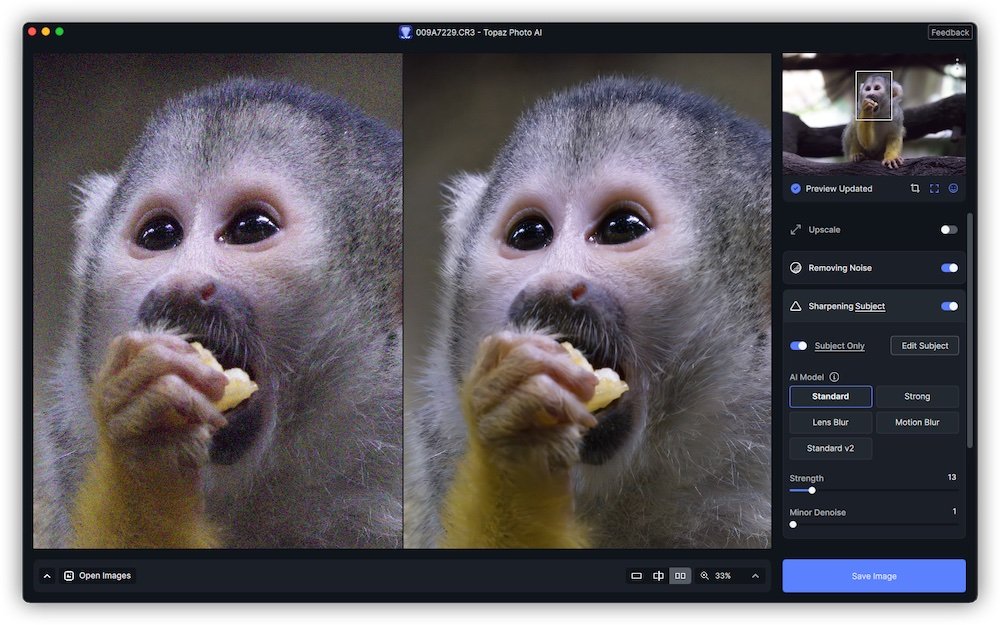
Topaz Photo AI 2 introduces generative AI features designed for professional-grade photo editing

Topaz Photo AI 2 has launched with all-new AI powered features, including a single-slider lighting adjustment filter, a color balance filter, and other best-in-class image enhancement features powered by generative AI.

Dallas, TX – Topaz Labs today announced the availability of Topaz Photo AI 2, the second major version of its flagship desktop app for image quality enhancement. With this upgrade, Topaz Photo AI uses generative AI to deliver on its promise of best-in-the-world image quality for professional and prosumer photographers.

Topaz Photo AI 2

With the new advancements in v2, photo editors can now:

  • Adjust Lighting improves lighting and addresses over/underexposure in a visually pleasing way. It can deal simultaneously with extreme highlights or shadows in the same image.
  • Balance Color attempts to remove color casts, then allows editors to adjust relative temperature based on the neutral baseline.
  • Maximize image quality on raw files with a heavily improved AI-based Raw Remove Noise engine that greatly outperforms alternatives in blind quality tests.

The new release also features improved blur reduction AI models and the ability to access Gigapixel generative upscaling directly from the Automate menu in Photoshop.

With Photo AI 2, Topaz Labs continues to bridge the gap between cutting-edge technology and magical results for photographers serious about image quality.

“Topaz Photo AI v2 shows the huge potential of generative AI to make editing real photos better,” said Eric Yang, CEO of Topaz Labs. “Photographers can focus entirely on achieving their artistic vision and let technology worry about the technical details.”

Topaz Photo AI 2 is a desktop software for Mac and Windows with integrations available for major image editors. It’s available on the Topaz Labs website for the introductory price of $159 for new users and $79 for existing users without an active upgrade license.

Canon EOS R6 vs EOS R8 Comparison Review, And 10 Differences

EOS R6 vs EOS R8

Here is a Canon EOS R6 vs EOS R8 comparison review, and a highlight of the 10 main differences.

Canon EOS R6 at a glance:

  • 20MP Full-Frame CMOS Sensor
  • DIGIC X Image Processor
  • 4K60p and FHD 120p 10-Bit Internal Video
  • Sensor-Shift 5-Axis Image Stabilization
  • 12 fps Mech. Shutter, 20 fps E. Shutter
  • Dual Pixel CMOS AF II with 1053 Points
  • 0.5″ 3.69m-Dot OLED EVF
  • 3″ 1.62m-Dot Vari-Angle Touchscreen LCD
  • Subject Tracking with Deep Learning
  • Dual SD UHS-II Memory Card Slots

Canon EOS R8 at a glance:

  • 24.2MP Full-Frame CMOS Sensor
  • 4K60p 10-Bit Internal Video, Canon Log 3
  • 2.36m-Dot OLED Electronic Viewfinder
  • 3.0″ 1.62m-Dot Vari-Angle Touchscreen
  • Dual Pixel CMOS AF II
  • 40 fps Electronic Shutter
  • Movie Digital IS
  • Vertical Movie Mode
  • Microphone Input, Headphone Output
  • Multi-Function Shoe, Wi-Fi & Bluetooth

Coming from our friends at Mirrorless Comparison, here is a neat Canon EOS R6 vs EOS R8 review. The 10 main differences are:

  1. Image Quality: The dynamic range and high ISO performance are very similar between the two cameras. The primary distinctions lie in the R8’s additional 4MP and its skin tone rendering with in-camera JPGs.
  2. Movie Capabilities: Both cameras offer the same 10-bit internal recording quality (dynamic range, ISO), but the R8 has fewer overheating issues and doesn’t crop the sensor in 4K. (Although the 1.07x crop on the R6 is hardly a significant concern.)
  3. Image Stabilisation: The R6 features 5-axis in-body stabilization, which extends the usability of slow shutter speeds for still photos and produces steadier footage while walking. That said, pair the R8 with a quality IS lens, and you’ll get more out of it than you would initially think.
  4. Autofocus: The R8 boasts more advanced subject detection software and performs better in low light. Both cameras excel in bird photography.
  5. Shutter and Continous Shooting: the R8 is faster with the electronic shutter (40fps vs 20fps) but doesn’t have a full mechanical shutter, only the EFCS (Electronic-First Curtain Shutter).
  6. Extra Features: The R8 includes Dual Pixel RAW, Focus Stacking, Breathing Compensation, and a USB plug-and-play webcam function.
  7. Design: The R8 is lighter and more compact, whereas the larger R6 offers several advantages such as a bigger battery, additional buttons, a larger grip, and an improved viewfinder.
  8. Viewfinder and LCD: The R6 boasts a larger viewfinder with greater resolution, particularly convenient for those wearing glasses. Both cameras share the same touch-sensitive, vari-angle rear LCD.
  9. Cards and Battery: The R6 is equipped with two card slots and a larger battery, providing extended longevity for both stills and video.
  10. Price: The R6 carries a higher price tag when purchased new, though the discrepancy isn’t substantial in some regions. Considering second-hand prices, the R6 often becomes the more favorable choice.

Read the full and exhaustive Canon EOS R6 vs EOS R8 review at Mirrorless Comparison, it comes with charts, ISO comparison and everything your pixel peeping heart might wish. Or you can watch the video below.

Canon Patent: 200-800mm F5.6-9, 100-600mm F5.6-9 And 20-150mm F4-8

canon patent

A new Canon patent was spotted. Zoom lenses for full frame mirrorless cameras, i.e. the EOS R system.

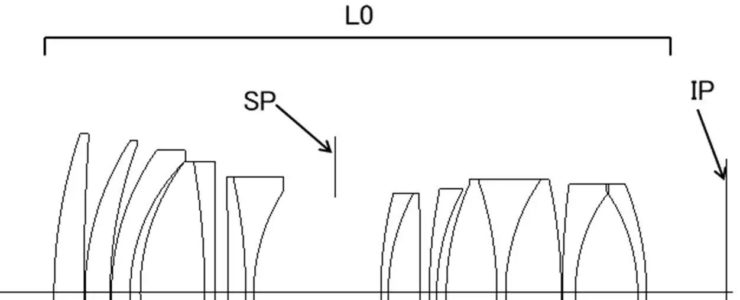
Canon patent application 2023125584 (Japan, published 9/7/2023) discusses optical formulas for three zoom lenses:

  • 200-800mm F5.6-9
  • 100-600mm F5.6-9
  • 20-150mm F4-8

From the patent literature:

A zoom lens is provided that is compact and lightweight and capable of suppressing variations in optical performance over the entire zoom range.

BACKGROUND ART

As an imaging optical system used in an imaging device, there is a demand for a small and lightweight zoom lens that has a high zoom ratio (variable magnification ratio) and high optical performance over the entire zoom range. As a zoom lens that satisfies this requirement, a positive lead type zoom lens in which a lens group with a positive refractive power is arranged closest to the object side is known.

In the zoom lens disclosed in Patent Document 1, the negative second lens group as the main variable magnification group is moved toward the image side during zooming from the wide-angle end to the telephoto end. In order to obtain a higher zoom ratio with this zoom lens, it is necessary to increase the overall length of the lens in order to ensure the amount of movement of the second lens group. As the total length increases, the diameter of the first lens group increases, which is not preferable from the viewpoint of miniaturization and weight reduction.

The present invention provides a zoom lens that is small and lightweight and capable of suppressing fluctuations in optical performance over the entire zoom range, and an imaging device having the same.

Example 1

  • Focal length: 206.00-775.96
  • F-value: 5.83-9.20
  • Half angle of view: 6.00-1.60
  • Image height: 21.64
  • Total length: 330.07-392.54
  • Back focus: 38.46

Example 2

  • Focal length: 100.02-599.98
  • F-value: 5.83-9.20
  • Half angle of view: 12.21-2.07
  • Image height: 21.64
  • Total length: 300.08-373.49
  • Back focus: 77.78

Example 3

  • Focal length: 19.99-150.00
  • F value: 4.12-8.12
  • Half angle of view: 30.77-5.20
  • Image height: 11.90-13.66
  • Total length: 118.37-150.69
  • Back focus: 10.01

More Canon patents are listed here.

[via asobinet]

Are These The Canon EOS R5 Mark II Specifications?

canon rumors canon news eos r7 mark ii canon eos rv

A set of alleged Canon EOS R5 Mark II specifications surface on the interweb of rumor sites.

Coming from a source with no known reliability record, these are the suggested Canon EOS R5 Mark II specifications:

  • 62mp Stacked CMOS Image Sensor
  • Variable resolution of 62mp, 31mp, 15.5mp
  • 8K recording up to 60fps internally
  • 4K recording up to 120fps internally
  • DIGIC X2s Processor
  • Dual CFexpress Type-B Card Slots
  • Eye control autofocus
  • A revised variable angle LCD panel
  • 5.76m-DOT 120fps EVF
  • Multi-function hot shoe
  • New battery, but same form as the LP-E6
  • New button layout and controls
  • Launch of new Canon camera app at the same time
  • Projected February 2024 Announcement

Besides the “DIGIC X2s” moniker for the CPU, there is nothing really new here. More an aggregation of various rumors that surfaced in the past. Also, in our experience, it is way to early for a reliable set of specifications; so take it with the necessary amount of salt, even if the source claims it comes “from an internal sales meeting […] with a large retailer”.

All Canon EOS R5 Mark II rumors are listed here.

Stay tuned.

[via TCI]