A New Canon Macro Longer Than 100mm With Variable Magnification? Yes Please.
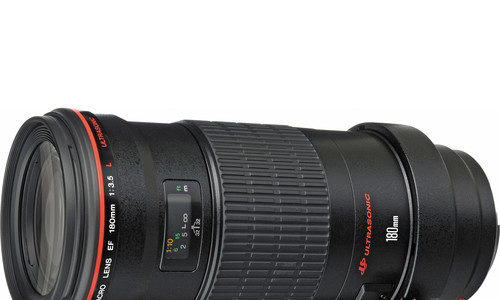
Canon EF 180mm f/3.5L Macro USM Lens

An anonymous source claims that Canon is planning a new macro lens, longer than 100mm, and with variable magnification ratios. No focal length. No aperture. No timeline. Just a dangling carrot for the macro crowd, and honestly? That’s enough to get people excited.

Canon’s Macro Legacy (The Good Old Days)

Let’s take a quick trip down memory lane, because Canon has made some genuinely wild macro lenses in the past.

The EF 180mm f/3.5L USM Macro, a telephoto macro that gave you true 1:1 reproduction and a generous working distance, meaning you didn’t have to shove the lens two inches from a bug’s face to get a sharp shot. Beloved by macro shooters. Discontinued. No RF replacement has appeared. Macro fans are still waiting.

The MP-E 65mm f/2.8 1-5x Macro, now this was something special. A manual-focus-only lens capable of magnification from 1:1 all the way up to 5:1. Five times life size. At 5x you’re essentially photographing the cellular structure of a gnat’s wing. A deeply weird lens that attracted a deeply passionate following. Also discontinued. Also without an RF successor.

Both lenses are gone from Canon’s active lineup, but you can still find them new-in-box if you look hard enough.

The New Rumor: Combining the Best of Both

Here’s where it gets interesting. The source suggests a lens that would combine:

  • Focal length longer than 100mm (the 180mm territory)
  • Variable magnification ratios (the MP-E 65mm territory)
  • Potentially with autofocus — which the MP-E 65mm notably lacked

The rumor source floats the idea of something like an RF 200mm f/4L with variable magnification as one possibility. That’s entirely speculative, no specs were provided, but it’s a plausible direction given Canon’s recent RF lens design philosophy.

What About the RF 100mm f/2.8L?

Canon does have a current macro for the RF mount: the RF 100mm f/2.8L IS USM, which features 1.4x maximum magnification (slightly beyond 1:1) and excellent hybrid IS. It’s a good lens. But some shooters have noted a focus shift issue when stopping down, and it doesn’t scratch the itch of the longer working distance crowd or extreme magnification enthusiasts.

A 100mm macro is great. A 180mm+ variable-magnification macro with autofocus would be on a different level entirely.

Fact Check

ClaimStatus
Canon EF 180mm f/3.5L USM existed✅ Confirmed — real lens, now discontinued
Canon MP-E 65mm f/2.8 1-5x existed✅ Confirmed — real lens, MF only, now discontinued
Canon RF 100mm f/2.8L IS USM exists✅ Confirmed — current RF macro, 1.4x magnification
RF 100mm focus shift issue✅ Reported by multiple shooters
New macro longer than 100mm planned❓ Single anonymous source, unverified
Variable magnification on new lens❓ Same anonymous source, unverified
RF 200mm f/4L specifically❓ Canon Rumors speculation, not from source
Timeline❌ None given

The Verdict

Low confidence on specifics, but Canon absolutely should make this lens. The EF 180mm and MP-E 65mm communities were passionate and underserved. A modern RF macro that merges long working distance with variable magnification, and adds autofocus, would be a statement lens.

Whether it actually happens is another question. As Canon Rumors admits, the source is anonymous and confidence is low. But hey, a macro shooter can dream.


Source: Canon Rumors

Canon to Announce Faster-Than-F/2.0 Zoom Lens in Late 2026?

canon eos r7 mark ii canon rumors EOS R6 Mark III

In news that will shock absolutely no one who has seen camera lens prices lately, Canon is reportedly planning to announce a zoom lens faster than f/2.0 by late 2026. Yes, you read that correctly. Faster than f/2.0. We’re as surprised as you are that it’s taken this long.

The Holy Grail of Zoom Lenses

Canon already gave us the RF 28-70mm f/2L USM back in 2018 when the EOS R system launched, a lens so big it doubles as a recreational fitness device. But since then? Crickets. The rumor mill has been churning for years about what Canon might do next, and apparently the answer is: go even wider.

According to the rumor source there’s “pretty good proof” that an f/1.4L zoom lens is on the horizon. Late 2026 is the target. So if you’ve been holding your breath, please exhale.

Sony’s Doing It, So Obviously Canon Has To

Let’s be real: Sony kicked off the f/2 zoom party with the FE 50-150mm f/2 GM and the FE 28-70mm f/2 GM. Both are magnificent. Both are absurdly expensive. And both have Canon shooters collectively weeping into their reflection elements.

Canon, being Canon, can’t let Sony have all the fun. So expect Canon’s offering to be… let’s say “ambitious.” Possibly in the same way the 28-70mm f/2L was ambitious, i.e., heavy enough to require a insurance waiver.

Wait, APS-C Too?

The rumors also hint at an APS-C (RF-S) f/1.4 zoom, potentially alongside a new EOS 7D Mark II expected sometime in mid-2026. This would be Canon’s way of saying, “We know you exist, crop-sensor users. We haven’t forgotten about you. Mostly.”

Patent Pending

Canon being Canon, they’ve filed approximately seventeen bazillion patents covering f/1.4 zoom optical designs for full-frame, Super35, and APS-C sensors. One particularly wild patent describes a 4.2-6.5mm f/1.2 for Super35 sensors. Is this for a PowerShot? Are we getting an f/1.2 compact camera? Maybe! Probably not! Who knows!

What We Actually Know

  • ✅ Canon RF 28-70mm f/2L USM exists (2018, ~$2,300, 1.5kg of optical excellence)
  • ✅ Sony has f/2 zooms (50-150mm f/2 GM, 28-70mm f/2 GM)
  • ✅ Canon has filed f/1.4 zoom patents
  • ❓ Late 2026 announcement — unconfirmed
  • ❓ f/1.4L zoom specs — speculative
  • ❓ EOS 7D Mark II — pure rumor
  • ❓ APS-C f/1.4 zoom — also pure rumor

The Verdict

Will this lens exist? Almost certainly. Will it be absurdly expensive? Absolutely. Will it weigh more than your first car? Probably. We’re here for it.

Stay tuned for more updates, or don’t. Canon will announce it when they announce it, and we’ll be here to write about it either way.

source: canonrumors.com

Canon WM-E1-R: Specs Surface for Canon’s First Wireless Bluetooth Microphone

Details on Canon’s upcoming wireless microphone system have surfaced via an overseas certification authority, giving us a first look at the specs for the WM-E1-R. Canon’s first official Bluetooth wireless microphone.

The filing covers two model numbers: DS586233 (receiver) and DS586234 (transmitter/mic capsule), which together make up the WM-E1-R system.

Specs

  • Wireless: Bluetooth 5.2
  • Polar pattern: Omnidirectional
  • Made in: Japan
  • Receiver size: approx. 45.4 × 36.4 × 52.8 mm
  • Microphone size: approx. 54.0 × 23.2 × 47.5 mm

The receiver is compact enough to mount in a hot shoe; the mic capsule is a clip-on or lavalier-style unit. Both are small, comparable to competing systems from Rode and DJI in the same category.

Timing

The certification registration dropped on February 23, 2026, just days before CP+. That’s not a coincidence, Canon tends to clear regulatory hurdles right before major announcements. Whether it showed up at CP+ or lands shortly after remains to be seen, but the filing strongly suggests a formal reveal is imminent.

What It Means

Canon has been steadily building out its video ecosystem alongside the EOS R lineup, and a first-party wireless mic is an obvious gap to fill. Bluetooth 5.2 is a reasonable choice for this use case, low latency, solid range, and no need for an extra dongle beyond the receiver.

The omnidirectional pickup pattern keeps it versatile for on-camera interviews and vlogging, though it’s not a replacement for directional mics in noisier environments.

More details, including pricing and availability, when Canon makes it official.

Source: Asobinet

Canon EOS R6 Mark III Review: Mobile01 Calls It a Complete Hybrid

The EOS R6 Mark III has been out since November 2025, and the reviews are starting to roll in. Mobile01 just published their full take (via Asobinet), and it’s pretty glowing — with a couple of caveats.

The Highlights

Sensor & Speed

  • 32.5MP sensor, up from 24.2MP in the Mark II
  • 40fps electronic shutter with pre-burst
  • CFexpress Type B + SD UHS-II dual slots
  • ISO 102400 max — same ceiling despite the higher resolution
  • ISO 6400 excellent, ISO 12800 usable

Video

  • 7K Open Gate recording — shoot once, reframe in post
  • Full-size HDMI Type-A (finally)
  • USB 3.2 Gen 2 with power delivery
  • Multi-function hot shoe with digital audio support

Build & Ergonomics

  • ~670g body with improved heat dissipation
  • Deep Canon-trademark grip, magnesium alloy frame
  • Weather-sealed
  • Vari-angle touchscreen, 3-inch 1.62M dot

Autofocus

  • Subject tracking holds through partial occlusion
  • Pre-register up to 10 people for priority tracking in crowds

The Weaknesses

  • Rolling shutter on fast subjects using electronic shutter
  • Strong crop when using electronic IS in video mode
  • No IBIS performance figures quoted in the review

The Verdict

Mobile01 calls it “a highly competitive hybrid with few weaknesses” — strong in both stills and video, with real-world improvements that matter. The 7K Open Gate and full-size HDMI alone are significant wins for hybrid shooters.

Pricier than the Mark II at launch — but you’re getting a meaningfully upgraded camera.

More Canon EOS R6 Mark III coverage.

Source: Mobile01 via Asobinet

Canon Patent: 28-45mm f/1.2 and 35-70mm f/1.4 Zoom Lenses With Reflective-Transmissive Elements

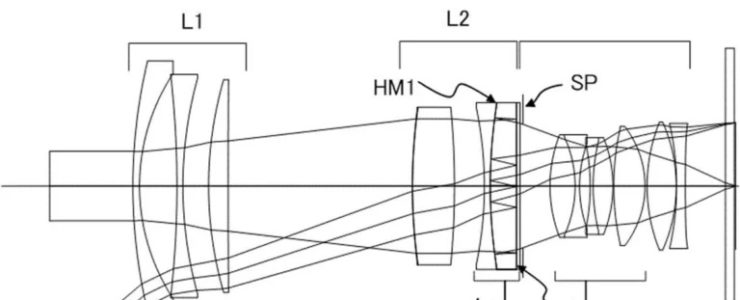
Canon just dropped a new patent, and it’s making us raise an eyebrow. Published February 27, 2026 (filed August 2024), the patent describes zoom lenses with apertures ranging from f/1.2 to f/1.4 — using reflective-transmissive (mirror) elements to keep things compact.

The Patent Details

The filing (P2026033938) covers several implementations:

  • Example 2: 28-45mm f/1.2 — backfocus 0.40mm
  • Example 3: 28.5-45mm f/1.4 — backfocus 0.40mm
  • Example 5: 35-70mm f/1.4 — backfocus 0.70mm

Example 2

  • Focal length: 28.00-45.00
  • F-number: 1.20
  • Half angle of view: 37.26-25.33
  • Image height: 21.30
  • Total length: 222.37-171.73
  • Back focus: 0.40

Example 3

  • Focal length: 28.50-45.00
  • F-number: 1.40
  • Half angle of view: 35.22-25.68
  • Image height: 20.12-21.64
  • Total length: 189.76-137.77
  • Back focus: 0.40

Example 4

  • Focal length: 15.40-36.01
  • F-number: 1.42
  • Half angle of view: 36.86-20.54
  • Image height: 11.54-13.49
  • Total length: 165.18
  • Back focus: 0.40

Example 5

  • Focal length: 35.70-68.00
  • F-number: 1.40
  • Half angle of view: 28.55-17.65
  • Image height: 19.42-21.64
  • Total length: 227.59
  • Back focus: 0.70

That’s… extremely short backfocus. Like, “we’re not talking about RF mount” short.

Wait, What?

For context, RF-mount lenses need a backfocus of around 20mm+ to clear the mirror. These numbers — 0.40mm and 0.70mm — are barely enough to clear a sensor. This suggests the optical design is intended for:

  • Compact cameras — where the lens sits directly on or very close to the sensor
  • Surveillance cameras — where catching every photon matters more than shallow DoF
  • Cinema sensors — some have extremely short flange distances

Not interchangeable lenses. Canon confirmed this in the filing notes: “backfocus is extremely short so this is not intended for interchangeable lens systems.”

But Here’s The Fun Part

Canon previously filed similar patents for prime lenses using the same reflective-transmissive technology — a 24mm f/0.7 and a 12mm f/1.0. Those were weird enough. Now they’re applying the same trick to zooms, going even wider and faster. A 28-45mm f/1.2 zoom would be absolutely enormous if built with conventional optics. The mirror elements fold the light path, dramatically shrinking total length.

Our Take

Is this coming to an RF-mount lens? Almost certainly not. The backfocus is physically incompatible.

Could this be a hint at future compact camera ambitions? Maybe. The G7 X line is due for a replacement, and a 28-45mm f/1.2 equivalent in a pocketable body would be something to see.

Or maybe Canon just likes filing patents for lenses they’ll never build. We’ve seen stranger things.

Source: Asobinet

Canon Patent: RF 300mm f/2.8 IS And RF 400mm f/2.8 IS

Canon patent

And yet another Canon patent application: two telephoto fast primes for the RF mount.

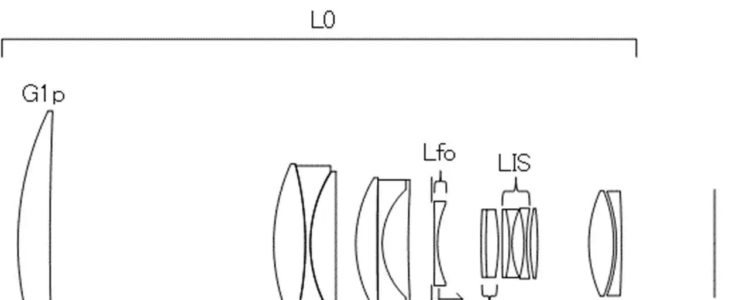
Canon patent application 2023104022 (Japan, published 7/28/2023) discusses optical formulas for two fast telephoto prime lenses for the RF mount: RF 300mm f/2.8 IS and RF 400mm f/2.8 IS.

From the patent literature:

Optical System and Imaging Device Having the Same

Description of the Related Art

An optical system used in an imaging apparatus is required to be compact and lightweight as a whole, and to have high optical performance capable of satisfactorily correcting various aberrations including chromatic aberration. As a compact optical system, a so-called telephoto type optical system is known in which a lens group with positive refractive power is arranged on the object side and a lens group with negative refractive power is arranged on the image side. However, in the telephoto type optical system, the longer the focal length, the larger the entire system, and the use of a lens with a large diameter or a heavy lens tends to increase the weight of the entire optical system.

Example 1

  • Focal length: 294.99
  • F-value: 2.90
  • Half angle of view: 4.19
  • Image height: 21.64
  • Overall length: 280.25
  • Back focus: 37.47

Example 2

  • Focal length: 390.00
  • F-value: 2.90
  • Half angle of view: 3.18
  • Image height: 21.64
  • Overall length: 370.50
  • Back focus: 37.00

More Canon patents are listed here.

[via asobinet]