Canon explores large image sensors for academic and industrial application
canon

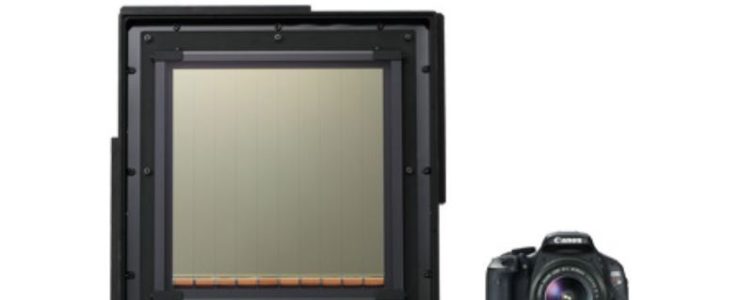
Canon posted a technical article about the company’s efforts in researching large size image sensors. The sensor in the article below is 40 times the size of a 35mm CMOS sensor. Nothing you will see on Canon’s next mirrorless camera.

Canon press text:

The Potential to Open New Frontiers in Academic and Industrial FieldsCMOS Image Sensors

In addition to the image sensors used in its consumer-model digital cameras, Canon is exploring new potential in academic fields and industrial fields through the development of ultrahigh-sensitivity CMOS image sensors and ultrahigh-resolution CMOS image sensors.

The World’s Largest Ultrahigh-Sensitivity CMOS Image Sensor

A certain level of light is required when shooting with a digital camera or camcorder, and without it, images cannot be captured due to insufficient sensitivity.

In the pursuit of further improving the sensitivity of imaging elements, Canon has embraced the challenge of achieving higher levels of sensitivity and larger element sizes while maintaining high-speed readout performance, and has succeeded in developing the world’s largest class of CMOS image sensor measuring approximately 20 cm square. At present, the standard diameter of the silicon wafers on which CMOS sensors are fabricated is 12 inches (approx. 30 cm). As such, a 20-cm-square sensor is the largest size that can be manufactured based on these dimensions, and is equivalent to nearly 40 times the size of a 35 mm full-frame CMOS sensor.

Increasing the size of CMOS sensors entails overcoming such problems as distortion and transmission delays for the electrical signals converted from light. To resolve these issues, Canon not only made use of a parallel processing circuit, but also exercised ingenuity with the transfer method itself. As a result, the sensor makes possible the shooting of video at 60 frames per second with only 0.3 lux of illumination (approximately the same level of brightness as that generated by a full moon).

120-Megapixel Ultrahigh-Resolution CMOS Image Sensor

Canon has spent many years working to reduce the pixel size for CMOS image sensors. These efforts have led to astounding results, making possible a pixel size of 2.2 µm for a total of approximately 120 million pixels on a single sensor. The APS-H size (approx. 29 x 20 mm) CMOS sensor boasts approximately 7.5 times the number of pixels and 2.6 times the resolution of sensors of the same size featured in existing products.

This CMOS sensor performs parallel processing to support the high-speed readout of large volumes of pixels, and by modifying the method employed to control the readout circuit timing, Canon successfully achieved the high-speed readout of sensor signals. As a result, the sensor makes possible a maximum output speed of approximately 9.5 frames per second, supporting the continuous shooting of ultrahigh-resolution images.

Images captured with the ultrahigh-resolution CMOS sensor maintain high levels of definition and clarity even when cropped or digitally magnified. Accordingly, this sensor offers potential for a range of industrial applications, including cameras for shooting images for large-format poster prints, cameras for the image inspection of precision parts, aerospace cameras, and omnidirectional vision cameras.

The 120-megapixel ultrahigh-resolution performance of the Canon CMOS sensor may lead to unprecedented industrial applications that could only be imagined in the past.

[via Image Sensors World]

A Canon conspiracy theory: A killer mirrorless camera may be on the horizon

mirrorless camera

Tony & Chelsea Northrup discuss a possible conspiracy theory, with Canon at the centre.

Is Canon purposely holding back their engineering skills, and hence a killer MILC, for strategic reasons? In other words: is Canon waiting for the right time to launch the ultimate mirrorless camera?

They say:

Canon has been the #1 camera manufacturer for decades, and they beat Nikon, Sony, Fuji, and all the others with leading-edge innovation. That seems to have changed in the last few years…but Chelsea has a theory that they’re just charging up for the ultimate mirrorless camera. Is it true?

While I’m sure the discussion in the video below wasn’t intended to be serious, there are some solid arguments in the talk. Enjoy, and sound off in the comment section if you want.

If you want to know more about Canon’s mirrorless agenda we got you covered. We expect Canon to announce the Canon EOS M5 Mark II ahead of Photokina 2018. Canon’s full frame mirrorless might take a bit longer.

Instant Magny 35 – An Instant Back for 135 SLR & Rangefinder Cameras is on Kickstarter

Instant Magny 35

NINM Lab is about to launch a Kickstarter campaign for a tool (or gadget, if you prefer) that might be interesting for a lot of people. Do you still have an old film camera and would like to use it? Well, read on.

The link to the Kickstarter project is here, and will be active from June 12 2pm GMT to June 16, 2018. NINM Lab’s press release can be found here. Kickstarter price is $159 for Canon cameras.

Press release:

Instant Magny 35 – From ephemeral moment to tangible memory

An Instant Back for 135 SLR & Rangefinder Cameras

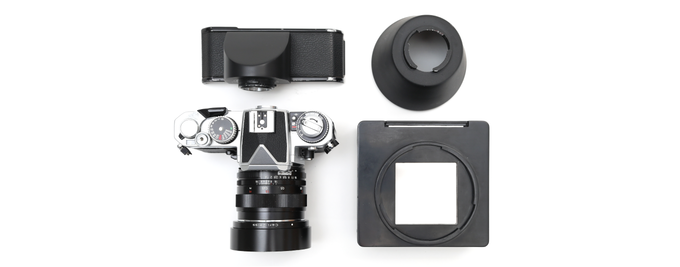
The new camera accessory, the Instant Magny 35 Instant Back, enables you to use a 135 Single Lens Reflex and Rangefinder film camera to capture instant photographs without any modifications.

The Instant Magny 35, developed by NINM Lab, is compatible with over 35 most common models from 5 major brands of 135 SLR and Rangefinder film cameras. The models supported include: Nikon FM/FE/FA Series, Leica M Series, Olympus OM Series, Pentax M series, and Canon A Series.

Instant Magny 3

NINM Lab is raising funds for Instant Magny 35 on Kickstarter. Pre-orders on Kickstarter start from US$99 with up to 45% off. Fundraising officially opens on June 12, 2pm GMT and concludes on July 16.

  • Transforming the traditional film camera into an instant camera
  • An unprecedented instant photography experience using your most reliable and familiar camera
  • Innovative design allows you to carry or store it easily and freely
  • Discovering the real you
  • Utilizing the commonly used Fujifilm Instax Square instant film

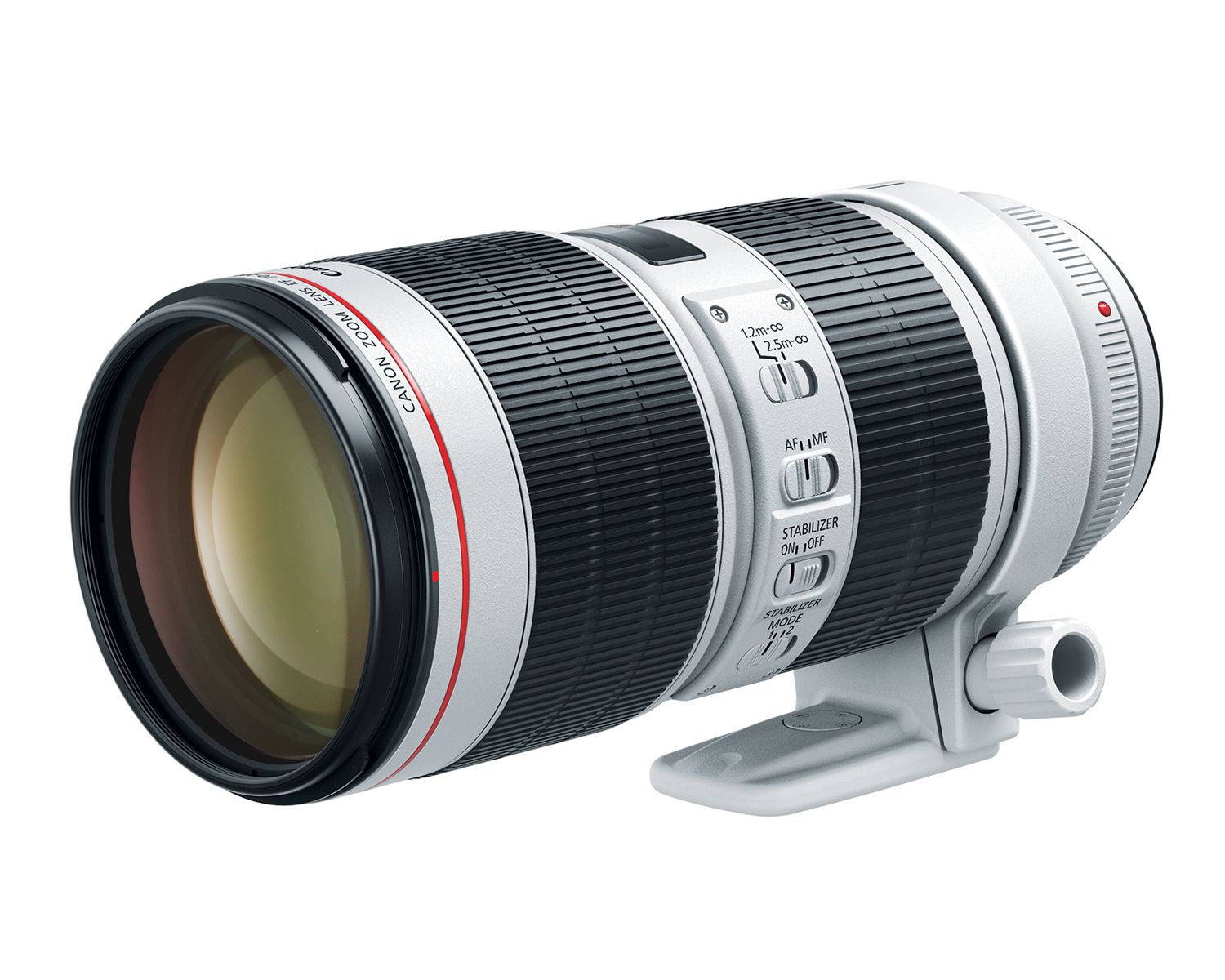
Canon EF 70-200MM F/4L II USM and EF 70-200MM F/2.8L IS III announced, pre-orders open

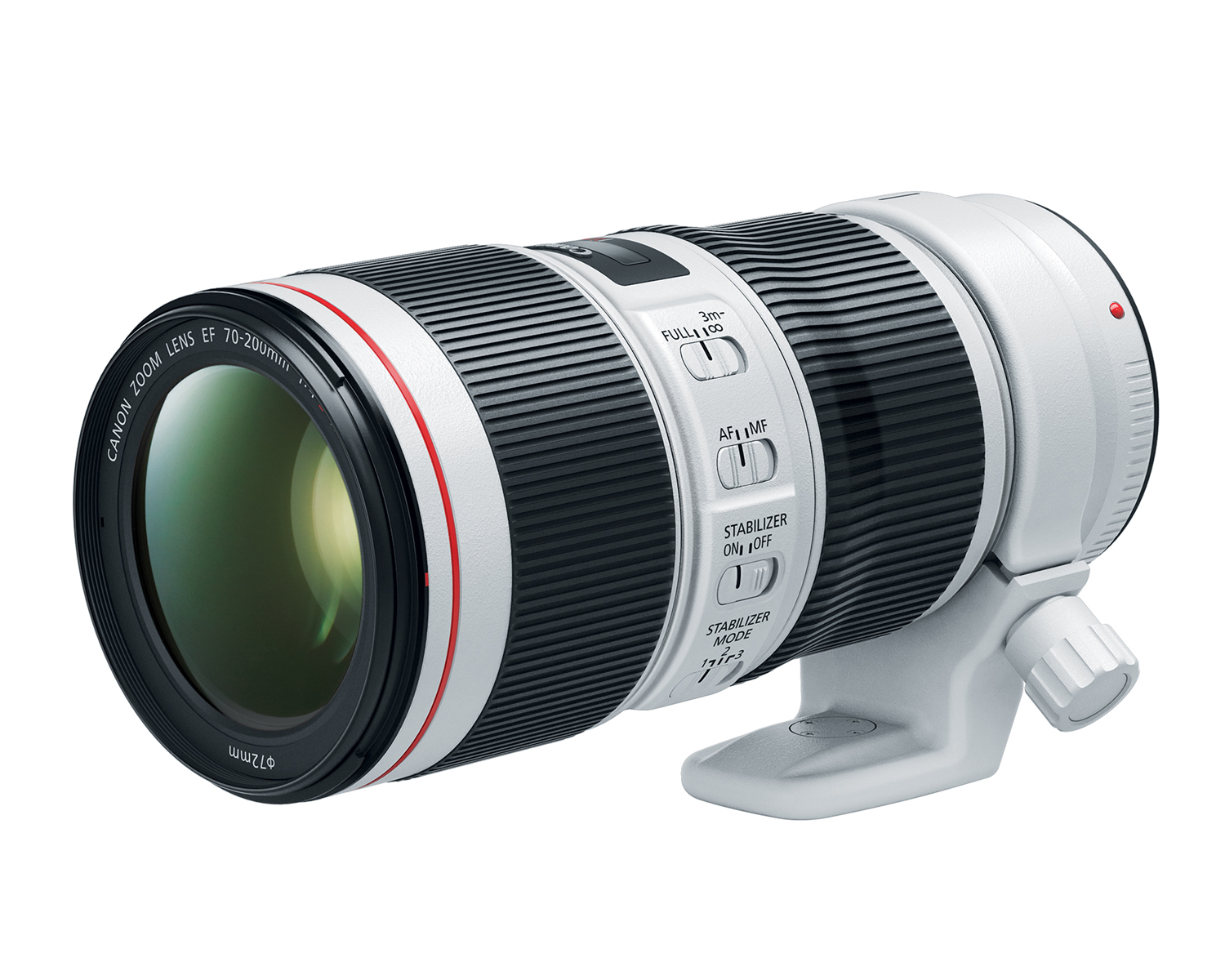
Canon officially announced the new EF 70-200MM F/4L II USM and EF 70-200MM F/2.8L IS III lenses.

Canon EF 70-200mm F/4L II pre-order at $1,299: B&H Photo | Adorama

Canon EF 70-200mm F/2.8L IS III pre-order at $2,099: B&H Photo | Adorama

Canon press release:

Canon Updates Lineup of EF L-Series Telephoto Zoom Lenses With the Introduction of EF 70-200MM F/4L II USM and EF 70-200MM F/2.8L IS III USM

Next Generation of EF 70-200mm Lenses Features a Variety of Updates Including Enhanced Optical Image Stabilization in the f/4 and the Inclusion of Air Sphere Coating in the f/2.8

MELVILLE, N.Y., June 7, 2018 – Canon U.S.A. Inc., a leader in digital imaging solutions, today introduced two new telephoto zoom lenses, the Canon EF 70-200mm f/4L IS II USM and Canon EF 70-200mm f/2.8L IS III USM. The new lenses serve advanced amateur and professional photographers in a variety of applications and solutions including wildlife, landscapes, portrait and sports photography. Canon EF 70-200mm focal-length lenses are a popular option for photographers in need of a long zoom range that maintains a relatively compact design. In addition, these updated lenses inherit the same overall build-quality and ruggedness photographers have come to expect from the Canon EF L-series line of lenses.

“At the core of image capturing, Canon believes the lens is just as important as the camera. A seamless relationship between the two allows photographers to produce emotion-evoking and timeless images,” said Kazuto Ogawa, president and chief operating officer, Canon U.S.A., Inc. “Canon is excited to offer photographers two distinct options in the 70-200mm focal-length, continuing to further expand our optics heritage.”

Canon EF 70-200mm f/4L IS II USM

The new Canon EF 70-200mm f/4L IS II USM features numerous updates over its predecessor, making it an ideal lens for advanced amateur photographers using Canon DSLR cameras such as the EOS 6D Mark II or EOS 80D. Most notably, Optical Image Stabilization is upgraded from three stops to five shutter speed stops1 of correction over the original f/4 lens. The improved IS allows photographers to more easily capture crisp, in-focus images without the use of a tripod. The new lens also features three IS modes, each uniquely designed and suitable for a variety of shooting situations, such as the capture of still subjects, panning or fast moving objects2. Furthermore, the IS operational noise has been reduced, which proves ideal for photographers shooting in a concert hall or on-stage shooting at the theatre.

Additional noteworthy features of the Canon EF 70-200mm f/4L IS II USM include:

  • One fluorite lens and two UD lenses helps to provide high-image quality
  • Minimum focusing distance shortened from 1.2m to 1m (3.9ft to 3.3ft)
  • Super Spectra Coating technology and optimized lens element placement helps minimize ghosting and flaring
  • Circular nine blade aperture producing a beautiful bokeh quality, ideal for portrait shooting
  • Lens features 20 lens elements in 15 groups
  • Fluorine coating on front and rear elements helps to reduce smears and fingerprints
  • Inner focusing system with Ring Ultrasonic Motor

Canon EF 70-200mm f/2.8L IS III USM

The new Canon EF 70-200mm f/2.8L IS III USM is an ideal lens for professional photographers who shoot with the Canon 1D and 5D series of DSLR cameras. The inclusion of Air Sphere Coating (ASC) technology helps to reduce flaring and ghosting, and suppresses the reflection of light.

Additional noteworthy features of the Canon 70-200mm f/2.8L IS III USM include:

  • Optical Image Stabilizer up to 3.5 shutter speed stops1 of correction
  • Fluorine coating on front and rear elements helps to reduce smears and fingerprints
  • Inner focusing system with Ring Ultrasonic Motor
  • One fluorite lens and five UD lenses helps to provide high-image quality
  • Minimum focusing distance of 1.2m (3.9ft)
  • Lens features 23 elements in 19 groups
  • Circular eight blade aperture

The Canon EF 70-200mm f/4L IS II is scheduled to begin shipping in late June 2018 with an estimated retail price of $1,299.00. The Canon 70-200mm f/2.8L IS III is scheduled to begin shipping in August 2018 for an estimated retail price of $2,099.00^. For additional information regarding the lenses improved performance over predecessors please visit, https://www.youtube.com/watch?v=OFTBw7-8gdk&feature=youtu.be.