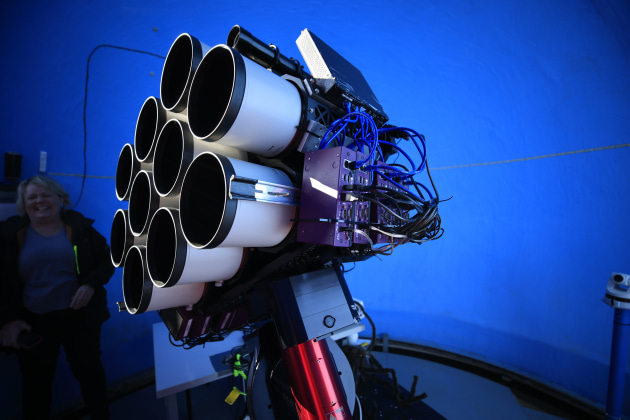
Remember the Dragonfly Telephoto Array? Once more, commercial Canon telephoto lenses are used to build an array to observe and study galaxies and other astronomical objects.
The Canon lenses used to build the new array are the Canon EF 400mm f/2.8 L IS II. The new array, named Huntsman Telescope, is made by Macquarie Unversity with support from Canon, as Australian Photography reports:
Located at the Siding Spring Observatory near Coonabarabran, NSW, the Huntsman will perform deep southern sky surveys to provide researchers with understanding about galaxy formation and evolution; how galaxies form, how they grow, how they engage with structures that surround them, and what happens when galaxies collide.
Canon says the second-generation Canon EF 400mm f/2.8 L lens was chosen for the task as it has ‘superb’ anti-reflection properties, owing to one of the first applications of Canon’s nano-fabricated coatings. Each lens is connected to a red-coloured camera which is then individually connected to one of 10 mini computers.
The coated lens array chosen for the Huntsman contrasts to a conventional mirror telescope, whose imperfectly polished surface can introduce subtle errors that ruin faint, extended structures surrounding galaxies.
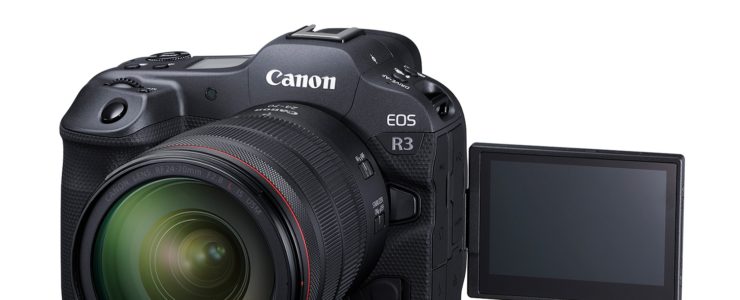
Canon released new firmware update for three EOS R cameras, the EOS R3, EOS R5 and EOS R6.
The firmware updates started to be available on Canon’s Asian sites, so we link Canon Singapore for the downloads.
Canon EOS R5 Firmware Version 1.6.0 (download) incorporates the following enhancements and fixes:
1. Adds [Auto Power Off Temp.: Standard/High] to the menu for movie recording. When [High] is selected, the camera will not automatically turn off when the temperature of the camera body and card become high, which may allow for longer movie recording than before, depending on the shooting conditions. Note that the temperature of the bottom surface of the camera may increase at this time. 2. Adds the ability to convert multiple HEIF images into multiple JPEG images. 3. Enhances the performance of “Movie Digital IS”. It stabilizes the image when taking selfies or walking shots using a wide-angle lens. 4. Fixes minor issues.
Canon EOS R6 firmware Version 1.6.0 (download) incorporates the following enhancements and fixes:
1. Adds the ability to convert multiple HEIF images into multiple JPEG images. 2. Enhances the performance of “Movie Digital IS”. It stabilizes the image when taking selfies or walking shots using a wide-angle lens. 3. Fixes minor issues.
Canon EOS R3 firmware Version 1.2.0 (download) incorporates the following enhancements and fixes:
1. Adds the ability to set “Custom high speed continuous” to the Drive mode. It is possible to shoot from 2 to 50 images continuously at a speed of approximately 30 to 195 fps. 2. Adds the ability to select “FHD 239.76 fps/200.00 fps” in “High frame rate.” 3. 1- Adds the ability for in camera “Depth compositing” during “Focus bracketing.” 2- Adds Focus bracketing and depth compositing with a flash (Speedlite EL-1). 4. Adds the ability of time-lapse movie recording. Note that the time-lapse movie setting is retained even if the camera enters the Auto Power Off state before starting time-lapse movie recording. 5. Adds the ability of Cloud RAW processing functionality. RAW processing with the latest image processing technology is possible. This is a paid service that requires the purchase of a Canon Imaging App Service Plan, which will be available starting July 25, 2022. 6. Adds the ability to convert multiple HEIF images into multiple JPEG images.. 7. Adds the ability to set [Still Image Crop/Aspect] to [Custom Controls]. The assigned button can be used to switch between crop and aspect ratio. 8. Adds the ability to crop and resize images during transfer to an FTP server. 9. 802.1X authentication/WPA2-Enterprise now supports the PKCS#12 certificate format. 10. Adds an electronic shutter sound to be played when the mechanical shutter or electronic 1st-curtain is set. 11. Enhances the performance of “Movie Digital IS”. It stabilizes the image when taking selfies or walking shots using a wide-angle lens. 12. Adds [Auto Power Off Temp.: Standard/High] to the menu for still shooting. 13. Fixes an issue, which displays Error Code 70 on the camera, that may occur, in rare instances, when the [Disp. performance] setting is set to [Smooth]. 14. Fixes minor issues.
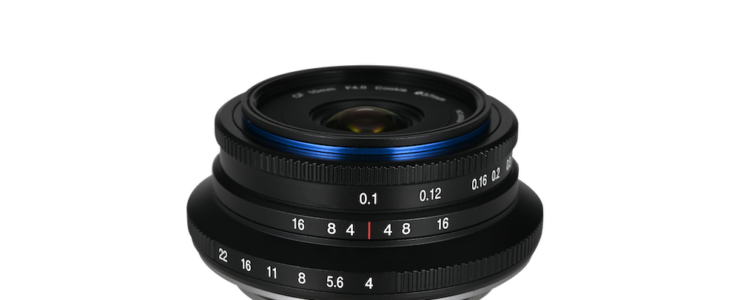
Venus Optics announced a new lens, the Laowa 10mm f/4 Cookie, a pancake lens for mirrorless cameras with APS-C imaging sensors. RF mount version available.
Anhui China, Jul 19, 2022 –Venus Optics announces the launch of the new Laowa10mm f/4 Cookie Lens for APS-C mirrorless cameras. It is one of the world’s widest rectilinear pancake lenses for APS-C cameras. At a cookie size of 25mm(0.98”)long and weighing only 130g(0.29lbs), it literally can be put in your pocket. Most of the wide-angle pancake lenses on the market are either fisheye or pinhole. They usually have obvious barrel distortion and inferior image quality. However, this new Laowa Cookie Lens is equipped with a high-performance optical design, featuring super-low distortion and optimized image quality to ensure users take full advantage of the mirrorless system –compact and capable. Laowa 10mm f/4 Cookie is a fun and mighty option for day-to-day content creators to carry around without burden, ideal for street, urban, landscape photography and everyday snapshots. The Lens has black and silver versions for multiple mounts including Canon RF, Nikon Z, Sony E, L mount and Fuji X to match with the camera body.
Extremely Compact and Lightweight
Laowa 10mm f/4 Cookie is a pancake-style lens specifically designed for APS-C mirrorless cameras. At just 25mm deep and weighing only 130g, you can use it with gimbals and shoot handheld easily. It’s almost like a body cap with function. With such discreet design and excellent portability, you will carry it anywhere and eventually shoot more.
World’s Widest Rectilinear Pancake
Featuring a remarkable 109.3° angle of view, Laowa 10mm f/4 Cookieis by farthe world’s widest rectilinear pancake lens for APS-C on the market. With the advantages of theultra-wide perspective and pocket-sized weight,this lens brings you a burdenless experience to capture epicmoments in everyday lifeand explore the beauty in our surroundings.
Super-low Distortion
Most pancake lenses with a wide perspective are fisheye so heavy Barrel distortion would be expected. However, the Laowa Cookie is here to break the norm. The lens has excellent control of optical distortion. The horizontal and vertical straight lines are retained from corner to corner. As an ultra-wide-angle lens, this is essential not only to reduce the post-editing time but also to expand the possibility of genres you can do with this lens, from street and outdoor photography to shape-edged architectures and spectacular landscapes
High Optical Performance
Laowa10mm f/4 Cookie lens comes with 12 elements in 8 groups optical structure with 2 aspherical and 4 extra-low dispersion elements. Despite the light and compact design, the lens managed to deliver the impressive image quality and high contrast. The performance of chromatic aberration, flaring, and ghosting effects are optimized to support your day and night snapshots.
Stunning 10-point Sunstar
Built with 5 aperture blades, stunning10-pointSunstar can be achieved easily when stop down.
Close Minimum Focusing Distance
The minimum focusing distance of Laowa 10mm f/4 Cookie is 10cm, allowing you to get super close to the subjects and create interesting wide-angle macro-like shots with nice separation between the object and background.
Built-in Filter Thread
Equipped witha37mm filter thread for you to use screw-in filters directly. It is very convenient and cost-saving as no additional filter holderis required.
Pricing & Availability
Laowa 10mm f/4 Cookie is currently available to purchase via Venus Optics official website and authorized resellers.The US price for Laowa 10mm f/4 Cookie is USD299 for all mounts. Pricing varies in different countries.
Nikon didn’t wait much to answer to yesterday’s report that they were withdrawing from SLR production.
In a note released on their Japanese site, Nikon states (machine translated):
Today [yesterday, 7/12/2022, editor’s note] , some media outlets have reported that we have withdrawn from the development of single-lens reflex cameras, but this is speculation and not announced by us.
We continue to produce, sell, and support digital SLR cameras, and we hope that our customers will continue to use them with peace of mind.
So, do not neglect to use Nikon gear with peace of mind.
After yesterday’s story that Nikon is set to withdraw form SLR camera production, a new report reiterates that Canon will follow suit.
Nikkei Asia reports about Nikon retiring SLR camera production, and cites Canon too.
TOKYO — Japanese camera maker Nikon will withdraw from the single-lens reflex camera business and shift toward digital offerings amid intensifying competition from smartphone cameras, Nikkei has learned.
Nikon’s SLR cameras have been widely used by professional photographers for more than 60 years and have come to be seen as synonymous with the Japanese company.
It now plans to focus resources on mirrorless cameras, which have become mainstream products on the back of more advanced digital technologies.
[…] Rival Canon also plans to follow Nikon and stop producing SLRswithin a few years.
That’s a weird news, not even a rumor. Nikon is said to withdraw from SLR camera development.
Reported by Nihon Keizai Shimbun, here are the main points (machine translated):
Nikon withdraws from development of single-lens reflex camera
Existing models will continue to be produced and sold for the time being
Introducing artificial intelligence (AI) and image processing technology and concentrating on the development of mirrorless cameras that are becoming mainstream in the market
Canon also plans to end the development of the flagship model of SLR cameras within a few years
Nikon directs development resources to mirrorless cameras, which are expected to grow
It is easy for mirrorless cameras to be equipped with digital technology, and there is a large margin for expansion of shooting functions.
Mirrorless cameras are cheaper than single-lens reflex cameras, which have the same functions as the price of less than 100,000 yen.
By improving the performance of image sensors and processing engines, it is becoming possible to use it like a single-lens reflex camera without any discomfort.
Uh, I do not know what to think here. But given that Canon seems also set to abandon SLR development, it might be plausible that Nikon will too. Any ideas? The future present is mirrorless, I guess.
This website or its third-party tools use cookies, which are necessary to its functioning and required to achieve the purposes illustrated in the cookie policy. If you want to know more or withdraw your consent to all or some of the cookies, please refer to the cookie policy. By closing this banner you agree to the use of cookies.