Canon Announces Kokomo, Social VR Platform For An Immersive Experience

kokomo

Canon announced the development of Kokomo, a virtual reality (VR) platform for an “immersive virtual reality experience“. To use Kokomo you need a Canon camera, a VR headset, and a smartphone. The recently announced Canon RF 5.2mm f/2.8L Dual Fisheye lens will be used for an “ImmersiveCall” demonstration at CES 2022.

Kokomo gives people a new way to be together, catch up, and explore new places. The Kokomo app combines the immersive 3D experiences of virtual reality, with the ease and excitement of video calling. Make eye contact, travel to incredible destinations, and connect with family and friends on a whole new level.

Canon lists the EOS M200 and the EF-M 15-45mm among the Canon gear to use with Kokomo. The video below gives a complete introduction to Kokomo, the app and how Canon wants the 3D experiences of VR to be combined with the ease of video calling.

Canon press release:

A Real “Together” Experience Canon Enters The Virtual Reality Platform Software Market By Introducing An Interactive VR Experience With Immersive Calling

Introducing The Kokomo Software By Canon, A First-Of-Its-Kind VR Platform Software for the Company, Currently Being Developed by Canon1

MELVILLE, NY, January 4, 2022 Canon U.S.A., Inc., a leader in digital imaging solutions, today showcases a first of its kind immersive virtual reality experience, the Kokomo Software by Canon. Kokomo is a software platform (currently in development1) designed to change human communication by combining virtual reality with an immersive calling experience.

This innovative software is being designed to provide users with a way to meet friends and family virtually “in-person” by using a compatible Canon camera, a VR headset and a compatible smart phone. Kokomo will allow users to see and hear one another in real time with their live appearance and expression, in a photo-real environment, while experiencing a premium virtual reality setting in captivating locations like Malibu, New York, or Hawaii.

The app uses Canon cameras and imaging technology to create realistic representations of users, so calls feel like you are interacting face-to-face, rather than through a screen or an avatar. This creates a Real“Together” Experience.

“With Kokomo we’re tapping into Canon’s innovative spirit and heritage of high-quality imaging to enable people to have real, authentic interactions when they get together in VR. Every ImmersiveCall should be a memorable experience,” said Kazuto “Kevin” Ogawa, president and CEO, Canon U.S.A., Inc. “Kokomo will enable people to create memorable, meaningful connections.”

CES® attendees will be amongst the first to try out the Kokomo software (currently in development) by Canon during the ImmersiveCall demonstration which will feature the Canon RF5.2mm F2.8 L Dual Fisheye Lens. Kokomo will be available in 2022 and the company plans to add new destinations, functionalities, and features to the Kokomo app, along with expanded compatibility with Canon cameras.

A Parody Comparison: Sony a1 vs Nikon Z9 vs Canon EOS R3

eos r3

Here is a neat parody about the competition in the mirrorless market. It’s survival of the fittest: Sony a1, Nikon Z9 and Canon EOS R3.

The folks at DPReview TV made the little parody video below. Imagine…

A plane crash leaves the mirrorless flagships overexposed to the dynamic range of elements. Will Canon, Nikon & Sony come to their sensors and group together to weather the aberrations ahead, or will they cannibalize one another?

Which one will survive through hunger (battery), nighttime and the ever persistent menace of smartphones? See for yourself.

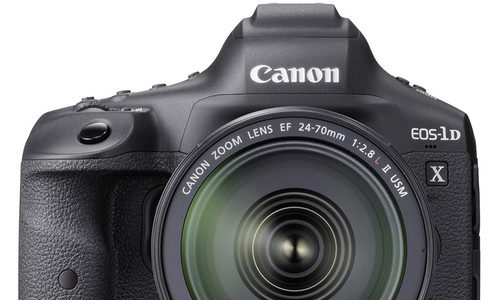
Canon EOS-1D X Mark III Company’s Last Flagship DSLR, Exec Says

canon eos-1d x mark iii sensor

Yesterday a news about Canon broke over the Internet. Not only the source of the news wasn’t cited by the usual suspects, but it was also reported in a misleading way.

asobinet.com broke the news reporting an interview with a Canon exec, Canon’s Chairman and CEO Fujio Mitarai. In the interview. Mr Fujio Mitarai states that the Canon EOS-1D X Mark III will be Canon’s last flagship DSLR. The future belongs to mirrorless:

The market needs are acceleratingly shifting to mirrorless cameras. In line with this, we are steadily shifting people

However, that does not mean Canon will no longer produce DSLRs, as some sites want you to believe. From the interview:

Demand for beginner and intermediate SLR cameras is strong overseas, so we plan to continue development and production for the time being.

It doesn’t really come to a surprise that Canon will no longer produce a flagship DSLR, given all the efforts they put into mirrorless. The next Canon flagship camera will be the Canon EOS R1.

Canon EOS R3 Review – 10 Things To Love Or Hate

canon eos r3 review canon cameras eos r1

A rather comprehensive Canon EOS R3 review and walk-through.

Canon EOS R3 at a glance:

  • 24MP Full-Frame Stacked BSI CMOS Sensor
  • Dual Pixel CMOS AF II, Eye Control AF
  • 6K60 Raw and 4K120 10-Bit Internal Video
  • 30 fps E. Shutter, 12 fps Mech. Shutter
  • 5.76m-Dot EVF with 120 fps Refresh Rate
  • 3.2″ 4.2m-Dot Vari-Angle Touchscreen LCD
  • Sensor-Shift 5-Axis Image Stabilization
  • Multi-Function Shoe, Built-In Vert. Grip
  • CFexpress & SD UHS-II Memory Card Slots
  • Wired LAN and 5 GHz Wi-Fi Support

Gerald Undone talks five features in his EOS R3 review he thinks are a big step forward for Canon and five things that in his opinion still need improvement. Enjoy.

You can download the Canon EOS R3 user manual from Canon. Or you might read it online. A technical brochure about the EOS R3 is available. You can watch the EOS R3 live-stream again here. More EOS R3 review stuff is listed here. We put together some interesting videos about the EOS R3, listed here. Be sure to check Gordon Laing’s in-depth review of the EOS R3, part 1 and part 2. Oh, and don’t forget to listen how the R3’s 30fps sound. Canon EOS R3 product description after the break.

Order in the USA ($5,999):
B&H Photo | Adorama

All Canon EOS R3 world-wide order links: [shoplist 67350]

Click here to open the rest of the article

Industry News: Sony Develops World’s First Stacked CMOS Sensor With 2-Layer Transistor Pixel

sony

Sony announced the development of a new image sensor with 2-Layer transistor pixels.

Sony press release:

Sony Develops World’s First*1 Stacked CMOS Image Sensor Technology
with 2-Layer Transistor Pixel

Widens Dynamic Range and Reduces Noise by Approximately Doubling*2 Saturation Signal Level*3

*1: As of announcement on December 16, 2021.

*2: Based on comparison, on a one square μm equivalent basis, between existing image sensor and the new technology applied to Sony’s back-illuminated CMOS image sensor; as of announcement on December 16, 2021.

*3: A single pixel’s maximum electron storage capacity.

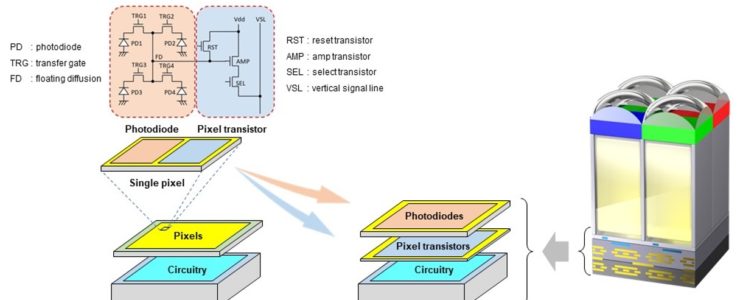
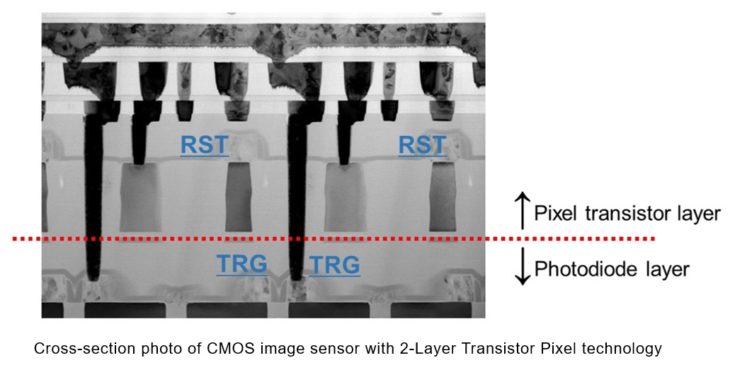
Sony Semiconductor Solutions Corporation (“Sony”) has succeeded in developing the world’s first*1 stacked CMOS image sensor technology with 2-Layer Transistor Pixel. Whereas conventional CMOS image sensors’ photodiodes and pixel transistors occupy the same substrate, Sony’s new technology separates photodiodes and pixel transistors on different substrate layers. This new architecture approximately doubles*2 saturation signal level*3 relative to conventional image sensors, widens dynamic range and reduces noise, thereby substantially improving imaging properties. The new technology’s pixel structure will enable pixels to maintain or improve their existing properties at not only current but also smaller pixel sizes.

Sony announced this breakthrough at the IEEE International Electron Devices Meeting that started on Saturday, December 11, 2021.

Stacked CMOS image sensor architectures

A stacked CMOS image sensor adopts a stacked structure consisting of a pixel chip made up of back-illuminated pixels stacked atop a logic chip where signal processing circuits are formed. Within the pixel chip, photodiodes for converting light to electrical signals, and pixel transistors for controlling the signals are situated alongside each other on the same layer. Increasing saturation signal level within form-factor constraints plays an important role in realizing high image quality with wide dynamic range.

Sony’s new architecture is an advancement in stacked CMOS image sensor technology. Using its proprietary stacking technology, Sony packaged the photodiodes and pixel transistors on separate substrates stacked one atop the other.
In conventional stacked CMOS image sensors, by contrast, the photodiodes and pixel transistors sit alongside each other on the same substrate. The new stacking technology enables adoption of architectures that allow the photodiode and pixel transistor layers to each be optimized, thereby approximately doubling saturation signal level relative to conventional image sensors and, in turn, widening dynamic range.

Additionally, because pixel transistors other than transfer gates (TRG), including reset transistors (RST), select transistors (SEL) and amp transistors (AMP), occupy a photodiode-free layer, the amp transistors can be increased in size. By increasing amp transistor size, Sony succeeded in substantially reducing the noise to which nighttime and other dark-location images are prone.
The widened dynamic range and noise reduction available from this new technology will prevent underexposure and overexposure in settings with a combination of bright and dim illumination (e.g., backlit settings) and enable high-quality, low-noise images even in low-light (e.g., indoor, nighttime) settings.
Sony will contribute to the realization of increasingly high-quality imaging such as smartphone photographs with its 2-Layer Transistor Pixel technology.

[via Sony Alpha Rumors]