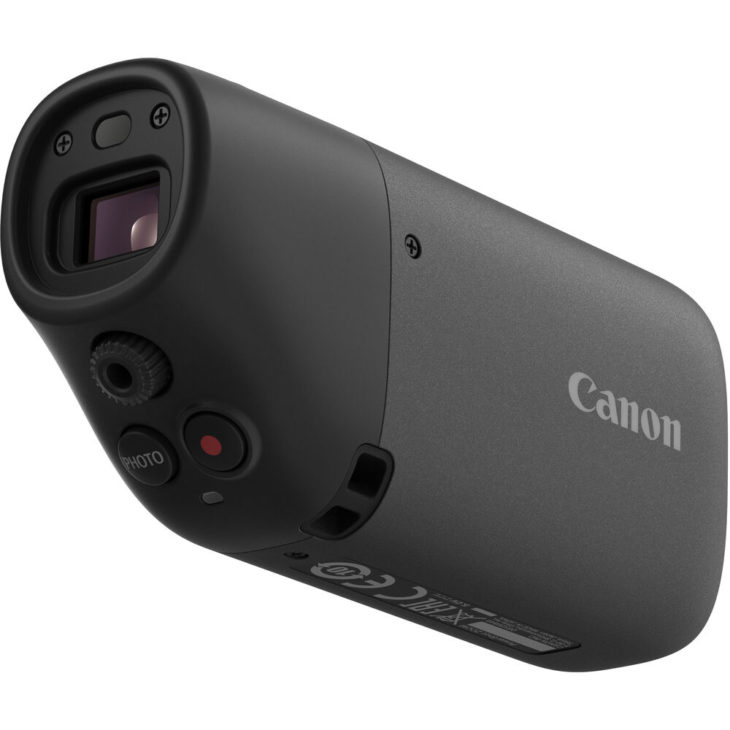
Long-range viewing and recording with a compact, pocketable design, the Canon ZOOM Digital Monocular is a unique blend of a digital camera and a stabilized monocular. Helping to easily and clearly see distant subjects, the ZOOM incorporates a 12MP CMOS sensor and an impressive 100-400mm-equivalent zoom lens, with 2x digital zoom possible, for handheld viewing of birds, wildlife, and sports subjects.
12MP CMOS Sensor and 100-400mm Zoom Lens
A 12.1MP CMOS sensor records both stills and Full HD 1080p video up to 30 fps.
One-touch switchable zoom control permits instant switching from 100mm to 400mm positions, and then further to 800mm using 2x digital zoom.
Optical Image Stabilization technology helps to steady handheld use for sharper shooting and steadier viewing. Powered IS suits even the most subtle of movement types, like breathing, while Dual Sensing IS corrects stronger movement types and longer viewing times.
A single-point AF system provides quick and accurate TTL focusing performance to suit various subject types. Additionally, a Face Tracking feature can be used to detect and track recognized faces to benefit viewing and photographing fast-moving action, like sports.
Magnification and Field of View:
100mm (Approx. 1.2x): 102′ / 30m at 100 yd
400mm (Approx. 4.8x): 25.7′ / 7.8m at 100 yd
800mm (Approx. 9.6x): 12.9′ / 3.9m at 100 yd
Portable Design and Intuitive Handling
Compact design is pocketable and offers easy one-handed use.
Integrated 2.36m-dot OLED electronic viewfinder has a 59.94 fps refresh rate for fluid motion rendering and high clarity.
One-touch three-step button makes for fast zoom changes between 100mm, 400mm, and 2x digital (800mm) positions.
Dedicated Photo and Rec buttons for stills and video capture.
Wi-Fi and Bluetooth connectivity pair with the Canon Camera Connect App for remote live view monitoring and wireless file sharing to a mobile device.
Featuring a microSD memory card slot for storing photos and videos and a 16GB microSDHC memory card is included.
Internal lithium-ion battery can be charged via the USB Type-C port and the battery provides approximately 150 shots, or two hours of viewing, per charge.
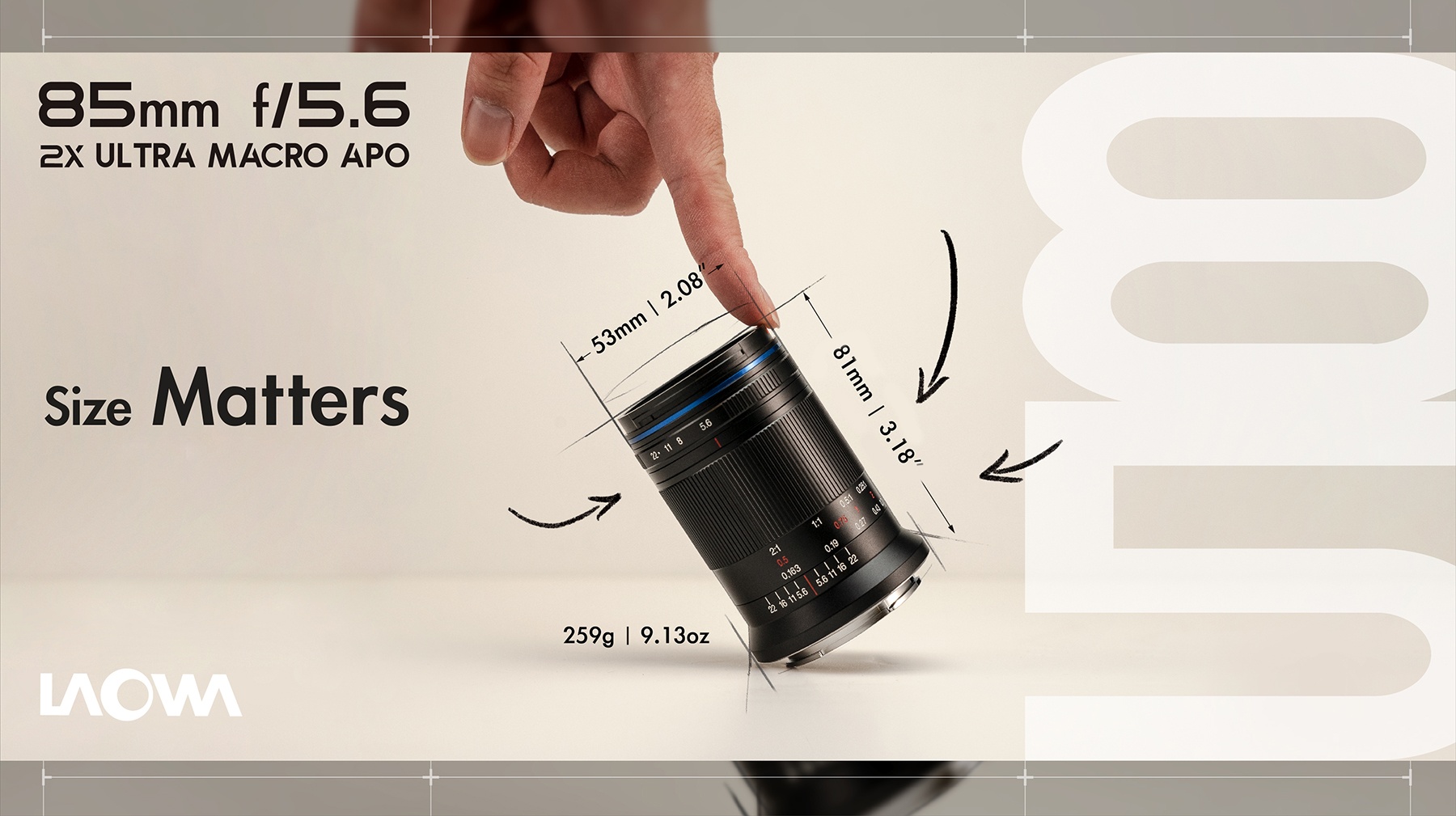
Venus Optics announced the Laowa 85mm f/5.6 2x Ultra Macro APO lens. The world’s smallest 2x macro lens, say’s the manufacturer.
The Laowa 85mm f/5.6 2x Ultra Macro APO is currently available to order on the official website of Venus Optics and their authorized resellers. Recommended Retail Price in the US is $449 (Canon RF, Nikon Z, Sony FE) and $499 (Leica M). Shipping starts from early December 2021.
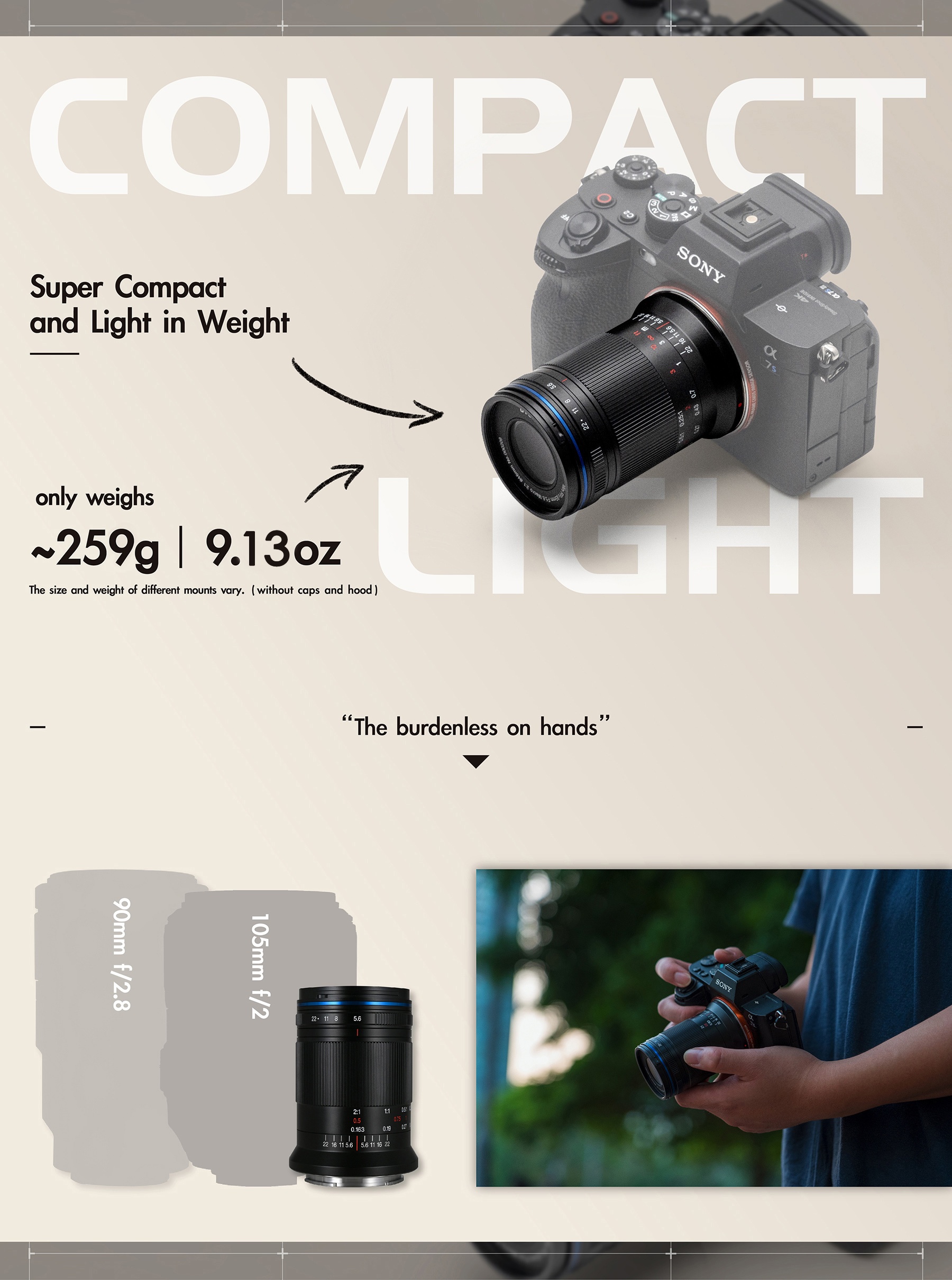
Laowa 85mm f/5.6 2x Ultra Macro APO is a mirrorless-designed macro lens with 28.55° angle of view for full frame. It is the smallest 2x macro lens in the Full Frame market. It weighs just around 252g (Leica M mount without caps and hood) which is super portable and handy for macro shooters. It features an apochromatic (APO) characteristic that chromatic aberration at both ‘in-focus’ & ‘out-of-focus’ is compressed to minimum. This new lens is able to focus from 2:1 magnification to infinity which can serve as both macro and portrait lens with great image quality.
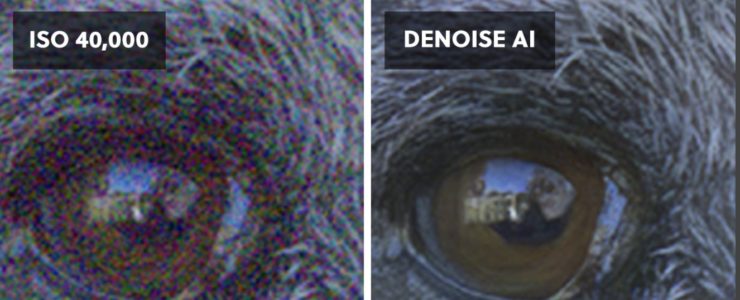
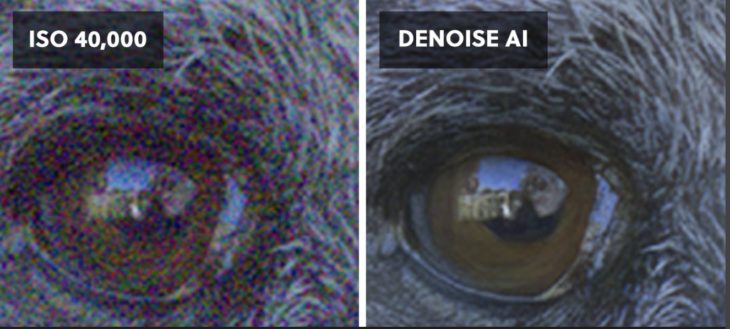
Topaz Lab put their Everything bundle on a 60% discount for Black Friday. The bundle includes Denoise AI, Sharpen AI, Gigapixel AI and Video Enhance AI. Rather powerful tools to enhance your photos.
The Topaz Everything bundle is on sale at $199.99. Compare at $559.96. The sale ends on Monday, 11/29. The images and the the video below gives you a pretty good idea how powerful these artificial intelligence powered tools are.
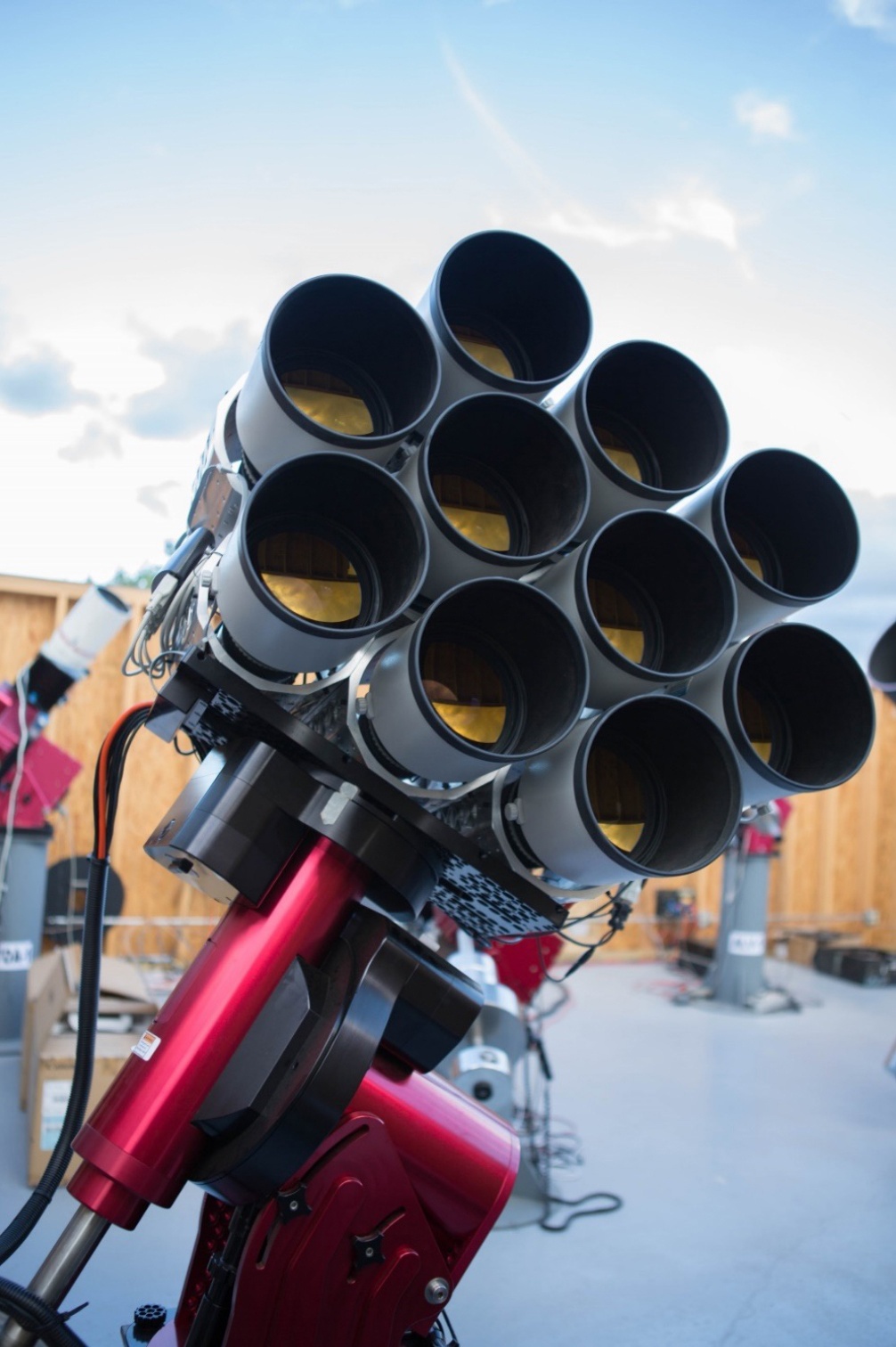
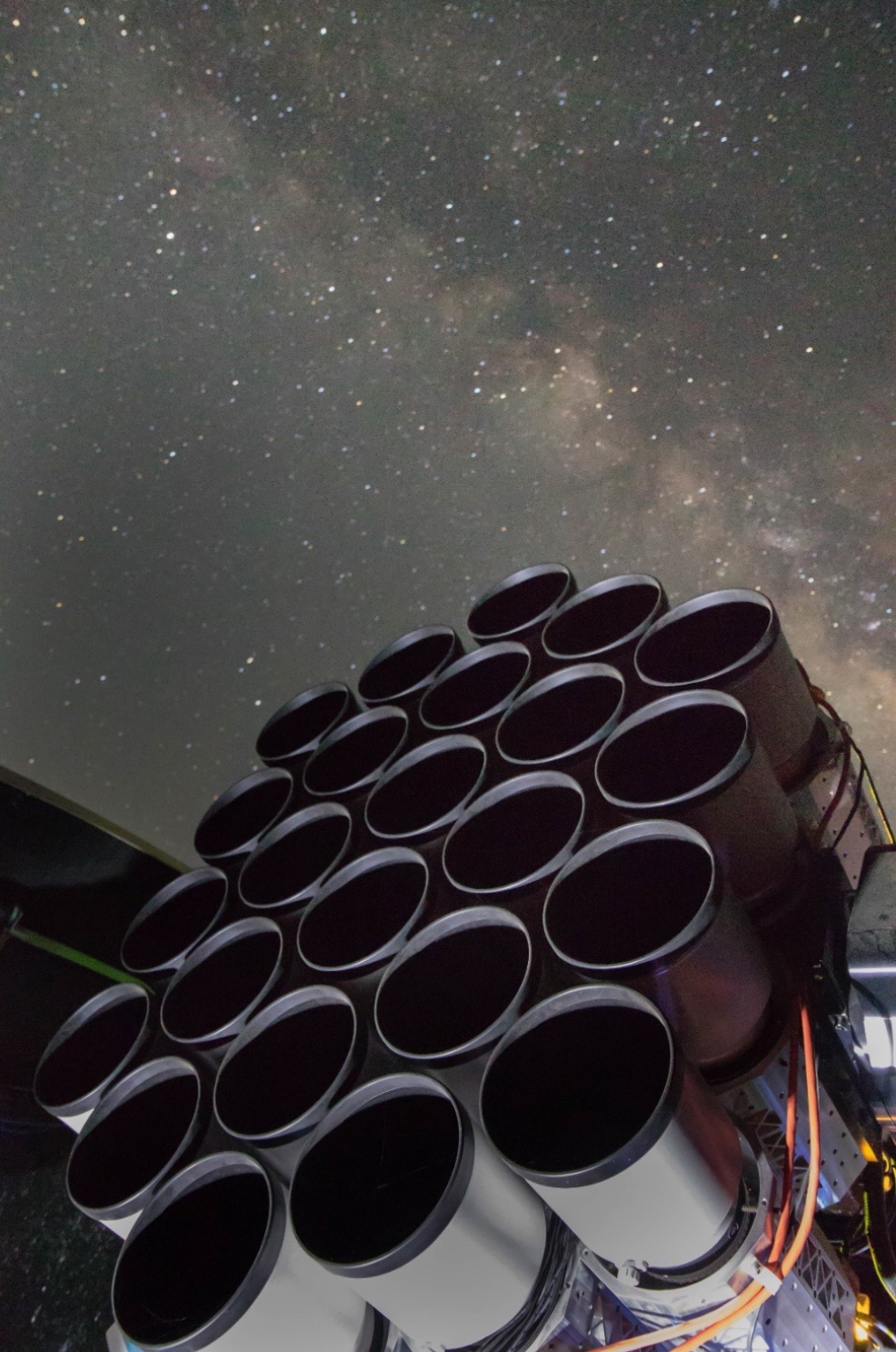
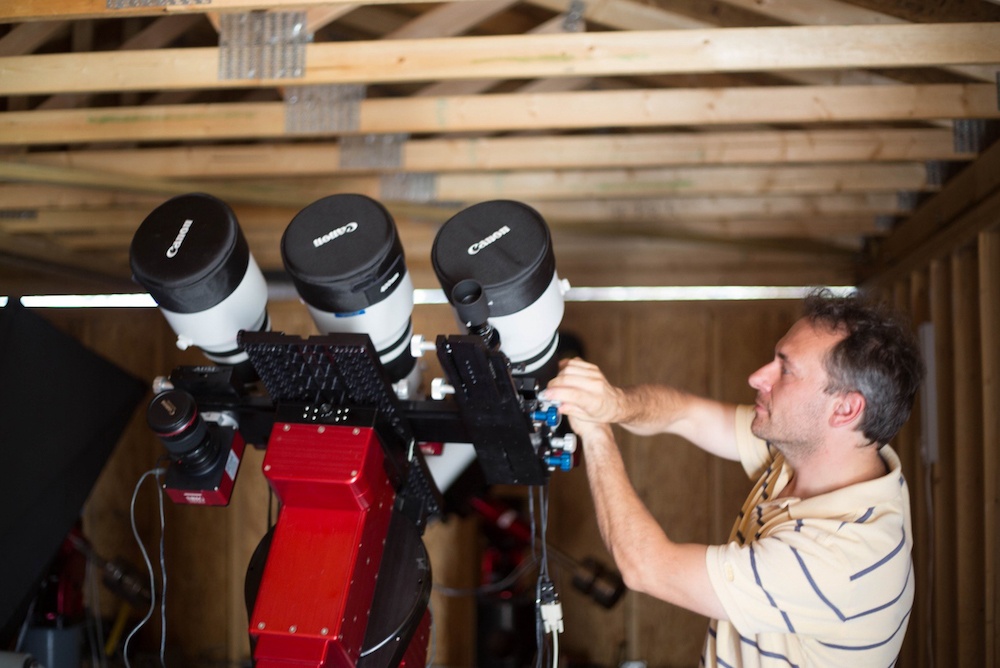
We reported about the Dragonfly Telephoto Array in the past. It’s a project developed by the University of Toronto’s Dunlap Institute for Astronomy and Astrophysics for which Canon delivers the optics.
The Dragonfly Telephoto Array started with 10 lenses and is designed to reveal
[…] the faint structure [of the universe] by greatly reducing scattered light and internal reflections within its optics. It achieves this using ten, commercially available Canon 400mm lenses with unprecedented nano-fabricated coatings with sub-wavelength structure on optical glasses.
Now Canon provides 120 (one-hundert-twenty) more EF 400mm f/2.8L IS II lenses to the array. So, now that you got what it is about, here is a more detailed description about the Dragonfly Telephoto Array:
The Dragonfly Telephoto Array is a novel telescope concept designed to image large and extremely faint structures in the night sky. These structures hold important clues to the distribution and nature of dark matter, the elusive substance whose contribution to the total mass-energy density of the Universe is five times higher than that of normal matter. These structure are hard to see with conventional telescopes due to a combination of scattered light from bright stars and their mosaicked detectors. Dragonfly harnesses the power of commercially-available high-end telephoto lenses to address these issues. The latest generation of Canon 400 mm f/2,8 lenses have superb anti-reflection properties, owing to one of the first applications of nano-fabricated coatings with sub-wavelength structures on optical glasses. Furthermore, each lens is equipped with a single monolithic wide-field detector covering six square degrees, and with multiple redundant lines of sight Dragonfly achieves extremely accurate modeling of the night sky emission.
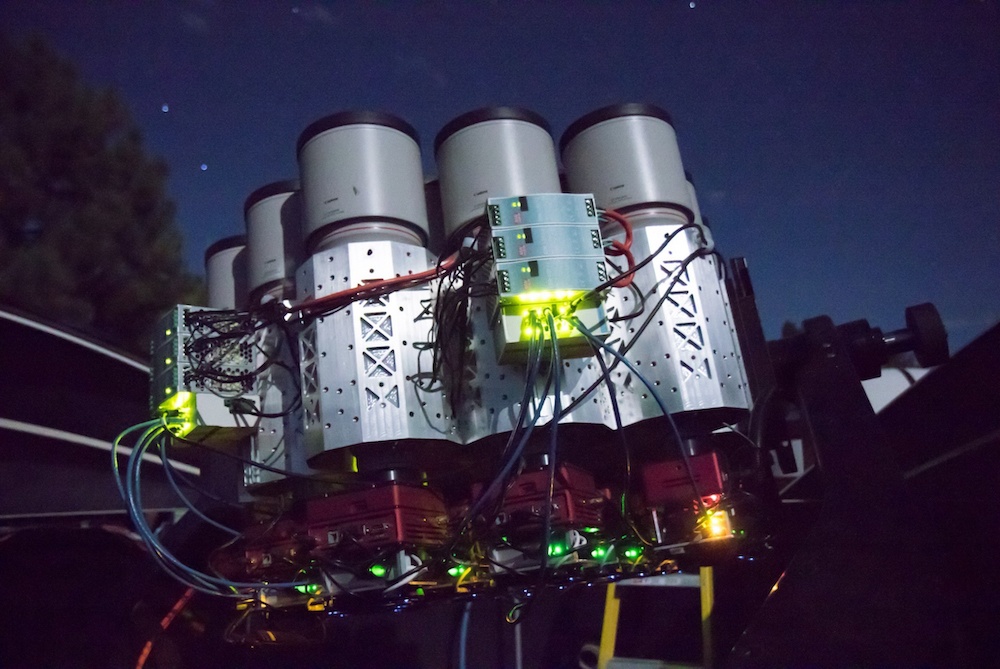
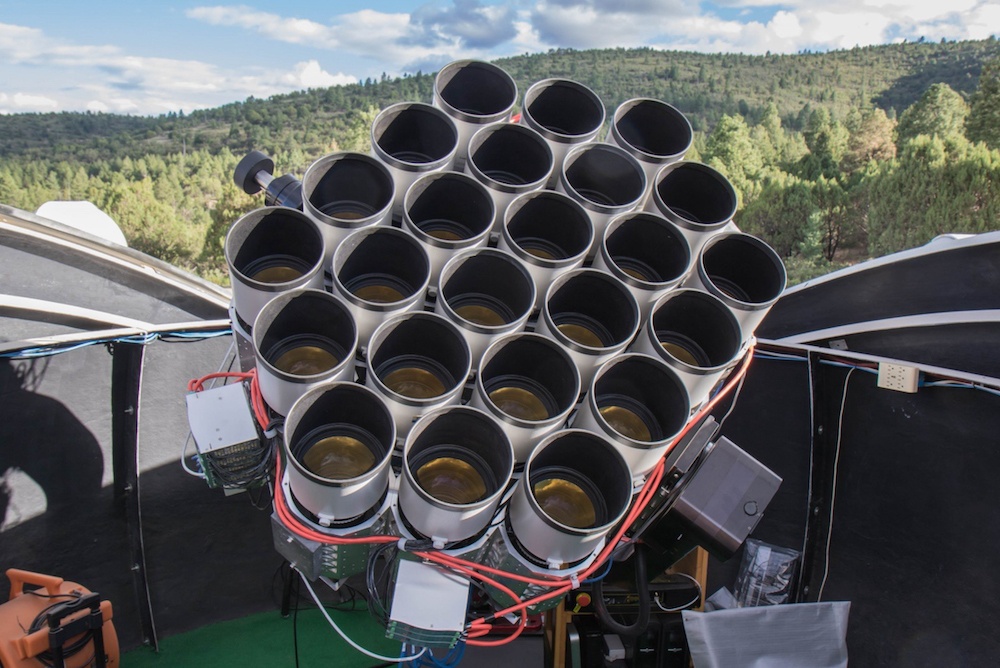
Commissioned in 2013 with three lenses, the array currently consists of 48 lenses in two clusters of 24. Optically the telescope functions as the equivalent of a 1.0 m diameter refractor with a focal ratio of f/0.4, the largest and by far the most sensitive lens telescope in existence. “Behind the scenes” innovations include the use of AI planning tools to optimize nightly operations and survey design, unit-based basic data processing with compute sticks, the application of Internet of Things operational protocols to communicate with the 48 lenses, and fully automated gate-driven cloud-based data analysis. Our dual goals are to:
1. Improve our understanding of dark matter through study of the low surface brightness universe
2. Harness the potential of distributed telescopes, combined with advances in information technology, for transformational science
Canon U.S.A. Inc., to Provide 120 EF 400mm f/2.8L IS II USM Lenses for Expansion of the Dragonfly Telephoto Array Project
MELVILLE, NY, November 18, 2021 – Canon U.S.A. Inc., a leader in digital imaging solutions, today announced the company will provide technical assistance to Project Dragonfly, an international research team from Yale University, and the University of Toronto, in its plan to expand the Dragonfly Telephoto Array. The company will provide the project with 120 Canon EF 400mm f/2.8L IS II USM large-aperture super-telephoto single-focal length lenses, and its parent company, Canon Inc., will provide technical assistance.
The Dragonfly Telephoto Array is a telescope array equipped with multiple Canon large-aperture super-telephoto single focal length lenses – specifically, the Canon EF 400mm f/2.8L IS II USM lens. The telescope was designed in 2013 by Project Dragonfly, an international research team from Yale University and the University of Toronto. The Dragonfly Telephoto Array is capable of capturing images of galaxies that are so faint and large that they had escaped detection by even the largest conventional telescopes. Its mission is to study the low surface brightness universe to elucidate the nature of dark matter and to utilize the concept of distributed telescopes.
In support of this research, Canon provided technical assistance by supplying 40 Canon EF 400mm f/2.8L IS II USM lenses in 2015, expanding the array to 48 lenses with 24 telescopes bundled on two separate mounts. Since then, the research team has produced significant results in extragalactic astronomy, including discovering the ultra-diffuse galaxy Dragonfly 44 in 2016 and the identification of a galaxy that lacks dark matter, NGC 1052-DF2, in 2018.
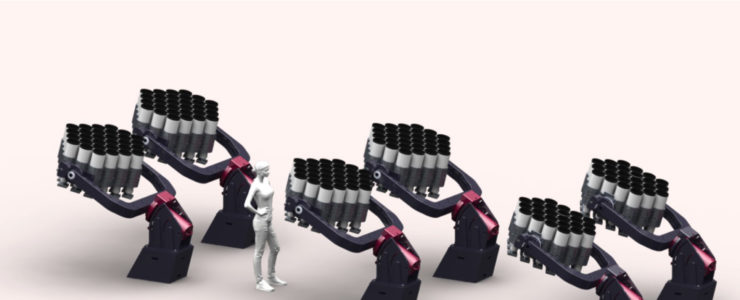
This time, Canon will provide technical assistance by supplying 120 Canon EF 400mm f/2.8L IS II USM lenses to the research team, further expanding the telescope array. With a total of 168 lenses, the telescope array has a light-gathering capability equivalent to that of a refracting telescope of 1.8 meters in diameter, with a focal length of only 40 cm, and is expected to open new windows on the universe.
Canon is committed to contributing to the development of science and technology by leveraging the technological strengths it has cultivated as a leading imaging company.
Message from Professor Pieter van Dokkum of Yale University comments
The Dragonfly Telephoto Array is the pre-eminent survey telescope for finding faint, diffuse objects in the night sky. It has enabled us to discover ultra-diffuse galaxies and other low-surface brightness phenomena—rendering images that deepen our understanding of how galaxies are formed and providing key insights into the nature of dark matter. The initial array was equipped with 48 Canon EF 400mm telephoto lenses featuring anti-reflection coatings that mitigate the effects of light scattering, overcoming the limitations of conventional telescopes in detecting faint structures. The lenses are coupled to monolithic wide-field detectors that permit excellent error control. With the addition of 120 of these lenses, in a newly developed configuration allowing extremely narrow filters to be used, Dragonfly will be the most powerful wide-field spectroscopic line mapping machine in existence. A major goal of the next iteration of the Dragonfly array is to detect and study the faint gas thought to exist around and between galaxies. By opening this new window on the cosmos, Dragonfly will tackle some of the most critical questions in astrophysics today.
Could this be the oldest optics brand of the planet. Any expert out there?
Zeiss celebrates the 175 years anniversary of he company foundation. Lotsa years. Zeiss makes some fine lenses for Canon mounts but they are not inexpensive.
ZEISS Celebrates 175 Years of Innovation, Passion and the Courage to Develop
ZEISS ran a virtual celebration to mark its 175th anniversary at its founding site in Jena.
German Federal President Frank-Walter Steinmeier said: “Its interplay of entrepreneurial spirit, drive to research, and inventiveness make the ZEISS Group a pioneer of modern industry.”
After a 5-million-euro donation to the Deutsches Museum, the global initiative “A Heart for Science” will serve as inspiration for tomorrow’s discoveries
Jena/ Oberkochen, Germany | 17 November | ZEISS Group
175 years ago, on 17 November 1846, young mechanic Carl Zeiss opened his workshop for precision mechanics and optics in Jena, thus laying the foundation for what would become ZEISS.
To mark this special day, the company ran a celebration event, the highlight of a jam-packed anniversary year. The virtual event took place on 16 November 2021 at the Volkshaus, in the company’s founding city Jena. During the virtual event, Dr. Karl Lamprecht, President and CEO of the ZEISS Group, praised the company’s successful past, celebrated its present and shared his outlook on the future.
“ZEISS’ unique history and its exceptional achievements make it a truly extraordinary company. Its 175 years also demonstrate the company’s high level of resilience and its willingness to accept change. And, above all, ZEISS’ tremendous passion, coupled with its pioneering spirit and its pragmatism in challenging and pushing the limits of the technically feasible,” said Dr. Lamprecht. “175 years of ZEISS are more than just a historical milestone in our corporate history. It’s also what motivates us to look ahead and help contribute to a bright future shaped by technological innovations.”
In a video message, German Federal President Frank-Walter Steinmeier congratulated all ZEISS employees around the world: “175 years of ZEISS is much more than an anniversary. Its interplay of entrepreneurial spirit, drive to research, and inventiveness make the ZEISS Group a pioneer of modern industry.” The President underlined ZEISS’ responsibility as a foundation-owned company: “Thanks to Ernst Abbe’s visionary realization that economic success, scientific progress and social cohesion all go together, he set up the Carl Zeiss Foundation and thus paved the way for the company to take entrepreneurial responsibility for the common good.” He also expressed his conviction that we most definitely need this collaboration between science and industry to achieve goals like climate neutrality as well as to safeguard jobs and ensure social welfare.
“As ZEISS’ sole shareholder, the Carl Zeiss Foundation benefits in particular from the economic success of its foundation company,” said Minister Theresia Bauer, Chair of the Carl Zeiss Foundation Administration, adding: “Upwards of 300 million euros have been invested in more than 700 research projects since 2007 alone. This makes it one of the largest private foundations in Germany committed to the promotion of science. I’d like to thank all our employees for enabling us to promote science through their innovative power,” said Dr. Dieter Kurz, Chairman of the Carl Zeiss Foundation Council and Chairman of the Supervisory Board of Carl Zeiss AG and SCHOTT AG. He analyzed the reasons behind ZEISS’s success: “ZEISS 175 is the fascinating story of an evolution from a small workshop with just one employee in Jena to a global market leader for the optics industry that employs 35,000 people. However, it’s a success story that’s not as straightforward as it looks today. In fact, it’s a story packed with twists and turns, ups and downs. Its long-term success has been possible because core virtues, values and skills have always been protected, while plenty of other aspects have been reinvented time and again. This is part of ZEISS’ innovation culture.”
This website or its third-party tools use cookies, which are necessary to its functioning and required to achieve the purposes illustrated in the cookie policy. If you want to know more or withdraw your consent to all or some of the cookies, please refer to the cookie policy. By closing this banner you agree to the use of cookies.