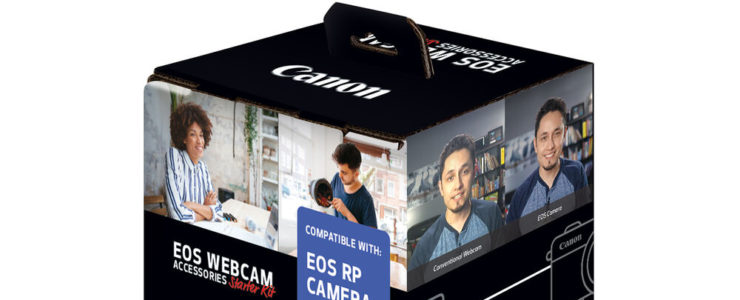
Turn your EOS RP Mirrorless Digital Camera into a high-performance webcam and enhance the quality of your content with the EOS Webcam Accessories Starter Kit from Canon. Simply download the freely available EOS Webcam Utility software, connect the camera to a compatible laptop or desktop computer with the provided IFC-100U Interface Cable, power it with the included AC-E6N AC Adapter and the supplied DR-E18 DC Coupler using a standard home outlet, and you’ll be on your way to longer continuous shooting and outstanding clarity. Whether you’re working, teaching, livestreaming, or just reaching out to friends and family, your audience will be able to clearly see you. This kit gives you everything you need in one convenient package, and lets you put yourself out there with the quality and ease you desire.
Turns your camera into a high-performance webcam and enhances the quality of your content
Provides superb clarity and continuous shooting
Powers the EOS RP Mirrorless Digital Camera via a household outlet for longer shooting sessions
Provides power wherever a convenient outlet is located, including indoors, outdoors, or in a studio
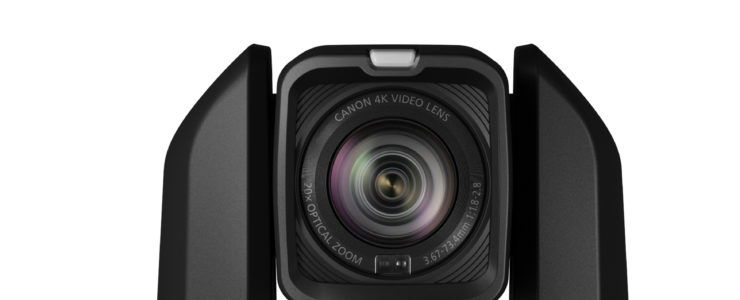
Canon U.S.A. Launches a Line of 4K UHD PTZ Cameras Ready For Integration Into a Variety of Environments
The Company Also Introduced the RC-IP100 Remote Camera Controller That Allows for the Control of Multiple Canon PTZ Cameras at Once
MELVILLE, NY, March 17, 2021– Designed for use in a wide-range of applications in broadcast, education, house of worship, sports, and corporate environments, Canon U.S.A., Inc., a leader in digital imaging solutions, is excited to introduce the company’s first line of 4K UHD PTZ cameras – the CR-N500 and CR-N300 for indoor live-streaming and the outdoor CR-X500.
This new line of cameras capitalizes on Canon’s digital imaging and operational expertise from both professional camcorders and network cameras. This enables the cameras to not only deliver brilliant 4K imagery thanks to Canon’s CMOS sensors, DIGIC DV 6 Image Processor, and optical zoom lenses, but also smooth pan, tilt and zoom functionality that allows for on-air camera movement. The new indoor PTZ cameras support various video interfaces, including HDMI, IP, and 3G-SDI, and are also compatible with popular live production protocols like NDI|HX®, RTMP and more. The new outdoor PTZ camera supports 12G-SDI, and includes a durable, IP55 rated weather-resistant housing. In addition to the cameras, Canon has also introduced a new remote camera controller, the RC-IP100, which supports IP and serial connections and can operate camera functions such as pan, tilt, zoom, focus, and iris.
“In 2020, Canon introduced the System Integrator Program with the goal of developing strategic relationships with integrators, providing the organizations world-class support and cutting-edge digital imaging equipment,” said Tatsuro “Tony” Kano, executive vice president and general manager of Canon U.S.A.’s Imaging Technologies & Communications Group. “These new PTZ cameras and remote camera controller were designed with the system integrator market squarely in mind. We are eager to see how these cameras are incorporated into the creative solutions that they develop for end users.”
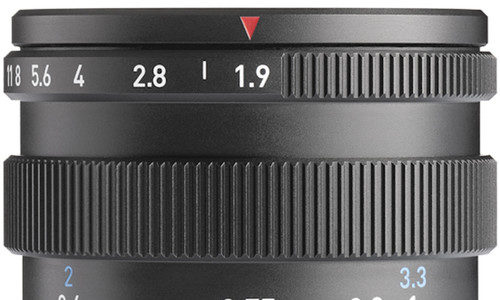
Meyer Optik Görlitz is back on track after their troubles, and released a new lens available also for the Canon EF mount: the Primoplan 58 f1.9 II.
At a glance:
Full-Frame Format
Aperture Range: f/1.9 to f/22
Central Dispersion & Converging Elements
Schott Glass, O’Hara Anti Reflex Coating
Manual Focus Design
Minimum Focus Distance: 2′
Filter Thread: 52mm
12 AR-Coated Aperture Blades
The Primoplan 58 f1.9 II can be preordered at $899 at B&H Photo. Below you see some sample photos shot with the lens.
Press release:
Meyer Optik Görlitz Primoplan 58 f1.9 II available!
Continuation of the Primoplan series
Primoplan imaging language paired with optimal performance
Lens mechanics in established design style
What are the next steps?
Bad Kreuznach – 12th March 2021 – Meyer Optik Görlitz is expanding its Primoplan portfolio with the Primoplan 58 f1.9 II. In addition to the very successful Primoplan 75 f1.9 II, the second lens in this series is now available in the usual Meyer Optik mount versions.
“With great pleasure we now present, after intensive and accurate work, the new Primoplan 58 II“, says Timo Heinze, Managing Director of OPC Optics. „About 85 years after the first Primoplan 58, we now offer a lens that has the characteristics and image-language of the historical original, while being manufactured using the most modern production processes and the best materials. Thus, photographers can get a perfect Primoplan 58 II with all the wonderful features that make and have made it so popular.”
Continuation of the Primoplan series Following the very successful launch of the new Primoplan 75 II last quarter, the new Primoplan 58 II adds another legendary lens to Meyer Optik Görlitz’s current range. The Primoplan 58 II brings the popular features of Primoplan-photography to a more “normal” focal length, making it even more versatile than the 75mm version.
Primoplan imaging language paired with optimal performance The new Primoplan 58 II offers, through the consistent orientation on the original from 1936, exactly the imaging characteristics that have always made it so desirable. With an even further improved optical design, the new Primoplan 58 II delivers the best possible contrast and high image sharpness. At the same time, many bokeh variations – from classic bubble bokeh, to swirly bokeh, to very soft / creamy bokeh – can be created with the Primoplan 58 II. By combining the effects, versatile options are available. Also, the Primoplan 58 II delivers very good results, even in difficult lighting conditions, due to its speed of 1:1.9.
Lens mechanics in established design style The design of the Primoplan 58 II follows the previous new editions from OPC Optics. So once again the lens received a stepless, damped, aperture & focus mechanism and can be used silently. As with all current Meyer-Optik lenses, the lens mechanics are produced by renowned German manufacturers in order to meet the high quality standards. In this way, an optimal interaction of the mechanical individual parts, a perfect feel and the longevity of the lenses are guaranteed.
What are the next steps? Trioplan 35 II will expand the portfolio of Meyer Optik Görlitz this year. In addition, new versions of the famous Biotars are currently being developed in various focal lengths. As well as versions of the existing lenses for the latest camera mounts (Canon R and Nikon Z). The exact dates of those releases are difficult to specify due to the current situation, but will definitely all be in the second half of this year.
Photos taken with the new lenses and further information are available at www.meyer-optik-goerlitz.com/en/.
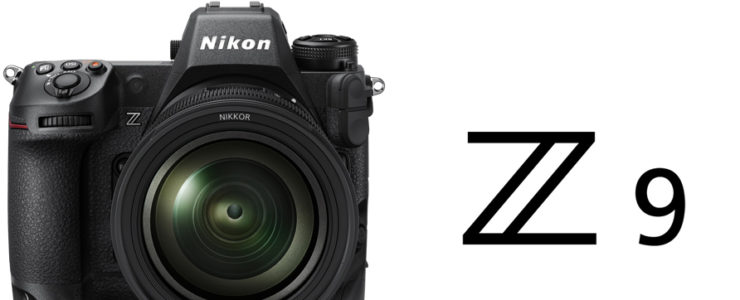
Nikon is developing the Nikon Z 9 full-frame flagship mirrorless camera
TOKYO – Nikon Corporation (Nikon) is pleased to announce the development of the first flagship model for which the Nikon Z mount has been adopted: The Nikon Z 9. The full-frame (Nikon FX-format) mirrorless camera is scheduled for release in 2021, and represents a significant leap in technology and performance.
The Z 9 brings together Nikon’s groundbreaking technologies to deliver the best still and video performance in Nikon history, meeting the advanced needs of professionals across a wide range of genres. It utilizes a newly developed FX-format stacked CMOS sensor and new image-processing engine. In response to the growing needs of professionals, advanced enthusiasts and cinematographers, it includes support for 8K video recording as well as various other video specifications that fulfill diverse needs and workflows. The Z 9 embodies ultimate usability as a tool offering users an unprecedented imaging experience, from capture to workflow, exceeding that of previous digital-SLR and mirrorless cameras.
*Information regarding the release of this product will be announced at a later date.
Some radical changes undergoing Canon as a whole have been reported at the latest Company Strategy Conference. Thanks to EdinaMN for the tip.
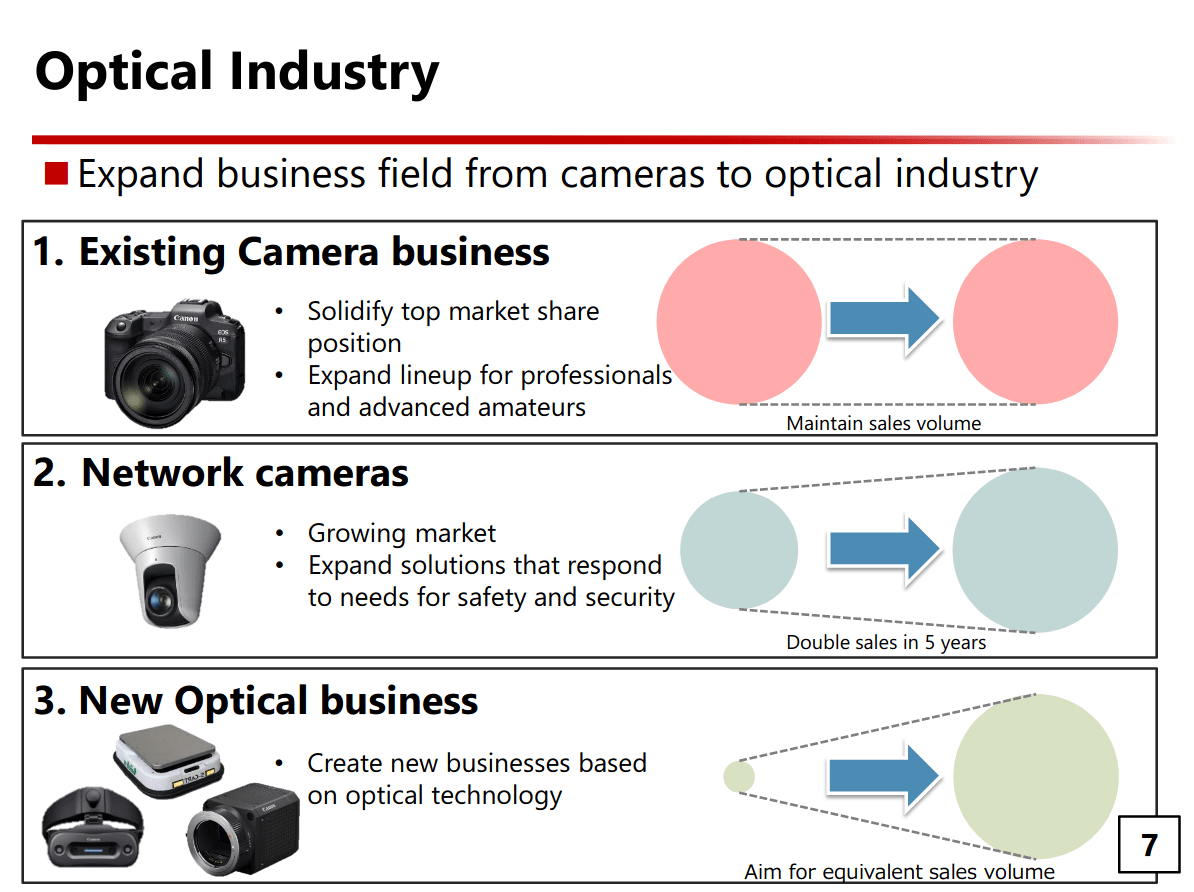
Mr. Fujio Mitarai’s speech at the conference highlights the difficulties Canon has to face as a global company. What Mr. Mitarai outlines is a corporate reorganization plan which defines four new business domains where Canon is going to be active: printing, industrial equipment, medical, and optical industry. Canon calls this process changing from a product group to a industry group business structure (see image on top). In Mr. Mitarai’s words:
The newborn “Optical Industry” involves three main areas, the existing camera business, network cameras, and other optical devices like Canon’s specialized cameras for scientific applications or mixed reality technology.
It’s the third business area in the image above that seems to hold most of Canon’s hopes for the future:
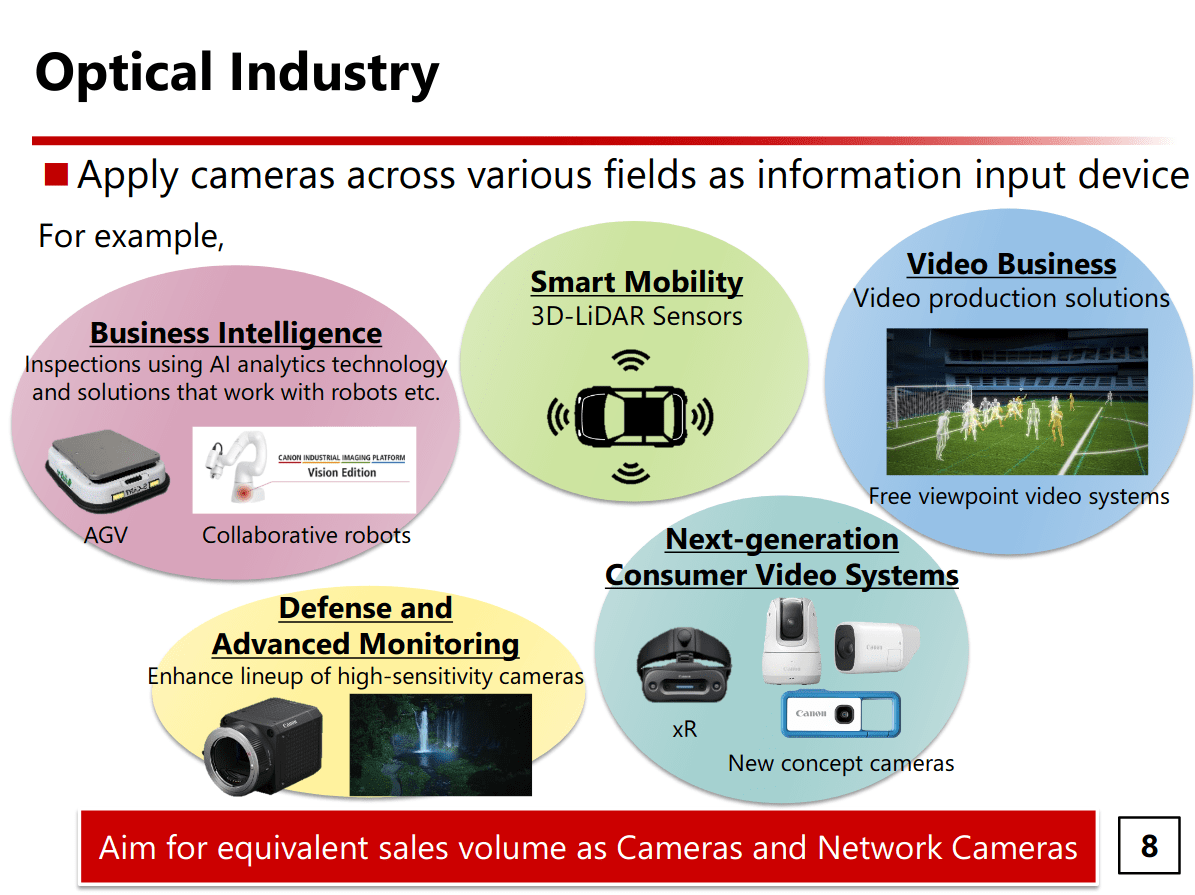
Canon clearly states that the “camera market has contracted significantly due to advances made in smartphone image capture functions” and that the “broader optical industry is a promising growth area for imaging devices that comprise mainly lenses and sensors“. The image below gives ore insights.
All in all, Canon seems to be optimistic about the future. All material related to Canon’s Company Strategic Conference, including Mr. Fujio Mitarai’s speech, can be found here and are available for download.
Sony is set to release another innovative imaging sensor, with 128MP resolution and global shutter.
Canon is also rumored to work on an entirely new sensor. Sony, so it seems, will release its imaging sensor before Canon..
Sony press release:
Sony to Release Large Format CMOS Image Sensor with Global Shutter Function and Industry’s Highest Effective Pixel Count of 127.68 Megapixels
Delivering Increased Pixel Count, High-Speed Imaging Performance, and Contributing to Solutions in the Field of Advanced, Diversified Industrial Equipment
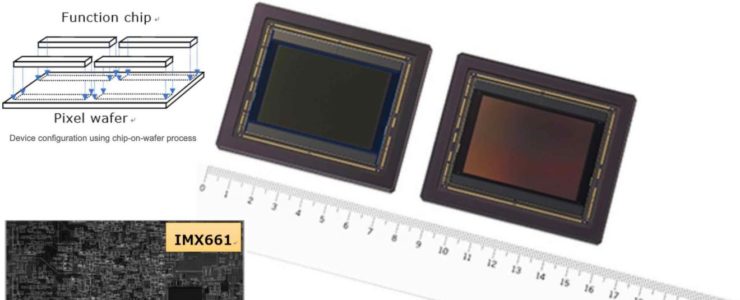
Tokyo, Japan — Sony Corporation announced today the upcoming release of a large format 56.73mm diagonal CMOS image sensor “IMX661” for industrial equipment with a global shutter function and the industry’s highest*1 effective pixel count of 127.68 megapixels.*2
This product features an increased pixel count that yields an optical size nearly 10 times larger than the common 1.1-type image sensor corresponded to the C mount*3 for industrial equipment. It also features Sony’s original global shutter pixel technology “Pregius™”, which enables capture of motion distortion-free images. Furthermore, the Sony’s original device configuration and interface technology employed enable high-speed image readout at a data rate nearly four times faster*4 than conventional products.
Sony expects that the new sensor, when used in industrial equipment cameras for a wide variety of applications, will help to solve a variety of complex challenges, thereby contributing to the development of industry.
*1Among CMOS image sensors equipped with a global shutter. According to Sony research (as of announcement on March 9, 2021).
*2Based on image sensor effective pixel specification method.
*3The joining mechanism between lens and the camera body.
*4Compared to Sony’s “IMX253” 1.1 type, 12.37 effective megapixels CMOS image sensor equipped with a global shutter function.
Model name Sample: IMX661 3.6 type (56.73 mm diagonal) 127.68-effective-megapixel CMOS image sensor Shipment date (planned)*5: April 2021(*5 The dates given for sample shipment date (planned) are for the color model. Black and white model samples will be available for shipment approximately one month later.”
Needs for automation, labor-saving and other benefits of digital transformation continue to grow in recent years in various fields of industrial equipment. This has accelerated the adoption of cameras for a wide variety of applications, driving demand for CMOS image sensors with higher imaging performance.
The new product couples Sony’s Pregius technology with the 3.6-type (56.73mm diagonal) large optical size, delivering an increased pixel count and motion distortion-free imaging. The original device configuration, which employs a chip-on-wafer process, together with Sony’s original interface technology, enables high-speed readout nearly four times faster than conventional products*4 in full-pixel readout mode. This design delivers highly efficient imaging that captures a wide viewing angle with no motion distortion in a single imaging operation. It also improves recognition precision thanks to the high-resolution imaging and delivers a high level of processing performance. It can contribute to solutions for a variety of industrial equipment applications, for example, inspection processes for production of displays and electronic substrates, wide-area monitoring, and aerial photography, where its improved precision and quicker readout will help meet the need for a high level of productivity.
This website or its third-party tools use cookies, which are necessary to its functioning and required to achieve the purposes illustrated in the cookie policy. If you want to know more or withdraw your consent to all or some of the cookies, please refer to the cookie policy. By closing this banner you agree to the use of cookies.