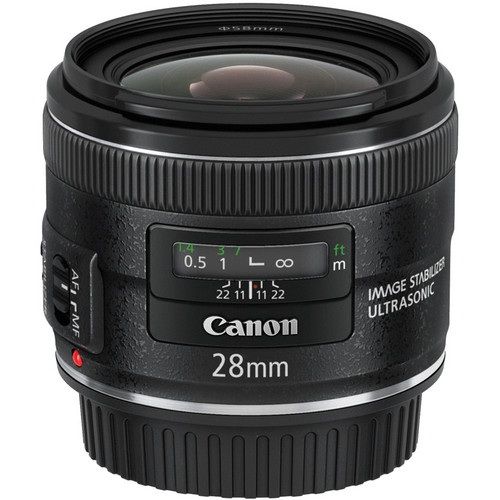
Canon EF 28mm f/2.8 USM IS Reviews And Video (Update)

Update: added another EF 28mm IS USM review.

The [shoplink 2165]Canon EF 28mm f/2.8 IS USM[/shoplink] succeds the EF 28mm f/2.8, a lens that was in production for 25 years and has now been discontinued. The old Canon 28mm can still be found on Amazon ($349) and on [shoplink 7866 ebay]eBay (for $399, which is excessive in my opinion)[/shoplink]. 28mm on a crop sensor give you a focal length of 45mm, near the normal focal length (50mm). I like the focal lenght on the crop body and I own the old Canon 28mm. It is one of the lens I use more often on my crop body, especially for street photography.

The new Canon EF 28mm isn’t an earthshaking technical progress. Focal length and maximum aperture didn’t change, although Canon widely changed the optical design. An ultrasonic motor that drives the auto-focus and image stabilization are the new features. A fast and very silent auto-focus isn’t a bad feature, though the micro-motor on my EF 28mm has never been to slow, it was louder. Canon claims the IS gives you 4 stops, although you should probably consider a more realistic figure of 2-3 stops. Uh, and the price, which is around three times the price of its predecessor.

A relatively fast prime (f/2.8) that’s not an “L” lens and goes over the counter for $800/€700. There is nothing revolutionary or innovative in this Canon prime. It’s a well built lens (though not being an “L” lens the build quality is very high), and it doesn’t extend and hence is little exposed to dust and water. It has a rock solid, reliable performance, sharpness is absolutely impressive, it’s lightweight, and wouldn’t it be for the price I am sure this could be a bestseller. Some macro capabilities are also given, the lens has a 0.2x magnification and a close-focusing distance of 23 cm (9 inches). Here are some Canon EF 28mm f/2.8 USM IS reviews for you to check.

Photozone.de writes

The Canon EF 28mm f/2.8 USM IS is, undoubtedly, a high performance lens with only a few weaknesses. The center performance is breathtaking and the border quality is also very good if you close the aperture by a stop or so. The lens is also capable of keeping its performance in close-focus scenarios. The low amount of lateral CAs contributes to the high sharpness perception as well. The lens produces a slight amount of mustache-style barrel distortion which is lower than most zoom lenses. The vignetting characteristic is a a weak spot – at max. aperture there’s quite a bit of light falloff so you should stop down to at least f/4 to reduce the issue to a more sane level (unless you’re after the effect, of course).

From Slrgear’s lab test:

Sharpness
On a sub-frame camera such as our studio Canon 7D, the lens provides excellent sharpness across its aperture settings; on a full-frame camera, the corners of the lens show a little softness.

Mounted on the Canon 7D, the lens provides consistent sharpness from its widest setting of ƒ/2.8 through to ƒ/11; while it’s not tack-sharp, it is very sharp indeed. Diffraction limiting sets in appreciably by ƒ/16, and there is a generalized softness when fully stopped-down at ƒ/22.

Mounted on the full-frame Canon 1Ds mkIII, we noted a bit more of the lens’ corners: specifically, it’s a bit soft in the extreme corners when used wide open at ƒ/2.8 and ƒ/4, and while the central region of the frame offers excellent results for sharpness, the corner areas trail very slightly behind.


[Update] Another detailed review with samples (and comparison with other Canon primes) can be found at The Digital Picture. Some excerpts:

I am modestly surprised that Canon decided to not include the Canon EF 28mm f/2.8 IS USM Lens in the L Series, but, like the 24 f/2.8 IS, the 28 f/2.8 IS has image quality that challenges these impressive lenses. The 28 f/2.8 IS has a price that makes adding the extra red paint around the end of the lens seem logical. […]

With good technique and a stable, standing shooting position, I am getting a very good percentage of sharp shots at 1/5 – 1/4 second. Beyond 1/4 sec, the keeper rate drops off gradually with sharp images still obtainable at close to 1 sec exposures. The IS assistance I experience is about 3 stops. […]

In a quiet environment, you will be able to hear the shuffling of elements inside the lens while autofocusing, but … this is one of the quieter-focusing lenses available.
Canon EF 28mm f/2.8 USM IS Reviews

Canon EF 28mm f/2.8 IS USM price check: [shopcountry 2165]

Canon EF 28mm f/2.8 price and availability check: [shopcountry 4832]

 

Three Canon EOS M Kits In Stock At DigitalRev (and Gizmodo EOS M review)

Three different Canon EOS M kits in stock at DigitalRev, all are ready to ship:

  • Canon EOS M with EF-M 18-55mm f/3.5-5.6 IS STM (click here)
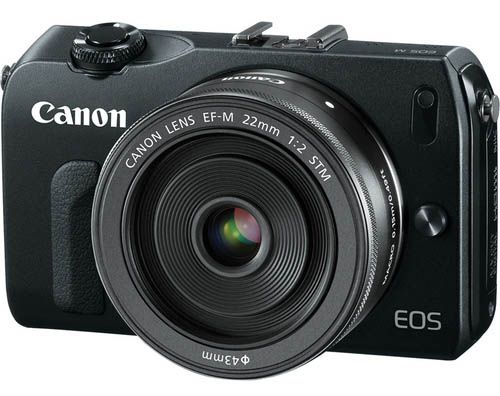
  • Canon EOS M with EF-M 22mm f/2 STM (click here)
  • Canon EOS M with EF-M 18-55mm and EF-M 22mm (click here)

The price of the kits depends by your check-out location. To see all of the Canon EOS M kits in stock at DigitalRev click here.

Gizmodo published a very positive review of the Canon EOS M. The small size makes the difference for Gizmodo’s reviewer. It’s true that the Canon EOS M is barley larger than a staple of card, yet featuring an advanced APS-C sensor and lots of functionality and features.

More than a shrunken down DSLR, the magnesium and stainless steel build and smooth lines remind us of Canon’s slick, consumer-minded Powershot cameras like the Canon s100. The EOS M has been stripped of everything that could add any bulk to it and it shows in its size: the camera with kit lens and battery included weighs just 14 ounces. That’s crazy light. Canon basically built a box around an image sensor.

Gizmodo’s conclusion:

We’ve been waiting a long time for a compact interchangeable-lens camera from Canon, and from the looks of it the Canon EOS M is a winner. Some of the traditional questions about mirrorless cameras remain, though. Will the camera be practical and easy enough for regular consumers who want a more powerful camera? Is the camera powerful enough for someone who’s used to a DSLR? At $800 with the 22mm lens, it’s not the cheapest camera of its kind out there, but it’s mighty reasonable considering others can cost upwards of $1000. We’ll know for sure how good a deal it is when the Canon EOS M is available in October.

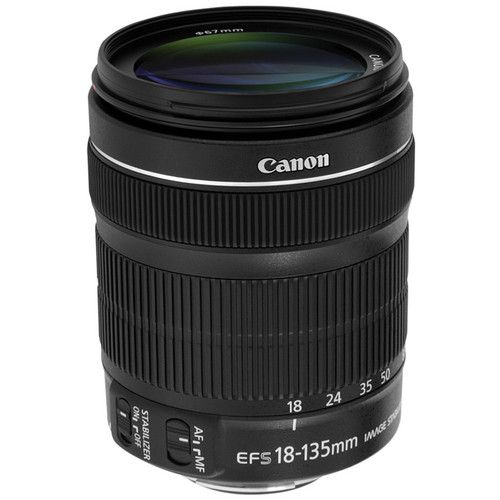
Canon EF-S 18-135mm f/3.5-5.6 IS STM Lens Review

Canon EF-S 18-135mm f/3.5-5.6 IS STM Lens Review

The Canon EF-S 18-135mm f/3.5-5.6 IS STM lens is one of the two lenses (the other is the [shoplink 5686]EF 40mm f/2.8 STM[/shoplink], and then there are two STM lenses for the [shoplink 6091]EOS M[/shoplink]) that have been designed to work smoothly with the Movie AF Servo mode that’s featured on the Rebel T4i/EOS 650D. In Movie AF Servo mode the camera can focus continuously while it is recording video. Moreover, the STM (Stepping Motor) AF should allow for a silent focusing (so you don’t record disturbing noise while in video mode).

The Canon EF-S 18-135mm f/3.5-5.6 IS STM lens sports a newly developed image stabilization system of which Canon claims it gives you 4 stops. The Canon is a good walk-around and everyday lens. It covers photographic settings from landscape (wide angle) to portrait photography. The lens will also sense if you are shooting normally or panning, and will activate the most appropriate IS mode to capture the best possible image. When shooting movies, Dynamic IS automatically engages, countering any shake caused by movement. On a crop sensor (1.6x magnification) the lens has a range of 29-216mm. The usual price tag of the Canon EF-S 18-135mm f/3.5-5.6 IS STM is $549, and it has the following specs:

  • 18-135mm Wide-Angle Zoom Lens
  • Aperture Range: f/3.5-36
  • Optical Image Stabilization
  • Stepping Motor and Inner Focusing System
  • Supports Movie Servo AF Feature
  • Smooth and Quiet AF Ideal for Video
  • EF-S Mount for APS-C Format EOS Cameras
  • Compact Design

Steve’s Digicams took the lens and tested it. They used a [shoplink 335]Canon EOS 60D[/shoplink] for the tests. In the conclusion they write:

Canon’s new 18-135mm IS STM lens is a high quality, versatile and affordable (~$550 USD) standard zoom lens. This lens can easily be used as an all-in-one lens, as it is all you need for most standard shooting situations. It is also one of just two of the STM lenses currently available (Oct. 2012), which is a must for anyone that uses their Canon dSLR regularly for shooting video. The new functions of the lens will automatically increase your video quality. As it is equipped with the new T4i kit, we recommend that you buy the kit for this lens, whether you are getting your first dSLR or upgrading from a previous Rebel. You will find yourself using this lens for all of your day to day shooting.

A more exhaustive description of the Canon EF-S 18-135mm f/3.5-5.6 IS STM lens follows after the break.

Canon EF-S 18-135mm f/3.5-5.6 IS STM Lens price check: [shopcountry 6295] Canon Rebel T4i/EOS 650D price check: [shopcountry 5623] Canon EOS 60D price check: [shopcountry 335]

Click here to open the rest of the article

Rebel T4i/EOS 650D Reviews And Comparisons Round-Up

Rebel T4i/EOS 650D Reviews And Comparisons Round-Up

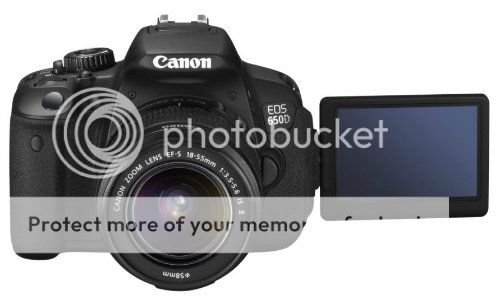
Time for a Rebel T4i/EOS 650D reviews and comparisons round-up. There are at least two big innovations that Canon carried out with the Rebel T4i/650D: the touchscreen interface (same as on the EOS M) and the hybrid auto-focus system. The AF system allows for full auto-focus while you are in video mode, a very quiet AF when you use STM (Stepping Motor) lenses. The hybrid AF and the full AF in video mode are a primer for Canon: The Rebel T4i/EOS 650D is the first Canon ever that comes with this feature. The Rebel T4i/EOS 650D kit with the 18-135mm IS STM kit lens has a price tag of $1200. The Rebel T4i/EOS 650D acted as a sort of testbed for the technologies Canon later implemented on its first mirrorless system camera, the [shoplink 6091]Canon EOS M (see here for price and specs)[/shoplink]. Rebel T4i/EOS 650D specifications:

  • STM Lens Support for Quiet AF in Movies
  • 18.0MP APS-C CMOS Sensor
  • DIGIC 5 Image Processor
  • 3.0″ Vari-Angle Touch Screen LCD
  • ISO 100-12800, Expandable to 25600
  • Full HD Movie Mode with Continuous AF
  • 5.0 FPS Continuous Shooting
  • 9-Point All Cross-Type AF System
  • Multi Shot Noise Reduction
  • Compatible with Canon EF and EF-S Lenses

Let’s start with digitalcamerainfo. They compared the Rebel T4i/EOS 650D with its predecessor, the Rebel T3i/EOS 600D. The new Rebel is definitely a more powerful video-making gear. However, if you are not particularly interested in video, then the [shoplink 333]Rebel T3i/EOS 600D (click here for price and specs)[/shoplink] may be your best bet. Virtually same image quality at a concretely lower price (it’s the last year’s model). The same guys at digitalcamerainfo also made a comparison between the Rebel T4i/EOS 650D and the Nikon D3200 (which is almost half the costs of the Rebel).

There’s little question that the T4i is a better camera in every respect, aside from pure image quality. It’s better built, more feature rich, has a more logical and full-featured control scheme, and boasts neat party tricks like touchscreen control and continuous video autofocus. This is stuff the D3200 can’t hope to match.

I know a lot of people who are unsure if they should prefer the Rebel T4i/EOS 650D or the more feature rich EOS 60D. The following video by Dave Dugdale may help take a decision.

Some more Rebel T4i/EOS 650D reviews. PCPro UK‘s verdict:

Clever use of a touchscreen display and a vast improvement to autofocus performance on video and stills makes the 650D the best all-rounder for amateurs.

Photographyblog‘s conclusion:

In summary the new 650D / Rebel T4i is the most complicated yet friendly mid-range Canon DSLR yet, truly a camera that you can grow into as your photography skills develop. It only misses out on our highest Essential award because of the still slow Live View auto-focusing and a small price increase over the 600D, but is more than deserving of our still-coveted Highly Recommended award.
I will come back to the Rebel T4i/EOS 650D when there are new reviews.


Canon Rebel T4i/EOS 650D price check: [shopcountry 5623]
Canon Rebel T3i/EOS 600D price check: [shopcountry 333]
EF-S 18-135mm f/3.5-5.6 IS STM price check: [shopcountry 6295]
Canon EOS M price and availability check: [shopcountry 6091]

24-70mm Lenses Reviews Round-Up (Canon, Tamron, Sigma)

The 24-70mm is a wide-angle to medium telephoto range that’s popular with full-frame shooters (e.g. photojournalists), so I thought it would be a good idea to write a 24-70mm lenses reviews round-up. Canon, Sigma and Tamron are the brands of choice. If used on a APS-C sensor, the lenses give you an equivalent of 36-105mm.

Canon recently released the [shoplink 2160]EF 24-70mm f/2.8L USM II lens ($2300)[/shoplink] to succeed the now discontinued EF 24-70mm f/2.8 USM (still available on eBay for around $1800). Canon’s new EF 24-70mm f/2.8L USM II has a rather hefty price tag, and no image stabilization. Being an “L” lens it is totally weather sealed, and the overall build quality is on line with Canon’s “L”-philosophy. The video above and the sharpness test below feature the “old” EF 24-70mm, which also comes without image stabilization.

The [shoplink 5013]Tamron SP 24-70mm f/2.8 DI VC USD ($1,299)[/shoplink] is cheaper than both Canons and has image stabilization(VC), making it an interesting alternative. The weather sealing of the Tamron is defined as a moisture-resistant construction [that] helps prevent water from penetrating the lens. For a lab test of the Tamron click here. And then there is the [shoplink 7634]Sigma 24-70mm f/2.8 IF EX DG HSM ($899)[/shoplink], no image stabilization, no weather sealing and definitely the less expensive of the three. A review of the Sigma can be read here.

At learningdslrvideo they were particularly interested to compare sharpness. They used a [shoplink 2431]Canon EOS 5D Mark III[/shoplink] for the tests. The results are discussed in the video above. That’s what they found out:

  • At 70mm
    • f2.8: Tamron beats Sigma (Sigma looks bad in the center and edges), Canon beats Tamron ever so slightly at center and edges
    • f5.6: Sigma beats Tamron at both center and edges, Canon beats Sigma only at center, edges are a tie
    • f8.0: Sigma and Tamron tie, Canon wins slightly
    • f16.0: All three tie
    • f22.0: Sigma does a nice job beating both Tamron and Canon
  • At 24mm:
    • f2.8: Sigma beats Tamron in the center, Tamron beats Sigma in the edges, Sigma beats Canon in center, Canon beats Sigma in the edges
    • f5.6: Sigma and Tamron tie, Sigma beats Canon in the center
    • f8.0: Tamron beats both Canon and Sigma
    • f16.0: All three tie
    • f22.0: All three tie
The Sigma may not have the excellent build quality of the Canon, nor it has any sort of weather sealing like the Tamron. Nevertheless, the Sigma has an excellent build quality), and its sharpness is good. Obviously sharpness is not the only concern for a photographer (though one of the most important). However, the Sigma is much less expensive than the Canon and the Tamron.
The next video shows a 24-70mm Canon vs. Tamron shootout (by youtube user TheCameraStoreTV). This time the new Canon EF 24-70mm f/2.8L USM II lens comes into the game.

EF 24-70mm f/2.8L USM II price and availability:  [shopcountry 2160] EF 24-70mm f/2.8L USM price and availability:  [shopcountry 232] Tamron SP 24-70mm f/2.8 DI VC USD price check: [shopcountry 5013] Sigma 24-70mm f/2.8 IF EX DG HSM price check: [shopcountry 7634]

Canon EOS M Reviews And Samples From Asia, Canon PowerShot S100 Deal

Now that it is shipping (at Amazon Japan and on [shoplink 6091 ebay]eBay[/shoplink]), the first Canon EOS M reviews and samples start to show up on Asian sites. DC.watch (translation here) and Ascii (translation here) both published ISO tests and the latter also reviewed the [shoplink 6093]EF-M 22mm f/2 STM (price&specs)[/shoplink] pancake lens and the [shoplink 6093]EF-M 18-55mm f/3.5-5.6 IS STM (price&specs)[/shoplink] zoom lens. The pancake is said to be generally sharp but on the edges at full aperture. Have your read while we are waiting for more Canon EOS M reviews and samples. For Canon EOS M pre-order links see at the end of the post. If you want to read a lucky EOS M owners thoughts, have a look at this forum thread (spoiler: he does not agree with Engadgets very critic review)

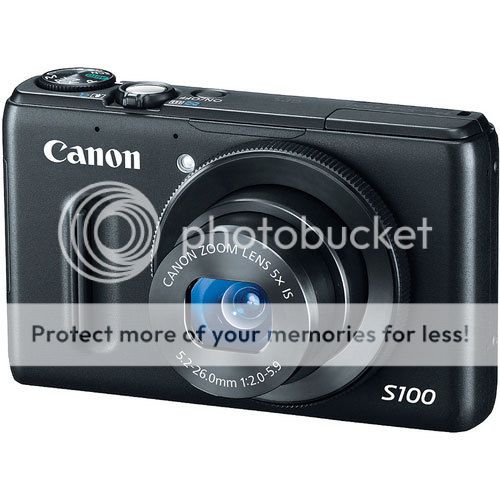
On eBay US there is good Canon PowerShot S100 deal going on ([shoplink 7601 ebay]$289.99 – click here to check it[/shoplink]). [sorry, posted wrong specs – thanks].

  • 12.1 effective megapixel, 1/1.73-inch high-sensitivity CMOS sensor
  • 3-inch TFT color LCD with wide viewing angle
  • DIGIC 5 image processor
  • Full 1080p HD video with stereo sound
  • 24mm wide-angle lens (5x optical zoom, 4x digital zoom and 20x combined zoom) with optical image stabilizer

EOS M pre-order links:

USA & world-wide:
EOS M page on Amazon (click here), Adorama (click here), B&H (click here)
EOS M Black at Amazon (click here), Amazon UK (click here), Adorama (click here) and BHphoto (click here).
EOS M White at BHphoto (click here).
EOS M 22mm pancake at Amazon (click here), Adorama (click here) and BHphoto (click here).
EOS M 18-55mm kit lens at Amazon (click here), Adorama (click here) and BHphoto (click here).
EOS M adapter at Amazon (click here) and BHphoto (click here).
EOS M Flash at Amazon (click here), Adorama (click here) and BHphoto (click here).

Germany (Amazon DE):
EOS M black with EF-M 18-55mm 1:3,5-5,6 IS STM lens and Speedlite 90EX for €849 (click here)
EOS M white with EF-M 18-55mm 1:3,5-5,6 IS STM lens and Speedlite 90EX for €849 (click here)
EOS M red with EF-M 18-55mm 1:3,5-5,6 IS STM lens and Speedlite 90EX for €849 (click here)
EF-M 22mm 1:2 STM Pancake lens for €249 (click here)
EF-EOS M Adapter for €129 (click here)
wexcameras.de (click here)

Italy: Amazon IT (click here)

UK: Amazon UK (click here)