Canon Patent: 400-600mm F2.8-4, 300-600mm F2.8-4.5 And 70-300mm F4

canon patent

Here is the next Canon patent application.

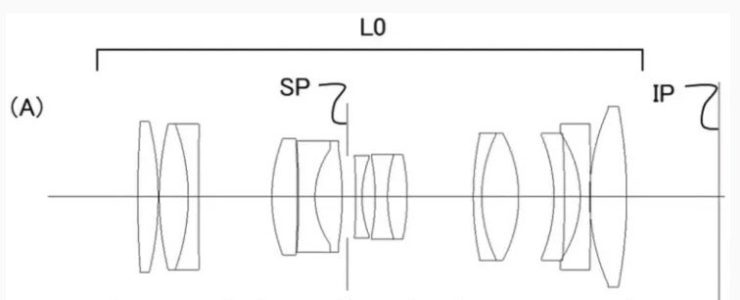
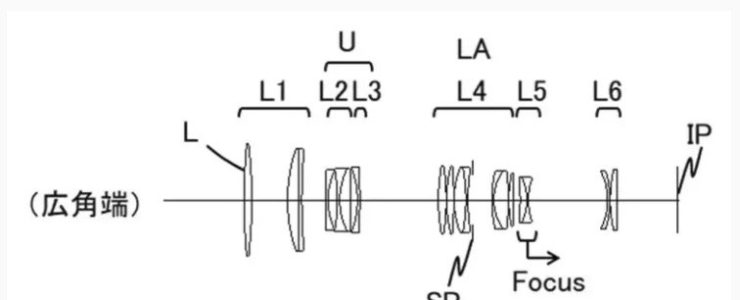
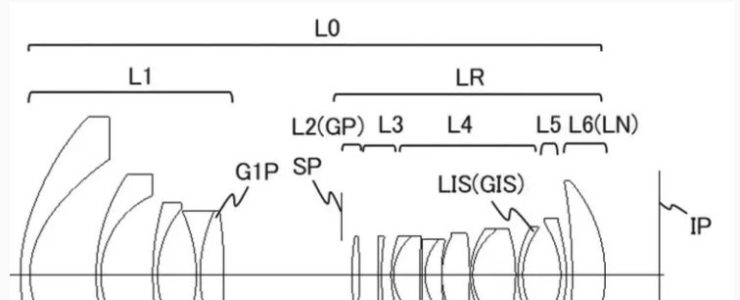
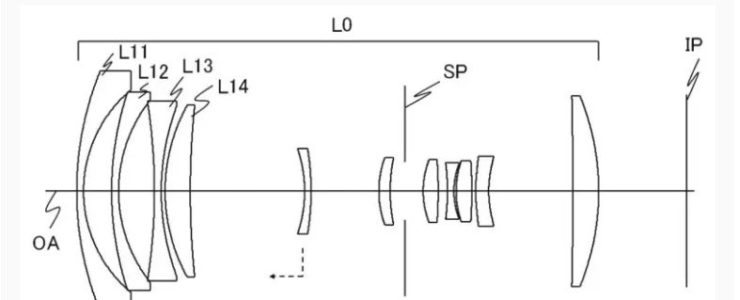
Canon patent application 2024101302 (Japan published 7/29/2024) discusses optical formulas for three telephoto/zoom lenses:

  • 400-600mm F2.8-4
  • 300-600mm F2.8-4.5
  • 70-300mm F4
  • A zoom lens that is small in size and has a large aperture while still providing high optical performance.
  • [Background Art]In recent years, there has been a demand for a telephoto lens with a zoom function, which is small and has a large aperture, yet has high optical performance. Patent Document 1 discloses an optical system having a plurality of converter lenses, which is composed of a first to third lens group with positive, negative, and positive refractive powers, and a subsequent group including one or more lens groups, which are arranged in order from the object side to the image side, in order to achieve weight reduction and telephotography. Patent Document 2 discloses an optical system having a first and second lens group with positive and negative refractive powers, and a subsequent group including one or more lens groups, which are arranged in order from the object side to the image side, in order to achieve both size reduction and high image quality, and the first lens group is composed of a plurality of subgroups. Patent Document 3 discloses an optical system having a first lens group with positive refractive power, a second lens group, and a subsequent group including one or more lens groups, which are arranged in order from the object side to the image side, in order to achieve both improved optical performance and weight reduction, and which ensures an air gap in the first lens group.
  • However, in the optical system of Patent Document 1, the refractive power of the first lens group and the second lens group are optimized to achieve compactness, and it is also possible to achieve telephotography using multiple converter lenses, but it is difficult to achieve compactness when the image sensor is large. In the optical system of Patent Document 2, the spacing between the main variable magnification groups can be changed during zooming, or the number of lenses in the main variable magnification groups can be increased to achieve high image quality, but it is difficult to achieve a large aperture. In the optical system of Patent Document 3, the configuration of each lens group is optimized to achieve both weight reduction and suppression of chromatic aberration, but it is difficult to achieve compactness when the aperture is large.
  • An object of the present invention is to provide a zoom lens which is small in size and has a large aperture, yet provides high optical performance .

Example 1

  • Focal length: 409.335-582.738
  • F-number: 2.880-4.100
  • Half angle of view: 3.025-2.126
  • Image height: 21.635
  • Total length: 475.002
  • Back focus: 39.500

Example 2

  • Focal length: 306.239-582.535
  • F value: 2.900-4.600
  • Half angle of view: 4.041-2.127
  • Image height: 21.635
  • Total length: 475.001
  • Back focal length: 41.785

Example 3

  • Focal length: 71.997-291.389
  • F-number: 4.120
  • Half angle of view: 16.725-4.246
  • Image height: 21.635
  • Total length: 276.801-332.801
  • Back Focus: 39.493-64.844

Example 4

  • Focal length: 101.052-291.652
  • F-number: 4.120
  • Half angle of view: 12.084-4.242
  • Image height: 21.635
  • Total length: 279.187-308.962
  • Back Focus: 39.496-52.523

Canon Patent: 9-18mm F4 IS, 10-20mm F2.8-4 IS And 11-22mm F2.8 IS

Canon Patent

Here is another Canon patent application.

Canon patent application 2024100498 (Japan, published 7/26/2024) discusses optical formulas or three wide angle lenses:

  • 9-18mm F4 IS
  • 10-20mm F2.8-4 IS
  • 11-22mm F2.8 IS

From the patent literature:

  • A zoom lens that is compact yet has good optical performance even when vibration is reduced is provided.
  • [Background Art]As an imaging optical system used in imaging devices such as digital still cameras, video cameras, broadcast cameras, and security cameras, there is a demand for an optical system that is small and lightweight and has high optical performance even if the amount of image blur correction is large. Patent Document 1 discloses a zoom lens having a subsequent lens group including a first lens group with negative refractive power, a second lens group with positive refractive power, and an anti-vibration lens group, which are arranged in order from the object side to the image side. The anti-vibration lens group performs OIS, which reduces (corrects) image blur caused by shaking of the imaging device due to hand shake or the like (hereinafter referred to as camera shake) by moving (shifting) in a direction perpendicular to the optical axis. In addition, the imaging element that captures the subject image formed by the imaging optical system can perform IIS, which corrects image blur by shifting in a direction perpendicular to the optical axis.
  • In a central projection type imaging optical system, the amount of movement of an image point on an image plane due to camera shake differs between the center and the periphery of the image plane. In particular, the wider the angle of an imaging optical system, the greater the amount of movement of an image point in the periphery compared to the center. For this reason, in an ultra-wide-angle zoom lens with an angle of view exceeding 100°, a lot of image shake remains in the periphery.
  • In the zoom lens of Patent Document 1, the curvature of field during vibration reduction is corrected, but a large amount of residual image blur occurs in the peripheral area due to the difference in the amount of image point movement between the center and the periphery. Also, in the IIS, if the outer diameter of the vibration reduction lens group is large, it becomes difficult to miniaturize the zoom lens.
  • The present invention provides a zoom lens which is small in size and yet has good optical performance even during vibration reduction, and an imaging apparatus using the same.

Example 1

  • Focal length: 10.33-19.39
  • F-number: 4.08-4.12
  • Half angle of view: 61.36-48.13
  • Image height: 18.92-21.64
  • Total length: 128.82-123.27
  • Back Focus: 12.13

Example 2

  • Focal length: 9.20-17.90
  • F-number: 4.08-4.12
  • Half angle of view: 64.04-50.40
  • Image height: 18.90-21.64
  • Overall length: 125.26-119.35
  • Back Focus: 10.50

Example 3

  • Focal length: 11.30-23.90
  • F-number: 4.08-4.12
  • Half angle of view: 59.29-42.15
  • Image height: 19.02-21.64
  • Total length: 129.79-129.33
  • Back focus: 14.54-10.54

Example 4

  • Focal length: 11.30-22.00
  • F-number: 2.89
  • Half angle of view: 59.44-44.52
  • Image height: 19.14-21.64
  • Overall length: 137.35-125.58
  • Back focus: 13.50-10.50

Example 5

  • Focal length: 10.30-19.80
  • F-number: 2.89-4.12
  • Half angle of view: 61.76-47.54
  • Image height: 19.18-21.64
  • Overall length: 132.94-127.01
  • Back Focus: 11.35

Canon Patent: 12-30mm F4-6.3 & 24-50mm F4-6.3 PowerZoom Lenses

canon patent

Here is the first of a batch of new Canon patent applications.

Canon patent application 2024099414 (Japan, published 7/25/2024) discusses methods and optical formulas for two PowerZoom lenses:

  • 12-30mm F4-6.3
  • 24-50mm F4-6.3

From the patent literature:

  • A zoom lens is provided that has a wide angle of view, is compact, and has high optical performance while allowing rapid zooming.
  • [Background Art]In recent years, there has been a demand for zoom lenses that are wide-angle, compact, and high-performance (high resolution). In addition, in recent years, the demand for moving images has increased, and in order to achieve smooth zooming, zoom lenses with electric zoom functions are required. As a wide-angle optical system, a negative lead type optical system is known. Patent Document 1 and Patent Document 2 disclose a negative lead type zoom lens in which the first lens group is immobile relative to the image plane during zooming.
  • SUMMARY OF THE PRESENT EMBODIMENTS
    An object of the present invention is to provide a zoom lens which has a wide angle of view, is compact, has high optical performance, and is capable of rapid zooming.

Example 1

  • Focal length: 14.40-29.10
  • F-number: 4.10-6.26
  • Half angle of view: 43.6-25.3
  • Image height: 11.51-12.90
  • Overall length: 78.75
  • Back Focus: 11.50

Example 2

  • Focal length: 24.70-48.50
  • F-number: 4.10-6.14
  • Half angle of view: 41.5-24.0
  • Image height: 18.19-20.62
  • Overall length: 107.48
  • Back Focus: 20.26

Example 3

  • Focal length: 12.36-27.16
  • F-number: 4.10-6.40
  • Half angle of view: 47.9-26.2
  • Image height: 10.67-12.59
  • Overall length: 79.81
  • Back Focus: 11.50
[via asobinet]

Canon EOS R1 And EOS R5 Mark II Announced

canon eos r1

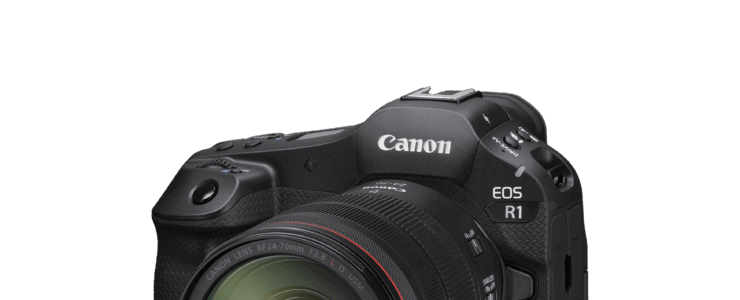
Canon announced the EOS R1 and EOS R5 Mark II. The Canon EOS R1 camera is expected to be available in the Fall of 2024, for an estimated retail price of $6,299.00*. The Canon EOS R5 Mark II camera is expected to be available in August 2024, for an estimated retail price of $4,299.00* for the camera body only. The EOS R5 Mark II camera kit, which will include the RF24-105mm F4 L IS USM lens, will have an estimated retail price of $5,399.00*.

Pre-order:

Canon Officially Launches the New EOS R1 and EOS R5 Mark II Full-Frame Mirrorless Cameras

MELVILLE, N.Y., July 17, 2024 — Canon U.S.A., Inc., a leader in digital imaging solutions, today launched two new professional full-frame mirrorless cameras, the EOS R1 and EOS R5 Mark II. The EOS R1 camera is designed for both professional still photographers and video creators in a wide range of fields including sports, news reporting and high-end video production. The EOS R5 Mark II camera features improved video focused features for the advanced creators and real-time multi recognition tracking system for those who focus on still photography.

Canon EOS R1 Camera is “Ahead of the Game”

Canon’s EOS 1-series legacy continues with the unveiling of the flagship EOS R1 camera. This high-performance, reliable, and weather-resistance camera is designed for professionals in the photojournalism, sports and wildlife fields. Key features of the EOS R1 camera include:

  • Back-illuminated stacked 24.2 megapixel full-frame sensor and new processing system for extremely fast reading
  • Increased read-out speed, reducing “rolling shutter” distortions
  • Still-image shooting speeds up to 40fps
  • “Cross-type AF” imaging sensor for more positive focus on subjects with linear detail
  • Strong video capabilities, up to 4K (also 6K RAW video options)

Canon EOS R5 Mark II Camera helps users “Master the Moment”

For the professional who demands high-quality still and video output, the EOS R5 Mark II camera is ready to deliver. Designed with performance and image quality at its core, the EOS R5 Mark II camera offers the fundamental elements in one package for sports/wildlife photographers, journalists/producers, video producers and visual creators. Key features of the EOS R5 Mark II camera include:

  • Back-illuminated stacked 45 megapixel full-frame sensor and new processing system for extremely fast reading
  • When compared to previous EOS R camera models, more advanced and powerful AF system including Eye Control AF and new subject tracking technologies
  • Cinema EOS video features such as:
    • Custom Picture color profile including Canon Log 2
    • False Color Wave Form Monitor
    • 4CH Audio with 24bit LPCM
    • Pre-recording up to 5 seconds

Accessories for the EOS R5 Mark II camera were designed thoughtfully with the end-user in mind. There is a new, more powerful battery. The LP-E6P battery, when compared to previous battery versions, features higher continuous power and two-times the amperage. Optional battery grips were also thoughtfully designed, and there are three options:

  • BG-R20– For vertical operability
  • BG-R20EP with Ethernet – Port enables high-speed wired communication
  • CF-R20E
  • P with Cooling Fan and Ethernet – Cooling fan helps maximize movie performance
  • Both cameras feature the new DIGIC Accelerator, which is an addition to the DIGIC X processor. The DIGIC Accelerator assists with deep learning processing which helps to quickly analyze large volumes of data and supports the next-gen AF system, Dual Pixel Intelligent AF. Dual Pixel Intelligent AF is based on Accelerated Capture and deep learning, allowing end-users to experience tracking advancements, such as body, joint and head area estimation and focus on people other than the main subject.