Here is a Canon RF 100-500mm review. The recently announced Canon RF 100-500mm f/4.5-7.1L IS lens seems to be a rather interesting and well performing lens.
Coming from Gordon Laing, the 29 minutes video-review below looks at the Canon RF 100-500mm from all possible points of view and compares it to the EF 100-400mm lens. Gordon seems to be pretty fond of the RF 100-500mm, calling it the “best RF telephoto” lens. In any case a powerful option for the EOS R system.
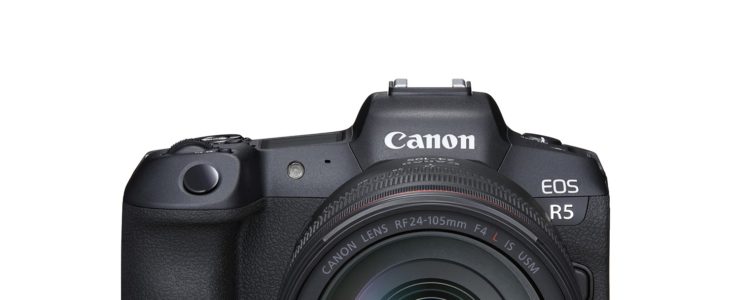
Canon set a new reference standard with the Canon EOS R5, overheating drama included. Here is a Canon EOS R5 review for underwater photography and video.
[…] a full review of the Canon EOS R5 full frame, 45 megapixel mirrorless camera for underwater photo and video. The R5 has some of the best specs on the market including 45 MP still images, 8K video @ 30P with internal RAW recording, 4K video up to 120fps, 5 axis in-body image-stabilization, and more!
The staff at Bluewater Photo and the Underwater Photography Guide took the Canon EOS R5 diving in the cold waters of the Puget Sound, Washington to put it to the test and see just what it could do. We’ve been very impressed with the underwater footage that we captured. However, we do think that the marketing by Canon for the R5 should have been done differently – this is a spectacular still camera with amazing video features, but it should not be relied on for the video features that were initially marketed.
Well, at least underwater the heating issue should be under control ;-)
In a clear effort to uncover new ways to motivate people to waste spend $5000 for a camera with Sony sensor, Leica will soon release a special edition, James Bonde-themed camera. How can you afford not to own one?
The Leica Q2 007 Special Edition will be released in the next weeks. Here are some images leaked ahead of the announcement. Is the suitcase a fancy camera case or a suggestion about how to take the money to the retailer?
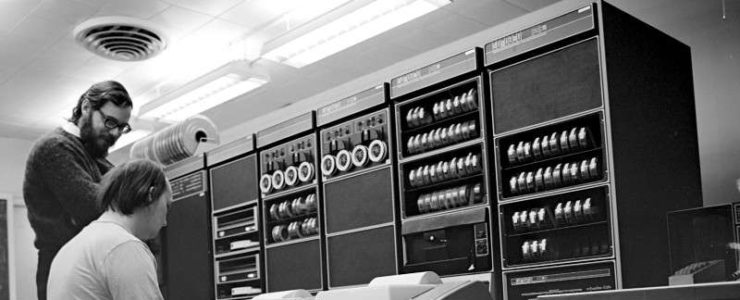
Front Page Linux posted an interesting and well written article about the history of Unix and Linux. Definitely worth your attention if you are into computer science.
For this special history guide, we are going to take a trip back in time to see where the seed of Linux was planted — namely via the Unix systems of the early 1970s and how it has progressed through the modern day. Though most are completely unaware of the enormous impact that Unix-like operating systems have planted on our society, understanding its storied history can allow us to realize why the Unix model has lived on far longer and become more successful than any other operating system architecture (and philosophy) in existence.
In fact, the estimated 5 billion people in the world (more than half the population) to own a mobile phone have been using Unix-based operating systems, knowingly or not, since the “smart” phone hit the consumer shelves in the late 2000s. From the Linux-based Android platform to the BSD-flavored iOS, Unix has stolen the massive mobile market along with the majority of other systems in existence. In fact, if you look at the operating system on just about any device besides the desktop PC, it is more likely than not that it runs some form or derivative of Unix.
So, how did an operating system written to port a game from one machine to another gain so much prominence in our world today when it was first conceived and implemented over sixty years ago? Well, our journey begins at AT&T’s famous Bell Laboratory with two unlikely heroes that helped kick off the modern technological age. Strap in and grab some popcorn, this is going to be a wild ride!
Fujitsu to Deliver New FX1000 Supercomputer System for Canon
TOKYO, Sept. 22, 2020 — Fujitsu Limited today announced that it has received an order for a new supercomputer system from Canon Inc.
The system consists of a Fujitsu Supercomputer PRIMEHPC FX1000 unit, which harnesses top-class technology from the world’s fastest supercomputer, Fugaku, which was jointly developed by RIKEN and Fujitsu. The new supercomputer will achieve an expected theoretical computational performance of 648.8 teraflops.
Upon completion, the supercomputer will play a key role in contributing to Canon’s initiative of “no-prototype” product development, delivering enhanced capabilities and scope of applicability of analysis in Canon’s product development process.
This system is planned to begin operations in the first half of 2021.
Background
Canon is promoting a “no-prototype” initiative in the development of its products, such as office multifunction devices and other various types of printers, cameras, and semiconductor lithography equipment. To make this initiative a reality, Canon is leveraging 3D CAD data in analytical simulations to evaluate multiple facets of proposed products, including functionality, as well as ease of manufacturing. In the past, Canon has relied on both a Fujitsu Supercomputer PRIMEHPC FX10 system and a Fujitsu Supercomputer PRIMEHPC FX100 system.
Now, to take its initiative to the next level, Canon has adopted Fujitsu’s PRIMEHPC FX1000 system, which delivers reliable, high performance computing power, with world-leading energy efficiency.
Overview of the New System
Fujitsu’s new system consists of a PRIMEHPC FX1000 with 192 nodes, with an expected theoretical computational performance of 648.8 TFLOPS. Fujitsu will also deploy Fujitsu Server PRIMERGY systems and Fujitsu Storage ETERNUS systems as peripheral devices. As an important part of Canon’s product development cycle, this system will enable larger scale analyses and simulations in impact analysis experiments evaluating damage to or deformation of a potential product when dropped, including simulations with over 100 million elements, a challenge for previous systems to handle. The new system will also support airflow analysis and electromagnetic wave analysis. These benefits will ultimately help to deliver an enhanced product development flow through Canon’s “no-prototype” initiative.
Fujitsu’s technical computing solutions, particularly the PRIMEHPC FX1000, demonstrate an ongoing commitment to streamlining the performance, quality, and functionality of products while reducing product development times and costs for its customers.
We knew Canon was working on a Nifty-Fifty for the EOS R camera system. Now the Canon RF 50mm f/1.8 showed up at a certification authority.
Two lenses with SKUs 4514C005 and 4515C005 have been registered, and it seems 4515C005 refers to the upcoming Canon RF 50mm f/1.8 STM. The lens already got rumored, and a pertinent patent was spotted.
The Canon RF 50mm f/1.8 STM was rumored to get announced in 2020 but it looks as if it will come in 2021 unless Canon does another announcement session this year, which seems unlikely. And the other registered lens…?
This website or its third-party tools use cookies, which are necessary to its functioning and required to achieve the purposes illustrated in the cookie policy. If you want to know more or withdraw your consent to all or some of the cookies, please refer to the cookie policy. By closing this banner you agree to the use of cookies.