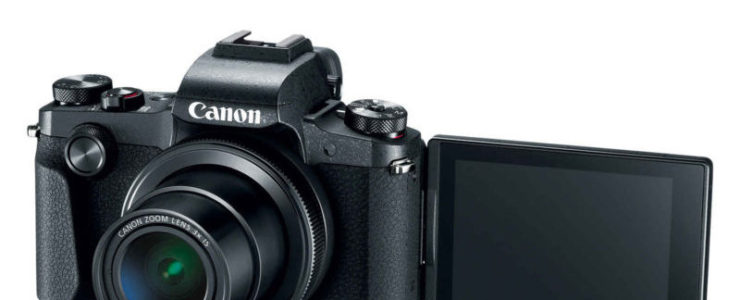
New Canon 4K UHD Portable Zoom Broadcast Lenses announced
4k

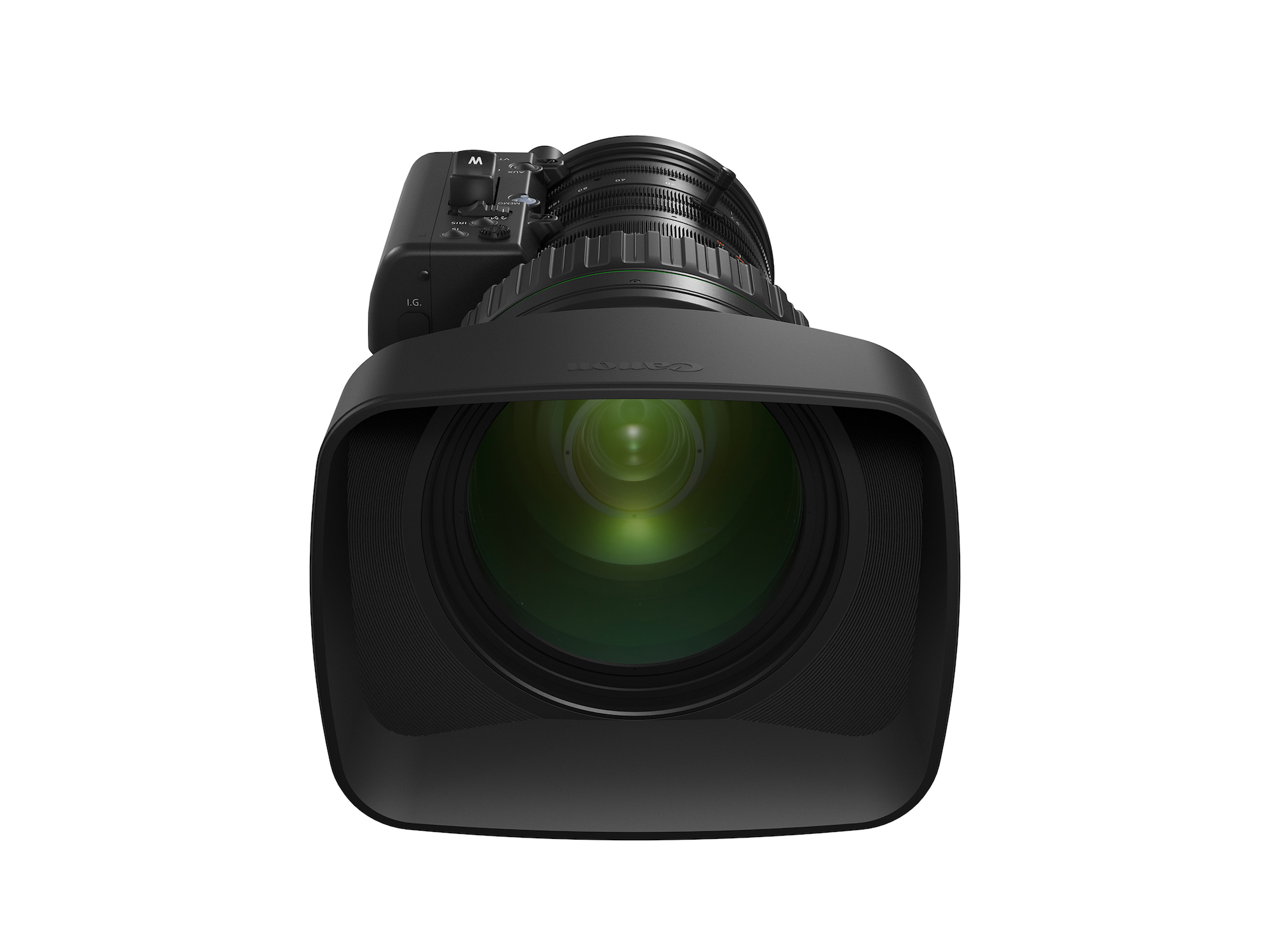
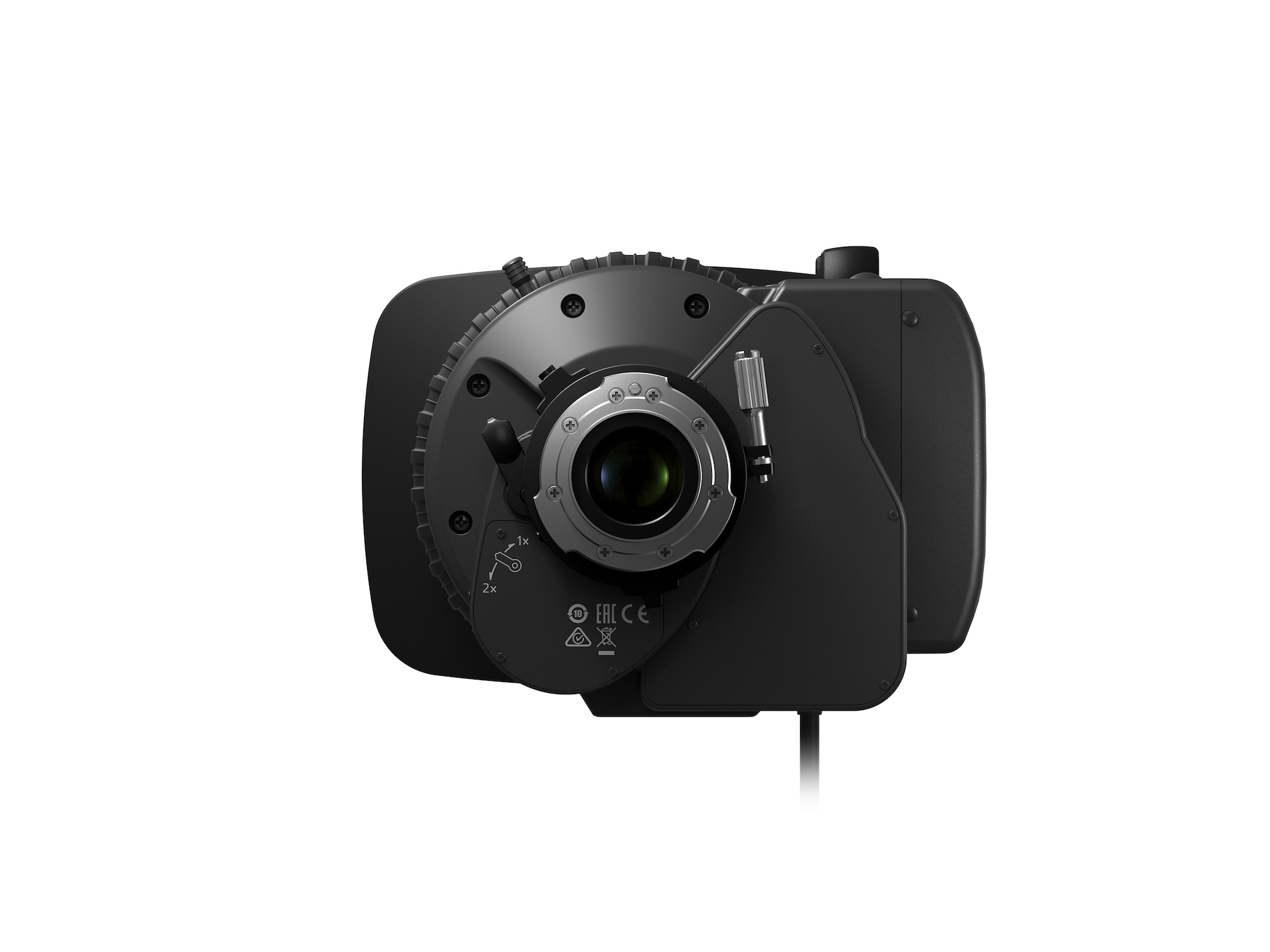
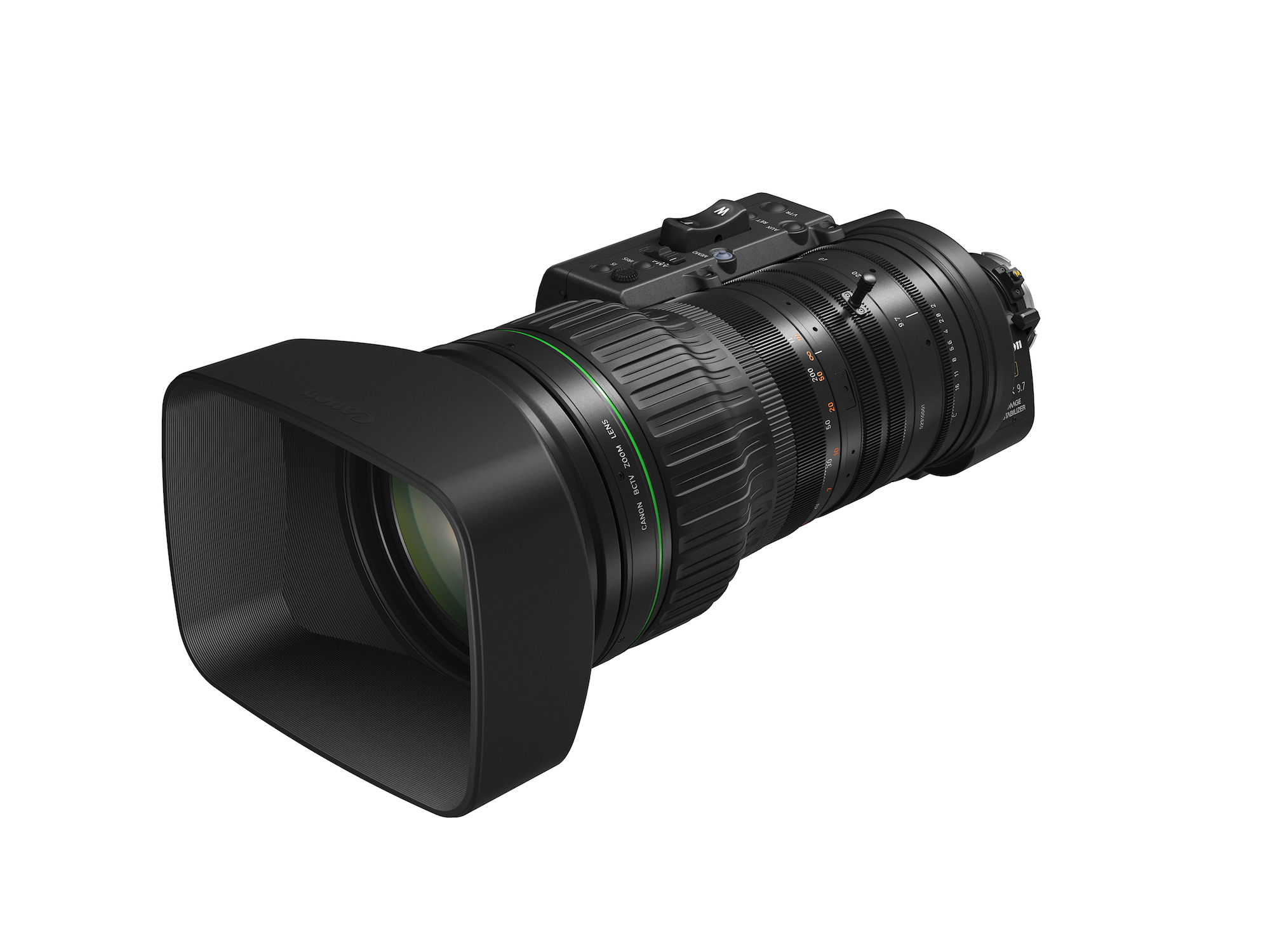
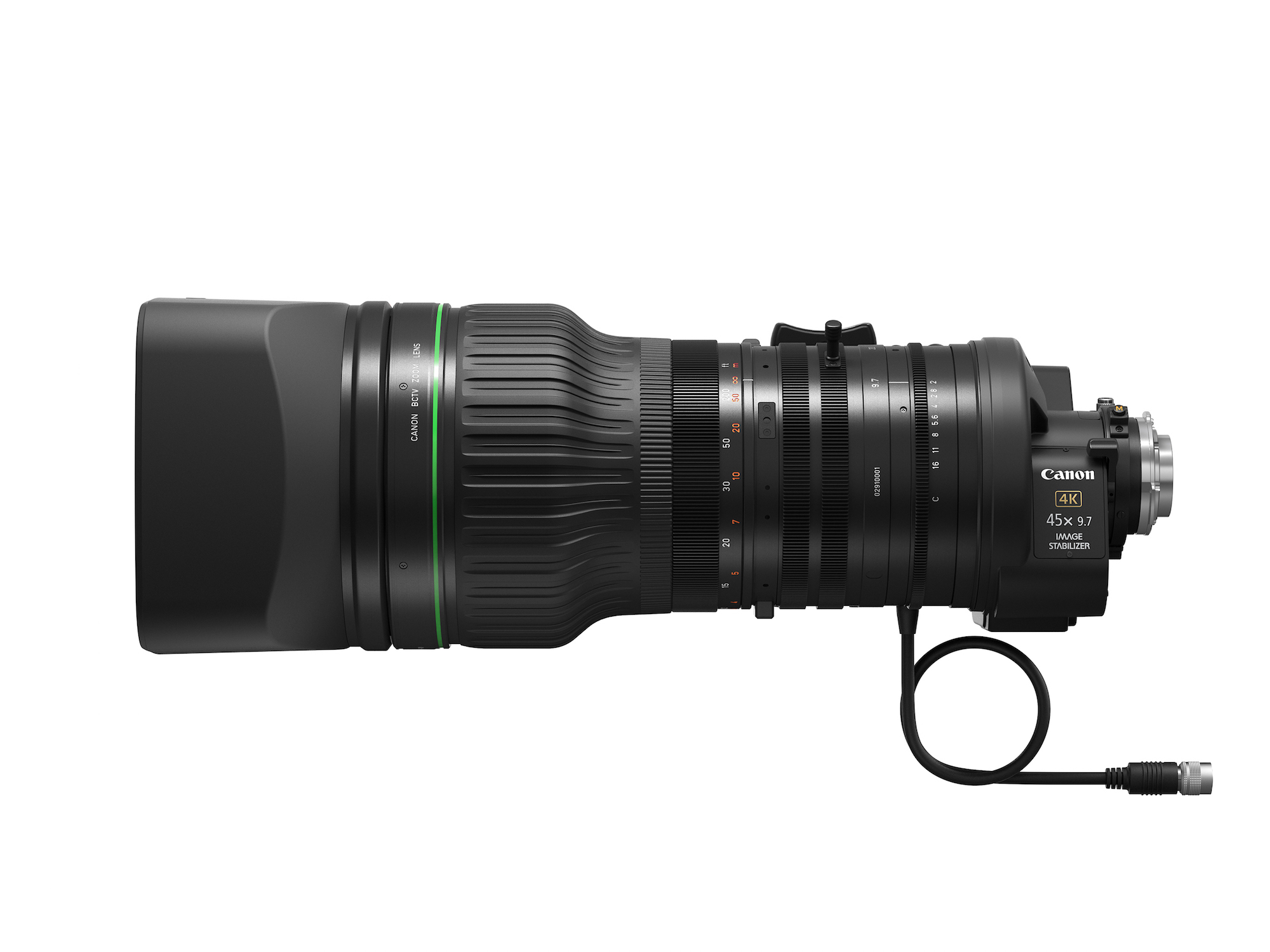
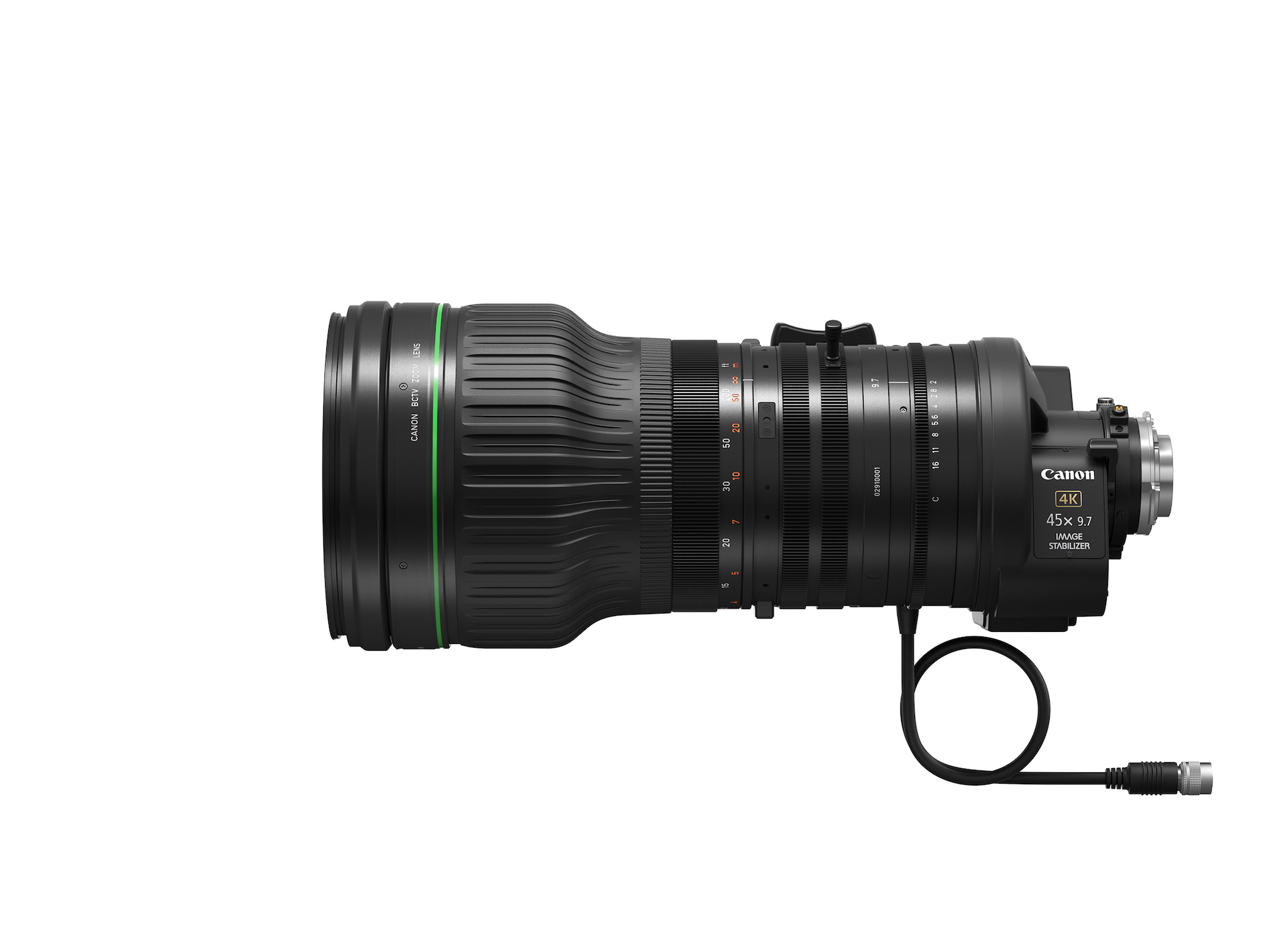
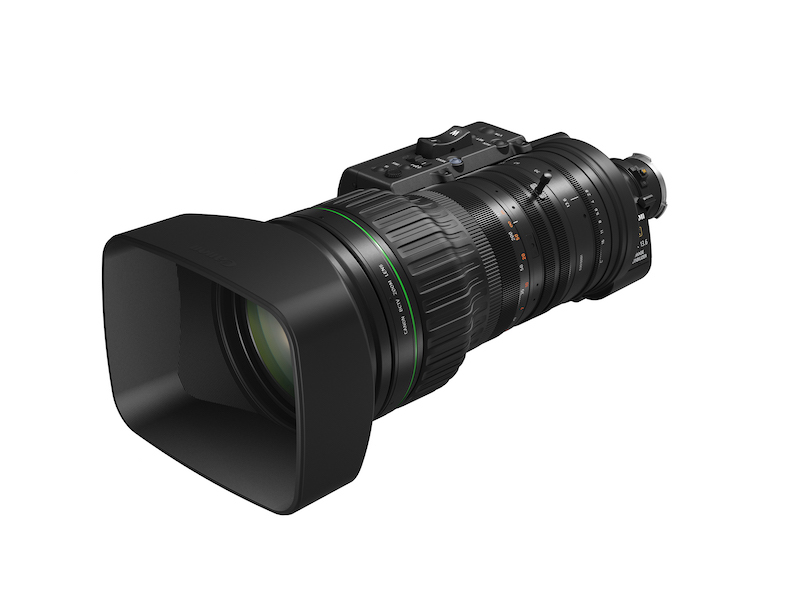
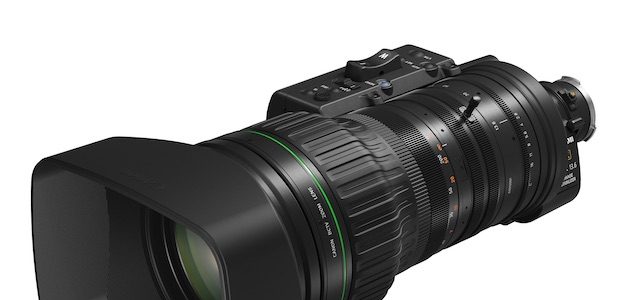
Whiteout anyone seeing it coming, Canon just announced two new 4K UHD portable zoom broadcast lenses. Following Canon’s naming tradition for this kind of lenses, these two too have nice monikers, easy to remember:  Canon CJ45ex9.7B and CJ45ex13.6B. Easy Peasy.

The Canon CJ45ex9.7B is scheduled to be available in April 2018, while the CJ45ex13.6B will be available in May 2018. For full product specifications and more information on these lenses and the full-line of Canon 4K Broadcast Lenses please visit here.

Canon press release:

Canon Launches New 4K UHD Portable Zoom Broadcast Lenses

The New Broadcast Lenses Feature 45x Zoom, The Highest Zoom Ratio in Their Class1

MELVILLE, N.Y., November 1, 2017 – Canon U.S.A., Inc., a leader in digital imaging solutions, announced today two new portable 4K UHD broadcast lenses for use with broadcast cameras featuring 2/3-inch sensors: the Canon CJ45ex9.7B 4K UHD Portable Zoom Lens provides users with the highest zoom ratio in its class1, and the Canon CJ45ex13.6B 4K UHD Portable Zoom Lens features both the highest zoom ratio and longest focal length in its class1.
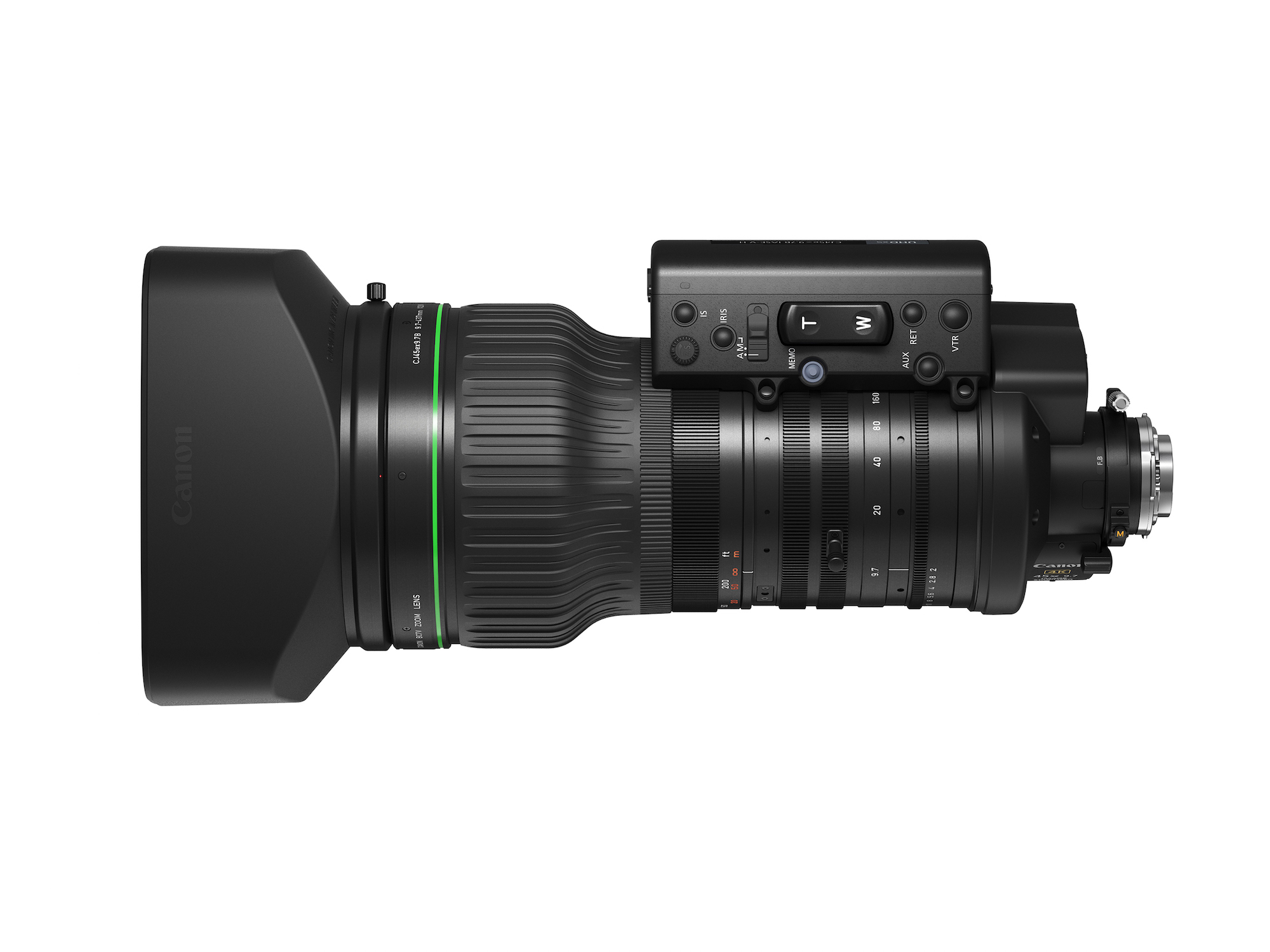
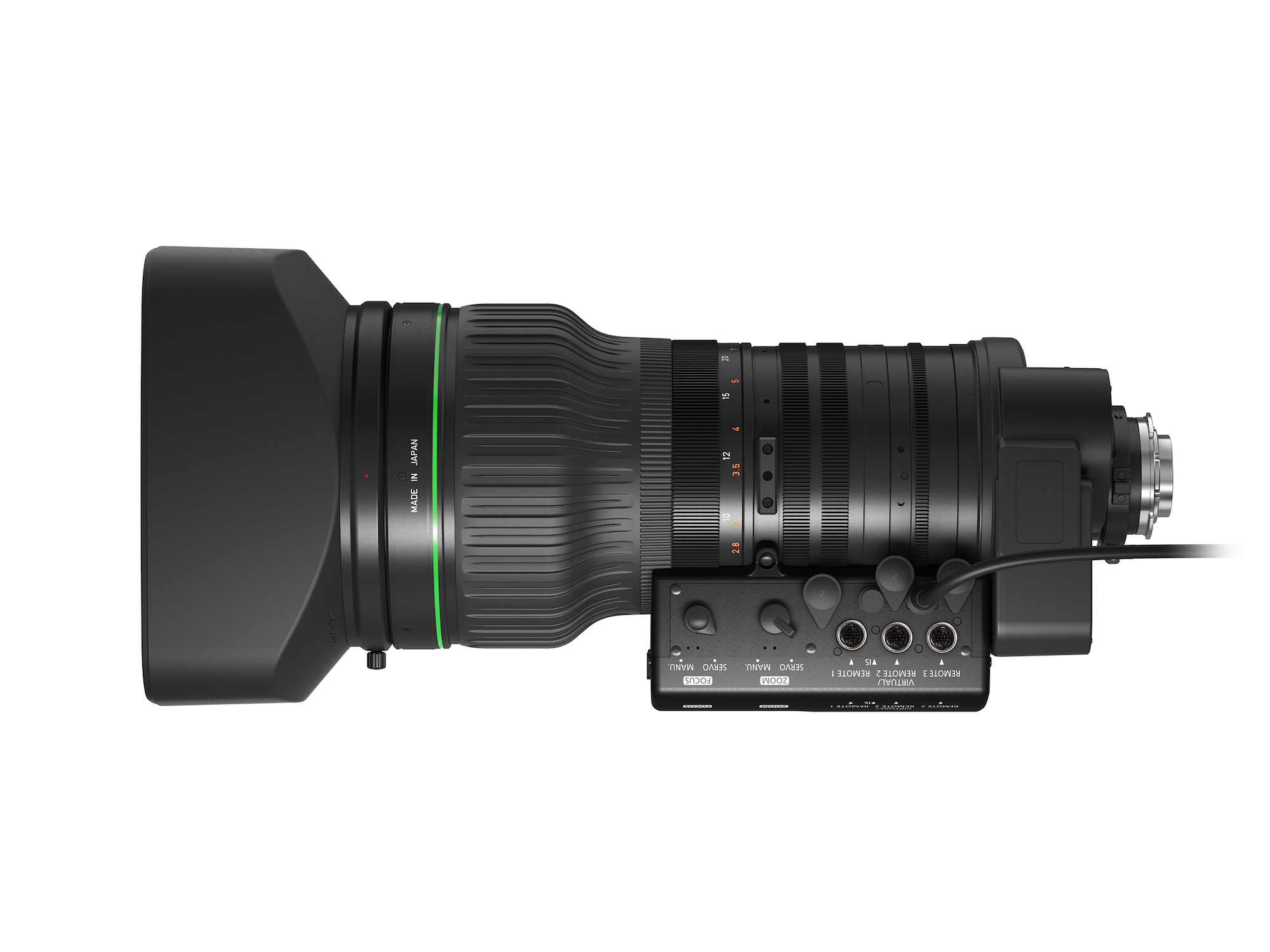
The Canon CJ45ex9.7B and CJ45ex13.6B lenses both feature a broad 45x zoom ratio and wide-angle focal length of 9.7 mm to 437 mm and 13.6 mm to 612 mm, respectively. Both telephoto zoom lenses are ideal pieces of equipment for Electronic Field Production (EFP) broadcast applications including wildlife/nature, sports, live events, documentaries, and helicopter/aerial. Additionally, both lenses are well suited for mid-size broadcast vans and surveillance applications.

“As the demand for more 4K UHD broadcasting continues to grow, Canon is constantly developing high-quality products to provide producers and broadcasters with outstanding optical performance,”said Yuichi Ishizuka, president and COO, Canon U.S.A. “The CJ45ex9.7B and CJ45ex13.6B both support a variety of broadcast applications, enabling users to capture breathtaking 4K UHD image quality in a form factor that is both lightweight and compact.”

The CJ45ex9.7B and CJ45ex13.6B both employ Canon proprietary optical design technology that features optimal lens positioning using both fluorite and Ultra-low Dispersion (UD) glass. The use of these lens elements enable users to capture high-quality 4K UHD imagery from the center of the imaging field to the periphery and across the entire zoom range, making them ideal for a variety of shooting situations—from close-up shots all the way to wide shots such as panoramic views of large venues.

The form factor and operational controls of the lenses will be very familiar to users who have previously operated one of Canon’s award-winning HD lenses. The lenses are designed to meet the demands of the on-the-go broadcast shooter where lightweight and compact are key advantages, comparable to HD super telephoto lenses. Both lenses feature three 20-pin connectors for zoom control, focus control and access to the virtual terminal, even in full servo setup with focus and zoom controllers connected. Futhermore, a 16-bit absolute value encoder in the digital drive unit helps eliminate the need for any initialization, enabling users to simply turn on the camera and begin shooting.

Availability

The CJ45ex9.7B 4K UHD Portable Zoom Lens is scheduled to be available in April 2018*, while the CJ45ex13.6B will be available in May 2018*. For full product specifications and more information on these lenses and the full-line of Canon 4K Broadcast Lenses please visit, https://www.usa.canon.com/bctv-lenses.

Click here to open the rest of the article

Two Canon lenses and a flash show up at certification authority (EF 24-70mm f/2.8L IS?)

Canon Rumors

Nokishita spotted some more unreleased Canon gear that has been registered at a certification authority.

The list:

  • Interchangeable lens 1
    • SKU: 2309C005AA
    • made in Japan
  • Interchangeable lens 2
    • SKU: 2439C005AA
    • made in Japan?
  • DS 401141
    • Electronic flash
    • SKU: 1757C003

It appears a fact that at least one of the lenses above is manufactured in Japan, which usually means the Utsunomiya factory. This factory produces Canon’s “L”-grade lenses. One of the listed lenses may be the long rumored EF 24-70mm f/2.8L IS, i.e. Canon’s first image stabilised 24-70mm f/2.8 lens. Another lens that is rumored since a while is he Canon EF 135mm f/2L IS. However, I consider the EF 24-70mm f/2.8L IS more likely to be announced, since Canon still doesn’t have an image stabilised 24-70mm f/2.8L lens.

I expect both lenses to be announced before end of the year. We’ll see soon, so stay tuned.

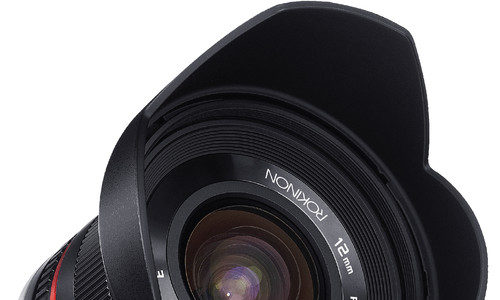
Deal: Rokinon 12mm f/2.0 NCS CS Lens for Canon EF-M Mount – $279 (reg. $349, today only)

Rokinon 12mm f/2.0
  • Canon EF-M Mount/APS-C Format
  • 19.2mm (35mm Equivalent)
  • Aperture Range: f/2.0 to f/22
  • Three ED and Two Aspherical Elements
  • Nano Coating System

Eventually, a deal for the Canon EOS M system. Get the Rokinon 12mm f/2.0 NCS CS lens at $279. Compare at $349. On offering at this price today only in B&H Photo’s DealZone. The black Rokinon 12mm f/2.0 NCS CS Lens is a prime wide-angle lens designed specifically for use with APS-C sized image sensors. Providing a 35mm-equivalent focal length of 19.2mm and a broad 98.9° angle of view, this lens is well-suited for architectural, interior, and landscape images. Its fast f/2.0 maximum aperture is further beneficial to working in low-light conditions.

Three extra-low dispersion elements and two aspherical elements have been incorporated into the optical design to minimize chromatic aberrations and distortion in order to produce sharper images. Additionally, a Nano Coating System (NCS) has been applied to the lens elements in order to reduce surface reflections and prevent lens flare and ghosting for improved light transmission and more contrast-rich imagery

  • Prime wide-angle lens provides a 35mm-equivalent focal length of 19.2mm, making it ideally suited for architectural and landscape subjects.
  • Fast f/2.0 maximum aperture benefits working in low-light conditions.
  • Three extra-low dispersion elements and two aspherical elements reduce chromatic aberrations and distortions in order to produce sharper images.
  • Nano Coating System improves light transmission and suppresses lens flare and ghosting for more contrast-rich, color-neutral images.

There is more to check if you’re looking for good deals. Have a look at the following links. Today’s Gold Box and one day only deals at Amazon US, Amazon DE, Amazon UK, B&H Photo, eBay, Adorama, and refurbished lenses and DSLRs at Canon Store (check the refurbished listings at Canon Store whenever you have time for it, the best deals hide there).

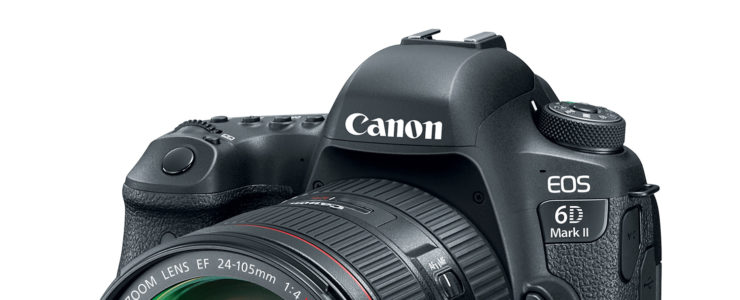
Canon EOS 6D Mark II review (Imaging Resource)

EOS 6D Mark II

Canon EOS 6D Mark II: [shopcountry 46185]

EOS 6D Mark II at a glance:

  • 26.2MP Full-Frame CMOS Sensor
  • DIGIC 7 Image Processor
  • 45-Point All-Cross Type AF System
  • Full HD Video at 60 fps; Electronic IS
  • 3.0″ Vari-Angle Touchscreen LCD
  • Dual Pixel CMOS AF and Movie Servo AF
  • Native ISO 40000, Expanded to ISO 102400
  • 6.5 fps Shooting; Time-Lapse & HDR Movie
  • Built-In GPS, Bluetooth, & Wi-Fi w/ NFC
  • Dust and Water Resistant; SD Card Slot

Imaging Resource tested the new Canon EOS 6D Mark II. While they confirm that dynamic range is not up to its peers, they also underline the many positive aspects of the EOS 6D Mark II. The EOS 6D Mark II might be bested by competitors when it comes to DR, still the 6D II proves to be a reliable and powerful tool for photographers.

From the conclusion, regarding image quality and prints:

When looking at print quality, the Canon EOS 6D Mark II delivers excellent 30 x 40 inch prints at ISO 50 through 200. At ISO 400 and 800, you can still make a nice 30 x 40 inch print, although there is a bit less fine detail. This is still an impressive result. At ISO 1600 and 3200, the maximum print for a good print drops to 24 x 36 and 20 x 30 inches respectively. If you want to shoot at ISO 6400, the maximum print size that still passes our test is 13 x 19 inches. Impressively, you can still make a good 11 x 14 inch print with ISO 12,800 images, which is quite the feat for any camera. Overall, print quality analysis results for the Canon EOS 6D Mark II are exceptional, especially when considering the camera’s reasonable price tag.

Dynamic range is a weak spot in the imaging performance of the EOS 6D Mark II . While the 6D II does not have bad dynamic range in absolute terms, it is disappointing that it cannot match its predecessor in terms of dynamic range performance despite being a much newer camera with an all-new image sensor. Not only can the 6D II not match the 6D in terms of dynamic range, it trails its competition quite considerably, being bested by the Nikon D750 and Nikon D610 cameras […] Read the review…

It’s somewhat weird that Canon exposed itself to all this blame because of the sensor in the EOS 6D Mark II. I mean, we are talking about a company that has sensor manufacturing know how and which still builds the sensors for their cameras in their own factories (Nikon uses Sony sensors, for instance). Did they not anticipate the sh**storm they were going to get?

Do you own an EOS 6D Mark II? What is your experience? Feel free to sound off in the comment section.

Canon EOS 6D Mark II: [shoplist 46185]

Canon G1 X Mark III sample gallery (pre-production model)

powershot g1 x mark iii

PowerShot G1 X Mark III at a glance:

  • 24.2MP APS-C CMOS Sensor
  • DIGIC 7 Image Processor
  • 3x Zoom Lens, 24-72mm (35mm Equivalent)
  • Built-In Electronic Viewfinder
  • 3.0″ Vari-Angle Touchscreen LCD
  • Full HD 1080p Video Recording at 60 fps
  • Dual Pixel CMOS AF, Image Stabilizer
  • ISO 25600, 9 fps Continuous Shooting
  • Built-In Wi-Fi with NFC, Bluetooth
  • Dust- and Water-Resistant Construction

Canon PowerShot G1 X Mark III pre-order: B&H Photo | Adorama | Amazon US

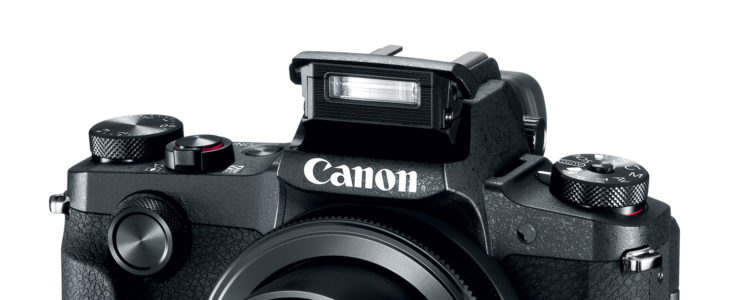
DPReview posted a set of sample photos shot with a pre-production Canon PowerShot G1 X Mark III. Had a quick look and I think the PowerSHot G1 X Mark III delivers. A PowerShot G1 X Mark III hands-on and preview round-up is here.

Future Canon PowerShot Cameras to feature Dual Pixel AF on 1″ sensor? [CW2]

canon powershot g1 x mark iii dual pixel af

The recently announced Canon PowerShot G1 X Mark III is not the only PowerShot camera Canon will announce in the next months. We expect a replacement for the G5 X and G3 X, but there might be one or two more new PowerShots. CES in January is a good candidate for PowerShot announcements.

The interesting news is we have been told (thanks) that Canon is going to feature Dual Pixel AF on future PowerShot Cameras with 1″ sensors. DPAF is featured on the PowerShot G1 X Mark III, though this one has an APS-C sensor (first time on a PowerShot).

Featuring Dual Pixel AF on PowerShot cameras would be a smart move by Canon. The company’s patented auto-focus technology is a real game-changer. First introduced with the EOS 70D, DPAF was slowly ported to other photographic and video gear. It’s nowadays featured on mirrorless cameras, on entry-level Rebel DSLRs, high-end gear as the EOS 5D Mark IV and EOS-1D X Mark II, Cinema gear, the new Canon XF405, and on the PowerShot G1 X Mark III. The Canon XF405 has an 1″ sensor, so we can assume Canon already has the assembly line to produce 1″ sensors with Dual Pixel AF.

However, Canon is very slow-paced when it comes to port their proprietary technology to a broader offering. As welcome as it would be to have Dual Pixel AF on consumer oriented PowerShot cameras, I have some doubts about it to happen soon. Hence, I rate it CW2 and will try to gather more information about the topic.

Stay tuned.