Tips on how to photograph the Solar Eclipse by Canon Explorer of Light Ken Slutke

Canon Explorer of Light Ken Slutke about how to photograph the Solar Eclipse. Slutke was interviewed by Time.

He gives some recommendations:

Sklute recommends three Canon models at different price points and skill levels, as shown in the video above. The Powershot Sx60 is a beginner level point-and-shoot bundled with a solar filter that can be purchased for $499.99. For the next step up, Sklute suggests the Rebel T7i (camera body only) for $749.99. On the more professional side, you can buy the 5D Mark IV (camera body only) for $3,299.

Once you have your camera, the next step is choosing a lens. You’ll want at least a 300 mm focal length to get a good-sized image of the sun in the frame, Sklute says. Focal length refers to the distance between a camera’s sensor and its lens. The longer the lens’s focal length, the larger the sun will be in the final image. Those who are hesitant about investing in an expensive lens may want to rent one instead.

Read the article at Time

The total solar eclipse will be visible in the US on August 21, 2017. The Canon Digital Learning Center has a lot of resources to get you ready.

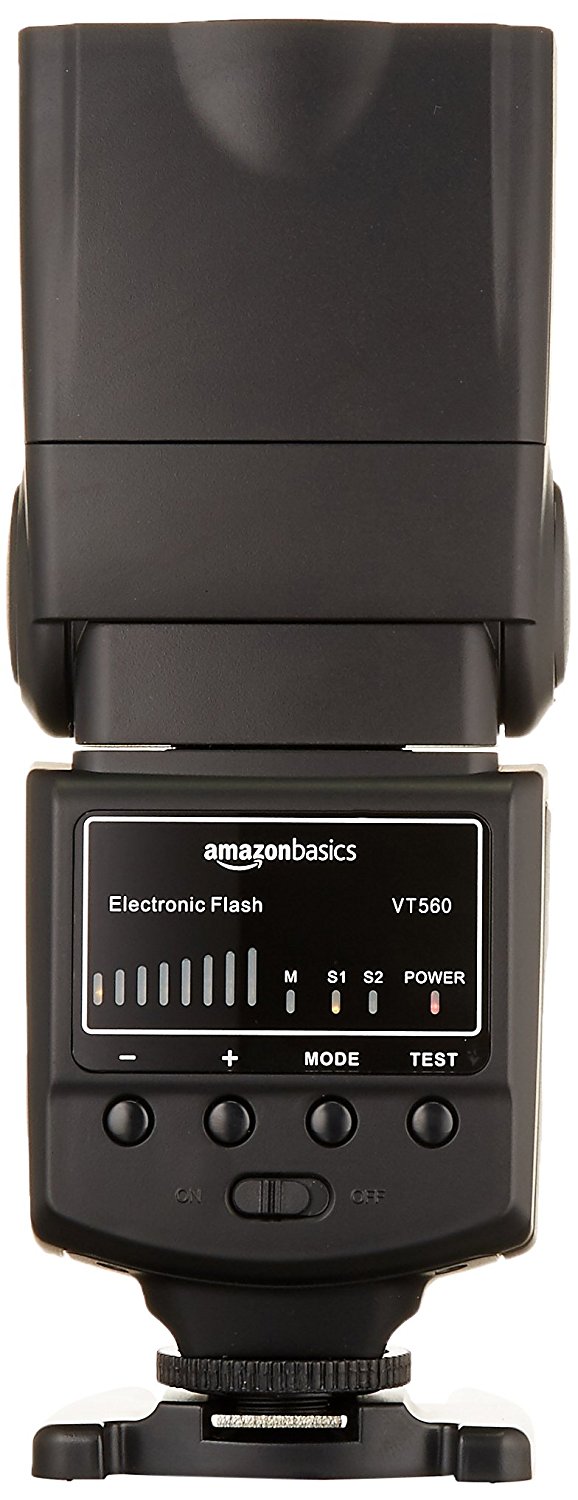
You can get an AmazonBasics Electronic Flash for Canon DSLRs for just $28

AmazonBasics Electronic Flash

AmazonBasics Electronic Flash at a glance:

  • External flash for taking professional-looking photos in low-light conditions; compatible with Canon and Nikon DSLR cameras
  • 3 flash modes for versatility: M, S1, S2 (Manual mode, Slave mode 1, and Slave mode 2)
  • Standard PC synchronous port (input) for off-camera connecting; wireless sensor for triggering flash from a distance
  • Tilts up to 90 degrees; rotates up to 270 degrees
  • 8 levels of flash-brightness control; automatic saving function retains current flash settings; hot shoe stand and carrying bag included

Well, this may appear to a lot of photographers on a budget. Amazon sells a very inexpensive flash for Canon and Nikon DSLRs under their AmazonBasics brand, the AmazonBasics Electronic Flash for DSLR Cameras, and it’s yours for just $27.99.

The AmazonBasics Electronic Flash has three modes, M, S1, and S2, respectively Manual, Slave mode 1, Slave mode 2. A standard PC synchronous port is also provided, so you can connect the flash off-camera using a cable.

Reviews are mostly positive with an average of 3.9/5. The AmazonBasics Electronic Flash for DSLR cameras appears to be a pretty good deal, as one reviewer puts it: “[…] no flash at this price point has those features. This is unbeatable for the money.

AmazonBasics Electronic Flash

[via PetaPixel]

Are you waiting for the Solar Eclipse? Canon Digital Learning Center has plenty of resources

The Canon Digital Learning Center silently provided a lot of resources for you, going from events and workshops to a rich set of articles (see the list below). Photojournalist Dave Henry and commercial/landscape photographer and Canon Explorer of Light Ken Sklute share articles and photos to help plan and photograph the eclipse event, which occurs on August 21, 2017.

It’s the first tome since almost 100 years that a total solar eclipse will traverse North America. Get ready for the big event by learning all there is to know. Click here to see what CDLC provided to get you ready for the solar eclipse.

  • Tracking the Eclipse
  • Planning Ahead for a Successful Solar Eclipse Shoot
  • Photographic Exposure of a Solar Eclipse
  • Spectacular Totality
  • Location Set-up
  • Choosing Lenses for Eclipse Photography
  • Choosing a Camera for Eclipse Photography
  • Multiple Camera Eclipse Coverage
  • Being Safe Using Solar Filters
  • Supporting Your Camera with a Tripod
  • Planning Multiple Exposure Sequences
  • Keeping It All In Focus

Then there is Google’s “Eclipse Megamovie” project (see here, and be sure to watch the 1min video on top).

Led by the University of California at Berkeley, scientists from multiple universities are turning to citizen scientists for help gathering images of the sun and its atmosphere, the corona. Volunteers armed with standard photography equipment—a camera, telephoto lens, and tripod—will capture photos of the eclipse as the moon’s shadow passes over their part of the country. Once this huge dataset is collected, it’s Google’s turn. We’ll use our technology to algorithmically align and process the images submitted by citizen scientists to create a continuous view of the eclipse: the Eclipse Megamovie.

In addition to the movie, the full dataset of images will be made available to the public and the scientific community. Time will only tell what insights and projects may come from this rich collection.

If you’ll be on the path of totality and plan on taking pictures, the project needs your help. Head to https://eclipsemega.movie/ to learn more about how to join and take the best eclipse photographs possible.


Canon-led team working on next low-cost rocket to carry small satellites into space

Canon's Imaging Satellite CE-SAT

We reported Canon’s efforts for conquering space before. Latest news was on June 23, 2017, the CE-SAT 1 (Canon Electric Satellite 1) was launched into orbit from the Satish Dhawan Space Center in Sriharikota, southeastern India. It’s since 2014 that Canon puts efforts into space technology, with some unlucky events like the first rocket exploding.

Canon appears to still believe and work for the (commercial) race into space. Nikkei Asian Review reports:

Canon is joining IHI Aerospace, construction company Shimizu and the government-backed Development Bank of Japan in the venture.

The new company will be founded on Wednesday with capital of 200 million yen ($1.8 million). Canon Electronics will take a 70% stake. The three other parties will have stakes of 10%.

The business is not expected to get underway until at least the end of fiscal 2017. When it does begin operating, it will try to meet some of the surging demand to carry small satellites into space with a small, low-cost rocket.

Canon and its partners are going to develop rocket technology based on the tech found in the SS-520 minirocket, build by Japanese space agency JAXA. Canon will supply the control equipment for the rocket.

The CE-SAT 1, launched in June 2017, is

[…] an experiment satellite developed at Canon Electronics Space Technology Laboratory to create a high-resolution Earth-imaging system by combining a Cassegrain telescope with a conventional Canon image sensor found in the firm’s EOS product line.

There are several slightly modified Canon [shoplink 2431]EOS 5D Mark III[/shoplink] cameras on board of the CE-SAT 1. The cameras are used to build a high-resolution Earth-imaging system (more here).

According to my sources, Canon’s low-cost rocket will not have 4K ;-)

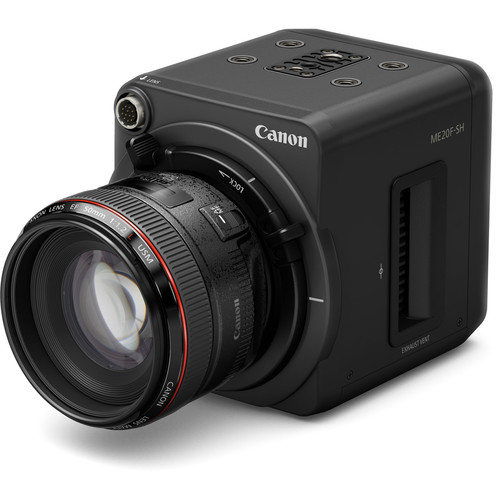
Canon’s ME20F-SH Multi-Purpose Camera Enables Viewers to ‘See in the Dark’ on National Geographic’s ‘Earth Live’

Canon ME20F-SHME20F-SH at a glance:

  • Up to 4 Million ISO & 12 Stops DR
  • Full Frame 35mm CMOS Sensor
  • Canon DIGIC DV 4
  • Full HD up to 60p
  • HD/3G-SDI & HDMI Connectors
  • Canon Locking Cinema EF Lens Mount

Canon’s mighty and underestimated ME20F-SH Multi-Purpose Camera, able to go up to ISO 4M and to deliver 12 stops of dynamic range, got some press. The ME20F-SH was used in National Geographics “Earth Live” project. The Canon ME20F-SH is not for anyone, it’s a specialised camera and it sells for $20,000 at B&H Photo and Adorama.

The trailer…

Canon press release:

Canon ME20F-SH Multi-Purpose Camera Allows Television Audiences to Enjoy a Live-Broadcast First: Wildlife in Full Color at Night

MELVILLE, N.Y., August 2, 2017 – Canon U.S.A., Inc., a leader in digital imaging solutions, is proud to congratulate the team behind the National Geographic’s live television special “Earth Live”. The two-hour broadcast featured a live-production first, by using Canon’s ME20F-SH Multi-Purpose Camera along with a variety of Canon lenses, including the CINE-SERVO 50-1000mm T5.0-8.9 EF to show television viewers live images of illusive nocturnal wildlife from around the world at night, in color, without using artificial lighting. Hosted by award-winning actress Jane Lynch and award-winning television personality Phil Keoghan, the unprecedented two-hour event gave viewers an unfiltered, real-time broadcast feed to see Earth’s wildlife in various natural habitats with the use of 51 cameras shooting simultaneously in 25 different locations across six continents. The show premiered on National Geographic, Nat Geo WILD and Nat Geo MUNDO on Sunday, July 9, and aired in 171 countries and 45 languages.

Working closely with National Geographic, executive producer Al Berman’s idea for “Earth Live” involved several locations that were in total darkness during the live production and those dark locations would either require lights that would disturb wildlife, or the use of infrared or thermal cameras, which didn’t suit Berman’s idea. It wasn’t until 2015 when Canon debuted the ME20F-SH Multi-Purpose Camera that Berman saw the opportunity to broadcast undisturbed nocturnal wildlife in color. The announcement of this revolutionary four million ISO, full-frame sensor camera that can shoot full-color video in extreme low-light conditions, immediately caught the attention of Berman, who approached Canon U.S.A. with his idea. The Company’s technical support team worked closely with Berman and his crew to provide and test equipment to help bring this concept to life.

“The Canon ME20F-SH camera made it possible to do the show, and we were awed by the footage this camera was able to capture in challenging low-light environments,” said Berman. “Through Canon’s ongoing, hands-on support, viewers were able to see Earth’s greatest wildlife and further deepen their understanding of the world.”

The incredible ISO capability of the ME20F-SH allowed for viewers to virtually see in the dark and watch—in full color—live wildlife lit only by the moon. Dubbed the “Canon Moon Cam” by cinematographers during the live production, filmmakers were awed by the footage they were able to capture and broadcast in color around the world.

“Using Canon’s ME20F-SH allowed viewers to see these marvelous creatures in their natural environment, opening a portal into this beautiful unknown world,” said Yuichi Ishizuka, president and COO, Canon U.S.A., Inc. “We feel honored that National Geographic and Mr. Berman called on Canon to be a part of such a pioneering and magnificent piece of work, allowing the world to see what has never been seen before. This kind of innovation is the bedrock of our company, and we look forward to more opportunities to show the power of imaging.”

“Earth Live was an ambitious television special that allowed us to go beyond what we thought was possible” said Tim Pastore, president, original programming & production, National Geographic. “The footage and images deeply resonated with our audience, and we couldn’t be happier that Canon was a part of the incredible moment for our network and in television history.”

The broadcast featured live feeds from nine Canon ME20F-SH cameras positioned in the parts of the world that were in nighttime during the live broadcast. Additional Canon equipment used by the National Geographic Channel for the television special included the CN-E30-300mm T2.95-3.7 L SP Cinema Zoom Lens and the CINE-SERVO 17-120mm T.2.95-3.9 PL.

“Earth Live” is produced by Bunim-Murray Productions, Berman Productions and Plimsoll Productions for National Geographic. Al Berman, Gil Goldschein, Andrew Jackson, Martha Holmes and James Smith are executive producers. For National Geographic, Michael J. Miller is the executive producer; Kevin Tao Mohs is vice president, production and development; and Tim Pastore is president of original programming and production.

For additional information on Earth Live and to view the full show, visit natgeotv.com/EarthLive.

For more information about Canon EOS cameras and lenses, please visit the Canon U.S.A. website at usa.canon.com.

Click here to open the rest of the article

Canon Unveils New Binoculars Featuring Enhanced Image Stabilization Technologies

Image Stabilization

Canon’s new 14×32 IS, 12×32 IS and 10×32 IS binocular models are scheduled to be available November 2017 for an estimated retail price of $1449, $1399 and $1349 respectively.

Canon press release:

New Binoculars are the Ideal Tools for Outdoor Enthusiasts, Travel, and Sports

MELVILLE, N.Y., August 2, 2017 – Canon U.S.A. Inc., a leader in digital imaging solutions, today announced three new additions to its portfolio of Canon Image Stabilized Binoculars with the 14×32 IS, 12×32 IS and 10×32 IS. While all current Canon binoculars are equipped with an image stabilization (IS) function, new to these binocular models is Lens Shift Image Stabilization Technology. The IS technology, found in Canon EF lenses, allows users to see an even sharper image by moving the IS lens to correct optical axis. This technology incorporates a vibration gyro mechanism that assists in canceling out the effects of user-shake or movement.

In addition, the new binoculars are the first Canon binoculars to feature Powered Image Stabilization, a feature frequently found in Canon digital cameras and camcorders. Even the slightest shake when using high- magnification binoculars could translate into a blurred or unstable image from the binocular. When a user utilizes the Powered IS user-shake and movement can be quickly corrected and image quality remains intact.

“Canon is very proud of its imaging heritage and ability to utilize technologies and solutions across a broad spectrum of products, including our line of Canon Image Stabilized Binoculars,” said Yuichi Ishizuka, president and COO, Canon U.S.A., Inc. “The technology implemented into these new models will enhance users’ experiences while offering the familiarity and quality they trust in Canon optics.”

Additional features include:

  • Microcomputer Control Technology
  • Improved Design and Comfortable Grip
  • Field Flattener Lens
  • Super Spectra Lens Coating
  • 6.6 ft. (2m) Minimum Focusing Distance

Pricing and Availability

Canon’s new 14×32 IS, 12×32 IS and 10×32 IS binocular models are scheduled to be available November 2017 for an estimated retail price of $1449.00, $1399.00 and $1349.00 respectively.* For more information, please visit: https://www.usa.canon.com/cusa/consumer/products/binoculars/image_stabilizer

Click here to open the rest of the article