Canon security cameras deliver real-time analysis of emotions, report
security cameras

Canon is investing in artificial intelligence systems. Here is another application.

Nikkei Asian Review reports:

TOKYO — A Canon unit is launching a new security camera system that performs double duty, providing surveillance while also enhancing customer service.

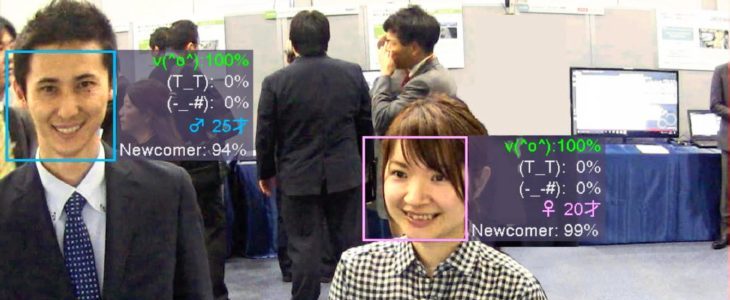
Canon Marketing Japan’s system analyzes facial expressions in real time — a feature envisioned as a marketing tool allowing retailers and entertainment venues to interpret customers’ reactions moment by moment.

The technology detects three emotions — joy, sadness and anger — as well as age and gender. Software analyzes footage sent to the cloud, automatically tracking and charting the level of a particular emotion as a percentage.

A theater, for instance, could monitor an audience to see when and how often they laughed. Canon MJ expects plenty of business from relatively small retailers, such as supermarkets, along with amusement parks and other clients that want detailed insight into customer satisfaction.

The technology is being launched under the company’s cloud-based image management service, VisualStage, with emotion analysis software developed by Tokyo-based security imaging company Aroba.

Read the article at Nikkei Asian Review.
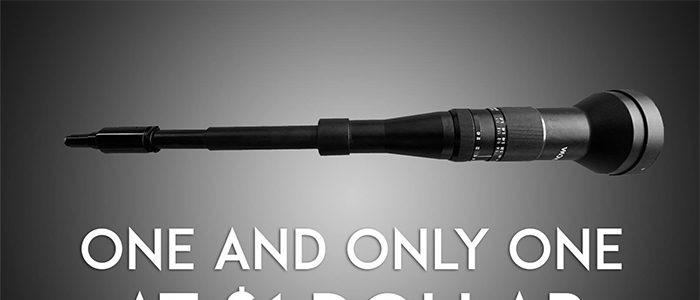
Venus Optics will launch a “Revolutionary” Laowa 24mm f/14 Macro lens, and you might grab one for $1

laowa 24mm f/14

Venus Optics released some teasers for what they call “the weirdest but most revolutionary macro tool ever”, that’s the Laowa 24mm F/14 Macro.

You may get the Laowa 24mm f/14 Macro for just $1 (one Dollar), but you have to act quick and check out the Venus Optics Page or their Facebook page to grab it. Sorry, but there is no more information about how the get it at $1.

BCN Ranking shows Canon leads market in Japan, Nikon does well, Sony doesn’t count

canon

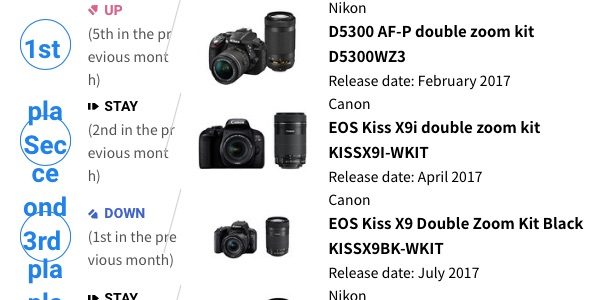
BCN Retail published market figures for interchangeable lens cameras in Japan for the period January to June 2018.

Canon clearly leads the market and ranks best for MILCs, Nikon is present (Nikon D5300 ranks first), Sony appears to have no importance.

Among the first 10 placed, Canon hits 7 times, Nikon 3 times. Sony’s best placement is rank 15.

Canon is also leader in the mirrorless market, with the EOS M50 being the most sold mirrorless camera in Japan.

[via Digicame Info]

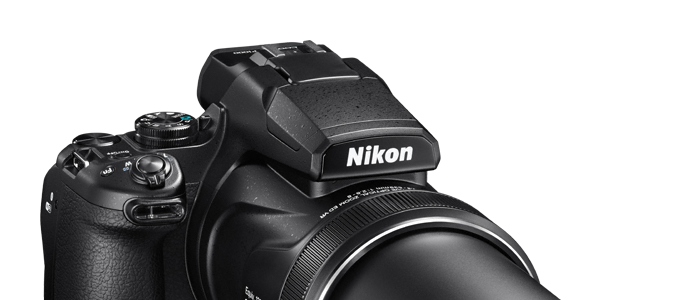
The Nikon Coolpix P1000 125x zoom is just C.R.A.Z.Y

Nikon coolpix p1000

Nikon Coolpix P1000 at a glance:

  • NIKKOR 24-3000mm Lens (35mm Equivalent)
  • Aperture Range: f/2.8-8
  • 16MP BSI CMOS Sensor
  • EXPEED Image Processor
  • ISO 100-6400
  • 2.36m-Dot OLED EVF
  • 3.2″ 921k-Dot Vari-Angle LCD Monitor
  • 4K UHD Video Recording
  • SnapBridge via Wi-Fi or Bluetooth
  • Auto, Aperture, Shutter, Manual Modes

A few days ago Nikon announced the Nikon Coolpix P1000, a compact camera with a 24-3000mm equivalent zoom, which translates to a 125x zoom.

125x zoom, you read right. If you want to learn what a 125x zoom, or a 24-3000mm (35mm-)equivalent lens means, then have a look at the videos below. Spoiler: it’s just C.R.A.Z.Y.

The Nikon Coolpix P1000 goes for $999, and can be pre-ordered at B&H, Adorama and Amazon.


Just for the fun to compare, this is what the Nikon P900 was able to do.

[via DIY Photography]

Did You Know Nikon Designs its own Sensors?

nikon

I didn’t.

Imaging Resource’s Dave Etchells had the rare chance to visit Nikon’s super-secret sensor design laboratory. But, wait, didn’t Sony manufacture the sensors in Nikon cameras?

So what is Nikon exactly doing? Say’s Etchells:

Companies designing chips of whatever sort generally rely on standard processes established by the “foundry” company that does the actual manufacturing. In these cases, the design process is “just” a matter of defining the layout of the devices on the chip. I say “just” though, because it’s far from a routine process to do this. The size and shape of transistors, photodiodes, resistors and capacitors determines their electrical characteristics, and there are loads of tradeoffs involved in balancing light-gathering efficiency, noise levels, readout speeds, on and on. A big trick is designing the pixels and readout circuitry so there’s as little “dead” (non-light-sensitive) area as possible, while maintaining readout speeds and minimizing power consumption.

Nikon designs its sensors and Sony manufactures them. The surprising thing here is how deep into details Nikon’s sensor design goes, let alone all the simulations and the testing. The reason Nikon is doing this, has to do

with being able to optimize the camera system as a whole, in ways that you can’t if you’re just using off-the shelf parts

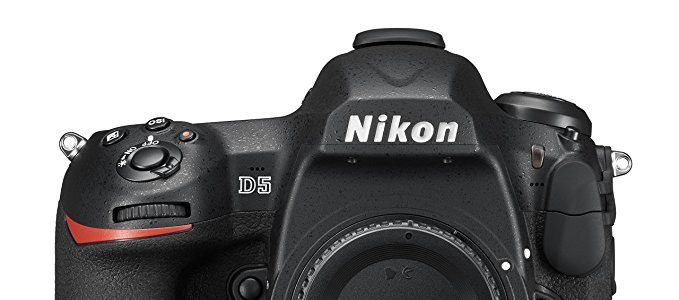
In other words: Nikon wants their sensors to be optimised for their lenses and to work at best with Nikon’s also in-house designed EXPEED image processing engine. The sensors featured in the Nikon D850 and Nikon D5 are an example of Nikon’s testing, simulation and overall sensor design.

To learn more about imaging sensors in general and about Nikon’s super-secret sensor design laboratory head over to Imaging Resource.