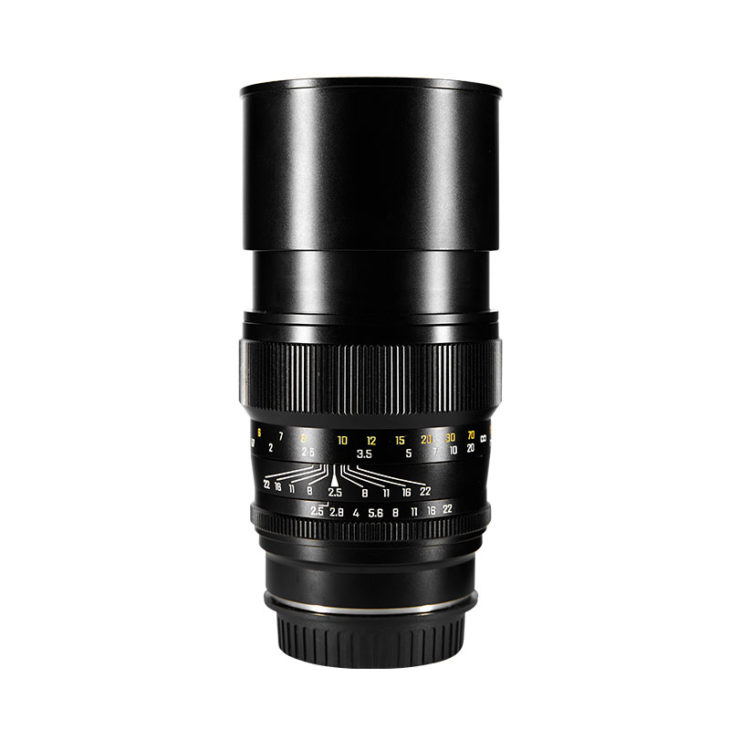
Mitakon Creator 135mm f/2.5 APO Portraits Lens For RF Mount Announced
Speedmaster 135mm

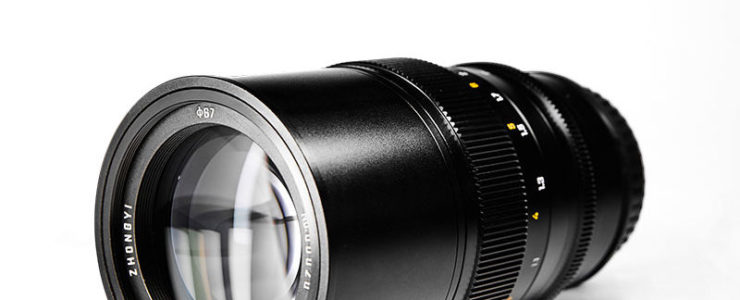
A new lens for your EOS R camera. The new Mitakon Creator 135mm f/2.5 lens is already available at their website. The US retail price is $299.

At a glance:

  • Aperture Range: f/2.5 to f/22
  • Two Extra-Low Dispersion Element
  • Manual Focus Design
  • Built-In Retractable Lens Hood
  • Internal Focusing
  • Minimal Focusing Breathing
  • Buttery Smooth Bokeh

Press release:

Shen Yang, 6th September, 2021 – Zhong Yi Optics, the leading wide-aperture lenses manufacturer in China, has rebuilt their old 135mm f/2.8 lens into 135mm f/2.5, available in Canon EF, Canon RF, Nikon F, Nikon Z and Sony FE mounts. The new 135mm lens benefits working in difficult lighting, also offering great control on depth of field. The lens is composed by high quality ultra-low dispersion elements that forms ultra-sharp images with minimal chromatic aberration. Well-built with metallic housing, the focus throw is comparatively long to give accurate focus control.

Mitakon Creator 135mm f/2.5 renders an exquisite bokeh by 9 blades of circular aperture. The background is softly blended like butter. Great control of depth of field can be achieved with focus technique, offering high level of creative potential with the lens. The perfect separation of subject from the background makes the lens ideal for portrait photography.

Zhong Yi has improved the optical design of Mitakon Creator 135mm f/2.5 lens based on experience of producing 135mm lenses. 2 Super ED (extra-low dispersion) glass and 2 ultra-high refraction Index glass elements are precisely deployed to provide optimal sharpness. Images taken by it are showing sharp details even across the corners, with minimal field curvature to ensure the highest possible resolution is retained along edges of the area in frame.

Super ED and ultra-high refraction Index glasses incorporated design of Creator 135 f/2.5 lens help achieved the APO quality. Chromatic aberration is well suppressed to the slightest. No more distracting colour fringing is found along areas with highlighting parts over the image. A perfectly coloured, extraordinarily sharp portrait image with beautiful bokeh is achievable under strong lighting with this lens.
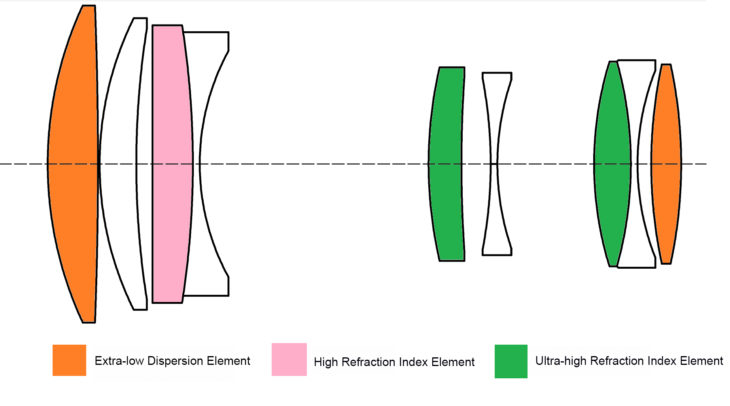
Speedmaster 135mm

Premium Built Quality with Retractable Hood

Clear scale marking on aperture ring and focus ring are embedded on the robust metal barrel. Long focus throw enables precise focusing on target objects. Lens hood is designed to be longer than it used to, helping to reduce lens flare and ghosting.

Internal Focusing and No Focus Breathing

The new 135mm has an internal focus design, on which no extension/retraction on the lens housing when adjusting the focus ring. Filters, matt boxes, or other camera accessories can be mounted on it solidly. Focus breathing is designed to be minimal that the transition of shifting area in focus will be silky smooth.

Speedmaster 135mm

Specification

Focal Length135mm
Aperturef/2.5-f/22
AutofocusNo
Lens Elements9 Elements in 7 Groups
Angle of View18.2°
Minimum Focus Distance1m (3.94’)
Maximum Reproduction Ratio0.1x
Filter Thread67mm
Size(diameter*height)79mm x 137mm (3.11” x 5.39”)
Weight845g (1.86lbs)
MountsCanon EF, Canon RF, Nikon F, Nikon Z, Sony FE
ColorBlack

It Seems Confirmed For Good: Canon EOS R3 Coming September 14, 2021

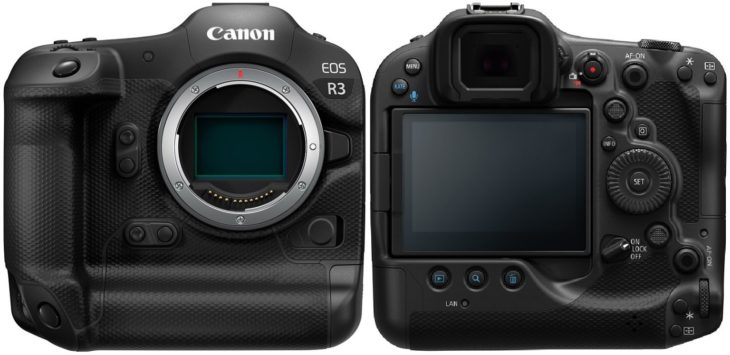
canon eos r3

We already knew it since it was leaked by a reliable source. Now it is confirmed for good: Canon will held an announcement on September 14, 2021. And it will regard the EOS R3.

The presentation scheduled for September 14, 2021, appeared as banner on the Internet (image above). While it is not stated that it is about the Canon EOS R3, we can be rather sure it will, given all the rumors so far.

The resolution of the upcoming Canon EOS R3 is no longer a mystery. It’s 24MP, and it got more than one confirmation. Oh, and have a look how impressing the 30fps of the R3 are. We expect the announcement in Fall 2021, likely in September. Here is what we know about the EOS R3 so far:

  • 24MP backside illuminated image sensor
  • Multi-Controller & Smart Controller
  • Vari-Angle Touch Screen
  • NEW accessory shoe
  • Wifi 5GHz
  • High speed 30fps electronic shutter with AF/AE tracking + RAW shooting at this speed
  • AF down to -7.0 EV
  • 8 Stops Coordinated Control IS with Optical IS and In-Body IS
  • 4K Canon Log3​
  • Oversampling 4K
  • Internal RAW video
  • Inclusion of cars and motorbikes in AF tracking technology
  • RAW internal movie recording
  • Speedlite shooting with electronic shutter
  • The same weather sealing as the EOS-1D series
  • LP-E19 Battery
  • Dual card slot SD & CFExpress

All our EOS R3 coverage is listed here, product images are here and here. There has been some discussion about who makes the imaging sensor of the EOS R3. You can get notified when the Canon EOS R3 will be available for preorder.

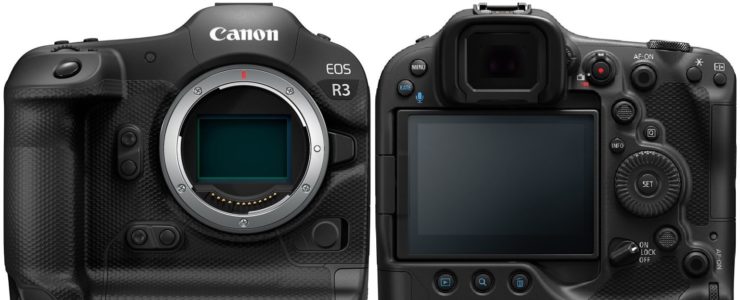
canon eos r3
The upcoming Canon EOS R3

[via asobinet.com]

Canon EOS R3 Unboxing and Hands On Video (while you wait for it)

canon eos r3 press release

The Canon EOS R3 will most likely get released to the general public on September 14, 2021. Here is already an unboxing and hands-on video.

Jared Polin does what is described in the title: unboxing a Canon EOS R3 and discussing it with his potent voice. Enjoy.

The resolution of the upcoming Canon EOS R3 is no longer a mystery. It’s 24MP, and it got more than one confirmation. Oh, and have a look how impressing the 30fps of the R3 are. We expect the announcement in Fall 2021, likely in September. Here is what we know about the EOS R3 so far:

  • 24MP backside illuminated image sensor
  • Multi-Controller & Smart Controller
  • Vari-Angle Touch Screen
  • NEW accessory shoe
  • Wifi 5GHz
  • High speed 30fps electronic shutter with AF/AE tracking + RAW shooting at this speed
  • AF down to -7.0 EV
  • 8 Stops Coordinated Control IS with Optical IS and In-Body IS
  • 4K Canon Log3​
  • Oversampling 4K
  • Internal RAW video
  • Inclusion of cars and motorbikes in AF tracking technology
  • RAW internal movie recording
  • Speedlite shooting with electronic shutter
  • The same weather sealing as the EOS-1D series
  • LP-E19 Battery
  • Dual card slot SD & CFExpress

All our EOS R3 coverage is listed here, product images are here and here. There has been some discussion about who makes the imaging sensor of the EOS R3. You can get notified when the Canon EOS R3 will be available for preorder.

How Does Canon’s 20 Years Old EOS-1D Image Quality Hold Up?

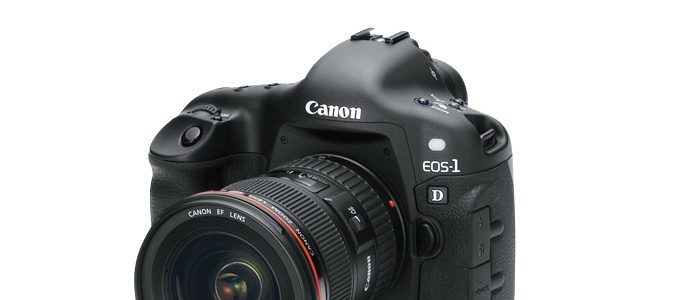
Canon EOS-1D

20 years ago Canon released the EOS-1D, the company’s first attempt in the professional digital camera market. How does the image quality compare nowadays?

At a glance:

  • Magnesium body, environmentally sealed, based on the Canon EOS-1V
  • 4.48 megapixel CCD sensor (primary colour filter)
  • Focal length multiplier: 1.3x
  • Maximum burst speed of 8 fps for up to 21 JPEG frames or 16 RAW frames
  • ISO 200 – 1600 in 1/3 stop steps, ISO 100 or 3200 available from a custom function ISO sensitivity bracketing
  • Evaluative, Partial, Center-weighted, Spot and Multi-spot metering
  • Shutter speed range: Bulb, 30 – 1/16,000 sec (1/500 sec flash X-sync)
  • Noise reduction can be enabled for exposures 1/15 sec or slower
  • 100 percent viewfinder coverage meeting professional needs with adjustable diopter and eyepiece shutter
  • 45-point Area AF for compositional freedom, and 21-zone metering
  • 10 white balance modes and WB bracketing functions, including setting Kelvin values
  • Voice narration recording with built-in microphone–maximum of 30 seconds
  • 21 custom functions and 25 personal functions, which can be stored into function groups

EduardoPavezGoye wanted to find out and discusses his findings about the Canon EOS-1D in the video below. I think the image quality is pretty good for a 20 years old digital camera with a 4.5MP sensor. Sure, you won’t print large formats, but still.

More about the Canon EOS-1D at Wikipedia. If you are curious, you’ll find the Canon EOS-1D press release after the break.

Click here to open the rest of the article

Did Canon Quietly Raise Prices For Their Gear Because Of The Pandemic?

canon rumors canon news eos r7 mark ii canon eos rv

It seems so, according to a recent report. Blame the pandemic, they say.

PetaPixel reports that Canon raised prices for some of their gear. The Canon EOS 5D Mark IV was selling at $2,499, now it’s $2,699. RF-mount lenses have also seen a $100 raise in price.

PetaPixel mentions a “source” who claims that the prices raised because of the coronavirus pandemic, i.e. because of “[…] its associated costs such as production delays and increased air freight expenses“. When asked for comment Canon refused to answer.

It’s true that there is more demand than available gear, and that many Canon lenses are on backorder. Still, it is hard to assess if the pandemic is the reason or nor.

Stay tuned.

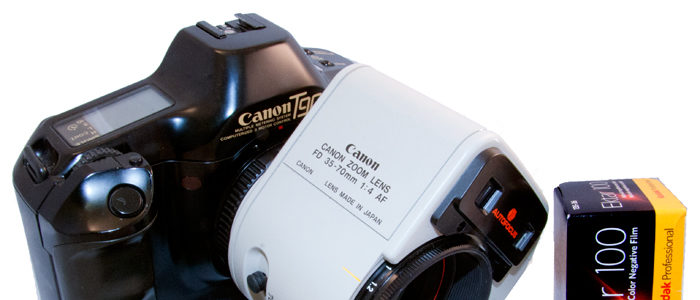
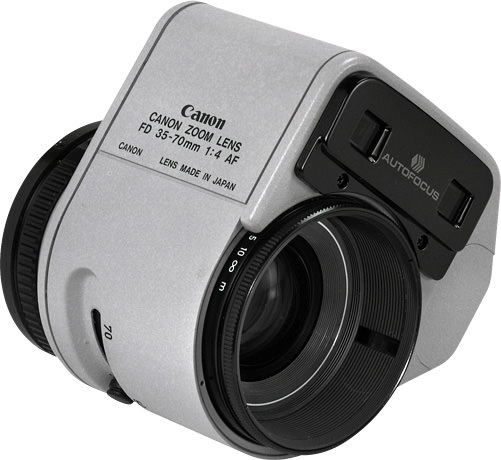
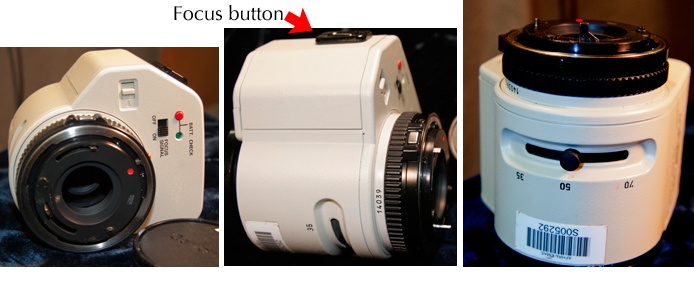
Canon Got Autofocus Right Already 40 Years Ago (with the FD 35-70mm ƒ/4 AF)

FD 35-70mm

Nowadays for most photographers it is not imaginable to have a lens without autofocus. Hasn’t always been that way. See how Canon managed to make an awesome AF lens not less than 40 years ago: the FD 35-70mm ƒ/4 AF.

The Canon FD 35-70mm ƒ/4 AF was released in May 1981. Here are the specifications:

Lens Construction (group)8
Lens Construction (element)8
No. of Diaphragm Blades6
Minimum Aperture22
Closest Focusing Distance (m)0.5
Maximum Magnification (x)0.15
Filter Diameter (mm)52
Maximum Diameter x Length (mm)85 x 99.5
Weight (g)604
FD 35-70mm

That’s how Canon described the lens in 1981:

This is the world’s first autofocus zoom lens with an autofocus function using Canon’s own SST (Solid State Triangulation) method. The incorporation of this function into the best-selling FD35-70mm f/4 (June 1979) interchangeable lens brought about automation of focusing for SLR cameras.

The SST method is a system in which information on the photographed object that enters the sensor through two fixed mirrors is converted into an electric signal and distance is measured by a microcomputer, with focusing performed by moving a distance ring with a motor. The latest fixed imaging device CCD (charge-coupled device) technology is adopted to provide high resolution and a broad dynamic range able to detect low to high luminance, making it less susceptible to the contrast and pattern size of the photographed object and enabling highly precise autofocusing. Also, as the SST method does not have a movable section in the distance measuring mechanism, no vibration or electric noise is caused, which provides high reliability fitting of a high-end SLR camera.

Kai W has a look at and introduces the Canon FD 35-70mm ƒ/4 AF lens in the video below.

More information about the Canon FD 35-70mm ƒ/4 AF may be found here.

Image courtesy photo.net

[via DPReview]