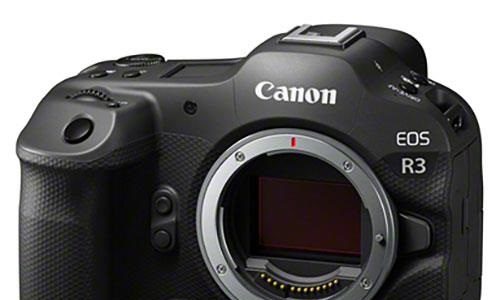
Canon started a microsite for the upcoming Canon EOS R3, along with an update for the camera specs. Canon already announced the EOS R3 but it was a development announcement.
New bit about the Canon EOS R3 coming directly from Canon. We now know more about the specifications of the EOS R3. Here is what we learned today from Canon:
Autofocus working down to -7.0 EV
Image stabilisation in lens + In Body Image Stabilisation deliver up to 8 EV
Head and eye detection have been improved
Autofocus detects eye, head and body
Autofous recognizes and tracks cars and motorcycles
Enhanced tracking for portrait and sports photography
CFExpress and SD cards
4K Log 3 and 4K oversampling
RAW video internal recording
Video autofocus follows people, eyes, animals, and motorsports
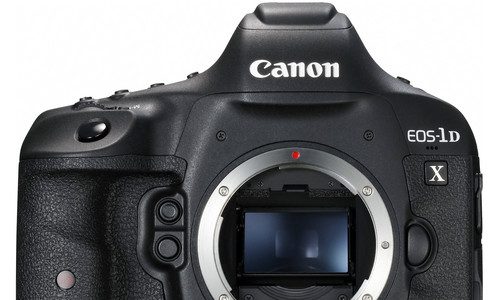
Magnesium alloy body with weather sealing comparable to EOS-1D X series
Canon published a technical article about the world’s first 1-megapixel SPAD image sensor. A groundbreaking image sensor and distance measurement sensor that will be the eyes of the future.
The advanced technology discussed in the Canon article is for applications involving augmented and virtual reality, ultra-high frames-per-second shooting speeds, robot automation, computer vision, and driverless vehicles. Here are some excerpts from the article:
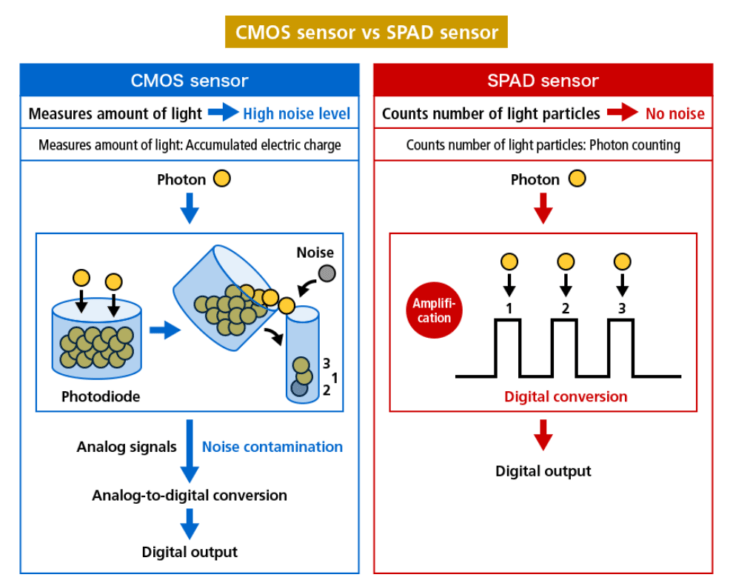
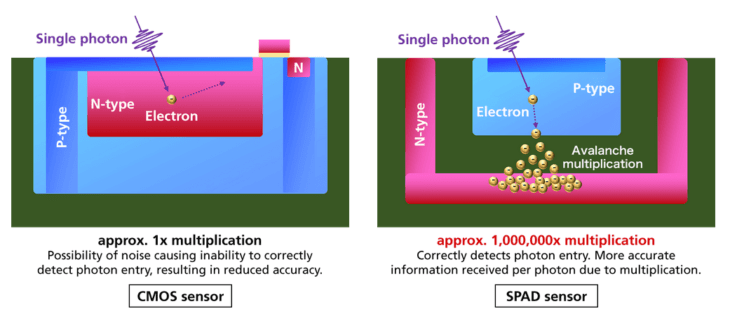
Both SPAD and CMOS sensors make use of the fact that light is made up of particles. However, with CMOS sensors, each pixel measures the amount of light that reaches the pixel within a given time, whereas SPAD sensors measure each individual light particle (i.e., photon) that reaches the pixel. Each photon that enters the pixel immediately gets converted into an electric charge, and the electrons that result are eventually multiplied like an avalanche until they form a large signal charge that can be extracted.
[…] it was considered difficult to create a high-pixel-count SPAD sensor. On each pixel, the sensing site (surface area available for detecting incoming light as signals) was already small. Making the pixels smaller so that more pixels could be incorporated in the image sensor would cause the sensing sites to become even smaller, in turn resulting in very little light entering the sensor, which would also be a big problem.[…] Canon incorporated a proprietary structural design that used technologies cultivated through production of commercial-use CMOS sensors. This design successfully kept the aperture rate at 100% regardless of the pixel size, making it possible to capture all light that entered without any leakage, even if the number of pixels was increased. The result was the achievement of an unprecedented 1,000,000-pixel SPAD sensor.
Canon sees many applications for their new and revolutionary image sensor:
In the fields of AR (augmented reality) and VR (virtual reality), which involve superimposing virtual images on top of real ones, being able to use the SPAD sensor to speedily obtain accurate three-dimensional spatial information enables more precise alignment of positions in real time. There are also high expectations for the application of SPAD sensors in solving one of the greatest challenges in designing driverless vehicles: the measurement of distances between a vehicle and the people and objects in its vicinity.
The article is very interesting and if you are into these technologies we recommend you give the article a try. The whole thing was spotted by Image Sensors World. More tech stuff is listed here.
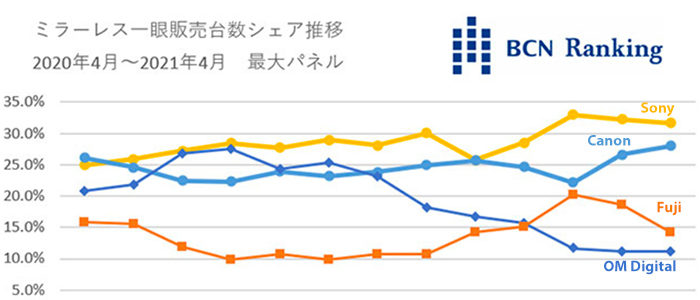
They are getting a bit boring, those BCN figures. Can they still be considered an indicator of…something?
Latest BCN statistics for the Japanese market show that Sony is still the alpha dog (no pun intended) in the mirrorless pack. The figures show that Canon is either “getting close” to Sony, or “still behind” Sony. Guess it depends by your very personal philosophy.
Canon released a small firmware update for the Canon EOS -1D X Mark II and Canon EOS 5D Mark IV.
Firmware Version 1.1.8 (EOS-1D X Mark II and firmware version 1.3.2 (EOS 5D Mark IV) incorporate the following fix:
Improves the camera’s connection compatibility to a PC while using a USB 3.0 or higher compatible cable.
Firmware Version 1.1.8 is for cameras with firmware up to Version 1.1.7. If the camera’s firmware is already Version 1.1.8, it is not necessary to update the firmware.
Some news from the industry. Panasonic makes cameras that are worth to have a look at. Here are the Lumix GH5M2, and the upcoming Lumix GH6.
Lumix GH5M2 at a glance:
20.3MP Live MOS Sensor with AR Coating
DCI/UHD 4K 60p Video, 10-Bit Internal
Pre-Installed V-Log L, No Crop 4K Video
6.5-Stop 5-Axis Dual I.S. 2
0.76x 3.68m-Dot OLED Viewfinder
3.0″ 1.84m-Dot Free-Angle Touchscreen
225-Area DFD AF, Advanced Subject Detect
Livestream Video via Wi-Fi
6K and 4K PHOTO Modes
Panasonic announced the Lumix GH5M2, and the development of the Lumix GH6. The Lumix GH5M2 can be preordered starting at $1,697 at B&H Photo | Adorama.
Panasonic Develops the LUMIX GH6 Micro Four Thirds Mirrorless Camera The Flagship of the LUMIX G Series for Innovative Video Expression Expected by End of Year
May 25, 2021
Newark, NJ – Panasonic is proud to announce the development of the LUMIX GH6 that combines the new Micro Four Thirds sensor and a new image processor. This flagship camera of the LUMIX G Series will be commercialized for its release to world markets by the end of 2021.
After establishing the LUMIX brand in 2001, Panasonic introduced the world’s first digital single lens mirrorless camera in 2008*1. Since then, it has produced a host of innovative cameras and interchangeable lenses by taking advantage of the outstanding mobility and high video performance which are unique to the mirrorless camera system. These cameras and lenses were originally used for photography but have also been used for film creation. After 20 years of innovative contributions to the imaging culture, LUMIX cameras and lenses have earned a solid reputation with a wide range of users, including professional photographers and film creators.
As the next milestone in the evolution of the legacy of LUMIX cameras, Panasonic is proud to announce that the development of the LUMIX GH6 is underway. The flagship of the LUMIX G Series and the latest model of the GH line, it is renowned for its stunning mobility and innovative video performance. Combining the high-speed sensor and Venus Engine image processor, the new GH6 realizes next-generation video expression. Providing 4:2:2 10-bit DCI 4K/60p recording capability*2, the LUMIX GH6 achieves unlimited video recording when the camera is used under the certified operating temperature*3. It is reliable enough to record continuous footage for a desired duration. It also provides a 10-bit 4K 120p High Frame Rate (HFR) and Variable Frame Rate (VFR) for high resolution slow/quick motion video. Moreover, the GH6 records 10-bit 5.7K 60p video by taking full advantage of the newly developed Micro Four Thirds sensor. Accommodating a variety of recording modes and shooting assist functions, the GH6 enables photo/video hybrid-use for various purposes including films, music videos, documentaries and short clips for social media to meet the creators’ needs. The GH6 will retail for approximately $2500.
This website or its third-party tools use cookies, which are necessary to its functioning and required to achieve the purposes illustrated in the cookie policy. If you want to know more or withdraw your consent to all or some of the cookies, please refer to the cookie policy. By closing this banner you agree to the use of cookies.