Canon EOS 6D In-Depth Review Published (DPreview)

[shoplink 7139]EOS 6D In-Depth Review[/shoplink]
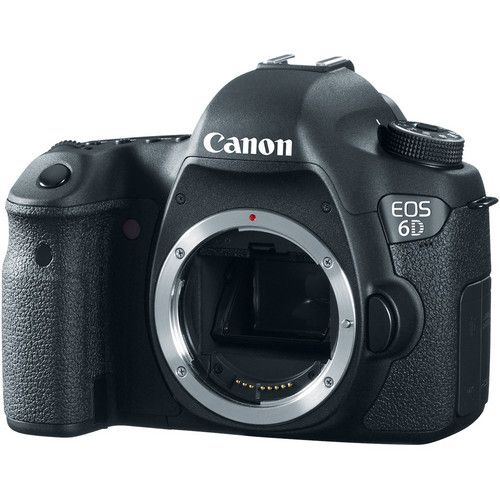
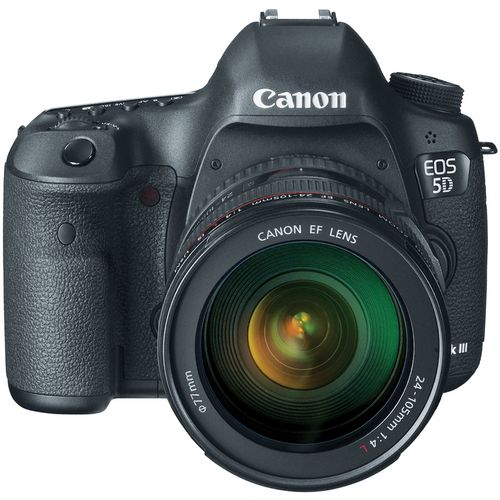
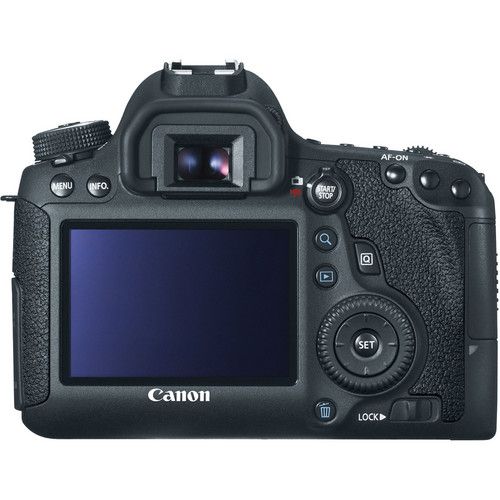
It is online. DPreview’s in-depth review of Canon’s entry level full-frame DSLR, the [shoplink 7139]Canon EOS 6D (price & specs)[/shoplink]. We know that the 6D is becoming highly popular and selling very good. Customers have embraced the possibility to get full-frame without having to pay the price for a [shoplink 2431]Canon EOS 5D Mark III (price & specs)[/shoplink]. Obviously, the 6D comes with compromises, first of all a much less advanced AF system than its bigger sibling and the competitors. But then, the 6D delivers outstanding low light/high ISO performance, noise is even less than the 5D Mark III, and more (as dpreview states “features that even […] higher-end models cannot match”). To check DPreviews high ISO comparison click here, for the image quality tests here. Moreover, it is the only full-frame DSLR to feature built-in WiFi and GPS, and these are very important features for a lot of photographers. Btw, the EOS 6D is actually down to $1899, see below for the links.

DPreview writes in the conclusion:

Let’s be clear, the EOS 6D has a lot more going for it than just its comparatively low price tag. Based largely on the well thought-out ergonomics and operational handling of the popular EOS 60D, this newest full frame EOS provides solid build quality and light weight in a snappy, responsive camera powered by the same DIGIC 5+ image processor found in the 5D Mark III and the dual-chipped EOS 1D X.

The 6D also sports features that even those higher-end models cannot match. You get class-leading low-light autofocusing capability with a very impressive -3 EV sensitivity (from the central AF point). The 6D also becomes the first full frame DSLR from any manufacturer with built-in Wi-Fi connectivity, a feature that is put to excellent use with a free Canon app – for Android and iOS devices – that provides live view-enabled remote camera control, exposure control and AF lock. Throw in an internal GPS unit and you’ve got a camera that provides features that are of real, practical use to a wide range of photographers.

The 6D inherits a number of features from the EOS 5D Mark III as well. Yet it is with several of these features that compromises will have to be made for those looking for a budget-conscious option to that higher-priced camera. The 6D offers identical video specifications, including an ‘All-I’ compression option […]

Measured noise levels from the 6D are similar to the older 5D Mark III at low to medium ISO settings but consistently lower above ISO 3200, which does make a difference in real-world use when it comes to high ISO shooting in marginal light […]

They list the pros of the EOS 6D as follows:

  • Excellent detail in raw file output across ISO range
  • Class-leading low light focus sensitivity (from central AF point)
  • Very effective JPEG noise reduction at highest ISO sensitivities
  • Impressively quiet ‘silent’ shutter drive mode
  • Quick Control menu provides easy access to shooting settings
  • Wi-Fi-enabled remote camera control via smartphone or tablet
  • Effective and easy to use multi-exposure HDR mode
  • Built-in GPS with text log capability
  • Exposure simulation in live view can be toggled on and off
  • Full manual control in video mode
  • Choice of IPB and All-I video compression modes
  • In-camera Raw conversion
  • Good battery life (except when GPS and Wi-Fi are turned on)
  • High quality bundled raw converter (Digital Photo Professional)
[shoplink 7139]EOS 6D In-Depth Review[/shoplink]

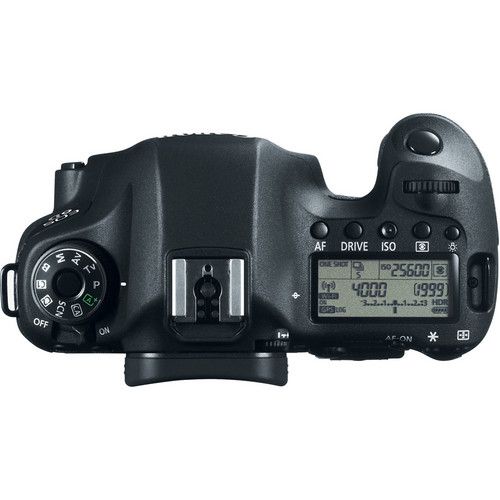
Don’t miss DPreview’s comprehensive analysis of the EOS 6D.

Some more information bits. Just recently, Mosaic Engineering released an anti-aliasing filter for the EOS 6D. The filter eliminates one of the shortcomings of the EOS 6D, that’s moiré and aliasing artifacts, and is a welcome tweak especially for videographers.

The price of the EOS 6D has gone down to $1899  (Amazon | B&H | Adorama) for the body only, and to $2499 (Amazon | B&H | Adorama) for the 6D with the EF 24-105 f/4L IS lens. There is also a deal by Top Rated Plus seller photovideo4less (99.6% positive ratings) on eBay: Brand new Canon EOS 6D with EF 28-135mm f/3.5-5.6 IS lens and more accessories sold for [shoplink 10532 ebay]$2099 (click here)[/shoplink].

Canon EOS 5D Mark III price check: [shopcountry 2431] Canon EOS 6D price check: [shopcountry 7139] [shoplink 7139]EOS 6D In-Depth Review[/shoplink]
Canon EF 35mm f/2 IS USM Video Review (DigitalRev)

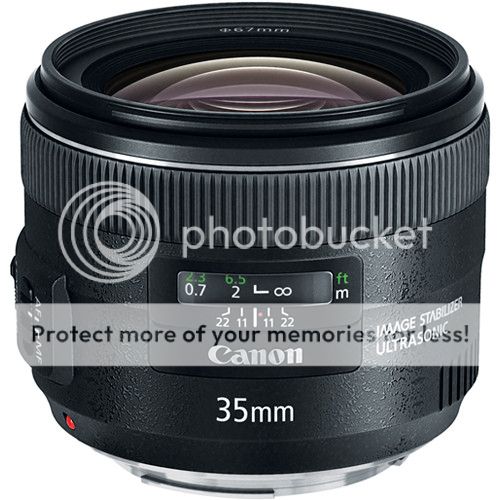
DigitalRev’s Kai has a look on Canon’s new EF 35mm f/2 IS lens. This lens has rather high price tag, $849, and  people is questioning if it is worth the money. Have a look at the video above to learn what Kai thinks about.

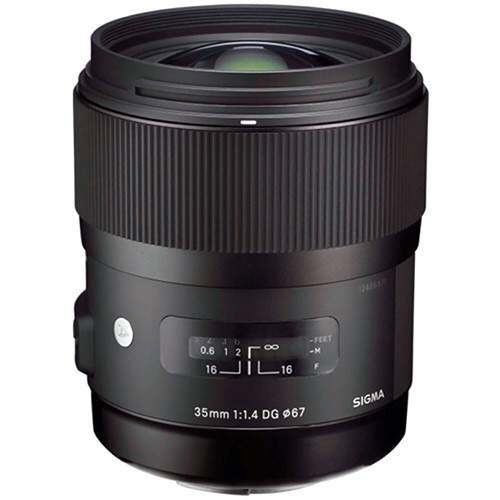
There are alternatives to the [shoplink 8253]Canon’s EF 35mm f/2 IS USM (price & specs)[/shoplink] to choose from if you are looking for a 35mm lens, as the [shoplink 8892]Sigma 35mm f/1.4 DG HSM[/shoplink] which comes with f/1.4 and is getting very good reviews, or the manual aperture and focusing [shoplink 10145]Rokinon 35mm f/1.4 (price & specs)[/shoplink]. The Rokinon is a very interesting lens, with a price tag of $479. For featured reviews of the Canon and Sigma lenses see herehere, and here. For the Rokinon see here.

Sigma 35mm f/1.4 DG price check: [shopcountry 8892] Canon EF 35mm f/2 IS USM price check: [shopcountry 8253] Rokinon 35mm f/1.4 price check: [shopcountry 10145]

[via dslcamera]

Canon EF 35mm f/2 IS USM

[shoplink 8253][/shoplink]

Canon EF 35mm f/2 IS USM
Sigma 35mm f/1.4 DG
[shoplink 8892][/shoplink]

Canon EOS 6D vs EOS 5D Mark III Comparison (ephotozine)

[shoplink 2431]EOS 6D vs EOS 5D Mark III Comparison[/shoplink] Interesting Canon EOS 6D vs EOS 5D Mark III comparison. Both full frame DSLRs, the 6D is noticeably cheaper than the 5D Mark III and obviously misses some of the features of its bigger sibling. Never the less, the EOS 6D is a full frame DSLR that is becoming highly popular.
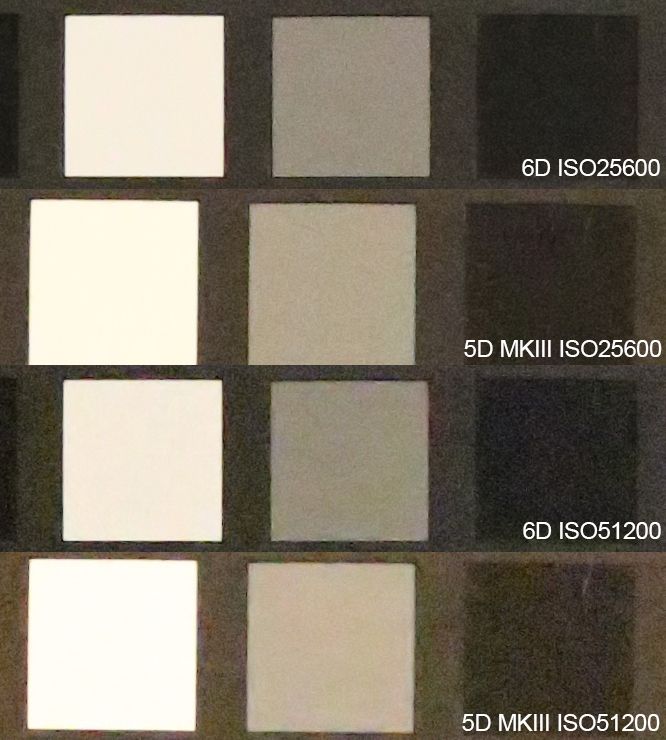
Over at ephotozine they wanted to know how the [shoplink 7139]Canon EOS 6D (price & specs)[/shoplink] holds up against the [shoplink 2431]Canon EOS 5D Mark III (price & specs)[/shoplink]. While the latter tops on speed (not just fps, check the table with the speed comparison), the former is known to have a very good high ISO performance. The EOS 6D definitely beats the 5D Mark III at ISO 25600 and ISO51200. Check the image below:

EOS 6D vs EOS 5D Mark III Comparison
Image courtesy: ephotozine.com

ephotozine’s comparison goes through all the functionality and feature set of both cameras, there are lots of lab test shots to compare. Many information for those who are uncertain which one of Canon’s full frame DSLRs is the right one to buy. In the verdict they conclude:

The Canon EOS 6D may deliver lower resolution images (20mp vs 22mp), however this gives the 6D the benefit of lower noise at higher ISOs. The Canon EOS 6D also benefits from a smaller body, as well as built in GPS and Wi-Fi, although these last two features do have a negative effect on battery life when used. The Canon EOS 6D has noticeably less focus points, just 11 compared to 61 on the 6D, which could be another concern for some.

The optical viewfinder in the Canon EOS 6D isn’t a full size (97% vs 100%) viewfinder like the 5D Mark III, however it does have the benefit of allowing it to be swapped out for an alternative viewfinder if required. The 6D also features a slightly smaller 3inch screen, instead of the 3.2inch screen on the 5D Mark III, as well as slower continuous shooting. Another potentially off-putting negative of the 6D is the lack of a headphone socket on the 6D which could be of concern for video recording (although this could be resolved by an external audio recorder).

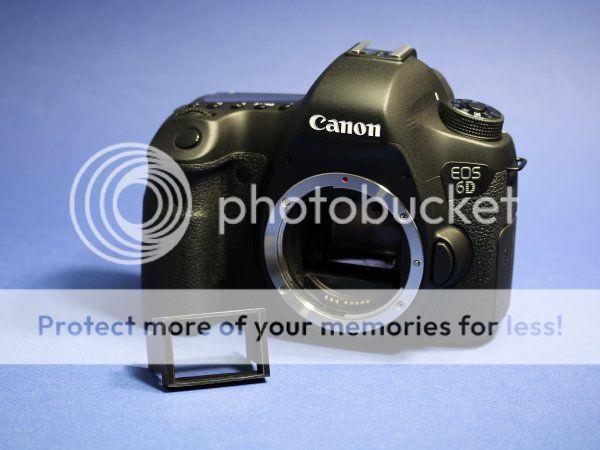
Just recently, Mosaic Engineering released an anti-aliasing filter for the EOS 6D. The filter eliminates one of the shortcomings ofthe EOS 6D, and is useful especially for videographers.

The price of the EOS 6D has gone down to $1899  (Amazon | B&H | Adorama) for the body only, and to $2499 (Amazon | B&H | Adorama) for the 6D with the EF 24-105 f/4L IS lens.

Canon EOS 5D Mark III price check: [shopcountry 2431] Canon EOS 6D price check: [shopcountry 7139] [shoplink 7139]EOS 6D vs EOS 5D Mark III Comparison[/shoplink] [via ephotozine]

Pimp My Canon EOS 6D: Mosaic Engineering Anti-Aliasing Filter

Mosaic Engineering Anti-Aliasing Filter
The VAF-6D filter

The [shoplink 7139]Canon EOS 6D (price & specs)[/shoplink] is selling very well, and it is on the way to become a highly popular camera. Canon’s entry level full-frame DSLR has a lot of good points: noise performance (even better than the [shoplink 2431]Canon EOS 5D Mark III (price & specs)[/shoplink]), the price (currently available at $1899  – Amazon | B&H | Adorama – for the body only, and $2499 – Amazon | B&H | Adorama – for the 6D with the EF 24-105 f/4L IS lens), outstanding image quality, and then. But everything comes for a price, and Canon made some compromises on the EOS 6D, foremost not featuring the advanced AF system of the EOS 5D Mark III, and holding back the excellent moiré and aliasing filters sported on the 5D Mark III.

Indeed, the EOS 6D, while having a very high image quality (on par with the EOS 5D Mark III), suffers from much more moiré and aliasing artifacts than its bigger sibling. That’s where the Mosaic Engineering anti-aliasing comes into play. They develop such filters for Canon and Nikon DSLRs since long. Now they made one for the Canon 6D, the VAF-6D. They made a video (spotted by DSLR News Shooter) to show the capabilities of the filter.

These are the first video clips demonstrating our new VAF-6D – which corrects the HD video aliasing and moire artifacts of the Canon 6D!

By the way, as with all our VAF-series filters, there’s no significant light loss with this filter: The variation in exposure among the different segments in the video, is due to the highly variable lighting – very wild partly-cloudy skies that day! Beautiful skies, though – so we didn’t want to overexpose them… To give the most valid comparison, we purposely kept the aperture and other imaging and processing parameters exactly the same among all the shots, so the video brightness varies with the cloud cover.

The filter doesn’t appear to lower resolution. There is, however, a small drawback when using the filter. Dan Chung from DSLR News Shooter reports:

There is also a shift to the back-focus setting of the lens, which means that the distance scale will be rendered inaccurate. Early versions of the filter for the 5D mkII also had very soft and dark corners with wide angle lenses. Mosaic claim to have improved both back-focus shifts and wide angle performance with a new second version for the 5D mkII. The 6D version should share these improvements but I haven’t tested it.

Mosaic Engineering’s filter isn’t really cheap. It costs $365 and can be ordered in their online store. We have to wait for more test to see if the EOS 6D with the filter can hold up to more expensive full-frame gear, like the EOS 5D Mark III. In any case, Mosaic Engineering’s filter is welcome accessory that will be of great interest for all those photographers and videographers who own an EOS 6D and want to get rid of moiré and aliasing artifacts. Even if the filter isn’t really cheap, for people on a budget it makes a good alternative to a $3150 5D Mark III, when bundled with the EOS 6D .

Canon EOS 6D price check: [shopcountry 7139] Canon EOS 5D Mark III price check: [shopcountry 2431] [DSLR News Shooter via nofilmschool]

Canon PowerShot S110 Review (best bet for enthusiast photographers)

Canon PowerShot S110 core specs:

  • 12.1MP Resolution 1/1.7″ CMOS Sensor
  • 24-120mm UA Lens (35mm Equivalent)
  • 5x Optical Zoom, f/2.0-5.9 Aperture
  • 3.0″ PureColor Touch Screen LCD Display
  • HS SYSTEM Technology, High Speed AF
  • DIGIC 5 Image Processor, Intelligent IS
  • Full HD 1080p Video with Stereo Sound
  • High-Speed Burst HQ, Manual Control Ring
  • ISO 12800, Multi-Aspect Ratio RAW
  • Smart AUTO, Movie Digest & Wi-Fi

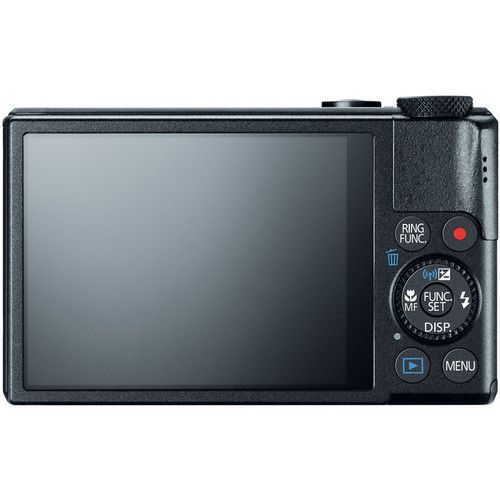
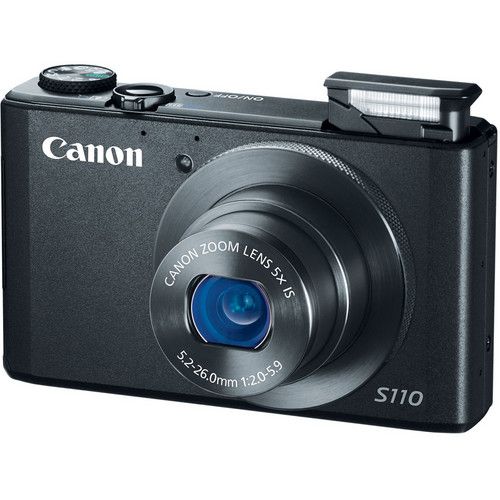
Cameralab’s review of the [shoplink 8374]PowerShot S110 (price & specs)[/shoplink], successor of the highly popular [shoplink 10301]PowerShot S100 (price & specs)[/shoplink]. Foremost: while the S100 had built-in GPS, the S110 comes with built-in WiFi connectivity, and no more GPS. I can’t say if Canon did this for commercial reasons or because of engineering issues. It is not a big issue since you can always geo-tag your pics by connecting to your smart-phone. The other big difference to its successor is the introduction of a touch-screen 3″ display, a welcome addition for all those who are used to smart-phones and similar devices. If the touch interface is as smart and well workingas on the [shoplink 6091]Canon EOS M (price & specs)[/shoplink] then Canon did it right. In the same way as on the EOS M, the touch-screen can be used for focusing and subsequent shutter release.

In the conclusion they write:

[…] the PowerShot S110 remains the smallest camera with advanced features like a bright lens, RAW files and manual controls, and the only one with a built-in motorised lens cap. The competition from Panasonic and Olympus meanwhile continues to travel in a different direction, offering brighter lenses, hotshoes and accessory ports, but in a less compact form factor with lens caps. Sony’s RX100 comes closest physically and packs in a bigger sensor too, but again lacks the motorised lens cover and some of the S110’s other features. While you may think having a manual lens cap isn’t a big deal, it does make a camera larger and delays the time to first shot; certanly when shooting with the S110 alongside any of the aforementioned rivals, it’s been noticeably quicker to action and that can mean the difference between capturing or missing a brief opportunity, and that’s worth taking into consideration.

[…] the PowerShot S110 remains the best bet for enthusiast photographers seeking the rare combination of advanced control in a truly compact connected camera. Had Canon made a better job of the connectivity features it would have been Highly Recommended, as it is the PowerShot S110 comes Recommended; if you value genuine take-anywhere portability over the bright lens, hot shoe and accessory optons of larger models it’s hard to beat.

Comprehensive review with sample pictures, noise comparison, and image quality tests.

Canon PowerShot S110 price check: [shopcountry 8374] Canon PowerShot S100 price check: [shopcountry 10301] [via cameralabs] [shoplink 8374]Canon PowerShot S110 Review[/shoplink] [shoplink 8374]Canon PowerShot S110 Review[/shoplink]

Canon EF 24-70mm f/4L IS USM Review (slrgear)

[shoplink 8251]EF 24-70mm f/4L IS USM Review[/shoplink]

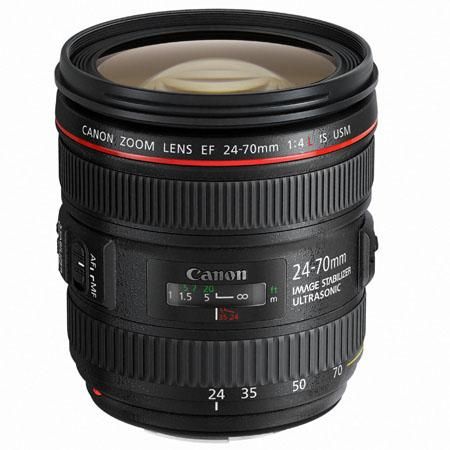
The [shoplink 8251]Canon EF 24-70mm f/4L IS USM (price & specs)[/shoplink] is about to become a highly popular lens, at least this is the impression if you look at the many EF 24-70mm f/4L IS USM reviews that are published. The latest comes from slrgear. Some excerpts from their review:

  • The 24-70mm […] offers sharp results, but is also the subject of some controversy for its performance at 50mm. We tested three copies of this lens; the first and second had poor performance at the 50mm setting.
  • Stopping down the lens does improve its sharpness: corner softness is never completely removed to provide tack-sharp results from corner to corner on full-frame, but it is dramatically reduced. Peak performance is shown at ƒ/8 across all focal lengths
  • Results for chromatic aberration with the 24-70mm ƒ/4L were good: overall, CA is kept under control through the majority of the frame
  • On APS-C sensors corner shading is not an issue, but on full-frame: the lens creates images with corners that are significantly darker than the center. In the worst case, 24mm at ƒ/4, the extreme corners are a full stop darker than the center
  • […] testing for distortion shows a complicated pattern with a point of near-zero distortion.
  • Going from infinity to close-focus takes well less than one second, and point-to-point focusing is lightning quick
  • the lens offers an impressive 0.7x magnification [for macro]. There is also some slight fine-tuning adjustment available for zoom and focus in the macro setting

As you have seen, they are nor very satisfied with the performance at 50mm (sharpness-wise). Moreover, they found inconsistencies among copies of the lens (not good Canon!). It is hence wise to test the lens at 50mm before buying it. The issues at 50mm reflect also in the conclusion:

Canon made a smart decision to offer a lower-priced alternative to its 24-70mm ƒ/2.8, in order to give Canon shooters of the more casual or economical nature a way to stay true to the brand name. Unfortunately the lens’ performance at 50mm stands out as unacceptable, especially when you consider [it] still costs $1,500. […] So what is a Canon shooter to do? If you’re happy with the performance you see from our sample pictures, and you need or want the image stabilization and macro capabilities of the 24-70mm ƒ/4, then you should be happy with your purchase – assuming you get as good a copy as we did […]

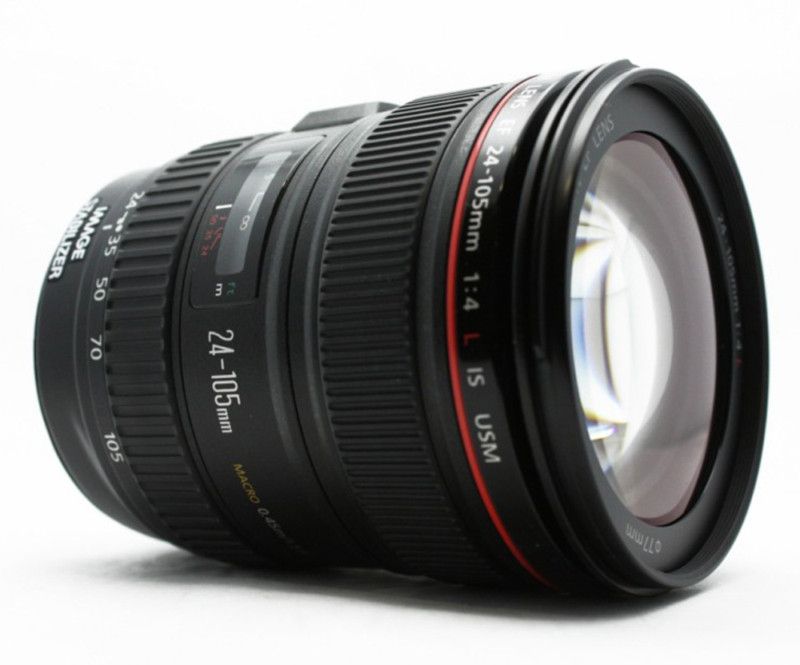
There is always the alternative to go for the good old [shoplink 230]Canon EF 24-105mm f/4L IS USM (price & specs)[/shoplink], which offers a wider range and the same specs as the 24-70mm. And the 24-105mm is known not only to be a lens of proven quality, but also to have consistent optical performance.

Canon EF 24-70mm f/4L IS USM price check: [shopcountry 8251] Canon EF 24-105mm f/4L IS USM price check: [shopcountry 230]

[via slrgear]

[shoplink 230]EF 24-70mm f/4L IS USM Review[/shoplink]