Canon EOS R6 Mark II On Its Way, Coming With Stacked Sensor?

canon rumors canon news eos r7 mark ii canon eos rv

A new rumor surfaced from the interweb of more or less silent murmurings. The Canon EOS R6 Mark II might come soon.

Twitter user how2fly posted…:

The prototype of the EOS R6 Mark II is already in testing, and it shares something with EOS R3: a STACKED sensor.

That’s not that unreal. It wouldn’t be the first time Canon introduces a new technology on a flag ship camera, and later on brings it to more affordable gear. The Canon EOS R6 is more than two years old, and might be in Canon’s update radar. If it gets the stacked sensor of the EOS R3 it would be a smart move by Canon.

how2fly was right in the past, so he or she might be right again. Let me know what you think.

Stay tuned.

Canon EOS R3 Review: Bird and Wildlife Photography (a stunning package, leaves nothing to be desired)

canon eos r3 review canon cameras eos r1

Here is a Canon EOS R3 review with an eye on bird and wildlife photography. It seems the EOS R3 delivers.

Canon EOS R3 at a glance:

  • 24MP Full-Frame Stacked BSI CMOS Sensor
  • Dual Pixel CMOS AF II, Eye Control AF
  • 6K60 Raw and 4K120 10-Bit Internal Video
  • 30 fps E. Shutter, 12 fps Mech. Shutter
  • 5.76m-Dot EVF with 120 fps Refresh Rate
  • 3.2″ 4.2m-Dot Vari-Angle Touchscreen LCD
  • Sensor-Shift 5-Axis Image Stabilization
  • Multi-Function Shoe, Built-In Vert. Grip
  • CFexpress & SD UHS-II Memory Card Slots
  • Wired LAN and 5 GHz Wi-Fi Support

Our friends at Mirrorless Comparison posted their full Canon EOS R3 review. A review that explicitly looks at bird and wildlife photography. They are rather fond of the Canon EOS R3. From their conclusion:

[…] a stunning package that leaves nothing to be desired, and no detail is overlooked.

The image quality is fantastic, probably the best Canon sensor I’ve ever tested. Some of you might have preferred more resolution, but the advantage here is the high ISO performance, with very usable images at 25,600 ISO. Dynamic range is also excellent.

The R3 offers a state of the art autofocus system and it has a unique characteristic that resonates with innovation – Eye Control – which works surprisingly well. The software is also very impressive, and the capability to detect and follow animals is the best I’ve seen. Only the occasional lack of consistency stops this camera from being the very best in the field.

Read the full review at Mirrorless Comparison…

The review comes with a lot of sample pictures at various ISO settings, tests, discusses ergonomics, and everything you might want to know. For the lazy ones among us, there is also a video-review (below).

You can download the Canon EOS R3 user manual from Canon. Or you might read it online. A technical brochure about the EOS R3 is available. You can watch the EOS R3 live-stream again here. More Canon EOS R3 review stuff is listed here. We put together some interesting videos about the EOS R3, listed here. Be sure to check Gordon Laing’s in-depth review of the EOS R3, part 1 and part 2. Oh, and don’t forget to listen how the R3’s 30fps sound.

Order in the USA ($5,999):
B&H Photo | Adorama

All Canon EOS R3 world-wide order links: [shoplist 67350]

Was This Image Shot With The Upcoming Nikon Z 8?

nikon z 6 mark iii full frame mirrorless camera nikon rumors

It appears as if the upcoming Nikon Z 8 mirrorless camera is already used.

In a post on Weibo by Nikon China you can find a 67MP image. Nikon does not have a camera with this resolution. So, it’s suspected the image was shot with the upcoming Nikon Z 8.

The image that has a 67MP resolution is the one below (You can download the original file from Weibo):

Nikon Z 8 or something else?

Canon Patent: Variable Apodization Using Electrochromic Elements (Defocus Smoothing technology)

devocus smoothing

This Canon patent application might point to the next generation of Canon’s Defocus Smoothing technology.

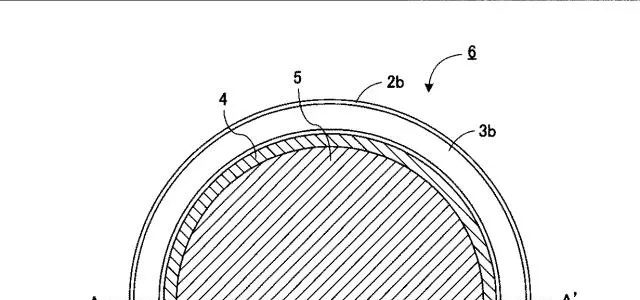
Canon patent application 2022124678 (Japan) discusses technology and optical formulas to obtain Defocus Smoothing by the mean of electrochromic elements (EC). Defocus Smoothing is Canon’s technology to improve bokeh (see short video below for an explanation).

From the patent literature:

BACKGROUND ART

An electrochromic (hereinafter sometimes referred to as “EC”) element is an element having a pair of electrodes and an EC layer disposed between the electrodes. It is an optical element that adjusts the hue and amount of light in the visible light band by applying a voltage between them to oxidize or reduce the compounds in the EC layer.

EC elements have already been applied to products such as variable transmittance windows for aircraft and anti-glare mirrors for automobiles. Attempts have been made to apply it to The apodization filter is an optical element that smoothes the outline of a blurred image, and has a transmittance distribution in which the transmittance decreases with increasing distance from the optical axis.

In the conventional EC device described above, a desirable transmittance distribution is achieved by defining the resistance range of the electrodes, but the setting of the constituent requirements was not sufficient. That is, the transmittance distribution of the solution-type EC element depends on the resistance ratio between the electrode resistance and the solution resistance per unit width. , depending on the resistivity of the electrochromic layer (solution). Therefore, it was necessary to define these in order to achieve a desirable transmittance distribution.

An object of the present invention is to provide an EC element capable of realizing a suitable transmittance distribution in a solution-type EC element in which power is supplied from the outer periphery of the dimming area, and furthermore, a suitable transmittance by following the aperture diameter of the mechanical aperture of the lens. It is an object of the present invention to provide an EC device capable of forming an index distribution. Another object of the present invention is to provide a lens unit and an image pickup apparatus having excellent optical characteristics using such an EC element.

To me it appears this might be the next generation of the Defocus Smoothing technology.

More patents are listed here.

Today Only: Viltrox EF-R2 Canon EF to RF Mount Adapter – $69 (reg. $99)

RF Mount Adapter

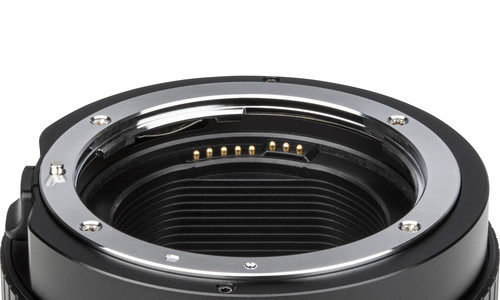
Only for today (8/26/2022) B&H Photo has a 30% discount on the Viltrox EF-R2 Canon EF Lens to Canon RF Camera Mount Adapter.

At a glance:

  • Canon EF/EF-S Lens to RF-Mount Camera
  • Customizable Control Ring
  • Maintains AF and Image Stabilization
  • USB Port for Firmware Updates
  • Gold-Plated Contacts Transfer Exif Data

Get the Viltrox EF-R2 Canon EF Lens to Canon RF Camera Mount Adapter on sale at $69. Compare at $99.

More selected deals:

Click here to open the rest of the article

Canon Patent: Converter Lens For EF-S 24mm F2.8 STM (increases focal length)

Canon Patent

I am not 100% sure I got this Canon patent application right. It seems to be about a magnifying optical system that increases the focal length.

The converter discussed in the patent literature appears to refer to the EF-S 24mm F2.8 STM lens (the master lens). From the patent literature:

BACKGROUND ART

A rear converter lens (hereinafter referred to as a converter lens) capable of enlarging the focal length of the entire system (increasing the focal length) by being placed between an interchangeable lens and an imaging device. It has been known.

In general, a converter lens has a negative refractive power, and the negative refractive power tends to increase as the magnification of the focal length increases. It is also known that if the curvature of the negative lens in the converter lens is increased in order to increase the negative refractive power, various aberrations such as coma due to the off-axis light flux are likely to occur.

In view of such problems, an object of the present invention is to provide a converter lens capable of obtaining high optical characteristics in the entire system when arranged on the image side of the master lens.

Master lens

  • Focal length: 24.50
  • F-value: 2.88
  • Half angle of view: 29.14
  • Image height: 13.66
  • Overall length: 64.83
  • Back focus: 35.68

Example 1

  • Focal Length: 39.54
  • F-value: 4.65
  • Half angle of view: 28.68
  • Image height: 21.64
  • Overall length: 89.59
  • Back focus: 13.96

Example 2

  • Focal length: 49.27
  • F-value: 5.79
  • Half angle of view: 23.71
  • Image height: 21.64
  • Overall length: 97.18
  • Back focus: 11.00

More Canon patent applications are listed here.