The Full Frame Mirrorless Camera Party Of 2018

Full Frame Mirrorless

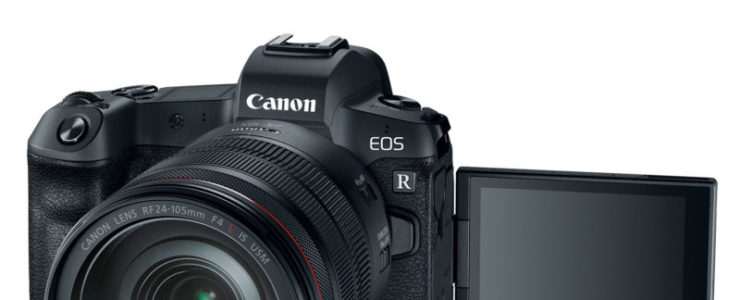
2018 was an important year for the mirrorless camera industry. Canon launched the EOS R, Nikon released their Z line-up, and Panasonic announced their upcoming Lumix S1 and S1R cameras.

Reason enough for the folks at DPReview to make a short video animation about the state of the full frame mirrorless nation. Enjoy.

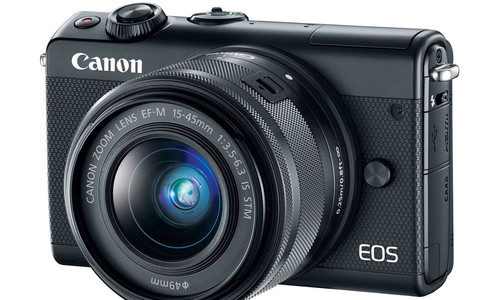
Deal: Canon EOS M100 with 15-45mm IS STM Lens and Accessories Kit – $399 (limited time)

canon eos m100

Canon EOS M100 kit at a glance:

  • 24.2MP APS-C CMOS Sensor
  • DIGIC 7 Image Processor
  • 3.0″ 1.04m-Dot Tilting Touchscreen LCD
  • Full HD 1080p Video Recording at 60 fps
  • Built-In Wi-Fi with NFC, Bluetooth
  • Dual Pixel CMOS AF
  • Up to 6.1 fps Shooting and ISO 25600
  • Creative Assist and Self Portrait Mode
  • EF-M 15-45mm f/3.5-6.3 IS STM Lens
  • Memory Card
  • Camera Pouch

For limited time B&H Photo has the Canon EOS M100 mirrorless camera bundled with the EF-M 15-45mm f/3.5-6.3 IS STM lens, a 32GB memory card and a camera pouch, on sale at $399.

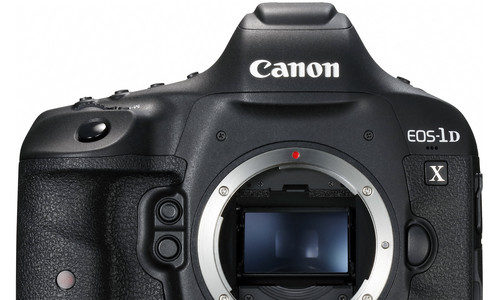
Canon Might Make A Mirrorless Version Of The EOS-1D X, Exec Suggests

EOS-1D X Mark ii mirrorless

Amateur Photographer editor Nigel Atherton had a talk with three top Canon executives to discuss the EOS R. In the excerpts below it’s Mr Shingo Hayakawa, Deputy Group Executive, ICB Optical Business Group, Image Communications Business Operations, to answer.

The interview is all about the new Canon EOS R mirrorless system.

AP: When you decided to make a full frame mirrorless camera what were the main priorities for the system?

SH: We started out thinking about the lenses we wanted to make and what the ideal lenses would be. That gave us the mount specifications and flange distance we needed. Only then did we start to consider how Canon could improve the main body. We decided that we wanted to make a completely new body, and to reconsider the ergonomics and operation so that it would be different from previous models. Our task is to give our customers more choice and then let them choose. […]

Do you think that in five years time, Canon will still be making new DSLR’s?

SH: Of course the situation is always changing and in the future, DSLRs will most likely experience a decline in popularity compared to mirrorless cameras, , but the optical viewfinder still has some advantages and we will continue to offer a choice for as long as our customers want it.

The next question is particularly interesting. In the answer Mr.  Shingo Hayakawa seems to suggest there will be a mirrorless versions of the EOS-1D X within 5 years.

AP: If there was a mirrorless version of the EOS- 1D X, do you think people would still buy the EOS- 1D X?

SH: We would guess that a mirrorless camera like that would be popular, and have already analysed which technology will be required in a camera in five years time.

Read the interview here.

What do you think, does this mean we have to wait 5 years to see a mirrorless version if the EOS-1D X?


Canon EOS R Field Tested At An Indian Wedding

canon eos r firmware update

Cinema5D’s Johnnie Behiri made a somewhat different review of the Canon EOS R. He took it to an Indian Wedding and made a mini documentary. More field tested than this might be impossible.

Here is what he liked in the EOS R:

  • Good lowlight quality. Up to ISO 6400 with no issues. Above it, noticeable noise but still usable.
  • Focus peaking
  • Swivelled LCD screen
  • Shutter dust protector – Will automatically be engaged when the camera switches off
  • Touch and Drag AF (LCD), makes it easy to change focus between given points
  • Dual Pixel autofocus works well.
  • Dual Pixel Focus Guide for an easy manual focusing
  • High Data rate (Up to 480Mbps, All Intra recording)
  • Excellent battery life
  • No signs of overheating
  • Manual audio adjustment and monitoring
  • 4K,10Bit, 4:2:2 over HDMI to an external recording device
  • Canon Log included (2 variations)
  • World camera (24, 25, 30p in 4K)

And what he didn’t like so much:

  • Full Frame camera which unfortunately records 4K video in 1.7x cropped mode
  • Severe rolling shutter effect
  • No 4K DCI recording
  • No internal optical stabilisation system
  • Take in account that when using the strongest available digital stabilisation option, picture quality will suffer and will become softer
  • No Zebra
  • No “Joystick” for smooth and easy focus placement
  • Focus magnifying won’t work while recoding
  • 8Bit internal recording
  • High Frame Rate in 720p quality only (120fps)
  • No autofocus when shooting in High Frame Rate
  • 60p is restricted to Full HD only
  • The new programable slide touch pad needs to be activated first before operating. Then (in case of assigning it to sound levels) changes can be made by tapping only and not sliding
  • If you have small hands, holding the camera becomes uncomfortable after a while

Johnnie Behiri’s review comes with test charts and some sample photos.

And here is the mini documentary/review:

Order the Canon EOS R in the USA: B&H Photo | Adorama | Canon USA | Amazon

Order the Canon RF mount lenses in the USA: B&H Photo | Adorama | Canon USA | Amazon

Canon EOS R world-wide order links:

[shoplist 52287]

Canon RF mount lenses world-wide order links:

[shoplist 52325]

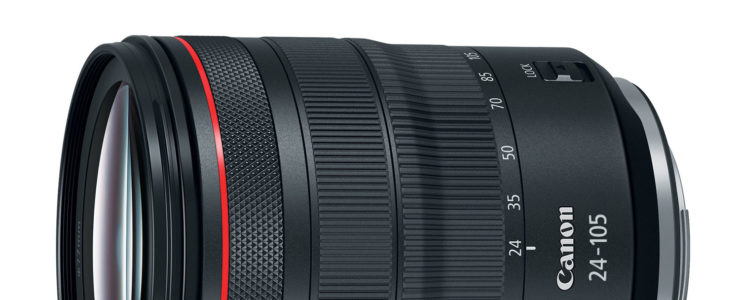
Canon RF 24-105mm f/4L vs EF 24-105mm f/4L II Lenses Comparison Review

Canon RF 24-105mm f/4L IS Review Canon EOS R

Rather interesting comparison. Canon made quite an impression with the RF 28-70 mm F/2L and especially the RF 50mm F/1.2L lenses for their new EOS R system. The RF 24-105mm f/4 on the other hand is the EOS R kit lens, and it’s likely the lens most users will start with.

The folks at Mirrorless Comparison compare the new world to the old. Jokes aside, the Canon RF 24-105mm f/4L (for EOS R systems) compared to the EF 24-105mm f/4L II (for “classic” Canon DSLRs).

From the conclusion:

The RF 24-105mm, the first of two zooms designed for the new Canon mirrorless mount, seems to have an advantage over the EF version: not only is it slightly sharper at most focal lengths and apertures (centre and corners) but it also has a more pleasant bokeh, a quieter AF motor and less focus breathing. The differences aren’t as significant as we had anticipated however, and let’s not forget that many other aspects are almost identical, such as the stabilisation and autofocus performance and perhaps most importantly, the price.

For these reasons, we feel that if, as a former or current Canon user, you already own the EF version of the 24-105mm, it makes sense to purchase the EF-EOS R adapter (which costs around $99 at the time of writing) and continue using it on the EOS R, especially if you plan to keep your Canon DSLR. Read the review…

Canon RF 24-105mm f/4: [shoplist 53593]

Canon EOS R: [shoplist 52287]

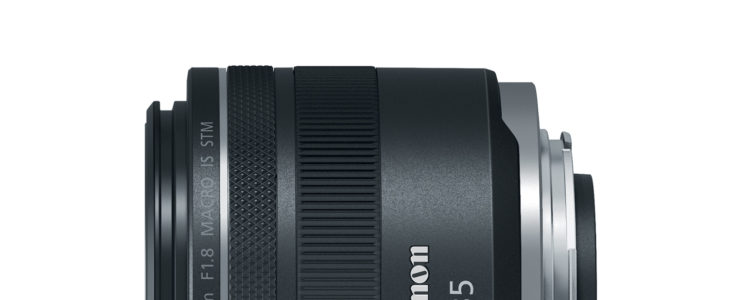
Canon RF 35mm f/1.8 IS Macro STM Review (Photograpy Blog)

Canon RF 35mm f1.8 IS STM

Photography Blog completed their full review of the Canon RF 35mm f/1.8 IS Macro STM lens for the EOS R system. This is the less expensive RF mount lens so far available ([shoplink 53576]£519/€519/$499)[/shoplink].

From the conclusion:

There’s lots to like in terms of image quality, and little to complain about. This lens is sharp almost from the get-go, excellent in the centre and at the edges when shooting wide open at f/1.8 and outstanding between f/2.8 and f/11. It’s capable of producing some nice bokeh effects for an f/1.8 lens, helped by the ability to focus as close as 17cms away from your subject. There is some mild barrel distortion and vignetting at f/1.8, but both of these can be corrected in post-processing. Chromatic aberrations are very well controlled and it even produces some nice sun-star effects at f/16-f/22.

The build quality is very good, certainly on a par with the RF 24-105mm kit zoom, with the built-in weather-proofing offering peace of mind in more inclement conditions. Canon also provide a good lens hood and padded case in the box. Read the review…

Canon RF 35mm f/1.8 IS Macro STM:

[shoplist 53576]