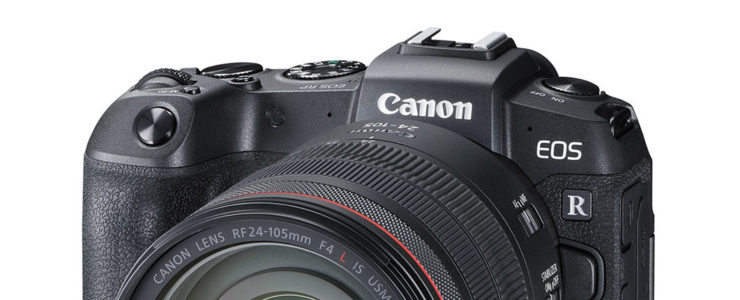
Canon EOS R Firmware ver. 1.2.0 Available To Download

canon eos r firmware update

The firmware update (ver. 1.2.0) for the Canon EOS R is available to download at Canon Canada.

Canon EOS R firmware Version 1.2.0 incorporates the following fixes and enhancements: 

Eye-detection AF 
1. Supports Servo AF when shooting still images. 
2. Now available when shooting movies regardless of “Movie Servo AF” setting. 
Small AF Frame Size 
Supports Servo AF when shooting still images. 
3. Now available when shooting movies regardless of “Movie Servo AF” setting. 

4. Under certain conditions the electronic level displayed in the electronic viewfinder did not display properly. 
5. Under certain conditions information displayed in the electronic viewfinder was not properly rotated. 
6. Under certain conditions updating the firmware for the wireless file transmitter WFT-E7 was not possible. 

This firmware update is for cameras equipped with firmware up to Version 1.1.0. If the camera’s firmware is already Version 1.2.0, this update is unnecessary. When updating the firmware of your camera, please first review the instructions thoroughly before you download the firmware. 
The firmware update takes approximately 6 minutes. 

Caution: 
The user guide has been revised to reflect the functional improvements to the product. Please download the latest version of the user guide together with the new firmware. The latest version of the user guide can be downloaded from Canon’s Web site. 

Canon Knows Phones Are Cutting Camera Profits, Other Segments Perform Well

canon rumors color calibration

Canon is set to cut profit outlook as smartphone photography is sacking camera market profits. But Canon isn’t just investing in consumer imaging products.

Nikkei Asian Review reports not only that Canon’s mirrorless offerings are currently one of the company’s more successful products, they also remind us that Canon isn’t just a consumer camera company.

Nikkei (emphasis mine):

Canon is expected to downgrade its earnings guidance for 2019, Nikkei has learned, with operating profit likely to fall short of the current forecast by about 50 billion yen ($447 million) as digital cameras lose ground to increasingly sophisticated smartphone cameras.

The Japanese company’s operating profit is on track to drop 20% to slightly above 270 billion yen, compared with the projected 325 billion yen. Sales for this year likely will undershoot the standing projection of 3.9 trillion yen as well.

Global shipments of digital cameras contracted by more than 20% last year, according to the Camera & Imaging Products Association, a Tokyo industry group. Canon’s digital camera sales are shrinking in the key market of China.

Read Nikkei’s report.

But Canon is alive and kicking (emphasis mine):

The company’s four new growth businesses have performed well, including the medical device unit acquired from Toshiba. Sales of security cameras in particular are projected to grow by more than 10%. New businesses are anticipated to produce 25% of the group’s full-year sales, up from 23% in 2018.

Yeah, Canon security cameras which according to a report are hidden in vacuum cleaners by the DEA.

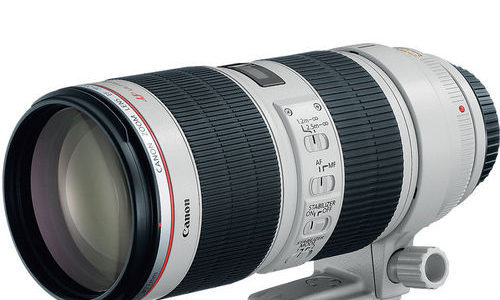
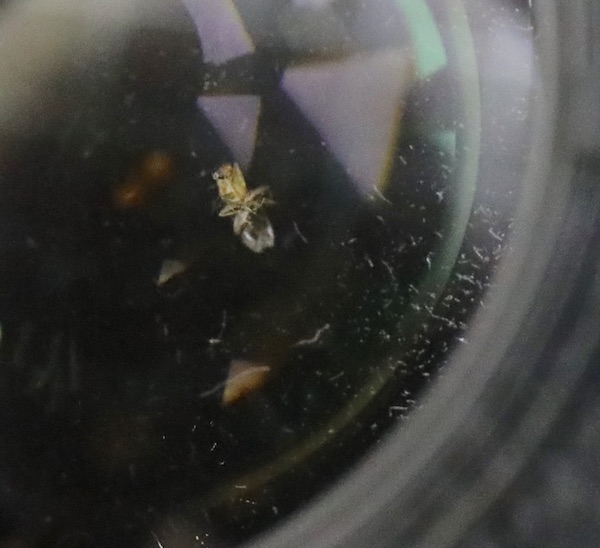
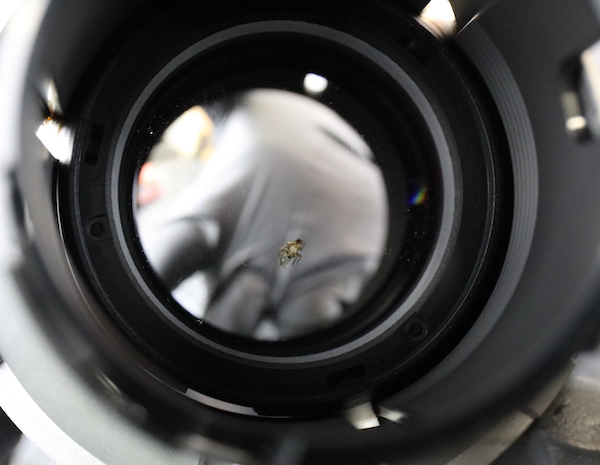
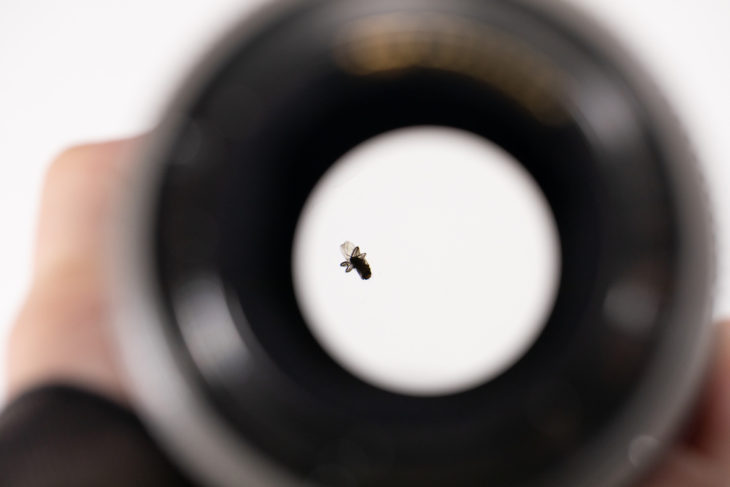
How Does A Fly Crawl Into A $2100 Weather-sealed Canon Lens?

Canon EF 70-200 f/ 2.8 L IS II

This time Lens Rentals shares a somewhat different teardown of photographic gear.

They got back a Canon 70-200mm f/2.8 IS II lens from rental, and found a fly inside the lens. A lens that’s supposed to be weather-sealed. While it is still unclear how the fly managed to crawl into the lens, Roger Cicala shows and proofs that a fly inside a lens (or dust for that matter) has little to no effect on image quality. He also shows how difficult it is to remove the fly from the lens.

Images © lensrentals.com, used with permission.

Head over to Lens Rentals to get the story, and see all steps of the teardown.

Canon EOS RP Ranks Before Sony a7III in Map Camera’s March Ranking

canon eos rp best mirrorless

The Canon EOS RP, the company’s first full frame mirrorless camera, already ranks pretty good in Japan, according to Map Camera (large camera retailer in Japan).

The Canon EOS RP ranks ahead the Sony a7 III. First ranked is the Ricoh III GR. This is a good result given the short time the EOS RP is available on the market.

Map Camera’s ranking:

  1. Ricoh III GR 
  2. Canon EOS RP
  3. Sony a7 III
  4. Sony a6400 
  5. Fujifilm X-T30 
  6. Olympus TG-5 
  7. Nikon Z 6 
  8. Canon EOS R 
  9. Canon IXY 200 
  10. Panasonic LUMIX DC-G9 

It seems Canon has another, more inexpensive full frame mirrorless camera on their agenda.

Canon To Announce EOS R Camera That’s More Entry-Level Than EOS RP?

canon eos rp best mirrorless

Canon execs are giving a lot of interviews as for late. Here is one more.

Michael Burnhill, European Technical Support Manager at Canon Europe, talked about the Canon EOS R system with EOS Magazine. The interview touches the usual topics already discussed in previous interviews. For instance IBIS (In Body Image Stabilisation).

Many of your competitors have introduced in-body image stabilisation (IBIS). Does Canon intend to introduce this technology?

MB: In-camera stabilisation – moving the sensor – is good for wide-angle and standard lenses, but as the focal length increases IBIS becomes less effective. There’s a very sharp drop-off. If you look at our competitors, all those who use IBIS still have an optical stabiliser in their longer lenses.

[…]

There is a high demand for IBIS, but we want to make sure we get it right. It’s on our drawing board, but when, or if, we implement it is still to be decided.

Basically, Canon is saying they will feature IBIS when it will be ready and satisfying their quality standard. Which is what we are used to see from Canon.

Fear not, Canon will continue to develop DSLRs.

Will Canon be introducing more DSLR cameras?

MB: Yes. Canon still sees demand for all sorts of cameras – including DSLR and mirrorless – so we will continue to produce across multiple product lines. We’ve only just phased out the EOS-1 film camera because there were still people buying it in certain markets, and we will see the same with the DSLR cameras.

There are certain technologies where we don’t think mirrorless is quite ready – the electronic viewfinder for instance – compared to the SLR system where there is zero lag through the viewfinder.

And finally, the question we featured in the title of this article. Apparently an EOS R model with a price below the EOS RP might be in Canon’s agenda.

Do you see a full-frame camera coming in at a price below the RP?

MB: Yes.

What?? So, did I get this right? Canon will launch a full frame mirrorless camera with a price below the Canon EOS RP ($1,299). They for sure have the technology.

What about the a pro model in the EOS R series?

And a pro version before the 2020 Olympics in Tokyo?

MB: Well, that’s the million dollar question…

There is a lot to come from Canon, in 2019 and especially in 2020. We expect Canon to announce a high resolution EOS R model before end of 2019. Stay tuned with us.

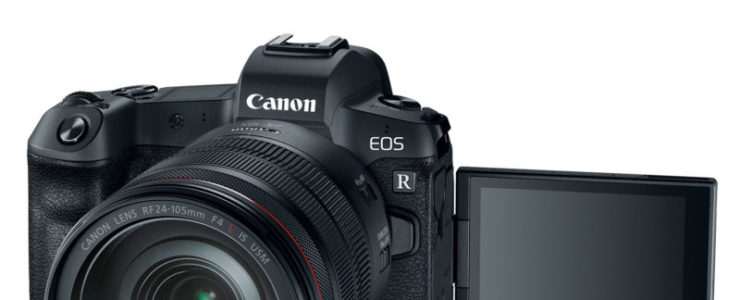
Canon EOS R mirrorless system: [shoplist 52287] [via EOS Magazine]

Instagrammer With 5.3M Followers Decided To Switch From Canon To Sony, Here Is Why

canon to sony

Renowned Photographer Paul Nicklen switched from Canon to Sony, and he explains the reasons in a newsletter.

I’ve switched to Sony mirrorless cameras. Here’s why.

I know these words might frustrate some of you, because for photographers, investing in gear is a huge financial commitment and we all want to get it right the first time. Once we go down a path of bodies and lenses, it’s difficult to switch.

I’ve made the decision to switch from my DSLR system to a Sony mirrorless system because I’ve realized mirrorless is the future of our industry—and Sony is leading the charge.

In the same vein as the evolution of life, there is also the evolution of camera equipment; it’s always changing. Early on in my career, most people at National Geographic shot Nikon, the prosumer camera of choice, especially in the film days. I excitedly moved to Canon in the early 2000s as they seemed to be the frontrunner in the digital space, but I never wanted to lock into a relationship with a major camera company because I didn’t want to be held to any one system. I’m a journalist and an artist, and I want to shoot with the best of the best and the latest and the greatest. After all, it’s really about getting the shot—a shot that will live on forever. And in my case, to tell an important story that has enough impact to create change for our planet.

I get dozens of emails from people every day asking me which camera I recommend, a question I haven’t readily been answering. The truth is, I’ve been conflicted.

Even though I have been shooting Canon until recently, for the past two years, I have I found myself telling everyone to buy a Sony system. See? Conflicted. It’s like telling someone to become a vegetarian while living on a carnivorous diet.

Cristina Mittermeier, my partner and co-founder of Sealegacy, has been shooting Sony for the past 12 years. I’ve watched her closely in the past two years and have become deeply impressed with the rapid evolution of this powerful photography system.
Cristina on expedition in the Abrolhos Archipelago, making the most of her Sony gear.
For a long time, the race was for DSLR (digital single lens reflex) cameras. DSLRs use a mirror, meaning every time you hit the shutter, the mirror goes up, the camera opens the shutter, exposes the image, and then the mirror closes. And for years, that race was mostly Canon and Nikon—until the introduction of mirrorless systems.

What does mirrorless mean? No mirror flips up and then bangs shut. You know that mirror sound: the one that almost rattles your teeth and scares huge flocks of birds from the trees and sends a bear running for the forest as you hammer away at ten frames a second. 

I’ve received countless angry glances from Cristina and other mirrorless shooters when my DSLR goes clack-clack-clack while they are quietly getting the shot at double the frame rate or nearly double the file size.

What happens when you physically remove the mirror from a camera? With no moving parts, the camera gets faster, and it becomes silent: the two most important camera traits for a wildlife photographer.

While other companies were devoting R&D to DSLR systems, Sony quietly went about investing most of its R&D in mirrorless systems. To me, it feels like the other big manufacturers are now trying to play catch-up—and it could take quite some time.

Combining a 42mb file while shooting at 10 frames a second on incredible quality G Master lenses while also being 100% silent makes the decision seem pretty simple. Life is about compromises, and camera equipment is no different.

Finally, for the first time since I became a professional photographer, I can wholeheartedly tell the world that this is what I shoot, guilt-free.

I’m proud to be a Sony Artisan of Imagery; I’m proud to tell everyone who asks me about what system they should get. I’ve stopped being conflicted.

That said, what are my favorite camera and lens combinations? I like the A7R3 for the file size and the speed of shooting. At 20 frames per second (fps), the A9 has its place as well. For me, 10 fps is fantastic; I will take file size over speed, mostly because I love seeing my images as massive fine art prints. But having 20 fps at my fingertips is a tremendous asset as well.

For lenses, I love the 12–24mm G wide-angle zoom for its range at the ultra-wide spectrum: it’s a spectacular lens for underwater photography. The 16–35 focal length used to be my favourite but I find that I leave it in my bag more often than not because I prefer the 12–24mm. The 24–70 f/2.8 G Master lens is great for portraits, but I can’t wait to try the new 135mm G Master after hearing all the recent buzz. But my favourite lens of all is the 100–400mm G Master; it is a workhorse like no other. Finally, the new 400mm f/2.8 is incredible for low-light shooting; with teleconverters, I can shoot it at 800mm. With a 42mm MB file, I can afford to crop in even more, which really makes that lens combo about 1200mm—all while keeping the 30MB equivalent.

I couldn’t be more excited or grateful for the journey ahead. Thank you for sharing in the adventure.


[via Sony Alpha Rumors]