Nikkei Asian Review pays tribute to Canon’s amazing lens line-up, the best money can buy. 93 among EF and Cine lenses.
TOKYO — Quite a few photography buffs will tell you: The lens makes the camera. And for storied single-lens reflex camera manufacturers like Canon, lenses might be the secret to surviving the era of smartphone ubiquity, too.
The market for digital cameras peaked in 2010 and has been shrinking ever since. As smartphone cameras improve, fewer and fewer consumers see a need to lug around an SLR, or even a compact point-and-shoot. Shipments of single-lens cameras fell 11.1% on the year in 2016, by volume.
In response, camera companies are looking for a new niche, with features not found in smartphone cameras. Lenses — from super telephoto models to ultrawide angles — offer the manufacturers myriad ways to differentiate themselves.
Over three decades, Canon has produced more than 130 million EF (Electro-Focus)-mount lenses for its SLRs, carving out a leading market share in Japan. The country’s lens market has been shrinking since 2012, but this year it is expected to return to growth, and Canon is once again asserting itself with a wide variety of products.
Even as the domestic lens market was declining, Canon continued to ramp up production by 10 million units a year, on average. Total output of EF lenses surpassed 50 million units in 2009 and 100 million in 2014.
Thomson Reuters compiled a list of what they consider the world’s top 100 tech leaders. Canon is listed, Sony is listed, Fuji is listed, Nikon is not.
In their words:
Today, we’re watching the gradual evolution from the Knowledge Economy to the Age of Artificial Intelligence and Virtuality. With it comes a fundamental shift in what it means to be a leader in this rapidly changing marketplace. That’s why we developed a first-of-its-kind ranking methodology for the technology sector.
Applying the intelligence, technology, and human expertise of Thomson Reuters, we have identified industry leaders poised to thrive at the intersection of regulation and commerce. The result is the Thomson Reuters Top 100 Global Tech Leaders.
TOKYO — Canon Electronics, IHI Aerospace and two other partners are looking to build the first private-sector rocket launch site in Japan by 2021, a major step forward for nongovernment players in the space sector here.
The location, specializing in small rockets, will be operated by a joint venture founded last summer by the Canon> and IHI units with general contractor Shimizu and the Development Bank of Japan. They are looking to begin construction in the Wakayama Prefecture town of Kushimoto, at the southernmost point of the main Japanese island of Honshu. A final decision will come after a geological survey.
[…]
The new site would allow civilian players greater freedom in scheduling launches, instead of working around the government’s plans. The quartet also aims to be able to launch 100kg-class small satellites at about a tenth of the cost of the H-IIA rocket, one of JAXA’s mainstay launch vehicles.
The joint venture previously announced plans to develop its own small rocket and could start taking orders for satellite launches by the end of the year. It plans to send up the first such rocket from the new site in 2021.
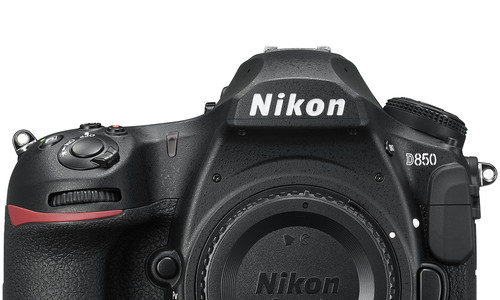
Nikon did exceptionally well with the Nikon D850 (), and users love it. The Nikon D850 was the most sold full frame DSLR during the holiday season 2017 in the USA.
Nikon press release:
Nikon Inc. Achieves #1 Spot in Full Frame Camera Market During Important 2017 Holiday Selling Season
Market Bolstered by Exceptional Demand for the Award-Winning Full Frame (FX-format) D850 DSLR
MELVILLE, NY – Imaging leader Nikon attained the #1 position for both market share and revenue for December 2017, in the full frame digital camera with interchangeable lens (DCIL) category in the U.S.1 The overwhelming success of the powerful new Nikon D850 DSLR as well as the acclaimed D750 DSLR helped contribute to the brand’s strong growth within the full frame camera segment for December 2017. According to The NPD Group, Nikon achieved double-digit unit and dollar sales growth within the full frame camera segment in December 2017 vs. December 2016.2This market category comprises all full frame digital cameras with interchangeable lenses (DCIL), including DSLR and mirrorless cameras. December is a significant month for sales because of the large volume of units sold during the holidays; industry-wide, DCIL full frame unit sales for the month of December 2017 were almost equal to unit sales from January through March of 2017, according to The NPD Group.3
“Nikon has returned to an emphasis on high-end products for advanced and professional users. These users appreciate Nikon’s full frame offerings because of their amazing image quality, reliability, low-light capability and high-speed performance,” said Bo Kajiwara, President and CEO, Nikon Inc. “Nikon is an innovative, diversified company with a clear, long-term strategy to thrive into 2018 and beyond.”
As antidote to the more noisy and breathless rumor outlets out there, have a look at Thom Hogan’s short and educated article about the evolution (past and future) of mirrorless camera systems.
Mirrorless initially looked like it was going to quickly erode DSLR unit volume back in 2012. That proved to be a false positive. Mirrorless was still nascent, Nikon was heavily promoting the Nikon 1 because they couldn’t make DSLRs due to the quake and flood (and already discounting the Nikon 1), and there was a lot of sampling going on to see if mirrorless truly was the future of interchangeable lens cameras. Frankly, no, it wasn’t yet ready back then.
[…]
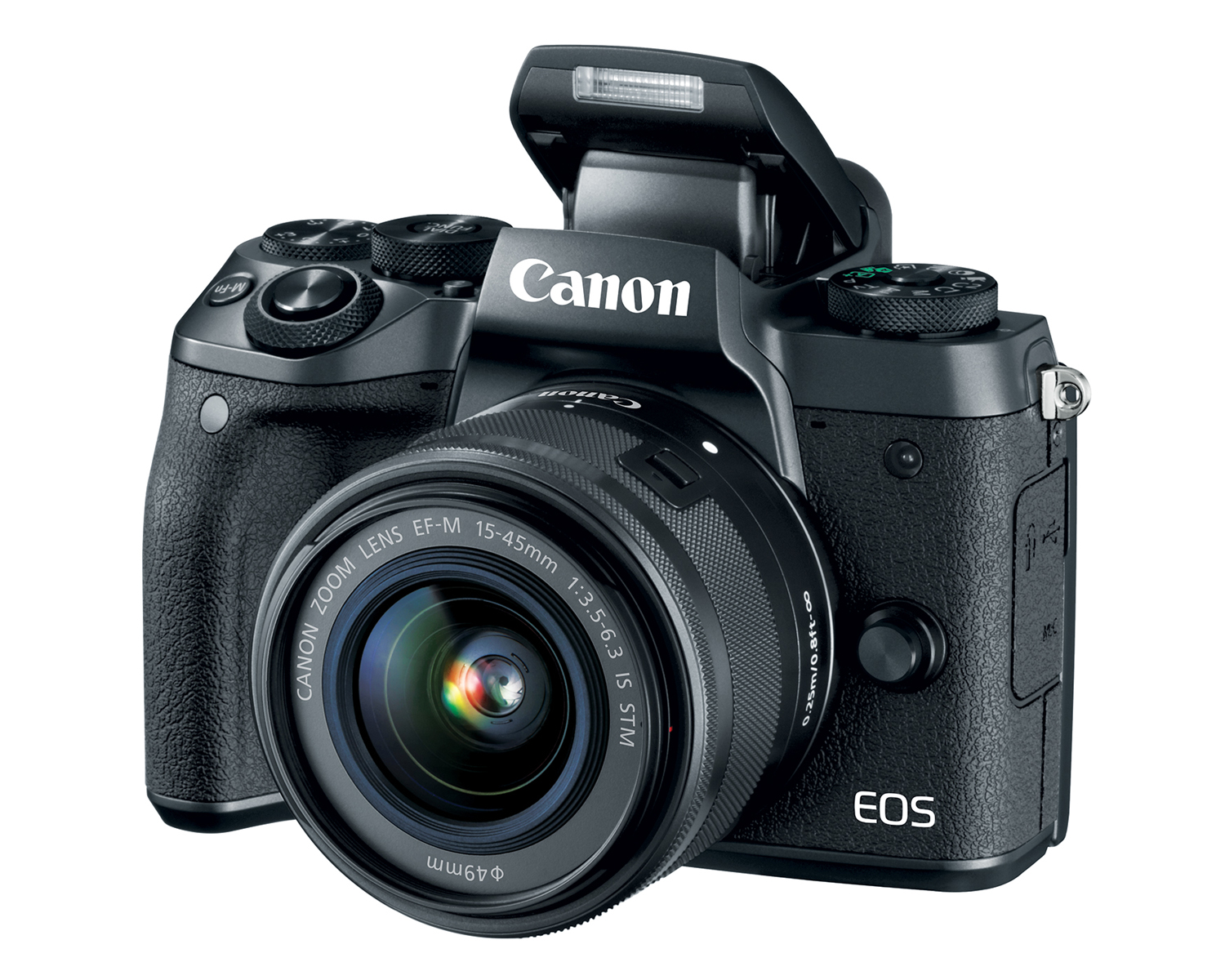
Compare that to today. Let’s use Canon as an example. You’d be hard pressed to show me how an entry Rebel DSLR is better than an EOS M5. After all, they’re using the same sensor. The Rebel is bigger, heavier, bulkier. It doesn’t do as well with face recognition autofocus, a big thing for the masses. In other words, most of the things that led samplers in 2012 to say “not ready yet” are no longer applicable. They can get equivalent or better results for their type of shooting out of a smaller, lighter, simpler camera now. A friend of mine says that there’s a study that shows statistical significance to European camera sales to European airline carry-on practices. As airlines tightened carry-on weight limits, people in Europe bought smaller and lighter cameras, apparently. Read Thom Hogan’s article…
There are some good points in Hogan’s article.
You likely know Canon will soon announce a new mirrorless camera. Some people are speculating the upcoming EOS M50 could indeed be the long-awaited full-frame mirrorless camera we are all eagerly waiting for. And now it’s also rumored to do 4K video. Sound to good to be true to me. We just had an elaborate prank with the PowerShot G7 X Mark III images. I urge to you to be more realistic. The EOS M50 is going to be announced ahead of CP+. We will soon know.
We want to learn what you think about the State of Mirrorless.
Do you think mirrorless camera systems will definitely take over in 2019?
This website or its third-party tools use cookies, which are necessary to its functioning and required to achieve the purposes illustrated in the cookie policy. If you want to know more or withdraw your consent to all or some of the cookies, please refer to the cookie policy. By closing this banner you agree to the use of cookies.