Follow us:
Industry News: Panasonic Lumix GH6 Camera With Dual Output Gain Sensor Announced
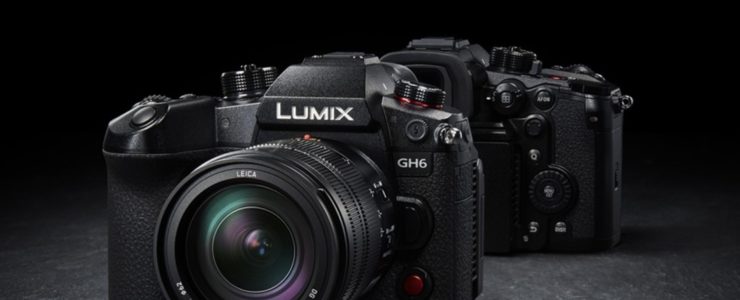
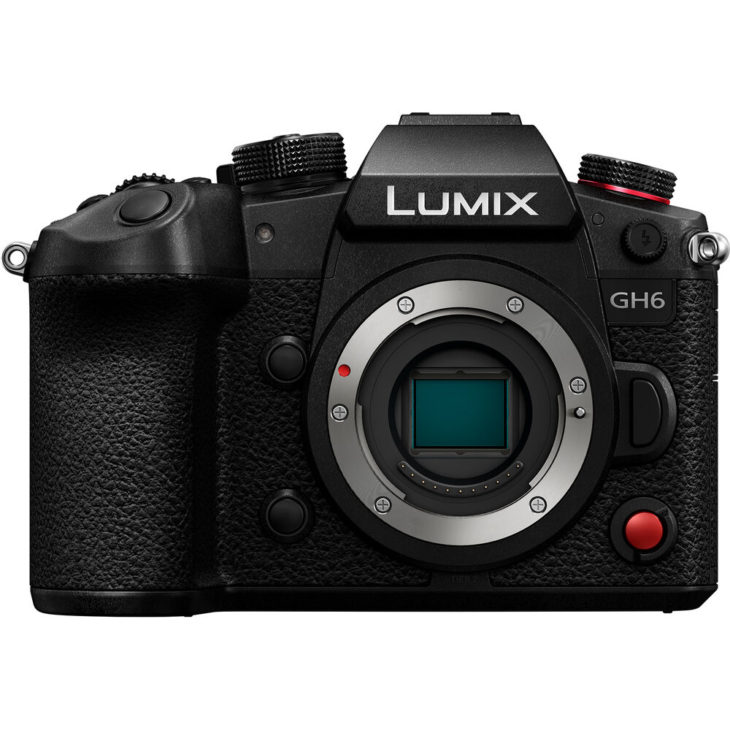
Panasonic announced a new mirrorless camera, the Panasonic Lumix GH6. See below what a Dual Output Gain sensor is and does.
At a glance:
- 25.2MP Live MOS Micro Four Thirds Sensor
- 4K 60p 4:2:2 10-Bit Unlimited Recording
- 5.7K 60p, 4K 120p HFR, FHD 300p VFR
- ProRes 422 HQ, V-Log and DR Boost
- Dual I.S. 2, 7.5-Stop 5-Axis Stabilizer
- 100MP Handheld High-Resolution Mode
- 3.68m-Dot OLED Electronic Viewfinder
- 3.0″ 1.84m-Dot Free Angle Touchscreen
- CFexpress Type B & SD UHS-II Card Slots
- Built-In Active Cooling
Pre-orders are live ($2,198) at B&H Photo | Adorama
Press release:
The LUMIX GH6, a Compact Next-generation Mirrorless Camera Featuring Unlimited C4K/60p in 4:2:2 10-bit, 5.7K/60p in 10-bit and 4K 120p HFR / FHD Maximum 300fps VFR Video Recording
Newark, NJ (February 21, 2022) – Panasonic is proud to introduce the new LUMIX GH6 – the latest flagship model of the LUMIX G Series digital mirrorless camera based on the Micro Four Thirds system standard.
In 2009, Panasonic introduced the DMC-GH1, the first model of the LUMIX GH series, with a photo/video-hybrid concept. Since then, the GH series has evolved to include innovative features demanded by users and has become renowned by creators worldwide as a first-choice tool thanks to its performance, mobility, and rugged design. The LUMIX GH6 is the latest addition of the series that again breaks the boundaries of digital mirrorless cameras.
By increasing the effective pixel count by more than 20%1, the new 25.2-megapixel Live MOS Sensor boasts high-resolution, high-speed signal readout and wide dynamic range. The new Venus Engine is equipped with advanced image processing technologies to render high resolution images with natural noise texture and rich color reproduction, which is a hallmark of LUMIX cameras.
The LUMIX GH6 contains V-Log/V-Gamut – a first for LUMIX G Micro Four Thirds cameras – and provides 12+ stops and even 13+ stops of wide dynamic range using Dynamic Range Boost mode.2
The new LUMIX GH6 has again evolved to achieve 4:2:2 10-bit C4K 60p unlimited video recording time3, 4:2:0 10-bit 4K120p, 4:2:2 10bit FHD 240p HFR (High Frame Rate) and FHD maximum 300fps VFR (Variable Frame Rate) to reproduce dynamic motion of the subject. In addition to 4:2:0 10-bit 5.7K 60p, 4:2:0 10-bit 5.8K 30p (4.4K 60p) anamorphic 4:3 video can be recorded utilizing the full area of the sensor. It is possible to display de-squeezed footage on the monitor in real-time. 5.7K 30p video recording is available in Apple ProRes 422 HQ for the first time in LUMIX cameras, which enables non-linear editing without transcoding. Extended recording time is made possible with LUMIX’s heat management technology.
Boasting 7.5 stops of powerful image stabilization with its Dual I.S.2 for agile handheld shooting, the LUMIX GH6 has adopted a new super high-precision 5-axis gyro sensor with a new algorithm to achieve 7.5 stops of Body I.S.4 and Dual I.S.25. It also offers a wide variety of recording formats, resolutions and framerates to choose from according to the purpose.
With expertise drawn from firsthand opinions, the LUMIX GH6 has been designed to recognize high quality video expression and workflow efficiency from setup to delivery in addition to excellent depiction performance and mobility. Together with a wide array of lens options, Panasonic is committed to leading the industry with creators who are seeking for a new way to go beyond the limitations of creativity.
The LUMIX GH6 will be available at valued channel partners for $2,199.99 (body only) and $2,799.99 (body + L-kit package) in mid-March.
- In comparison with the sensor of the LUMIX GH5.
- Available in Creative Video mode only, Minimum ISO 800 in standard mode/ISO2000 in V-Log/HLG.
- Under the guaranteed operating environment. When using a battery. The recording time depends on the capacity of the battery and the recording media.
- Based on the CIPA standard [Yaw/Pitch direction: focusing distance f=60mm (35mm film camera equivalent f=120mm), when H-ES12060 is used.
- Based on the CIPA standard [Yaw/Pitch direction: focusing distance f=140mm (35mm film camera equivalent f=280mm), when H-FS14140 is used.
1. State-of-the-art technologies enhance video quality even higher
Panasonic has developed a new 25.2-megapixel Live MOS Sensor without LPF (Low-pass Filter) that boasts high resolution, high-speed signal readout that reduces rolling shutter problem and achieves wide dynamic range. The new Venus Engine delivers approximately twice the processing power1, enabling high-speed processing of the new sensor’s higher pixel counts, higher-resolution and higher-bit-rate video. It has evolved with three key technologies: New Intelligent Detail Processing, New 2D Noise Reduction and High Precision 3D Noise Reduction for video. The new Intelligent Detail Processing detects the edges and flat and detailed parts in a frame more accurately, resulting in highly realistic images. The new 2D Noise Reduction suppresses chromatic noise and improves the texture of luminance noise to make photo clear and natural even when shot at high sensitivity. With the High Precision 3D Noise
Reduction for video, the detection capability of still and moving parts has been advanced, which makes it possible to optimize noise reduction while minimizing afterimages. As a result, the image quality of video with dynamic motion is enhanced. In addition, high-precision Dual 3D Color Control enhances color reproduction by brightness level, saturation level, and hue level for rich, faithful color expression.
The combination of the new advanced sensor with the enhanced saturation performance and engine makes it possible to render clearer images even in 25.2-megapixel high resolution and lower minimum ISO sensitivity at ISO 100 [Photo: ISO 50(Extended) – 25600 / Video: ISO 50(Extended) -12800].
Dynamic range measures the luminance range that a digital camera can capture. The LUMIX GH6 provides 12+ stops of wide dynamic range for pre-installed V-Log recording capability. Even 13+ stops can be achieved using Dynamic Range Boost mode2. With the new Dynamic Range Boost mode, saturation-priority image generated from low ISO circuit and low noise image generated from high ISO circuit are synthesized at each pixel. The composite image achieves both low noise and high saturation, resulting in a clear and smooth HDR video with rich gradation.
For agile handheld shooting, the LUMIX GH6 has adopted a new super high-precision 5-axis gyro sensor with a new algorithm to achieve 7.5 stops of Body I.S.3 and Dual I.S.24. Thanks to this powerful image stabilization, even 100-megapixel high resolution images can be shot using the High-Resolution mode without a tripod. In High-Resolution mode, eight consecutive images are automatically shot while shifting the sensor using the Body I.S. (Image Stabilizer) mechanism and synthesized into a 100-megapixel equivalent (11552 x 8672-pixel) image that faithfully reproduces precise details to be saved as beautiful, highly realistic RAW and JPEG images. With its high mobility achieved by the compact, lightweight design and powerful Body I.S., the LUMIX GH6 makes previously impossible shooting, such as handheld ultra-telephoto shooting, possible. The 5-axis Dual I.S. 2 also works for video recording, including 4K video to record natural, comfortable-to-see video footage. It applies appropriate compensation according to the type of movement by precisely judging the cause – whether it was generated by panning, tilting or hand-shake. The B.I.S. compensates for camera movement even when an interchangeable lens without O.I.S. (e.g., a cine lens) is used.
- In comparison with DC-S1H
- Available in Creative Video mode only, minimum ISO2000 in V-Log/HLG.
- Based on the CIPA standard [Yaw/Pitch direction: focusing distance f=60mm (35mm film camera equivalent f=120mm), when H-ES12060 is used.
- Based on the CIPA standard [Yaw/Pitch direction: focusing distance f=140mm (35mm film camera equivalent f=280mm), when H-FS14140 is used.
2. Professional-quality video performance for unlimited expression
The LUMIX GH Series has created an epoch-making industrial sensation by achieving outstanding video recording performance with advanced features that meet professional quality levels and standards. The LUMIX GH6 again evolves to achieve 4:2:2 10-bit C4K 60p unlimited video recording time1. 4:2:0 10-bit 4K120p (Equivalent to 5x slow motion2) and 4:2:2 10-bit FHD 240p HFR (High Frame Rate) video recording with audio also available to enable impressive expression such as speed ramping. FHD maximum 300fps (Equivalent to 12.5x slow motion2) and VFR (Variable Frame Rate) reproduce the dynamic motion of the subject.
In addition to 4:2:0 10-bit 5.7K 60p, 4:2:0 10-bit 5.8K 30p (4.4K 60p) anamorphic 4:3 video can be recorded utilizing the full area of the sensor. It is possible to display de-squeezed footage on the monitor in real time. 5.7K 30p internal video recording is available in ProRes 422 HQ and ProRes 422 for the first time in the LUMIX series using the CFexpress Type B card, which enables non-linear editing without transcoding. DCI4K, FHD ProRes 422 HQ and ProRes 422 will be supported with a future firmware update.
The LUMIX GH6 is capable of 4:2:2 10-bit C4K 60p internal recording and simultaneous output in 4:2:2 10-bit C4K 60p over HDMI. Since it is HDMI 2.1 compliant, it will support C4K 120p HDMI video output with a future firmware update. Moreover, capability of C4K 120p RAW output to Atomos Ninja V+ monitor recorder over HDMI 2.0, is under development, which also will be available with a future firmware update.
The LUMIX GH6 contains V-Log/V-Gamut capture to deliver a high dynamic range and broad colors. V-Log renders a very flat image while maintaining all the color information within the image. This means that there is a greater level of play when the images are put through post-production processes. The Live MOS sensor of the LUMIX GH6 achieves a wide color gamut known as V-Gamut, which is the GH6’s optimum color space and provides a color space that is wider than BT.2020. V-Log has log curve characteristics that are somewhat reminiscent of negative film and V-Gamut delivers a color space even larger than film.
The LUMIX GH6 offers the renowned colorimetry of the VariCam line of cinema cameras and uses their V-LOG picture profile and wider V-Gamut. For monitoring your work and to see an image that is no longer in LOG, the GH6 includes the V709 LUT (Look Up Table) with Rec.709 standard in the camera by default, this LUT can be output over HDMI or to the cameras monitors or both. It is possible to install your own LUT’s into the GH6 and access them from the V-Log View Assist menu. For users of the Varicam and EVA1 the GH6 can support LUT’s in their .vlt format, and for users of other camera systems we also support the .cube format.
The LUMIX GH6 offers a host of practical features. There are a variety of settings in Photo Style including different Cinelike gamma presets. “Cinelike D2” and “Cinelike V2” have similar gamma setting characteristics for film production. In response to requests from professional users, video assist functions such as Waveform Monitor, Zebra Pattern, Luminance Spot Meter, Frame Marker, Anamorphic Desqueeze Display, Red REC Frame Indicator and Tally lamps are available. The Safety Zone Marker, a new feature on the LUMIX GH6, shows a guide of 95%, 90% or 80% recording area to secure safety zone for the composition and for the subtitles. Center Marker now allows you to choose the type of the marker. In Color Temperature Setting, the kelvin values can now be displayed on the recording screen.
By using both an XLR microphone connected via the XLR Microphone Adaptor DMW-XLR1 (Ch1 Ch2) and built-in microphone (Ch3, Ch4), 48/96kHz 24-bit high-res audio can be recorded3. Users can combine several types of external microphones that fit the recording situation such as outdoor interviews where the voice of the speakers and ambient sound need to be recorded. The channel to use for the headphone can be switched during video recording and audio menus can be directly accessed with the Fn1 button on the camera top for easy sound level check during 4-channel audio recording. For the external microphone, a Φ3.5mm stereo jack is provided.
4K 60p Time Lapse videos can also be produced inside the camera. With the Exposure Leveling function, the exposure is automatically adjusted to prevent large changes in brightness between adjacent frames to produce equable time lapse footage.
USB host capability will be added with a future firmware update, making it possible to write the data directly to the SSD.